Quick answer
DUPLO and wood blocks both build fine motor skills and spatial reasoning, but they serve different play styles. DUPLO encourages guided construction with interlocking pieces, while wood blocks offer open-ended creativity and sensory variety. For most toddlers, a mix of both is ideal.
How DUPLO and Wood Blocks Differ in Play
DUPLO bricks click together, allowing toddlers to build stable structures and follow simple instructions. This builds cause-and-effect understanding and patience. Wood blocks, on the other hand, rely on balance and gravity, teaching toddlers about weight, symmetry, and physics through trial and error.
Wood blocks also offer more sensory variety—different textures, weights, and shapes. A set like Manhattan Toy's Deep Sea Adventure wood activity center adds gears, gliders, and bead runs, turning block play into a multi-activity exploration. DUPLO sets often include themed pieces, which can limit open-ended play but provide narrative prompts for imaginative storytelling.
Developmental Skills Each Type Supports
Both block types strengthen hand-eye coordination and fine motor control. DUPLO's snapping motion targets pincer grip and finger strength, while stacking wood blocks requires careful wrist control and spatial judgment. Wood blocks also encourage more creative problem-solving because there are no fixed connection points.
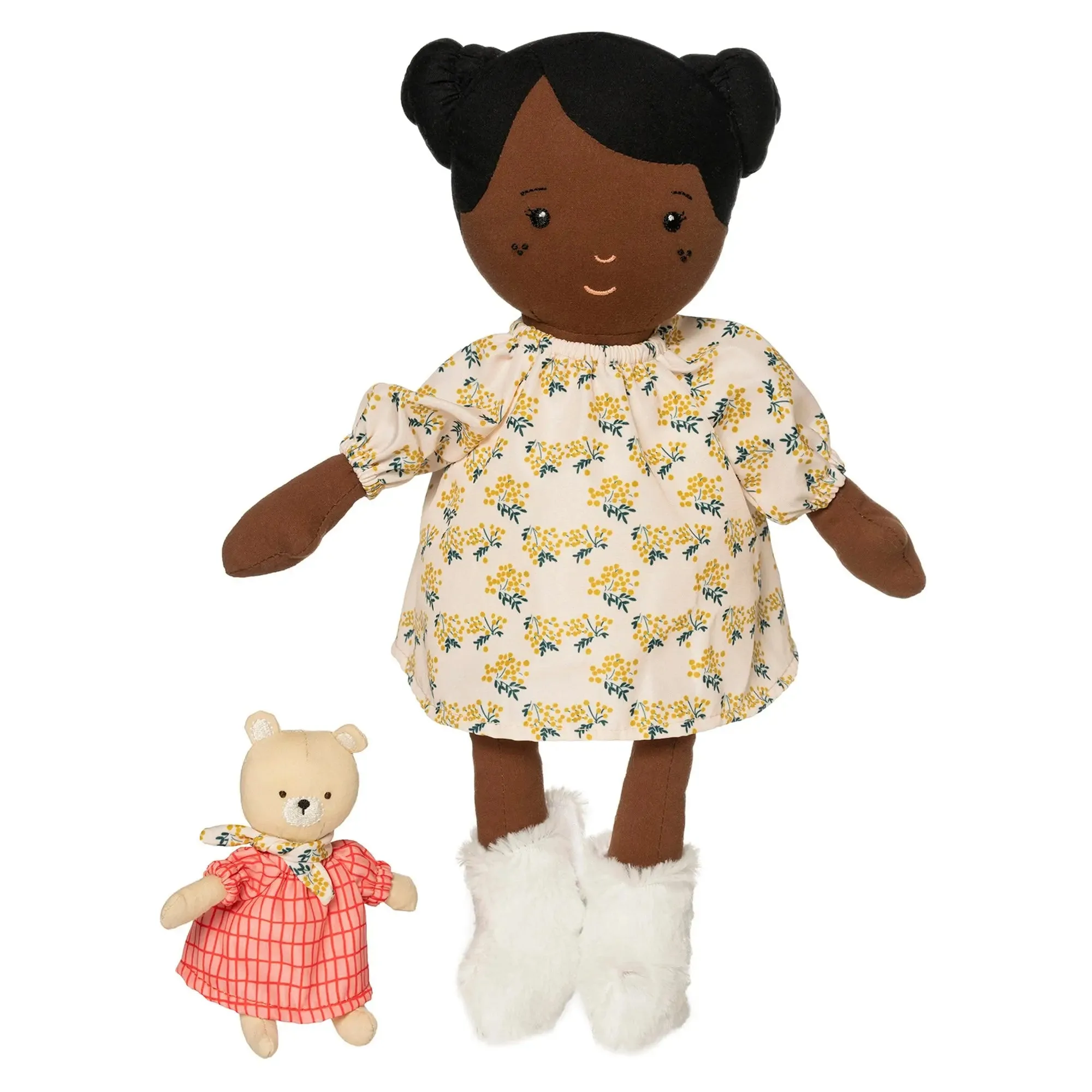
For language development, wood blocks allow children to name shapes, sizes, and colors freely. DUPLO sets often come with character figures and accessories, which can spark dialogue and role-play. A soft doll like Playdate Friends Ollie, with its removable outfit and bunny friend, pairs well with either block type for storytelling.
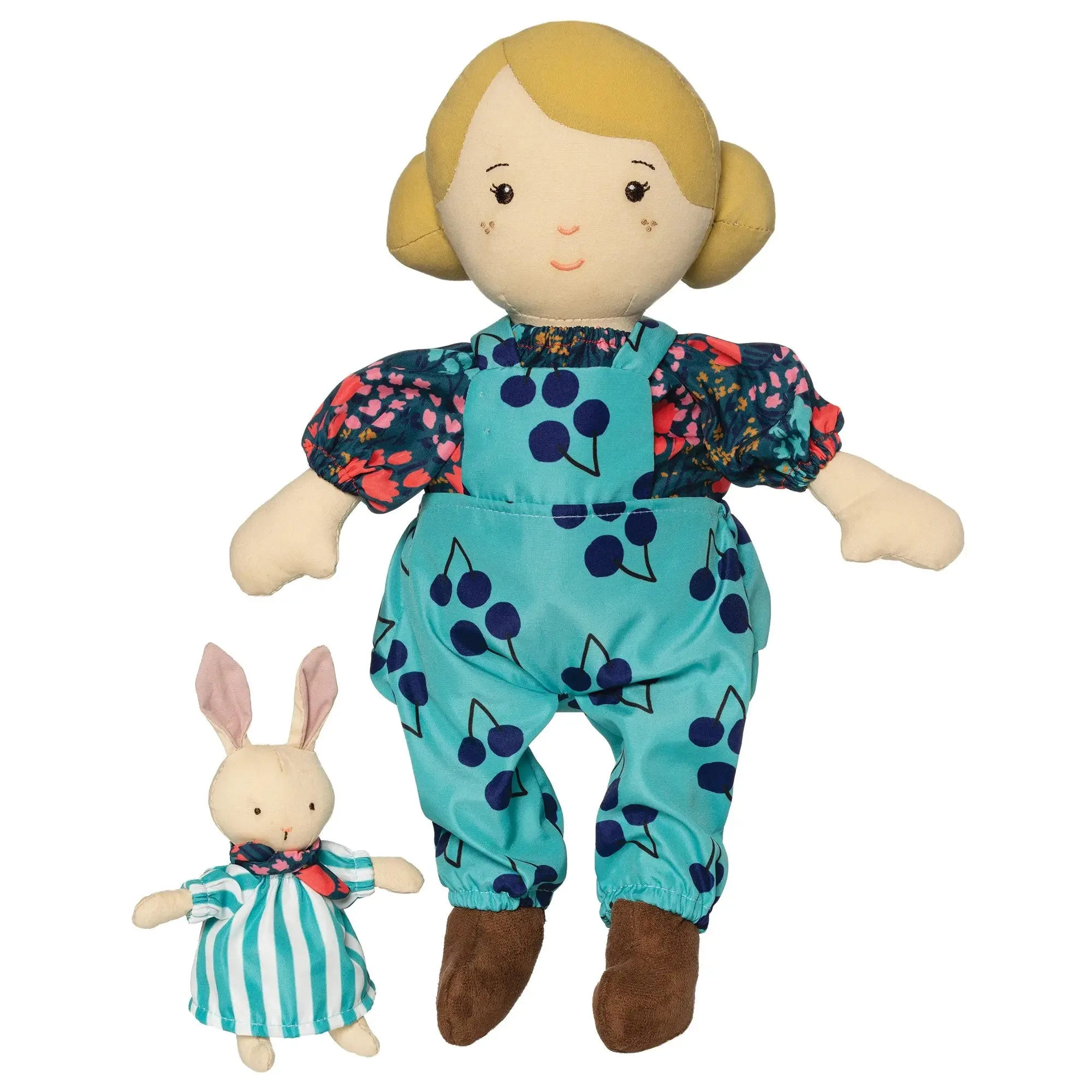
Playdate Friends Ollie
Safety and Durability Considerations
Both DUPLO and wood blocks are generally safe for toddlers, but check for small parts and sharp edges. Wood blocks can splinter if not well-finished, while DUPLO bricks are smooth and easy to clean. For teething toddlers, a dedicated teether like the Toadstool Twist & Shake offers a safer alternative to mouthing blocks.
Wood blocks tend to be more durable over decades, while DUPLO bricks can lose their clutch power after heavy use. If you want a long-term investment, high-quality wood blocks or activity centers like the Deep Sea Adventure are built to last through multiple children.
Trade-offs at a glance
- Open-ended creativity: Wood blocks allow unlimited building possibilities without instructions. DUPLO sets often have a specific build goal, which can limit creativity but teaches following directions. Choose wood blocks if you want free-form play; choose DUPLO if your child enjoys guided challenges.
- Sensory variety: Wood blocks offer natural textures, weights, and sounds. DUPLO bricks are uniform plastic, which is easier to clean but less stimulating for sensory exploration. For sensory seekers, wood blocks (or a wood activity center like Deep Sea Adventure) provide richer tactile input.
- Longevity and durability: Wood blocks can last for generations if well cared for. DUPLO bricks may wear out over time but are easier to replace individually. Wood blocks are a better long-term investment; DUPLO is great for short-term themed play.
Product facts that matter
- Deep Sea Adventure: This wood activity center is packed full of exciting features! Includes 4 quadrants in the shape of a jellyfish with a variety of activities: gliders, bead runs, spinning gears, springy coral and clacking clams. Deep Sea Adventure offers seated and kneeling play for young toddlers. It turns block play into a multi-sensory experience, encouraging cause-and-effect learning and fine motor development through varied activities—not just stacking.
- Elephant Plush Rocker: This elephant rocker features plush fabrics, an adjustable seatbelt, and a contoured backrest for added support. A chime in the tail adds whimsical fun with every rock. Encourage motor development, imaginative thinking, and cause and effect learning with every ride. For toddlers who need a break from floor-based block play, a plush rocker provides a different type of motor skill practice—balance and rhythm—while still supporting imaginative play.
Which should you choose?
Best for
- Toddlers who enjoy free-form building and sensory exploration
- Parents looking for a long-lasting, open-ended toy that grows with the child
Not for
- Children who prefer structured, guided play with clear goals
- Families who need easy-to-clean, lightweight toys for travel