Quick answer
If you sleep on a sleeping pad, start with a sheet: it clips the quilt to your pad, blocks drafts, and manages your pillow, which is the job a duvet cover cannot do. If you sleep on a mattress in a van, rooftop tent, or base camp, a duvet cover is the better first buy because it protects the quilt and gives you real comforter feel. Many campers eventually run both, but the sheet is the one that changes how warm and draft-free your night feels.
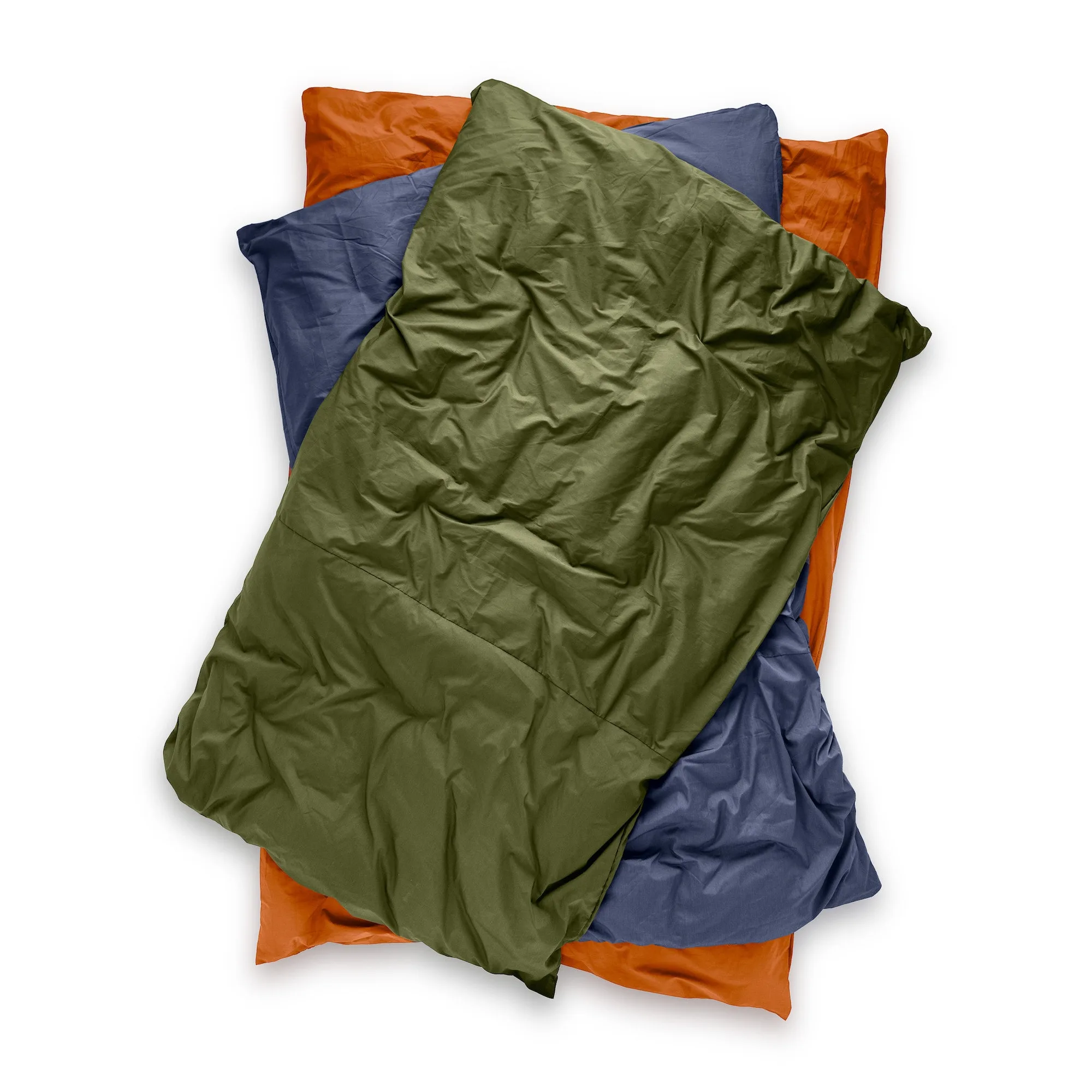
duvet cover
Camping bed bedding fails for a simple reason: a quilt that slides off your pad at 2 a.m. leaves you cold no matter how good the insulation is. Sheets and duvet covers solve different halves of that problem, and picking the wrong one first means you spend money on comfort you cannot use.
This comparison looks at what each layer actually does on a backpacking pad versus a double mattress, using real products from our sleeping bag and quilt lineup. The trade-off is straightforward: sheets buy draft control and weight savings, duvet covers buy protection and a familiar bed feel.
What a camping sheet actually does
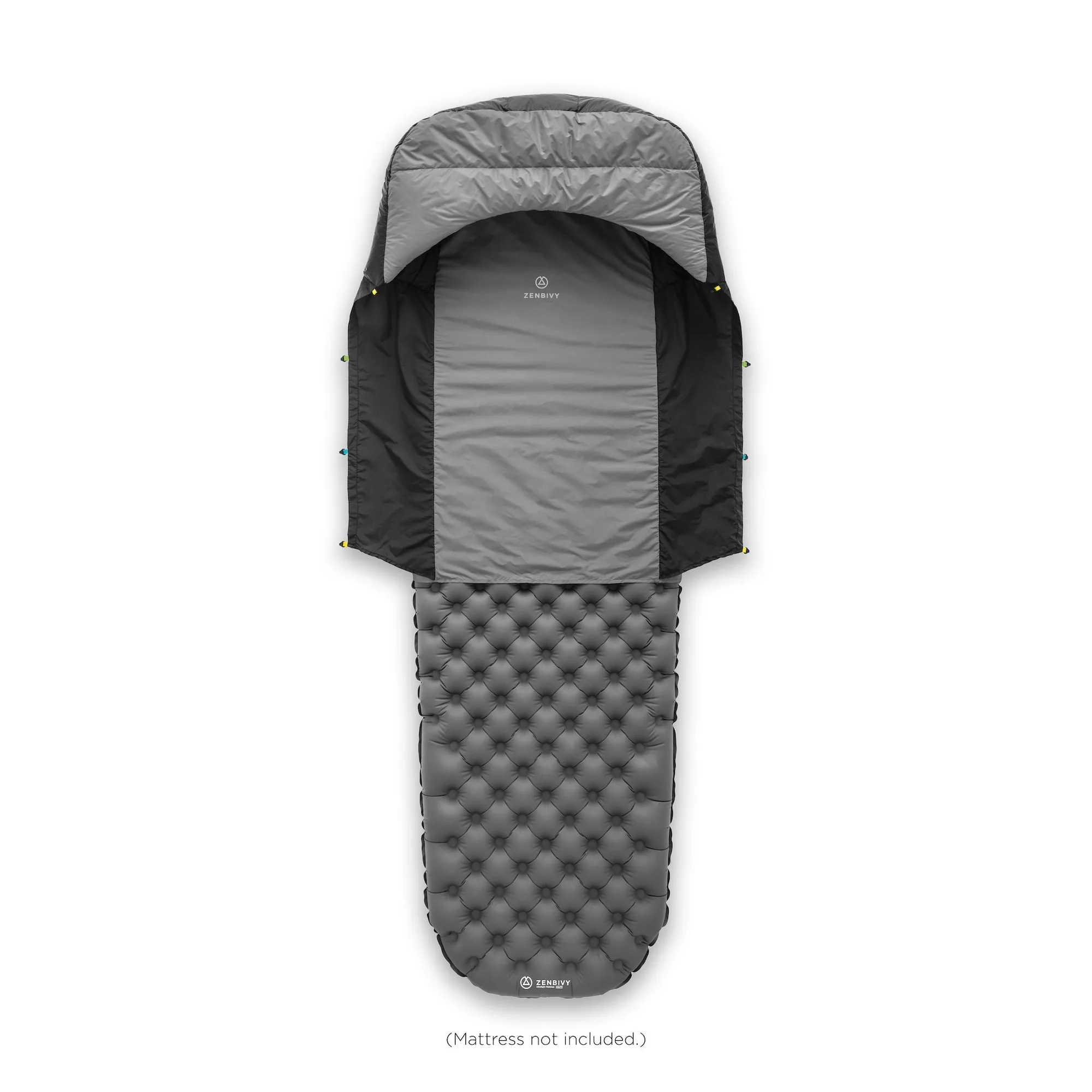
A camping sheet is not a flat hotel sheet. It is a fitted layer that attaches to your sleeping pad and gives your quilt something to clip to, so the quilt stays put while you roll over. That attachment is what eliminates drafts along the edges, and it also gives you a place to anchor a pillow instead of chasing it around the tent all night.
The Fast Sheet is built for minimalist, ultralight backpackers and starts at just 3 ounces. It is designed to block drafts while allowing total freedom of movement, and it pairs with any Zenbivy quilt to create the lightest possible sleep system. If your priority is grams and a draft-free night, this is the layer that earns its place in your pack.
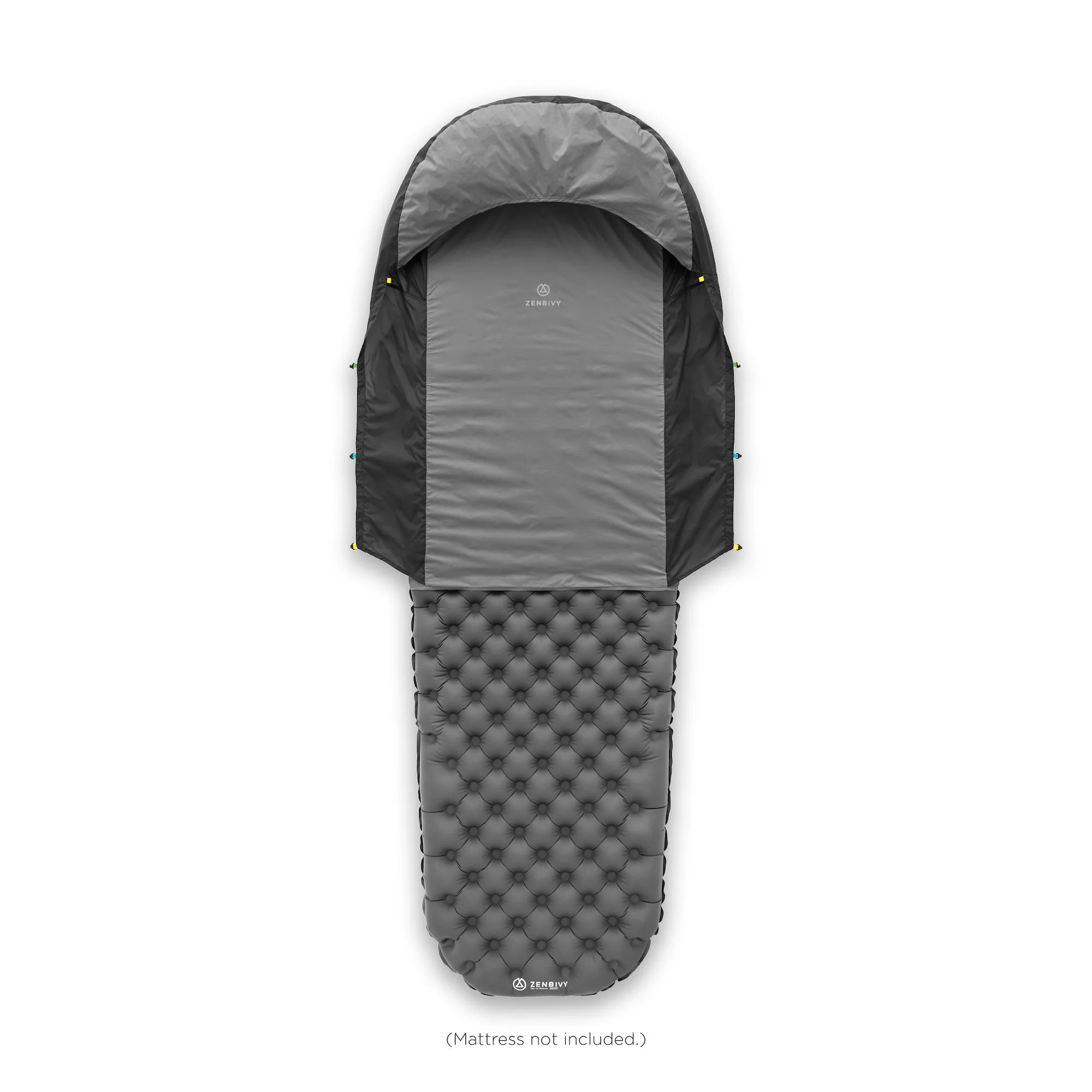
Fast Sheet
- Choose a sheet when your quilt slides off the pad or cold air creeps in at the edges.
- A sheet also gives your pillow a home, which matters more than most people expect.
What a duvet cover does on a camping bed
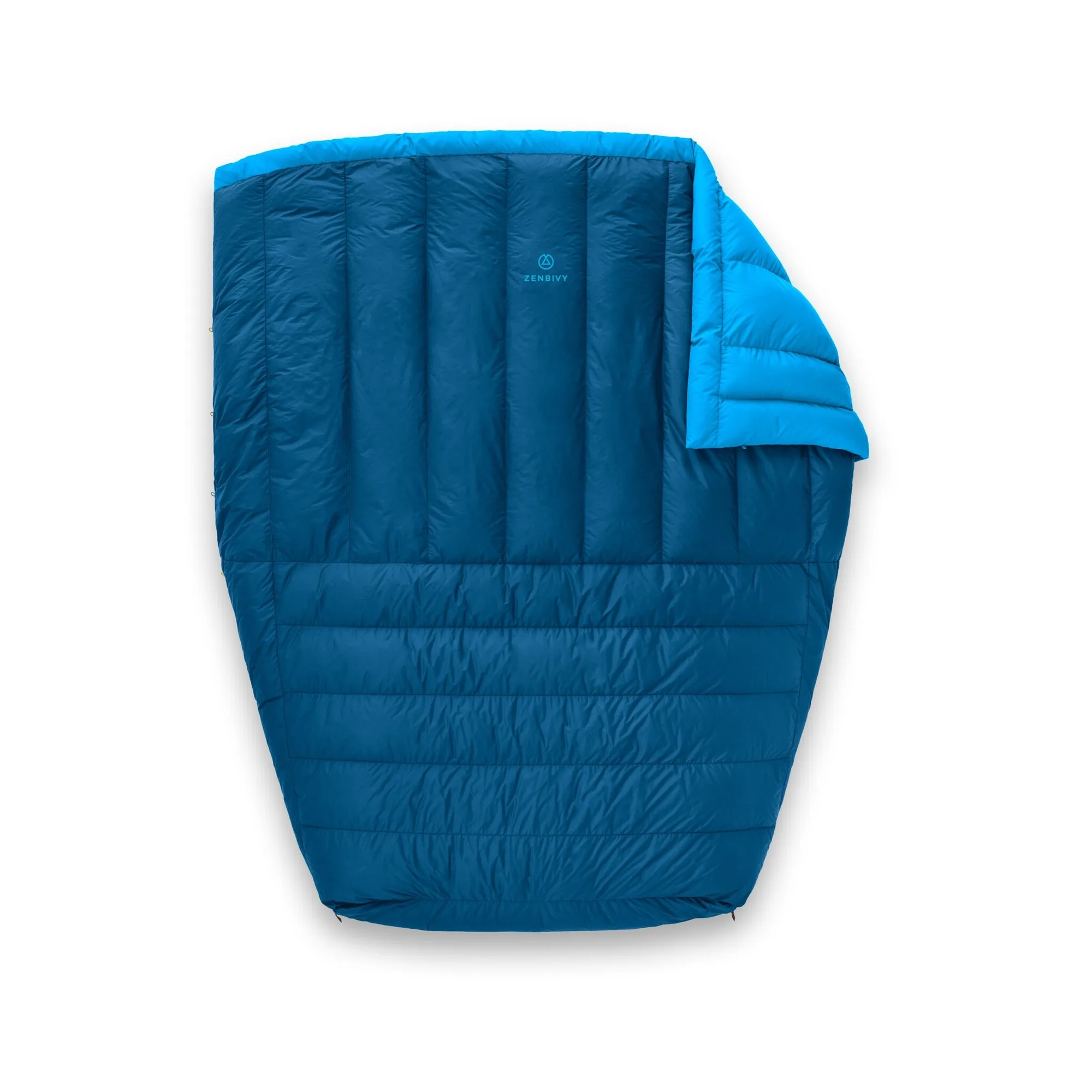
A duvet cover wraps your quilt like a comforter cover at home. It protects the quilt from sweat, oils, and dirt, which means fewer washes of the insulation itself, and it changes the surface feel against your skin. On a double setup, it also lets the quilt drape like bedding instead of lying flat like a technical blanket.
The Overland Double Bed is the clearest example: the oversized double quilt drapes like a real comforter, giving both sleepers room to move without cold spots or compromise, and a universal-fit sheet in three sizes adapts to fit nearly any mattress, from vanlife and rooftop tents to base camps and overlanding rigs. That is a bedding system for a mattress, not a backpacking pad.
- Pick a duvet cover when your quilt doubles as your everyday blanket and you want to wash the cover, not the quilt.
- On a double bed, a cover plus a fitted sheet is what keeps two sleepers from fighting over the same edge.
The trade-off: draft control versus protection and feel
Sheets win on draft control, weight, and packability. They are the layer that makes a quilt behave like a sleep system instead of a loose blanket, and the Fast Sheet starts at just 3 ounces, so the weight cost is close to nothing. What you give up is protection: a sheet does not shield your quilt from dirt and body oils, and it does not give you the soft comforter feel of a cover.
Duvet covers win on protection and familiarity. They keep your quilt cleaner and feel more like home bedding, which matters on longer trips and on double setups. What you give up is weight and simplicity: a cover adds bulk and another item to manage, and it does nothing to stop a quilt from sliding off a narrow pad. On a pad, the cover is the wrong tool; on a mattress, it is often the right one.
- Backpacking pad: sheet first, cover rarely.
- Van, rooftop tent, or base camp mattress: cover first, sheet second.
How the two layers work together
The strongest setup uses both, with each layer doing its own job. The Ultralight Sheet is the lightest way to block all drafts, eliminate all constriction, insulate your head, and manage your pillow, and it is compatible with any Zenbivy clip quilt. Pair it with a quilt, then add a cover only if you want the quilt protected and a softer surface against your skin.
For two people, the same logic scales up. The Core Double Quilt has a spacious design for maximum camping comfort and pairs with any Zenbivy Double Sheet to create a camp sleep system for two. Add a duvet cover on top of that if you want the comforter feel and easier cleaning, but the sheet is still the layer holding everything in place.
- Sheet plus quilt is the lightest complete system for one.
- Sheet plus quilt plus cover is the most comfortable and lowest-maintenance system for two.
Matching the layer to your quilt
Your quilt choice should drive your bedding choice. The Core Quilt is the simplest, softest, and most affordable backpacking quilt in the lineup, with a soft 50D Pongee lining, and it works well with a sheet for draft control. The Light Quilt Convertible uses an ultra-soft 25D Pongee lining and a draft-free convertible footbox for adjustable warmth, and it is designed to pair with a Light Sheet for a complete backpacking sleep system.
If you already own a quilt from another brand, the same principle applies: a sheet that clips or fits your pad will do more for your sleep than a cover will, because it solves the sliding and drafting problem directly. A cover is a comfort and protection upgrade, not a fix for a quilt that will not stay in place.
- Match the sheet to the quilt family when you can; the attachment points are designed to work together.
- If your quilt already stays put, spend your next dollar on a cover instead of a second sheet.
The trade-offs at a glance
- Draft control: A sheet clips the quilt to your pad and blocks drafts at the edges; a duvet cover does not attach to anything and cannot stop a quilt from sliding off a narrow pad. If you wake up cold because your quilt moved, buy the sheet.
- Weight and pack size: The Fast Sheet starts at just 3 ounces, while a duvet cover adds fabric and bulk with no draft-control benefit. Backpackers should treat the cover as optional and the sheet as core gear.
- Protection and feel: A duvet cover protects the quilt from dirt and oils and gives a comforter-like surface, which a sheet does not do. Long trips and double mattress setups justify the cover.
Products that show the difference
- Fast Sheet: Built for minimalist, ultralight backpackers, designed to block drafts while allowing total freedom of movement, and starting at just 3 ounces. This is the lightest way to solve the sliding-quilt problem, so it belongs in a pack where every ounce counts.
- Ultralight Sheet: The lightest way to block all drafts, eliminate all constriction, insulate your head, and manage your pillow, compatible with any Zenbivy clip quilt. It handles drafts, head warmth, and pillow control in one layer, which is more than a duvet cover can do on a pad.
- Light Quilt Convertible: Features an ultra-soft 25D Pongee lining and a patented draft-free convertible footbox, and pairs with a Light Sheet to create a complete backpacking sleep system. It shows how a quilt and sheet are designed as a pair, which is the strongest argument for choosing a sheet over a cover on a pad.
- Overland Double Bed: An oversized double quilt that drapes like a real comforter, with a universal-fit sheet in three sizes that adapts to fit nearly any mattress, from vanlife and rooftop tents to base camps and overlanding rigs. On a mattress setup, the cover-style drape and fitted sheet are what make the bed feel like a bed, which is where a duvet cover earns its place.
Which should you buy first?
Choose a sheet first if you
- sleep on a sleeping pad and your quilt slides off or drafts at the edges
- count ounces and want the lightest draft-free setup, like the 3-ounce Fast Sheet
- want one layer that also manages your pillow and insulates your head
Choose a duvet cover first if you
- sleep on a mattress in a van, rooftop tent, or base camp and want comforter feel
- want to protect your quilt from dirt and body oils and wash the cover instead
- share a double bed and need room for two sleepers without cold spots
Buy the sheet first if you sleep on a pad, because draft control is the problem that actually ruins nights. Buy the duvet cover first if you sleep on a mattress and want protection plus a familiar bed feel. Once you have both, the sheet holds the system together and the cover keeps it clean and comfortable.