Quick answer
Buy a Dwarvenite set when you need a playable floor, wall, or themed room right away and want the best cost per piece. Buy individual pieces when you already own a core layout and need to fix a specific gap, add a focal point, or test a new paint scheme without committing to a full set.
You are staring at two tabs: a Dwarvenite set that promises a full encounter, and a single piece that costs less than lunch. The right choice depends less on budget and more on what your table is missing right now.
This guide gives you concrete decision rules for buying individual terrain pieces versus sets, using real Dwarven Forge products as examples. You will learn how to check coverage, material, finish, and line compatibility before you spend.
Start with coverage, not piece count
A set earns its place when it covers a playable area: a room, a corridor, a cavern chamber. Individual pieces are for edges, corners, and details that complete or extend that area. Before buying, sketch your next encounter on paper and count the floor tiles and wall segments you actually need. If you are short by more than a handful of pieces, a set usually wins on both time and cost.
Coverage also depends on theme. A stone cavern set will not blend with a Tudor city build, even if the piece count looks similar. Match the set or single to the line you already own so your table stays visually consistent.
- Measure your intended play area in tile inches before comparing prices.
- Count walls and corners separately from floors; sets often include both in a fixed ratio.
When individual pieces are the smarter buy
Singles shine when you have a working layout and one stubborn gap. A diagonal wall can turn a boxy cavern into a natural chamber. A single dressing piece can make a room feel inhabited without adding floor area. Because individual pieces are sold unpainted or painted, you can also test a paint scheme on one piece before committing a whole set to it.
The trade-off is time and shipping. Buying many singles to build a full room usually costs more per piece than a set and takes multiple orders to assemble. Use singles for precision, not for bulk.
- Buy a single when you need one specific shape, not five generic ones.
- Unpainted singles let you match an existing paint job without repainting a whole set.
Material and finish: Dwarvenite vs resin
Dwarvenite is the durable, slightly flexible material used across most Dwarven Forge terrain. It survives transport and table bumps better than rigid resin, which matters if you game outside your home. Resin pieces typically hold finer detail but are heavier and more fragile. For a first purchase, Dwarvenite sets and singles are the safer investment.
Finish is a separate decision. Painted pieces cost more but are table-ready. Unpainted pieces cost less and let you control the final look. If you enjoy painting, unpainted singles are an inexpensive way to expand a set over time.
- Choose Dwarvenite for travel and frequent handling.
- Choose unpainted if you already own the paints and want to save money.
Line compatibility: City, Cavern, Castles, Starforged
Dwarven Forge organizes terrain into lines such as City Builder, Caverns, Castles, and Starforged. Pieces within a line are designed to connect and stack together. Cross-line mixing is possible for special scenes but often needs adapter pieces or careful placement. Before buying a set, confirm it belongs to the line you are already building.
If you are starting fresh, pick one line and buy a core set first. Then use individual pieces from that same line to expand. This keeps your storage, paint colors, and layout options consistent.
- Check the product line name before adding a piece to your cart.
- A single from a new line is a cheap way to test scale before buying a set.
Decision rules for your next purchase
- You need a playable room or encounter area: Compare the set's floor and wall count to your sketch. If the set covers at least 80% of the area, buy the set and fill the rest with singles later. Set first, singles to finish.
- You have a layout with one obvious gap: Identify the exact shape missing, such as a corner or diagonal. Buy that single piece rather than a set that adds unused tiles. Single piece, not a set.
- You want to test a paint scheme or new line: Buy one unpainted single from that line. Paint it, place it on your table, and see if it matches your existing terrain before investing in a set. Test with a single, then scale.
- You need a special effect like LED lighting: Buy the set that includes the LED pieces and socket base. These are designed as a system, and buying the components separately is harder to source. Buy the set for integrated features.
Product facts that affect your decision
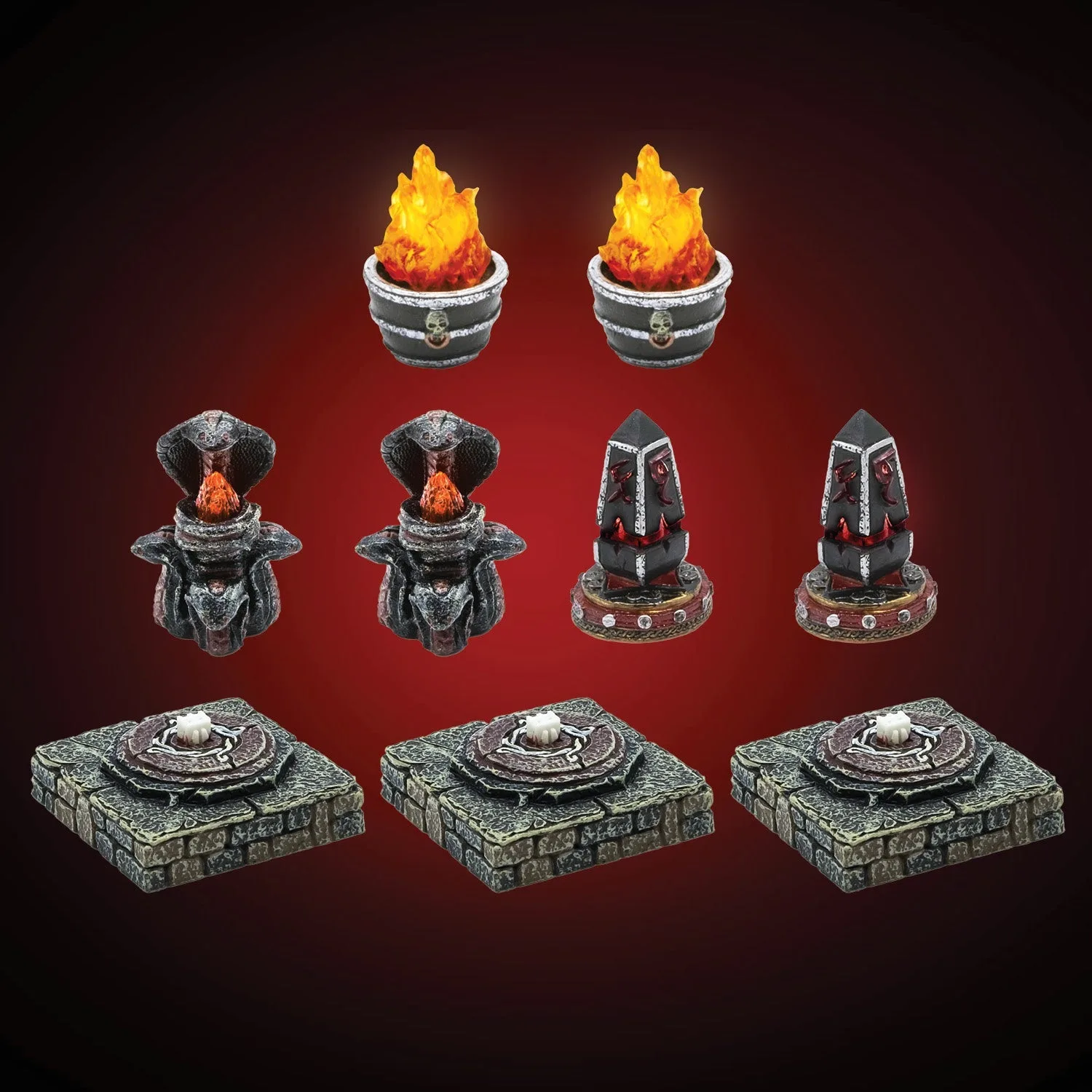
- Dungeon LED Floors (Unpainted): This Dwarvenite Set includes illuminated LED pieces such as the Fire Pot, Eldritch Obelisk, or Serpent Brazier, plus a Vaulted Floor - LED Socket that acts as a universal base for vertical LED pieces with JST bases. A set like this delivers a complete lighting feature you cannot easily replicate with random singles, so it is worth buying as a set when atmosphere is the goal.
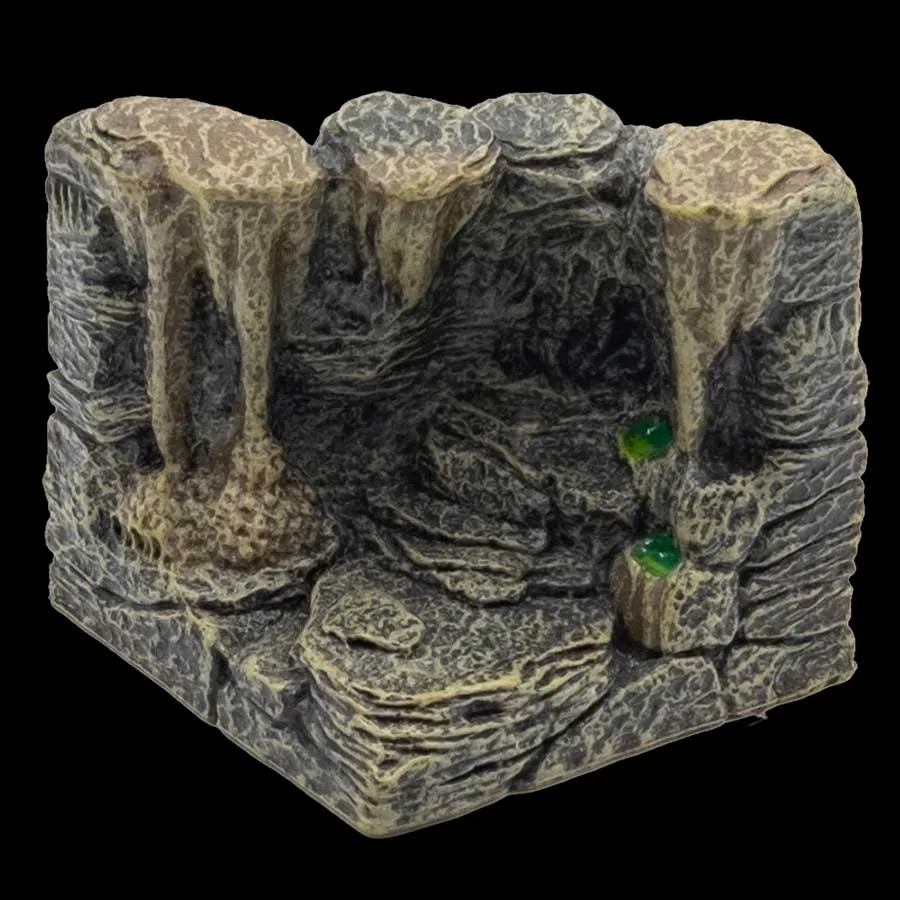
- Diagonal Cavern Wall (Unpainted): This individual piece is designed for stone cavern layouts, includes anchor magnets, and is made of Dwarvenite. A single diagonal wall can break up a boxy cavern without buying a full set, and the anchor magnets keep it stable during play.
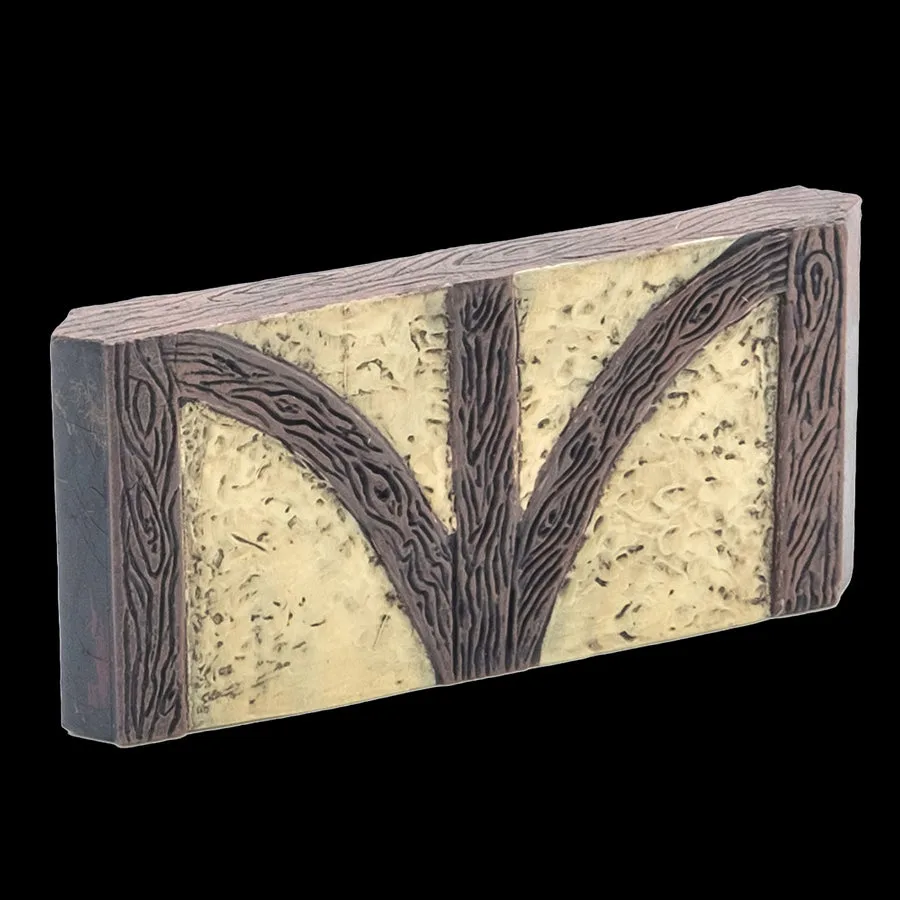
- Tudor Solid Wall (Unpainted): This individual piece is part of the City Builder (KS3) Cities line and is listed among basic core pieces and buildings. If you already own City Builder floors, a single Tudor wall extends your layout for a low cost and matches the line.
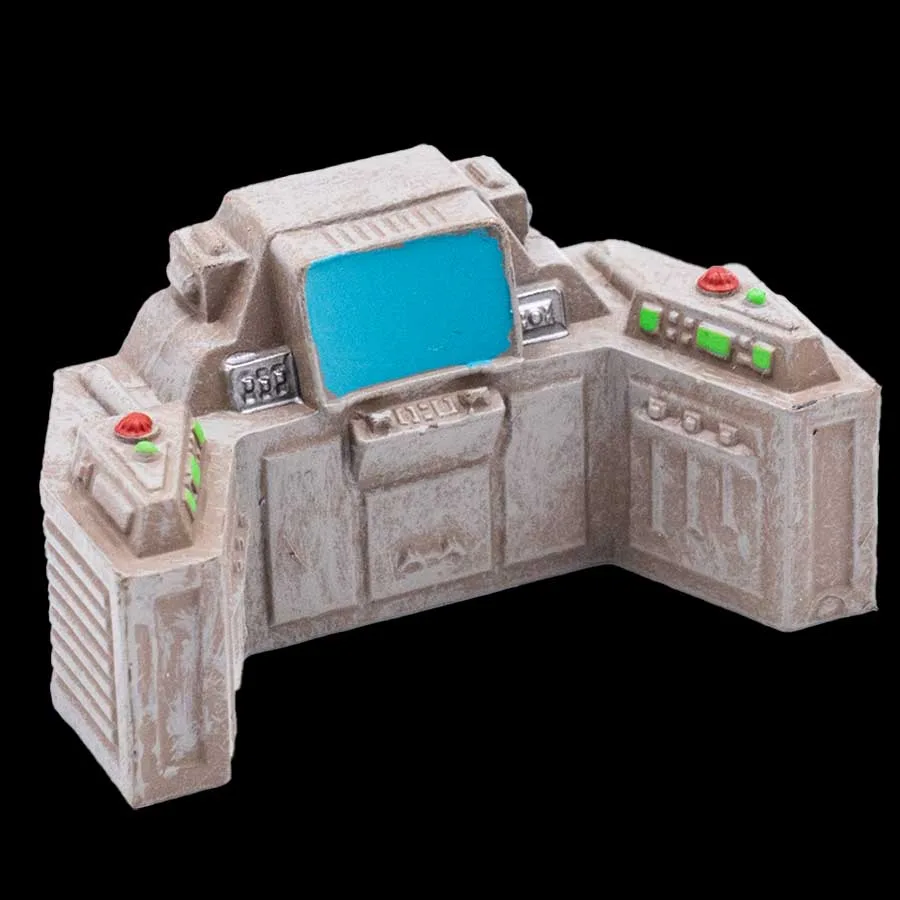
- Command Console (Unpainted): This individual piece belongs to the Starforged sci-fi line and is a single dressing piece intended for hobbyists to paint. Dressing pieces add narrative detail without adding floor coverage, so buy them after your core layout is complete.
Who should buy what
Best for
- New builders who need a complete room or cavern to start playing immediately.
- Gamers who want the lowest cost per piece and do not mind a fixed assortment.
- Hobbyists who want integrated features like LED lighting without sourcing parts separately.
Not for
- Builders who already own a large collection and only need one specific shape.
- Painters who want to test a new color scheme on a single low-cost piece.
- Shoppers who need a piece from a different line and cannot use the set's theme.
Buy the set when you need coverage and a playable scene now. Buy individual pieces when you need precision, a test piece, or a finishing touch. Check the line and material before you check out, and your terrain will keep working together for years.