Quick Answer
For most dogs, a traditional flat collar is the safer starting point, but an e-collar can be a powerful tool for off-leash recall when used correctly. Choose based on your dog's temperament, training experience, and the specific challenges you face outdoors.
Off-leash training demands reliable recall, and the collar you choose can make or break your success. E-collars and traditional flat collars serve different purposes, and understanding their strengths and limits helps you decide which fits your training style.
This guide compares the two based on practical use, safety, and fit, so you can make an informed choice without guesswork.
How E-Collars Work and Their Benefits
E-collars, also known as remote training collars, deliver a mild stimulation or vibration to get your dog's attention from a distance. They are especially useful for recall training in open areas where a leash can't reach. Many handlers appreciate the ability to reinforce commands without raising their voice or chasing after a dog.
The main advantage is the range and consistency they offer. A remote collar can communicate a correction instantly, even when your dog is far away. This can be a game-changer for hunting breeds, working dogs, or any dog with a strong prey drive.
- Start with the lowest stimulation level and always pair it with positive reinforcement.
- Use the collar only after your dog understands the command on-leash.
Traditional Flat Collars: The Reliable Everyday Choice
A traditional flat collar is simple, comfortable, and safe for daily wear. It's ideal for attaching ID tags and a leash, and it doesn't require batteries or special training to use. For puppies or dogs new to training, a flat collar is often the best first step.
However, a flat collar has a limited range. It only works when your dog is within leash length, which makes it less effective for off-leash recall. If your dog is already reliable on a leash, a flat collar can still be part of your routine, but it won't help when your dog is running free.
- Choose a flat collar that fits snugly without choking—two fingers should slide under it.
- Use a flat collar for everyday walks and reserve the e-collar for training sessions.
Key Differences at a Glance
The biggest difference is control: an e-collar gives you remote correction, while a flat collar only works within arm's reach. E-collars are more versatile for off-leash work but require careful, consistent use. Flat collars are simpler and safer for daily wear, but they don't solve recall problems.
Another difference is adjustability. E-collars often have multiple stimulation levels, letting you tailor the intensity to your dog. Flat collars have no such adjustment—they either fit or they don't. This makes e-collars more adaptable for different training scenarios.
Safety and Fit Considerations
Both collars must fit properly to avoid injury. An e-collar should sit high on the neck, just below the jaw, with the contact points pressing firmly but not too tight. A flat collar should be snug enough that it won't slip over your dog's head, but loose enough to breathe comfortably.
Never leave an e-collar on for long periods, as it can cause skin irritation. Flat collars are fine for all-day wear, but check regularly for wear and tear. Always supervise your dog when wearing any collar, especially during training.
Trade-Offs to Consider
- Range of control: E-collars allow corrections from a distance, ideal for recall. Flat collars only work within leash length. If your dog bolts, an e-collar gives you a way to reach them.
- Ease of use: Flat collars are simple and require no setup. E-collars need training and proper fit to be effective and safe. Beginners should start with a flat collar.
- Comfort for daily wear: Flat collars are designed for all-day comfort. E-collars can irritate skin if worn too long. Use an e-collar only during training sessions.
Product Facts
- 1" Everyday Collar - Polymer - SALE: 1-inch width polymer collar, available in size 14"-18", black with fluorescent pink accent, ready to ship, sale item non-refundable. This flat collar is a solid everyday option for dogs in that size range. The fluorescent pink accent adds visibility, which is helpful during early off-leash training when you want to spot your dog quickly.
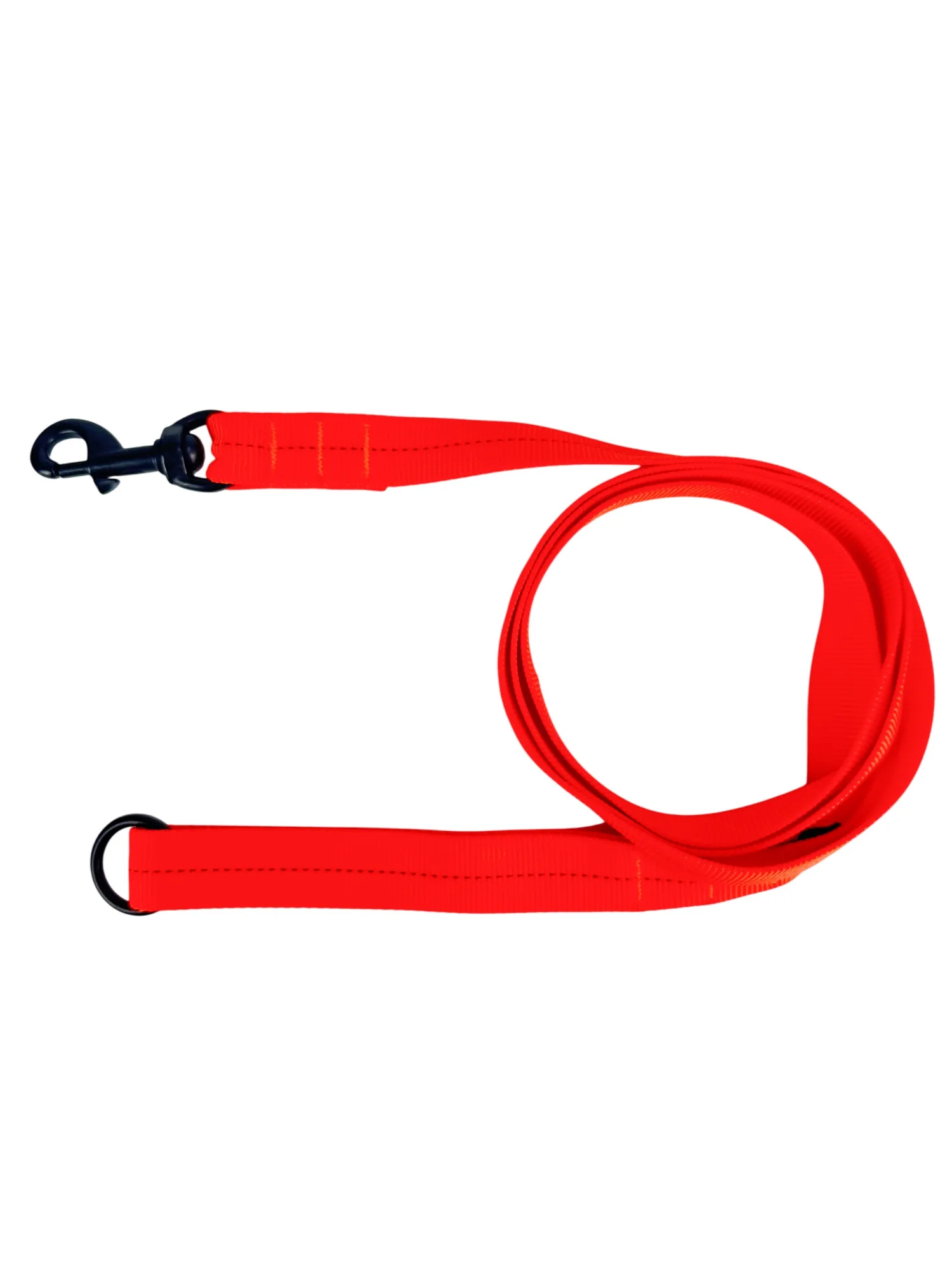
- Limited Edition Fluorescent Orange Single Ply Leash: Available in fluorescent orange, this single-ply leash is a lighter, more packable version of the trusted 1" double-ply tubular nylon leash, offering lightweight strength. Pairing a flat collar with a lightweight leash like this gives you control during on-leash practice, which is a necessary step before off-leash freedom. The bright color also improves visibility in the field.
Which Should You Choose?
Best for
- Dogs with reliable on-leash obedience who need a remote cue for off-leash recall.
- Hunters or working dog handlers who train in open fields or dense cover.
Not for
- Puppies under six months or dogs with sensitive temperaments—start with a flat collar and positive training.
Both collars have their place. A traditional flat collar is a safe, everyday choice, especially for young or sensitive dogs. An e-collar can greatly improve off-leash recall when used correctly and with proper fit. Assess your dog's readiness and training goals, then choose the tool that supports a positive, consistent training experience.