Quick answer
Most Easy Come, Easy Go stitch problems come down to tension, thread handling, or stitch direction—diagnose the symptom first, then apply the fix and know when to stop and redo.
Why the canvas itself matters
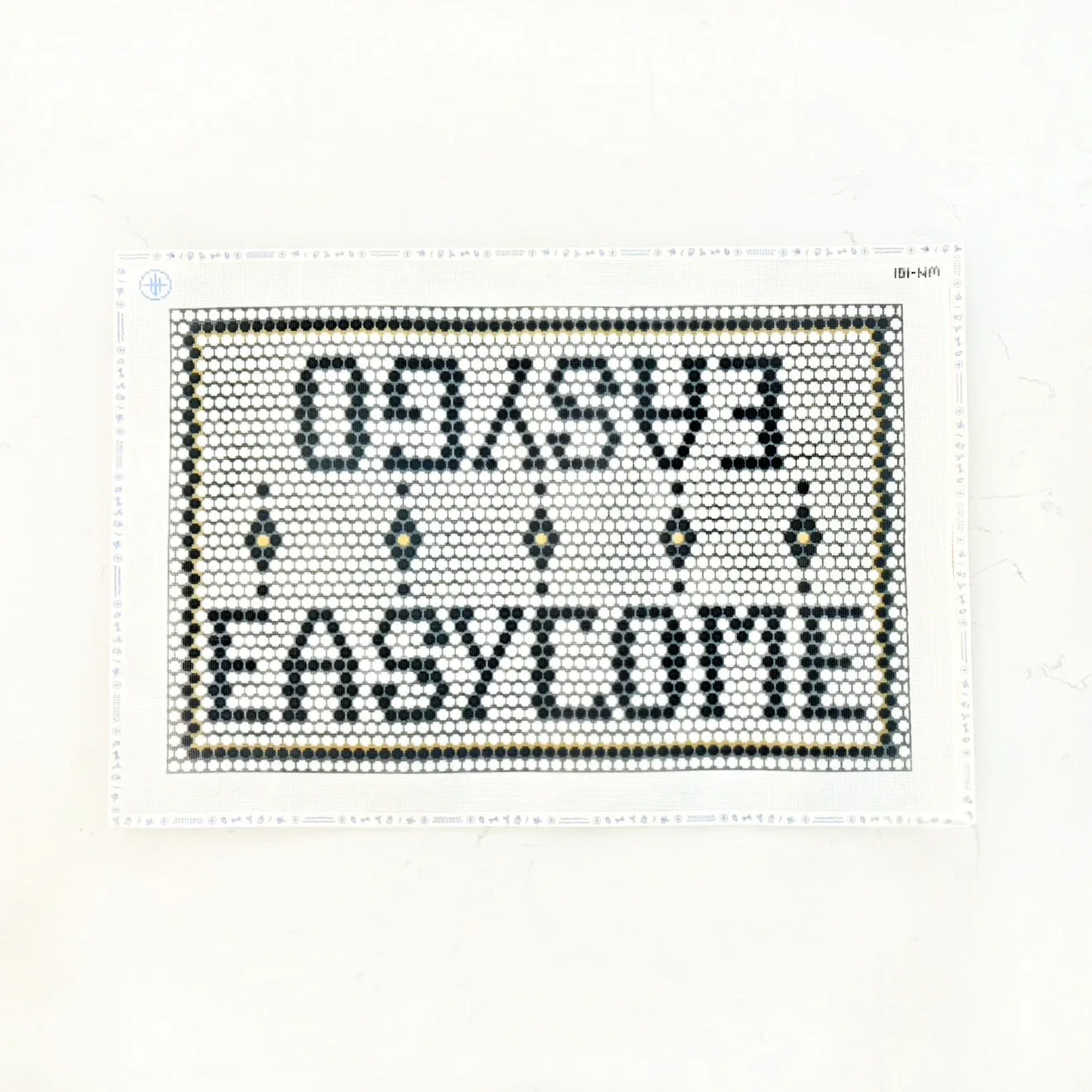
The Easy Come, Easy Go canvas is hand painted and stitch-painted on 13 mesh. That means the design is already marked, so your job is to follow the painted lines rather than count threads. When a stitch looks off, check whether the paint line guides you before you assume your technique is wrong.
Because the canvas is 13 mesh, the holes are larger than on finer canvas. This makes tension issues more visible, but it also makes corrections easier. You can often pull out a few stitches and redo them without damaging the canvas.
Diagnosis and Fixes for Common Stitch Problems
- Uneven tension: Symptom: stitches look loose or tight in patches. Likely cause: inconsistent pull or a change in how you hold the frame. Corrective action: stop, lay the canvas flat, and gently tug the loose stitches with a tapestry needle; then stitch the next rows with a steady, even pull. If the distortion persists after a few rows, remove the affected stitches and redo them with a consistent tension. Check tension every 10-15 stitches before continuing.
- Twisted or knotting thread: Symptom: thread tangles or knots form as you stitch. Likely cause: the thread twists as it passes through the canvas. Corrective action: stop, let the needle hang to untwist, and use the rail-road method (lay the thread flat with your finger) to keep plies aligned. If tangling continues, switch to a shorter thread length or a thread conditioner. Shorten your thread to about 18 inches if tangling persists.
- Uneven tension: Symptom: stitches look loose or tight in patches. Likely cause: inconsistent pull or a change in how you hold the canvas. Corrective action: work a few practice rows on scrap canvas, keep your stitch tension even, and check the back for long floats. If the canvas is stretched on a frame, confirm the tension is uniform. If the problem persists after a row, stop and redo that row before continuing. Mark the row where tension changed so you can compare before and after.
- Stitch count mismatch: Symptom: the design does not align with the painted grid. Likely cause: miscounting intersections or using the wrong mesh count. Corrective action: locate the center of the canvas and count outward from there; compare your stitches against the painted squares. If the mismatch is more than a few stitches, stop and consult the stitch pamphlet before stitching further. Stop at the first mismatch; continuing makes the error harder to undo.
- Thread tension problems: Symptom: stitches look loose or puckered. Likely cause: uneven tension while pulling the thread. Corrective action: stitch with a consistent, relaxed grip; let the thread lie flat, and check the back of the canvas after every few rows. If puckering persists, switch to a laying tool or a frame. Stop if the canvas is badly distorted — block it before adding more stitches.
- Thread wear or splitting: Symptom: thread frays, splits, or looks fuzzy. Likely cause: pulling too hard, using a dull needle, or stitching through an already pierced hole repeatedly. Corrective action: shorten your thread length, switch to a tapestry needle with a rounded tip, and avoid re-stitching the same hole. Stop if the canvas shows holes or the thread shreds beyond salvage; cut and restart that section with a fresh thread. Inspect your needle and thread before continuing; a dull needle causes most splitting.
Product fact
-
Easy Come, Easy Go: This 26” x 17” design is hand painted and stitch-painted on 13 mesh canvas. The 13 mesh count means each stitch is larger and more visible, so consistent tension matters more; mistakes show sooner and are easier to spot and correct.
Easy Come, Easy Go