Quick answer
For crisp, precise fold lines on card blanks, choose a scoring board. For adding decorative texture to paper edges before folding, use an edge crimper like the Crafter's Companion Edge Crimper.
What each tool does best
A scoring board creates a clean, indented line that guides the paper to fold exactly where you want. It's the go-to for card bases, envelopes, and any project that needs a straight, sharp fold.
An edge crimper, such as the Crafter's Companion Edge Crimper, uses recessed blades to roughen and distress paper edges. It adds texture and a worn look, ideal for vintage or mixed media designs, but it does not create a fold line.
Why you might need both
Many paper crafters keep both tools on their desk. You might use a scoring board to fold the card base, then an edge crimper to distress the outer edges for a shabby-chic finish. The two tools serve different stages of the same project.
Edge crimper vs scoring board: trade-offs at a glance
- Fold precision: Scoring board wins. It creates a sharp, straight crease every time. An edge crimper does not create a fold line at all.
- Edge texture: Edge crimper wins. It roughens paper edges for a distressed look. A scoring board has no effect on edge texture.
- Ease of use for beginners: Both are beginner-friendly. The edge crimper requires no measuring, just run it along the edge. The scoring board needs a bone folder or stylus but is straightforward after a few tries. If you only want to distress edges, start with the edge crimper. If you need to fold card bases, learn the scoring board first.
Featured product
-
Crafter's Companion - Edge Crimper: The Paper Edge Distresser Tool is designed to add texture and character to your papercraft projects by creating distressed, worn-style edges with ease. If you want a quick way to give card edges a vintage, grunge, or mixed media look without cutting through the paper, this tool delivers consistent results.
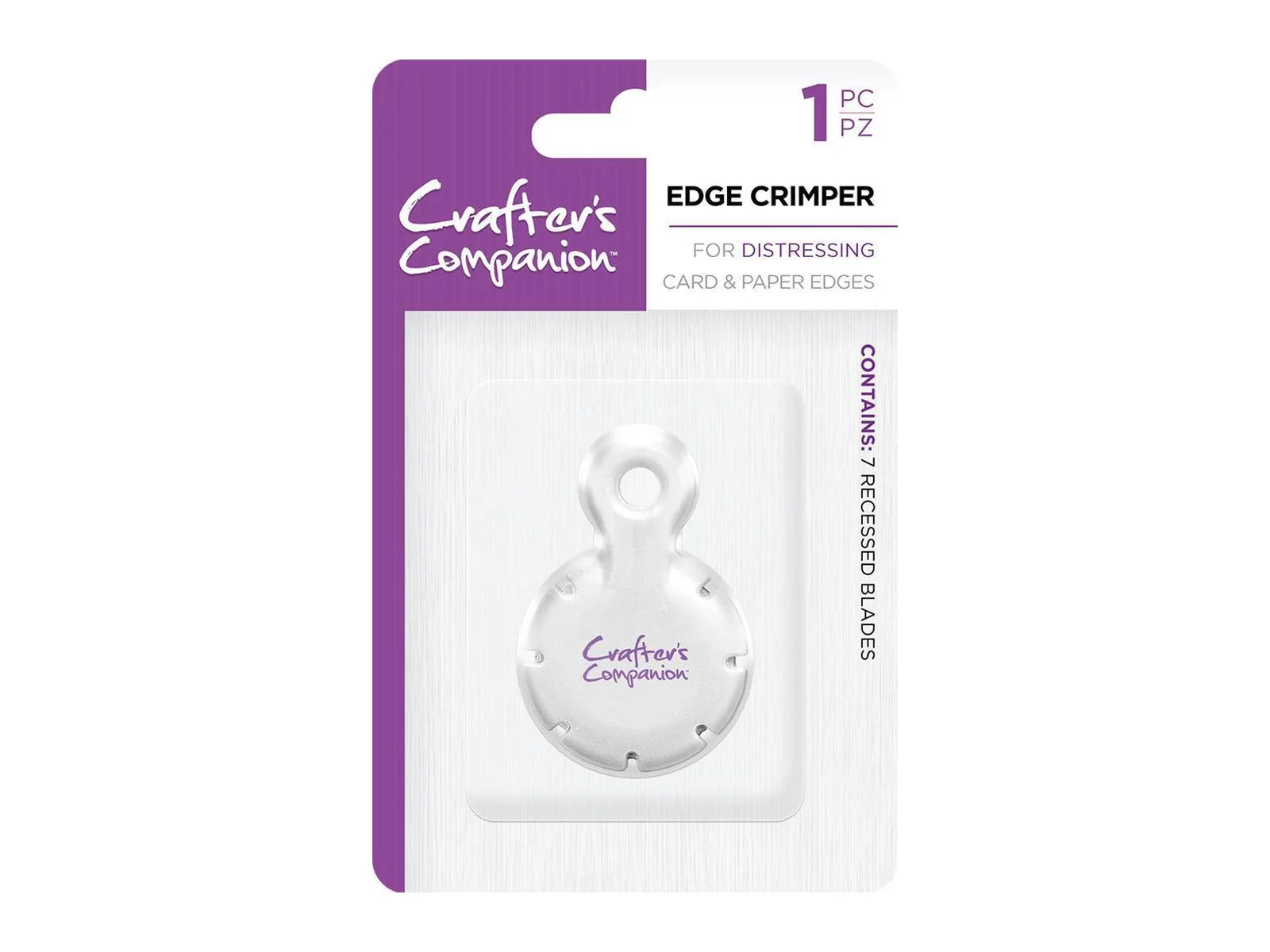
Crafter's Companion - Edge Crimper
Which tool fits your project?
Best for
- Crafters who need precise, repeatable fold lines on card blanks and envelopes
- Projects that require a clean, professional finish without edge texture
Not for
- Adding decorative, distressed edges to paper before folding
- Creating a vintage or grunge look on card edges