Quick answer
Choose the Edmund Footstool for a compact, stripe-accented companion to a sofa or bed, or the Elbert Footstool if you need a larger, button-tufted surface that doubles as a coffee table.
Size and footprint
The Edmund Footstool is described as a smart and simple footstool, making it a natural fit for smaller spaces or as an accent piece beside a sofa or at the foot of a bed. Its heritage green and warm white stripe adds pattern without overwhelming a room.
The Elbert Footstool is generously proportioned, with button-tufted upholstery and piped detailing. Its larger surface area allows it to serve as a footrest or, with a tray on top, as a coffee table. This makes it more versatile in a living room but requires more floor space.
Style and versatility
Both footstools share a sustainably sourced hardwood frame with turned legs in a timeless aged oak finish and brass castors on the Elbert. The Edmund's heritage green stripe offers a classic, tailored look that pairs well with neutral or traditional interiors.
The Elbert's natural linen and button-tufted top give it a more formal, tufted appearance. The piped detailing and brass castors add a refined touch, while the Oeko-Tex certified fabric ensures it meets rigorous textile standards.
Trade-offs at a glance
- Edmund Footstool: compact and patterned: Best for smaller rooms or as an accent piece. The heritage green stripe adds visual interest without taking up much floor space. It pairs naturally with sofas and beds.
- Elbert Footstool: large and tufted: Ideal for larger living areas where you want a footrest that can double as a coffee table. The button-tufted top and brass castors give it a more formal, traditional look.
- Consider your primary use: If you mainly need a footrest for an armchair or small sofa, the Edmund is sufficient. If you want a multi-purpose piece for a larger seating area, the Elbert's extra surface and castors make it more practical. Measure your available floor space and think about whether you'll use the footstool for seating or as a table before deciding.
Product details
-
Elbert Footstool, Natural Linen: Generously proportioned button-tufted footstool upholstered in natural linen with piped detailing, turned legs with brass castors, and Oeko-Tex certification. The larger size and tufted design make this footstool a statement piece that can also function as a coffee table, while the Oeko-Tex label confirms the fabric has been tested for harmful substances.
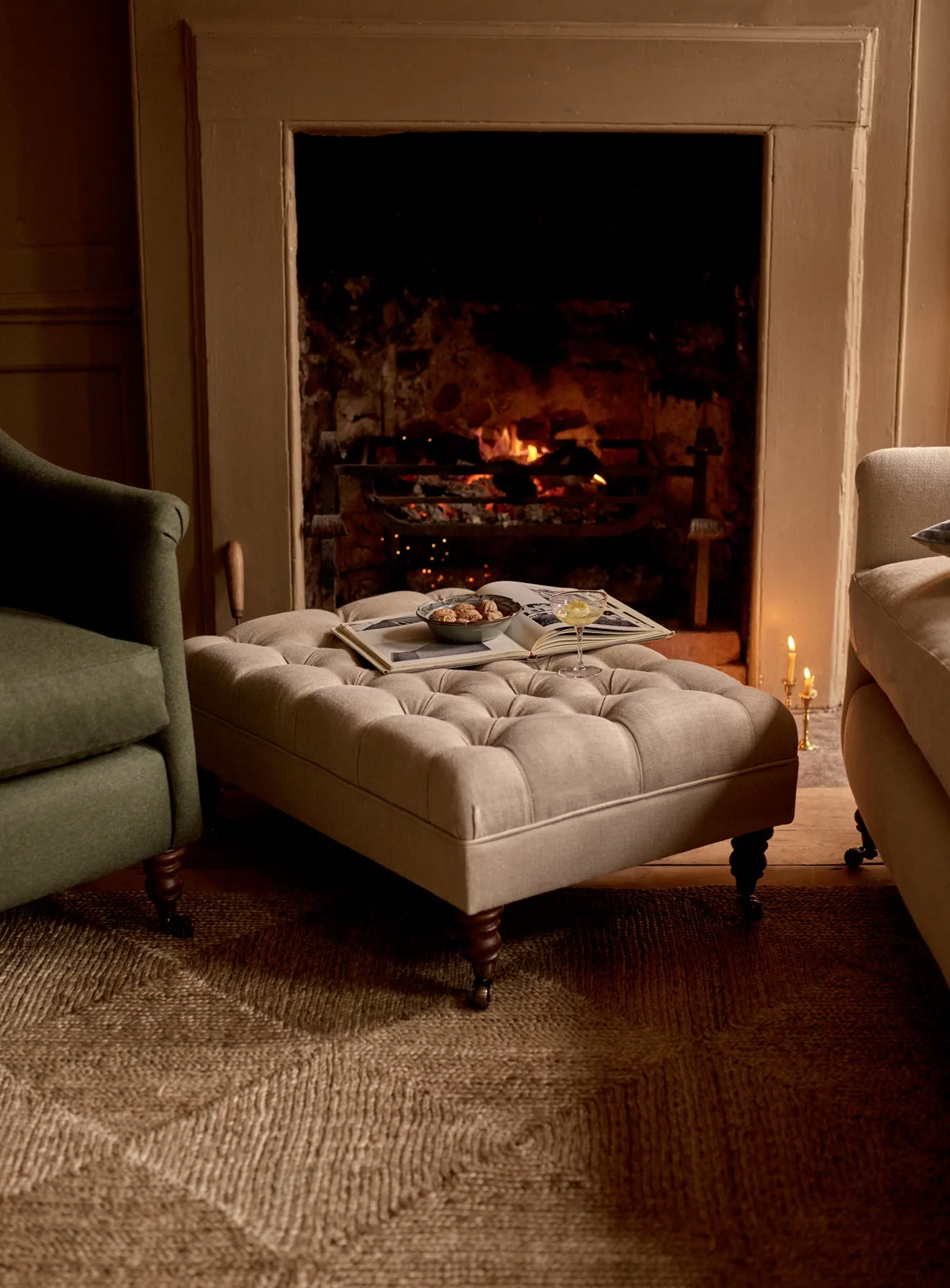
Elbert Footstool, Natural Linen
-
Edmund Footstool, Large, Heritage Green Stripe: Smart and simple footstool upholstered in heritage green and warm white stripe, with turned legs in an aged oak finish, designed to pair with sofas or sit at the foot of a bed. Its compact size and classic stripe pattern make it an easy, space-saving addition to a seating area or bedroom without competing with other patterns.
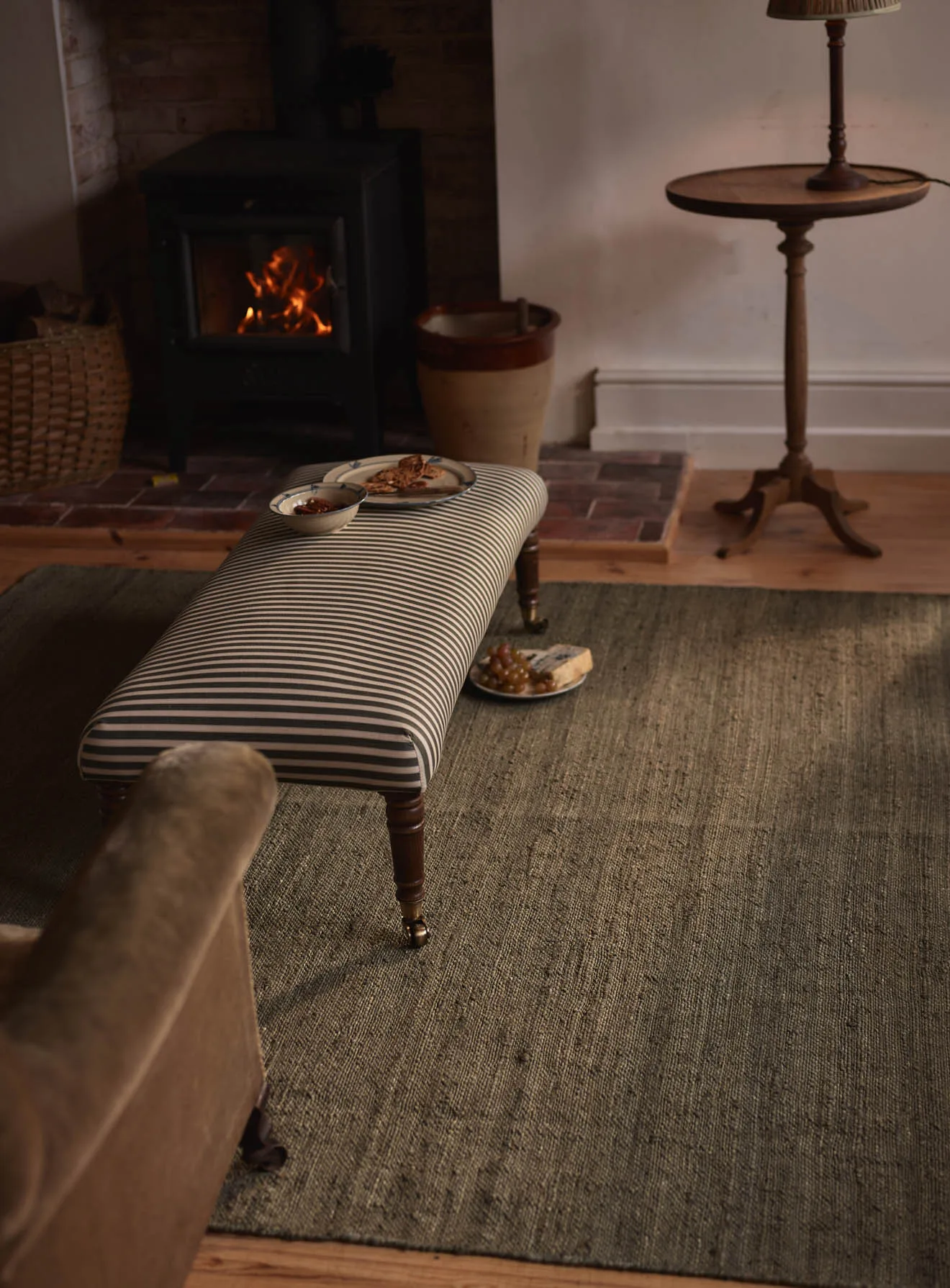
Edmund Footstool, Large, Heritage Green Stripe
Which footstool fits your home?
Best for
- Smaller living rooms or bedrooms needing a compact, patterned footstool
- Those who want a classic stripe to complement neutral or traditional decor
Not ideal for
- Large spaces where a substantial footstool is needed to anchor a seating area
- Anyone who prefers a solid-color, tufted look over a stripe pattern