Quick answer
Buy for the stage your baby is in right now, not the one you expect in six months. Match the toy's stated age range to your baby's current abilities, then check whether the format fits your space and routine. If a toy claims to cover every stage, treat that as a warning sign rather than a selling point.
Most parents buy educational toys the same way: they see a bright box, read a promising claim, and hope it lands. A few weeks later it sits untouched. The fix is not a bigger budget. It is matching the toy's format to what your baby can actually do this month.
This guide gives you decision rules for choosing developmental toys by age, plus honest trade-offs on storage, cleanup, and longevity. You will also see how a few real Nuby products fit specific stages so you can compare formats rather than guess.
Start with the stage, not the label
Age ranges on toy packaging are safety and ability guides, not marketing decoration. A toy marked 0+ months is built for batting, tracking, and mouthing. A toy marked 12+ months assumes your child can push, pull, or sit and steer. Buying above the stage usually means the toy sits in a closet; buying below it means your baby loses interest in a week.
Write down two things before you shop: what your baby does most of the day, and what they are just starting to attempt. A baby who reaches and grabs needs hanging sensory toys. A baby pulling to stand needs sturdy support. That single note eliminates half the catalog.
- Check the stated age range first, then picture your baby using it today.
- If you cannot describe how your baby would play with it, skip it for now.
Match the format to the milestone
Different milestones need different physical formats. Reaching and hand-eye coordination develop with hanging or dangling toys that reward a swipe with movement or sound. First steps develop with push-and-pull walkers that give little hands something sturdy to hold. Sitting play and early scooting develop with low, stable ride-on or foam formats that a toddler can mount without help.
This is why one toy rarely covers a whole year well. A hanging activity toy does nothing for a toddler learning to push. A walker is frustrating for a baby who cannot yet stand. Choose the format that matches the milestone you are actually in, and accept that you will buy again later.
- Reaching and grabbing: hanging or attachable sensory toys.
- Pulling up and first steps: push-and-pull walkers.
- Sitting and scooting: low ride-on or foam formats.
Weigh longevity against fit
Toys that grow with your child cost more upfront but can replace two or three single-stage purchases. A 3-in-1 format that converts from walker to scooter to caster board earns its shelf space because it stays useful across months, not weeks. The trade-off is that convertible toys are often bulkier and may not suit a small apartment.
Single-stage toys are cheaper, lighter, and easier to store, but you will replace them sooner. Neither choice is wrong. Decide based on your storage reality, not on the promise of maximum value.
- Choose convertible formats if you have floor space and want fewer purchases.
- Choose single-stage toys if storage is tight or you prefer to spend in smaller amounts.
Check materials and cleanup before you commit
Babies mouth everything, so material matters as much as function. Wooden frames offer stability for standing and pushing. Soft plush and foam are gentler on floors and furniture, and waterproof foam can be wiped clean after messy play. Fabric and plush parts usually need spot cleaning rather than a full wash.
Before buying, ask how you will clean it on a bad day. If the answer is unclear, the toy will stay dirty or stay in the closet. A quick wipe-down surface is a real advantage in a household with a crawling baby and a busy schedule.
- Wood for stability and standing support.
- Waterproof foam for easy wipe-down and softer bumps.
- Plush and fabric for sensory variety, with spot cleaning in mind.
Budget for stages, not for one hero toy
A practical approach is to spend more on the format your baby will use daily for months, and less on short-window novelty. A walker or play gym that anchors daily play justifies a higher price. A small attachable toy that lives on the stroller handle does not need to be expensive to be useful.
If you are buying a gift, choose the stage the baby is entering, not the stage they will reach next year. A toy that is slightly ahead of schedule usually gets ignored, and the parent remembers that.
- Spend on daily-use formats; save on occasional-use accessories.
- For gifts, buy for the next one to two months of ability.
Decision rules for buying educational toys
- Rule 1: Buy for the current milestone: Match the format to what your baby can do this month: hanging toys for reaching, walkers for first steps, low foam formats for sitting and scooting. If the toy requires a skill your baby has not shown yet, wait.
- Rule 2: Pay more only for daily use: Convertible or sturdy formats earn a higher price when they anchor daily play. Small attachable toys and short-window items do not need to be expensive. Ask how often it will be used in a normal week before you decide.
- Rule 3: Confirm the cleanup plan: Wood wipes or damp-cloths easily, waterproof foam wipes clean, and plush or fabric parts usually need spot cleaning. If you cannot clean it quickly, it will not stay in rotation.
- Rule 4: Check the stated age range: The age range is a safety and ability guide. Buying above it usually means the toy sits unused; buying below it means fast boredom. Treat a toy that claims to cover every stage as a caution, not a bonus.
How specific Nuby toys map to stages
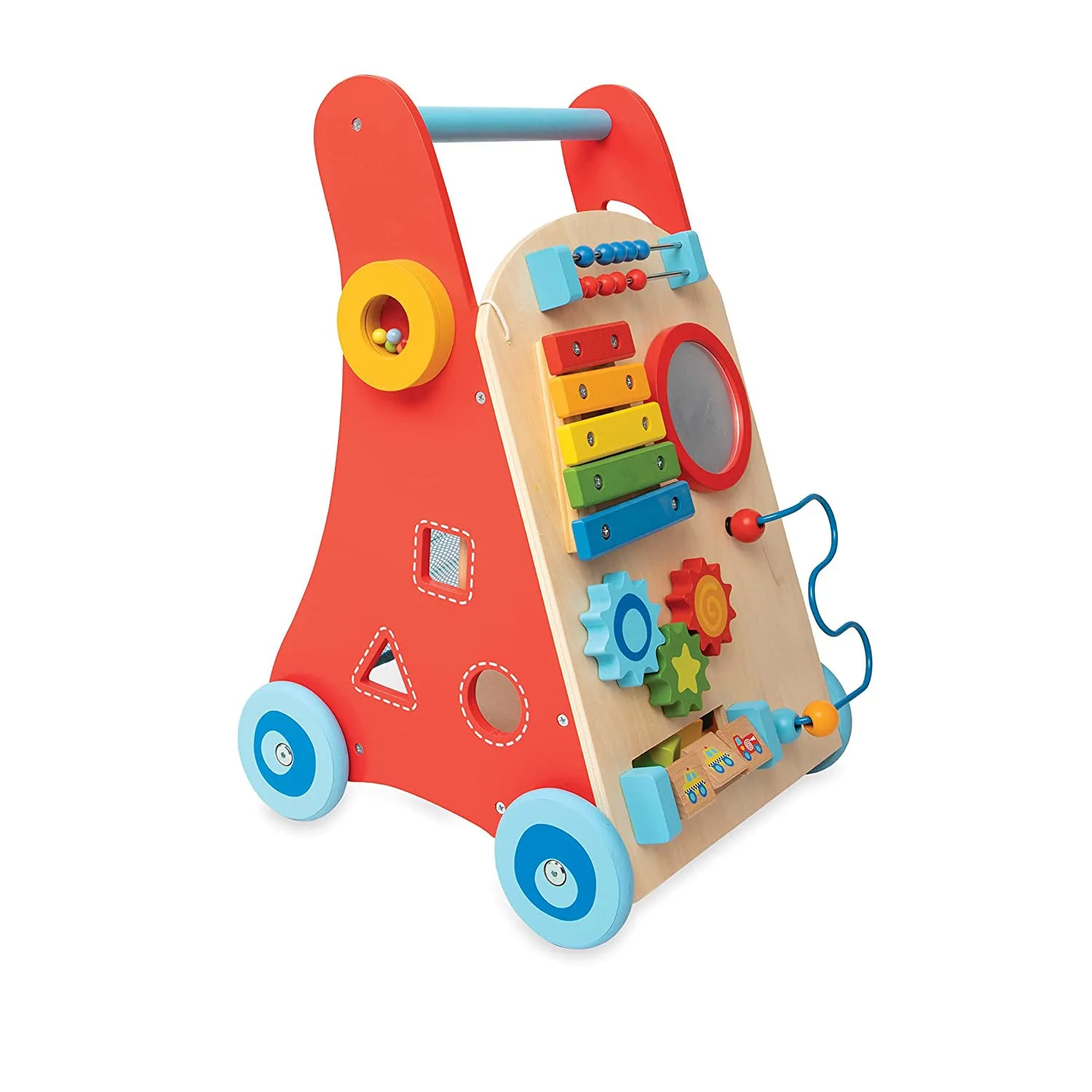
- Wooden Baby Walker: Push and pull function encourages first steps by providing sturdy support for little hands to hold on to. A strong fit for the pulling-up and first-steps stage, where stability matters more than features.
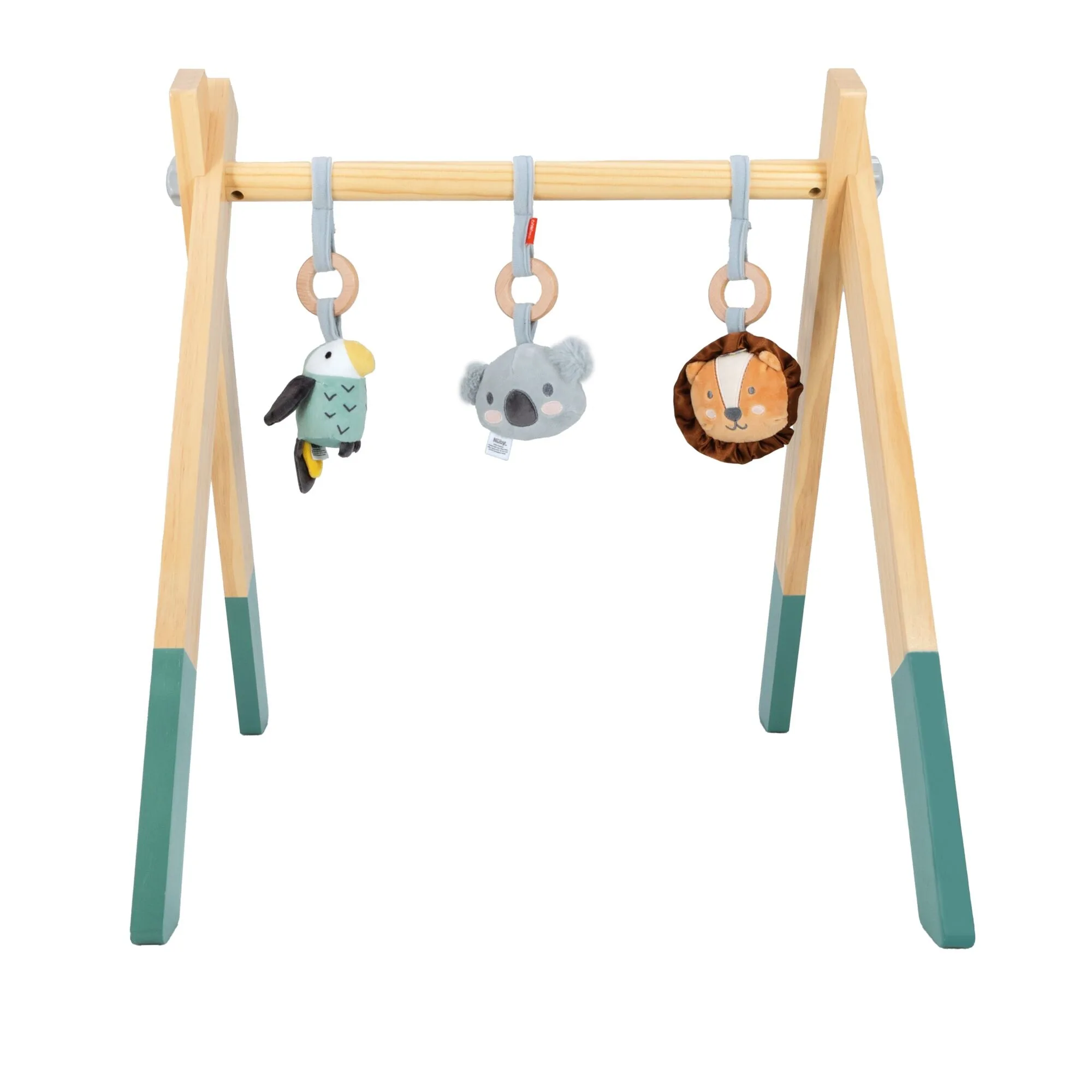
- Wooden Play Gym: Soft hanging toys include a squeaking koala, rattling parrot, and scrunching lion, and the solid wood A-frame is sturdy. Suits the reaching and grabbing stage, with varied sounds that reward a baby's swipe.
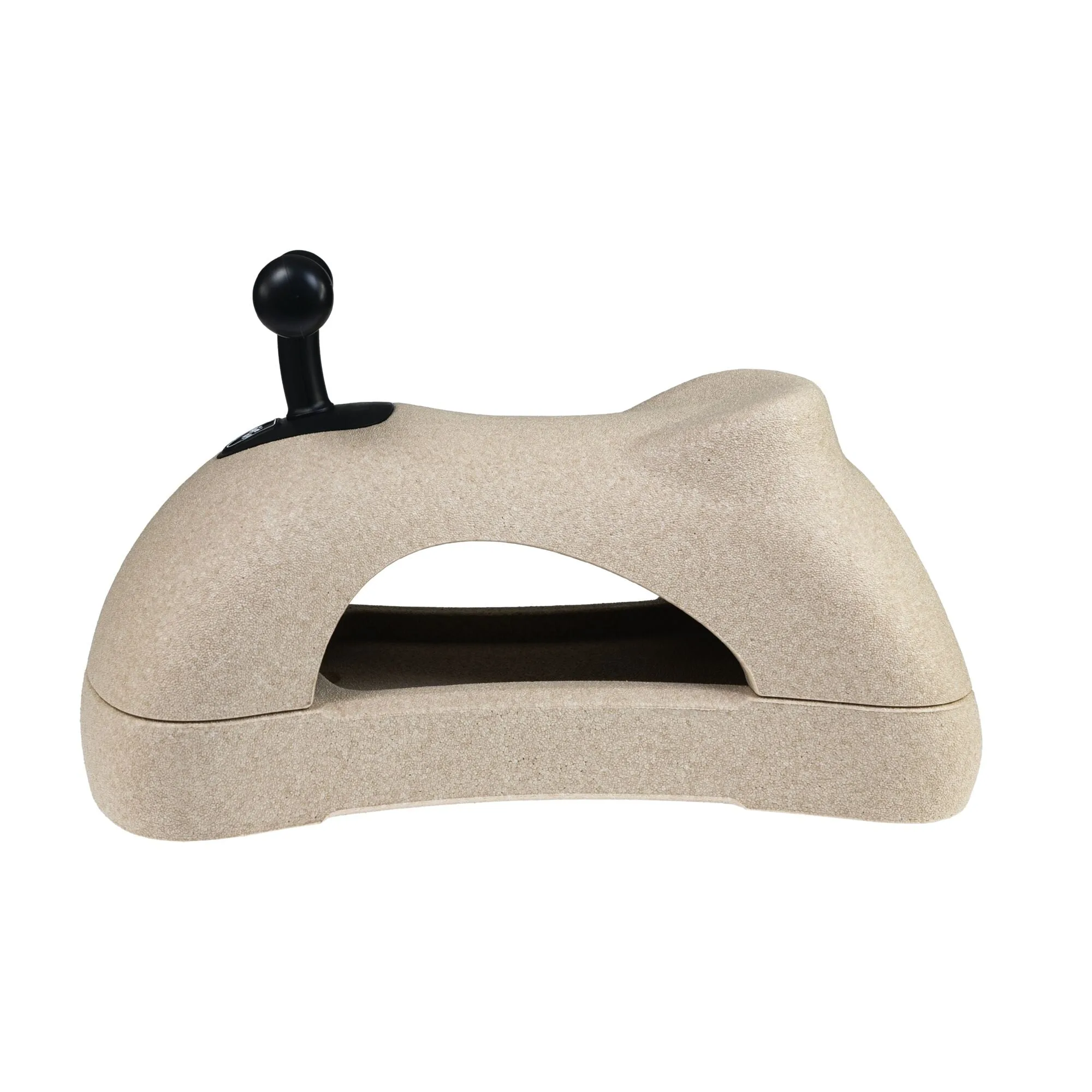
- Boogie Buggy | Beige: A 3-in-1 scooter, walker, and caster board made of waterproof EPP foam, for 12+ months. A convertible option for toddler energy that wipes clean and is soft on floors, though it takes more storage space.
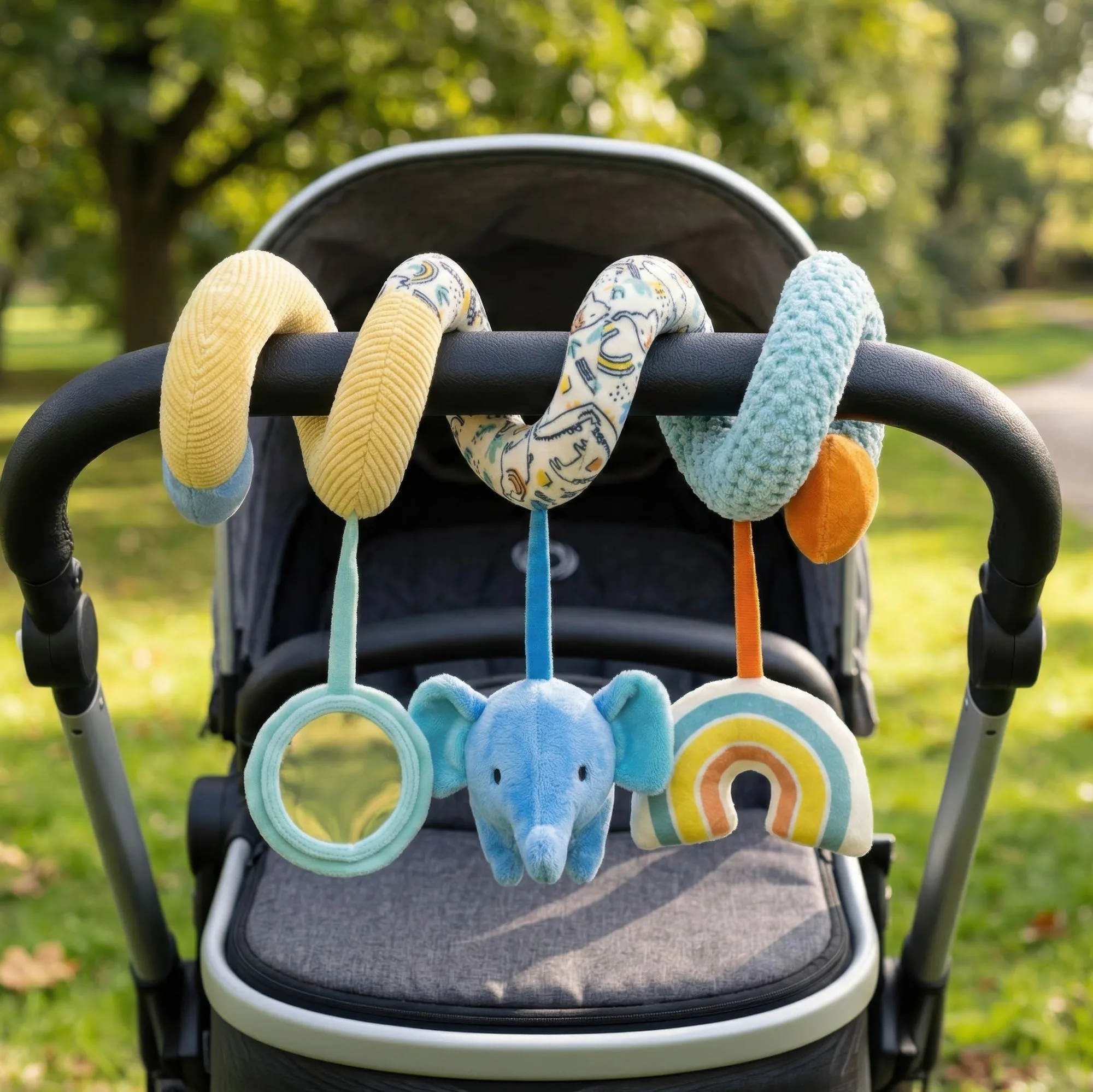
- Animal Adventures Spiral Activity Toy | Elephant: Attaches to car seats or strollers and includes three hanging sensory toys with squeaks, crinkles, and rattles, for 0+ months. A low-cost way to cover the reaching stage on the go, without taking up floor space at home.
Who this approach fits
Best for
- Parents buying one toy at a time for the stage their baby is in right now
- Gift buyers who want a toy the baby can use within weeks, not next year
- Households with limited storage that need clear format trade-offs
Not for
- Shoppers looking for a single toy to cover every stage from birth to toddler
- Parents who prefer to buy only once and never replace a toy
- Anyone unwilling to check the stated age range before purchase
Pick the format that matches your baby's current milestone, spend more only where daily use justifies it, and confirm you can clean it before it comes home. That approach beats any box claim, and it keeps your toy shelf working instead of overflowing.