Quick Answer
Emotion flashcards help kids name and understand feelings, which builds emotional vocabulary and supports speech therapy. Start with a few cards, model the words, and keep sessions short and playful.
Why emotion cards work for speech therapy
Emotion flashcards give children a concrete way to connect a word to a feeling. Seeing a realistic image of a happy or sad face helps kids label what they observe, which is the first step in using feeling words in conversation.
For children who struggle to express emotions verbally, these cards reduce the pressure to find the right word. Instead, they can point to a card, which builds confidence and encourages attempts at speech.
Trade-offs: realistic photos vs. illustrations
Real-life photos, like those on the 104 Emotions Flash Cards Set, show genuine facial expressions and contexts. This can be more relatable for children, especially when learning to read others' emotions in real situations.
Illustrated cards can feel more playful and less intimidating for younger kids, but they may miss the subtle cues found in real faces. Choose based on your child's age and comfort level.
Emotion Flash Cards FAQ
How do I start using emotion flashcards?
Begin with 3-5 cards showing basic emotions like happy, sad, and angry. Show one card at a time, say the emotion name clearly, and make the same face yourself. Ask your child to imitate the expression and the word. Start small and build up as your child gains confidence.
How often should we practice?
Aim for short, daily sessions of 5-10 minutes. Consistency matters more than length. Incorporate the cards into playtime, such as matching games or storytelling, to keep it fun. Short daily practice beats longer, less frequent sessions.
Can these cards help a child with autism?
Yes. The realistic images provide clear visual cues that can support emotional recognition and communication. Use the cards to help your child identify feelings in themselves and others, and practice appropriate responses. Use cards to create predictable, low-stress learning moments.
What if my child doesn't say the word?
Don't force speech. Let your child point to the card or make a facial expression. Praise any attempt to communicate. Over time, as they become more comfortable, they will likely try to say the word. Accept non-verbal responses as progress; speech often follows.
Product facts
-
104 Emotions Flash Cards Set for Kids Speech Therapy: This set includes 104 real-life emotion cards that teach feelings like happiness, sadness, and anger with realistic images. Realistic images help children connect the card to real-world expressions, making it easier to transfer learning to daily interactions.
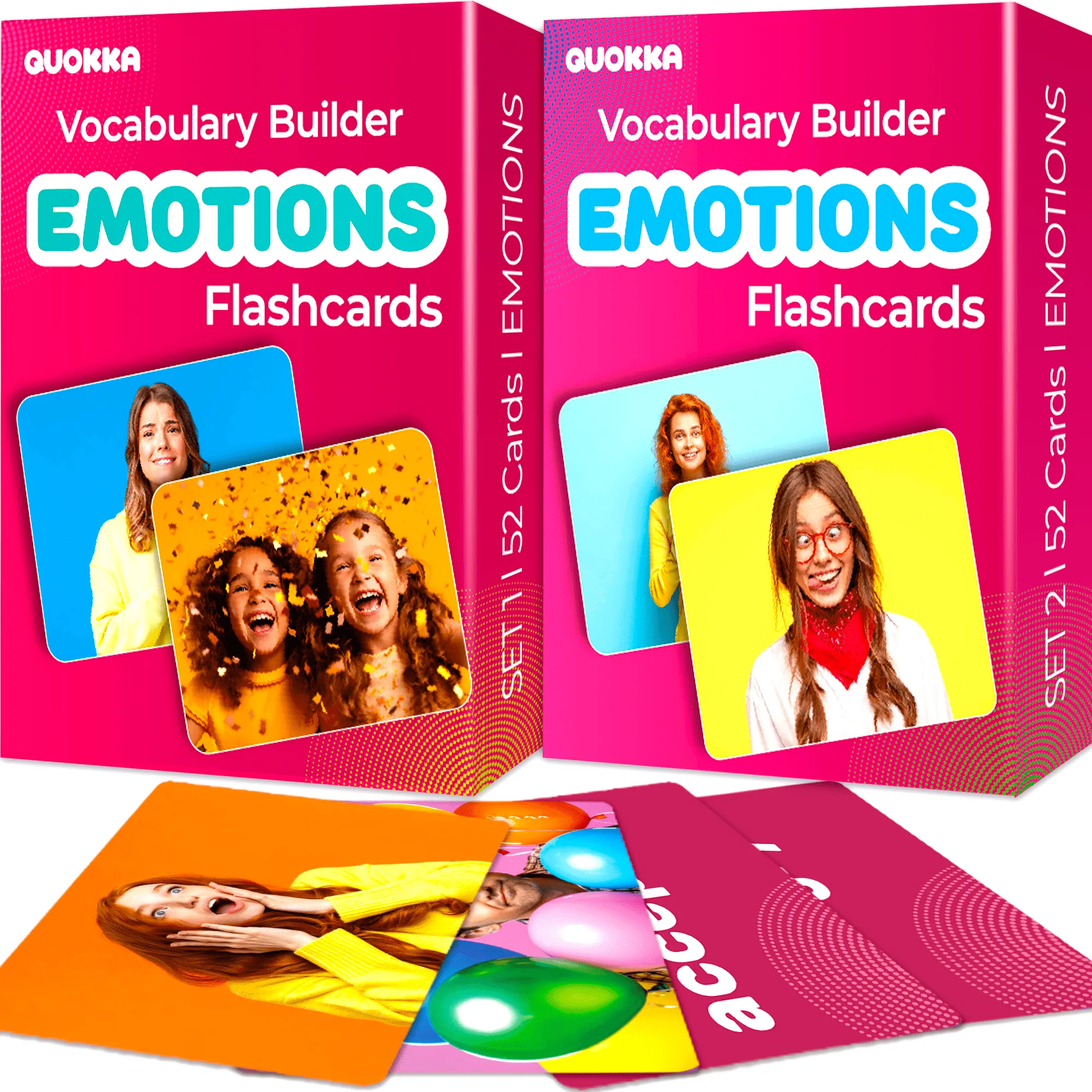
104 Emotions Flash Cards Set for Kids Speech Therapy