When you’re cooking over an open flame, the gear you choose can make or break your meal. Two of the most popular materials for campfire cookware are enamel and stainless steel. Each has passionate fans, but which one truly suits the rugged, smoky reality of outdoor cooking? In this comparison, we’ll break down the strengths and weaknesses of enamel cookware vs stainless steel so you can decide which set deserves a spot in your camp kitchen.
Whether you’re simmering a hearty stew, boiling coffee, or searing steak over coals, the right cookware matters. We’ll look at weight, heat distribution, durability, cleaning, and overall value. By the end, you’ll have a clear picture of what works best for your cooking style—and we’ll highlight some standout pieces from Barebones that combine beauty with function.
Why Material Choice Matters for Campfire Cooking
Cooking over a campfire is not like cooking on your kitchen stove. You’re dealing with uneven heat, wind, ash, and the occasional flare-up. The material of your pot, pan, or kettle directly affects how evenly your food cooks, how quickly it heats up, and how easy it is to clean afterward. Enamel and stainless steel are both popular, but they handle these challenges very differently.
Enamel cookware is made by fusing a glass-like coating to a metal base (usually steel). This creates a smooth, non-reactive surface that doesn’t leach metallic flavors into your food. Stainless steel, on the other hand, is an alloy of iron, chromium, and often nickel. It’s incredibly durable, resistant to rust, and can handle high heat without warping. But it can also develop hot spots if the pan is thin.
Weight and Portability: Enamel vs Stainless Steel
For backpackers and campers who hike to their site, every ounce counts. Enamel cookware tends to be heavier than stainless steel because of the thick glass coating and the underlying metal. A typical enamel pot can weigh 20–30% more than a comparable stainless steel pot. If you’re car camping or base camping, that extra weight is manageable. But for ultralight trips, stainless steel often wins.
That said, enamel pieces like the https://solpick.shop/products/rolled-enamelware-cup-set-117221https://solpick.shop/products/rolled-enamelware-cup-set-117226https://solpick.shop/products/rolled-enamelware-cup-set-117229Rolled Enamelware Cup Set offer a charming, vintage aesthetic that many campers love. They’re sturdy enough for daily use and stack neatly for storage. Stainless steel cookware is usually more compact and can nest inside itself, saving space in your pack.
- Enamel: Heavier but more stackable and visually appealing.
- Stainless steel: Lighter, space-efficient, and easier to pack.
Heat Distribution and Cooking Performance
Enamel cookware excels at even heat distribution because the glass coating spreads heat across the surface. This makes it ideal for simmering soups, cooking oatmeal, or making sauces without scorching. However, enamel can crack if exposed to sudden temperature changes—never put a hot enamel pot into cold water. Stainless steel, especially tri-ply or multi-clad versions, heats quickly and evenly, but thinner stainless can develop hot spots that burn food.
For campfire cooking, where you often move pots on and off the coals, stainless steel is more forgiving. You can place a stainless pan directly on hot coals or a grill grate without worrying about chipping. Enamel cookware is better suited for use over a controlled flame or on a camp stove, where you can manage heat more carefully.
Durability and Longevity: Which Lasts Longer?
Stainless steel is nearly indestructible. It resists rust, dents, and scratches. Drop it on a rock? No problem. Scrub it with steel wool? Go ahead. It will look the same for years. Enamel, while tough, is more fragile. A hard knock can chip the coating, exposing the metal underneath. Once chipped, the pot is still usable, but the exposed area may rust over time.
If you want cookware that can survive being thrown into a pack with other gear, stainless steel is the safer bet. But if you treat your gear with care and love the look of classic enamel, pieces like the Enamelware 2-Tone Dining Collection - Olive Drab can last for many seasons with proper handling.
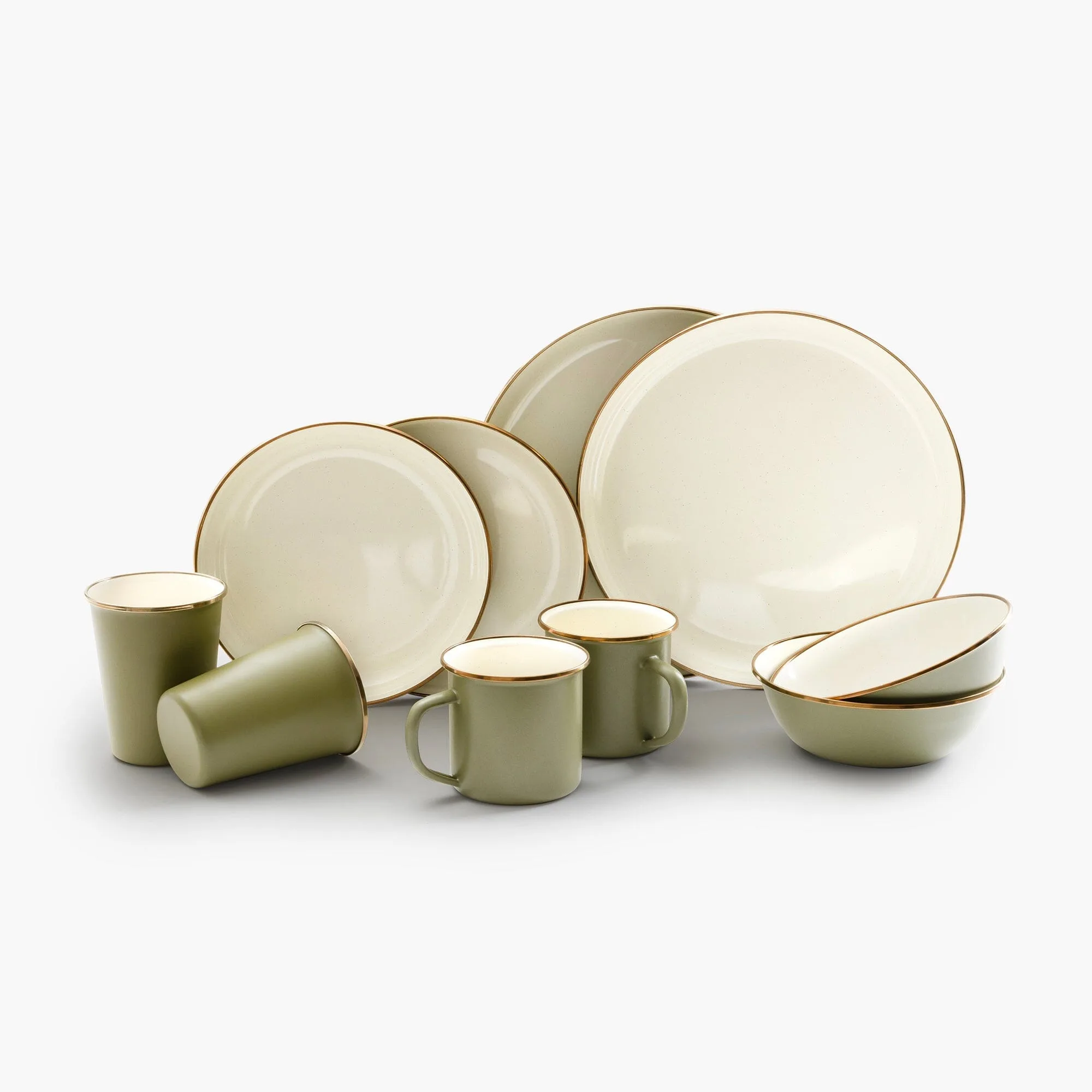
Enamelware 2-Tone Dining Collection - Olive Drab
- Stainless steel: Resists dents, scratches, and rust.
- Enamel: Can chip if dropped; requires gentle care.
Cleaning and Maintenance: Ease of Care
Cleaning campfire cookware is never fun, but some materials make it easier. Enamel’s smooth, non-porous surface resists sticking and is easy to wipe clean. A quick rinse or a gentle scrub with a soft sponge usually does the trick. Stainless steel, on the other hand, can develop stubborn burned-on food, especially if you cook at high heat. You may need to soak it or use a specialized cleaner.
That said, stainless steel can be scrubbed aggressively without damage. Enamel requires a softer touch—abrasive pads can scratch the glass coating. For campers who prioritize quick cleanup, enamel has a slight edge. For those who don’t mind a little elbow grease, stainless steel is more forgiving.
Versatility: From Campfire to Backyard Grill
Both materials work for a wide range of cooking tasks, but each has its sweet spot. Enamel is perfect for slow-cooking dishes like chili, stew, or baked beans. It’s also great for serving—many enamel pieces double as attractive tableware. Stainless steel shines for high-heat searing, boiling water quickly, and tasks that require a sturdy, non-reactive pan.
If you enjoy grilling over an open fire, a stainless steel tool like the Cowboy Grill Carving Fork is a great companion for handling meat. But for a complete cookware set that transitions from campfire to table, enamel offers a cohesive, rustic look that stainless steel can’t match.
- Enamel: Best for simmering, serving, and low-to-medium heat.
- Stainless steel: Best for high-heat searing, boiling, and durability.
Choosing between enamel cookware and stainless steel for campfire cooking ultimately comes down to your priorities. If you value even heat, easy cleaning, and timeless style, enamel is a wonderful choice. If you need lightweight, rugged gear that can handle abuse, stainless steel is the way to go. At Barebones, we offer both options built to last. For a classic campfire experience, explore our Enamelware 2-Tone Dining Collection - Olive Drab and enjoy cooking that’s as beautiful as it is functional.