Quick Answer
For browning and long-term durability, choose a stainless steel saucepan like the Bloomhouse Triply model; for effortless cleanup and low-fat cooking, the Bloomhouse ceramic nonstick saucepan is the better fit.
Heat Control and Cooking Performance
Stainless steel saucepans are prized for their responsiveness to heat changes. The Bloomhouse 3-QT Triply Stainless Steel Saucepan features an aluminum core that extends from base to rim, promoting even heating across the entire pan. This makes it ideal for tasks that require precise temperature adjustments, such as simmering sauces or searing.
Ceramic nonstick saucepans, like the Bloomhouse 3 Quart Aluminum model, excel at gentle cooking. The nonstick surface allows you to use less oil or butter, making it easier to cook delicate foods like eggs or fish without sticking. However, they are not designed for high-heat searing or browning, as that can damage the coating.
Durability and Maintenance
Stainless steel is inherently durable and resistant to warping and scratching. It can withstand high temperatures and is safe for metal utensils, making it a long-term investment for frequent cooks. The Bloomhouse Triply model also resists staining and does not react with acidic foods, so you can cook tomato-based sauces without worry.
Ceramic nonstick coatings are more delicate. They require gentle handling—wooden or silicone utensils are recommended—and can lose their nonstick properties over time if overheated. The Bloomhouse ceramic saucepan is PFA-free and offers a healthier cooking surface, but it will need to be replaced sooner than a stainless steel pan.
Cleaning and Care
Ceramic nonstick pans are a breeze to clean. Food slides off easily, and most messes can be wiped away with a soft sponge. The Bloomhouse ceramic saucepan is also dishwasher-safe, though hand washing is recommended to extend its lifespan.
Stainless steel can be more challenging to clean, especially if food sticks or burns. However, it is dishwasher-safe and can be restored with a stainless steel cleaner. The trade-off is that you may need to use a bit more oil or butter to prevent sticking, which adds to the cleaning effort.
Trade-offs at a Glance
- Browning and Searing: Stainless steel excels at high-heat browning and searing, while ceramic nonstick is not suitable for high heat.
- Ease of Cleaning: Ceramic nonstick offers effortless cleanup with minimal oil; stainless steel may require more scrubbing.
- Durability: Stainless steel is more durable and resistant to scratches and warping; ceramic nonstick coatings are more delicate and may wear over time. If you cook frequently and want a pan that lasts, stainless steel is the safer investment.
Product Facts
-
Bloomhouse 3-QT Triply Stainless Steel Sauce Pan w/ Non-Stick Non-Toxic Pro Ceramic Interior: Crafted from high-quality 18/8 stainless steel with a heat-responsive, base-to-rim aluminum core for efficient heat distribution. This ensures even heating and reduces hot spots, giving you reliable control for sauces and searing.
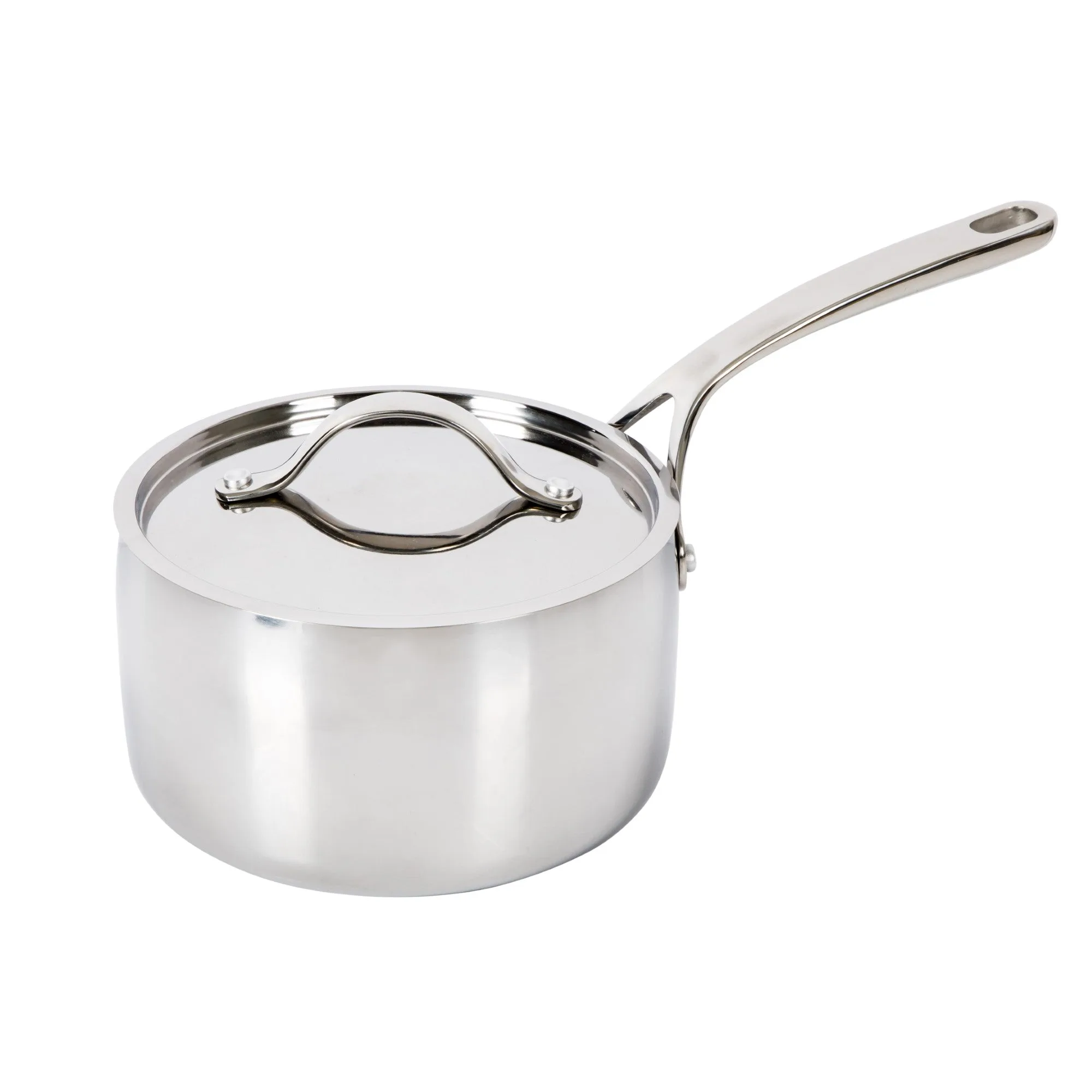
Bloomhouse 3-QT Triply Stainless Steel Sauce Pan w/ Non-Stick Non-Toxic Pro Ceramic Interior
-
Bloomhouse 3 Quart Heavy Duty Aluminum Premium PFA Free Ceramic Nonstick Saucepan with Lid - Linen White with Gold Handle: Made with a PFA-free ceramic nonstick coating and designed for optimal heat distribution and nonstick performance. This provides a healthier, low-fat cooking surface that is easy to clean, ideal for everyday use.
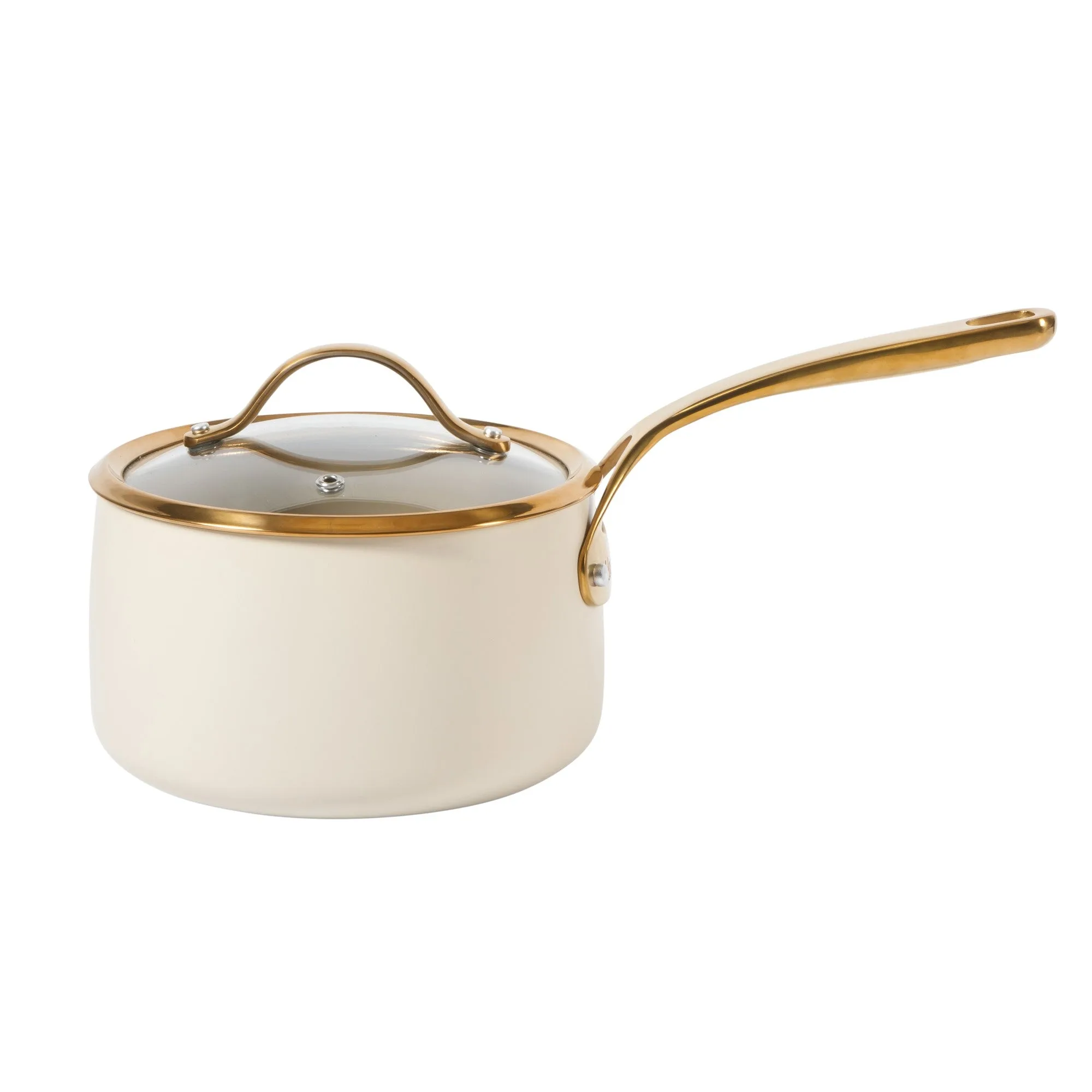
Bloomhouse 3 Quart Heavy Duty Aluminum Premium PFA Free Ceramic Nonstick Saucepan with Lid - Linen White with Gold Handle
Which Saucepan Fits You?
Best For
- Home cooks who want a versatile, long-lasting pan for browning, deglazing, and simmering
- Those who prefer cooking with less oil and want hassle-free cleanup
Not For
- Cooks who frequently use high-heat searing or need a pan that can withstand metal utensils
- Those who prioritize maximum durability and are willing to put in extra cleaning effort