Quick answer
The Enerjet by AeroTech F52-8C 2-Motor Pack (product 65214) is a single-use, composite-propellant 24mm motor pack for mid-power rockets that need a fast, high-thrust boost and an 8-second delay. Buy it if you want composite performance without assembling reload hardware and your rocket is built for an F-class motor. Skip it if you fly 18mm kits, want reloadable economics, or need a different delay time for your descent setup.
What the F52-8C designation actually tells you
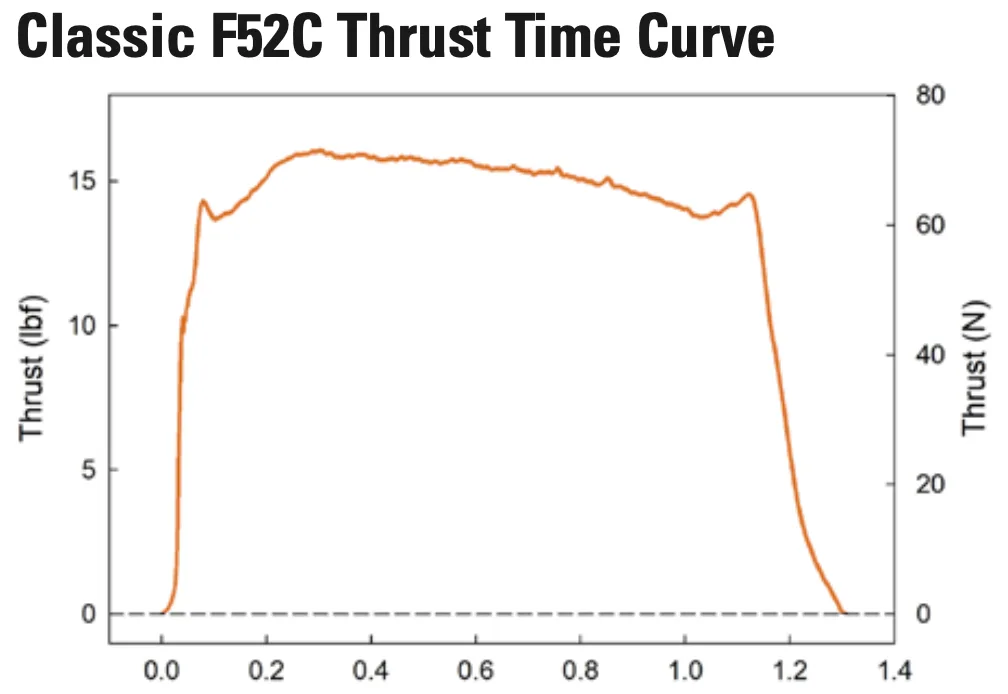
In the Enerjet/AeroTech naming system, F52-8C means: F total impulse class, 52 newtons average thrust, 8-second delay, and a C-slot or comparable composite grain configuration. The high average thrust relative to a typical F motor means the F52 pushes hard right off the pad, which suits heavier mid-power rockets or windy-day launches where you want to punch through the air quickly.
The 8-second delay is the part most flyers get wrong. Delay time is not a suggestion; it is the coast time before the ejection charge fires. A rocket that is too light or too draggy will still be climbing at 8 seconds, and one that is too heavy will be descending nose-first. Check your simulation or the motor manufacturer's recommended weight range before you commit to the pack.
These are single-use composite motors. That means no aluminum case, no O-rings, no assembly, and no cleanup beyond wiping the casing after flight. The tradeoff is that you pay per flight instead of per reload.
Why composite propellant matters for a 24mm motor
The supplied catalog facts state that Enerjet F52 motors use the same family of solid propellant as NASA's Space Shuttle Boosters, military missiles, sounding rockets, and NASA's future SLS moon rocket. That is a real technical lineage, not marketing fluff: composite propellant burns with higher specific impulse and more consistent thrust than black powder, and it tolerates temperature and age better.
The F52 also uses a patent-pending high-strength polymer case and bulkhead with a polymer nozzle. In practice, that means the casing is lighter than an equivalent aluminum reload case and you do not need to inspect or grease hardware before each flight. For a flyer who launches a handful of times a year, that simplicity is the main reason to choose this pack over an RMS reload kit.
Flight prep steps for the F52-8C
Prep starts before you leave the house. Verify your rocket's motor mount accepts a 24mm motor, confirm the rocket's all-up weight is inside the F52's recommended range, and check that your recovery system is packed for an 8-second delay. If you are flying a kit that normally uses a D or E motor, do not assume it will survive an F52; motor mounts, fins, and shock cords all see more stress.
At the pad, insert the motor fully into the mount and secure it with the retainer or friction fit your kit uses. Composite motors do not need wadding the way black powder motors do, but you still need a proper ejection charge path and a nomex or cellulose shield to protect the chute. Do not modify the delay or the ejection charge unless you have the correct tooling and experience; the F52-8C is sold as a fixed-delay motor.
After the flight, let the casing cool before handling. Composite cases stay hot longer than black powder casings. Inspect the nozzle and case for cracks or burn-through, and retire any motor that shows damage. Never attempt to reuse a single-use motor.
Where the F52-8C fits in the AeroTech lineup
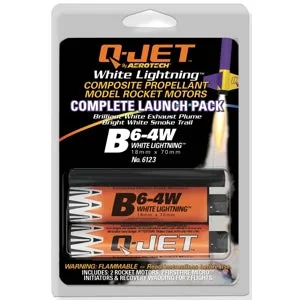
The F52-8C sits between small 18mm Q-Jet motors and reloadable RMS systems. If you want a low-cost way to fly a lot of small rockets, the Quest Q-Jet B6-4W 12-pack is the better value per flight. If you want the lowest cost per flight on bigger rockets and do not mind assembly, an AeroTech RMS reload kit plus reusable hardware is the long-term play.
The F52-8C is the middle path: more impulse than an 18mm Q-Jet, less commitment than RMS hardware, and a fixed delay that removes one variable from your launch day. That makes it a good choice for a specific rocket you fly occasionally, or for a flyer who wants composite performance without a hardware investment.
Decision rules for the F52-8C
- Rule 1: Match the delay to your rocket, not the motor: An 8-second delay suits a rocket that coasts for roughly eight seconds before apogee. If your sim shows apogee well before or after that, pick a different delay or a different motor. Simulate or check the manufacturer's weight range before buying the pack.
- Rule 2: Choose single-use if you fly rarely: The F52-8C needs no case, no O-rings, and no assembly. That convenience is worth the higher per-flight cost if you launch a few times a year. Buy the 2-pack if you want composite performance without hardware.
- Rule 3: Choose reloads if you fly often: AeroTech RMS reload kits are cheaper per flight, but you must buy compatible hardware and assemble each motor. Mid-power and high-power RMS parts do not interchange. If you fly monthly, price out an RMS case plus reloads before committing to single-use packs.
- Rule 4: Do not size up without checking the airframe: An F52 produces more thrust and ejection energy than an 18mm motor. Motor mount, fins, and recovery hardware must be rated for it. If your rocket was designed around D or E motors, verify it can handle an F before you fly.
Product facts
- Enerjet by AeroTech F52-8C 2-Motor Pack - 65214: Enerjet F52 mid-power motors are single-use composite propellant model rocket motors, and the pack contains two motors. You get two flights per pack with no hardware to buy, assemble, or clean, which lowers the barrier for a first composite motor experience.
- Quest Q-Jet™ B6-4W White Lightning Rocket Motors Value 12-Pack - Q6318: Quest Q-Jet B6-4W motors are 18mm composite motors sold in a value 12-pack, described as perfect for small groups and family rocket outings. If your goal is many low-cost flights on small rockets, this pack is the better fit than a 24mm F motor; choose the F52-8C only when you need more impulse.
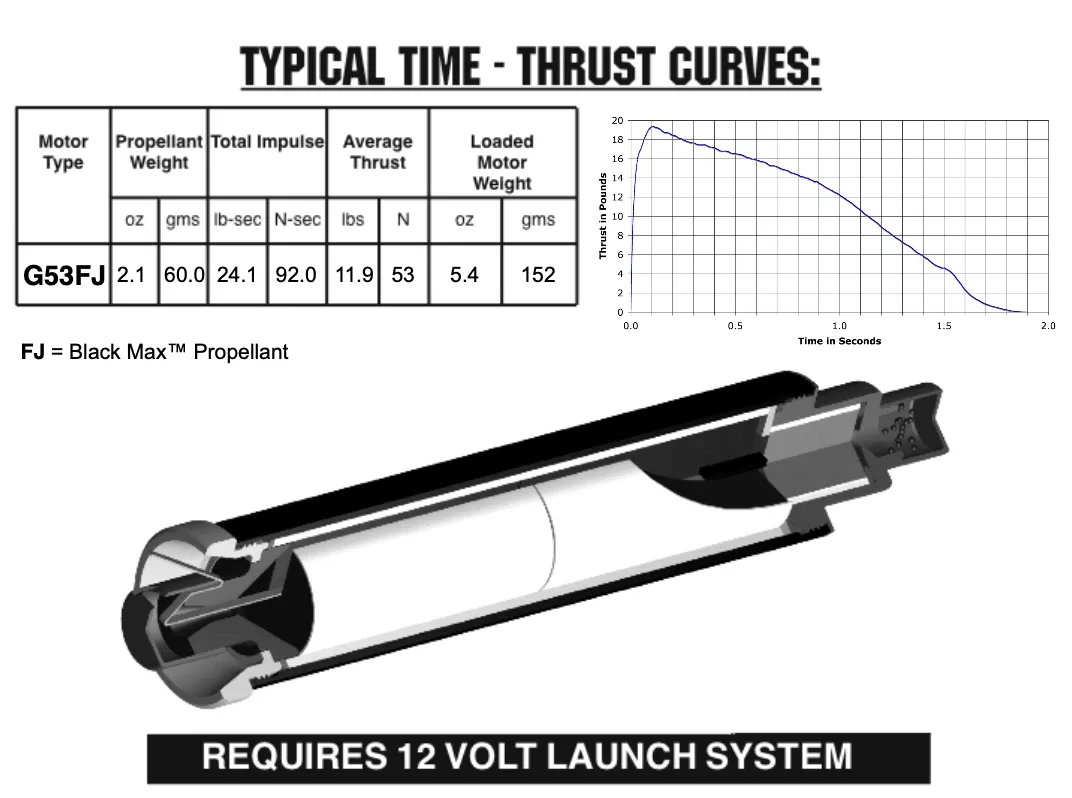
- AeroTech G53-7FJ RMS-29/40-120 Reload Kit (1 Pack) - 73307: The AeroTech G53-7FJ RMS-29/40-120 reload kit is a reloadable motor system that requires AeroTech RMS-29/40-120 motor hardware, sold separately, and mid-power RMS reloads are not compatible with high-power RMS products. Reloads lower cost per flight but add assembly steps and hardware cost, so they make sense only if you fly often enough to amortize the case.
Is the Enerjet F52-8C 2-Motor Pack right for you?
Best for
- Mid-power flyers who want composite performance without reload hardware
- Rockets that sim to roughly an 8-second coast to apogee
- Occasional flyers who value simple prep over lowest cost per flight
Not for
- 18mm kits and small field flying, where a Quest Q-Jet B6-4W pack is a better match
- Flyers who launch often and want the lowest cost per flight from AeroTech RMS reloads
- Rockets that need a different delay time or are not rated for F-class thrust