If you love making ramen at home, you know that prep work is half the battle. Slicing chashu pork, dicing scallions, julienning nori, and soft-boiling eggs all demand sharp, precise knives. A single chef’s knife won’t cut it—literally. Here’s why a focused ramen knife set of a gyuto, nakiri, and paring knife will transform your bowl-building process.
Whether you’re a Vite Ramen regular or just starting to explore Japanese knife styles, these three blades cover every task from protein to produce. Let’s break down what each does and how to choose the best knives for ramen without overspending.
Why Ramen Prep Demands Three Knives
Ramen bowls rely on a mix of textures and cuts: tender braised pork, crunchy bamboo shoots, silky soft-boiled eggs, and delicate scallion rings. Each ingredient benefits from a specific blade geometry. A gyuto handles the heavy lifting—slicing through meat and large vegetables. A nakiri excels at chopping greens and root veggies without accordion cuts. And a paring knife gives you the control needed for precise garnishes like narutomaki spirals or chili threads.
Trying to do everything with one knife leads to frustration, uneven cuts, and more time at the board. Investing in a dedicated ramen knife set saves time and elevates your presentation. Plus, having the right tool for each job makes cooking more enjoyable. And because these three knives cover 90% of kitchen tasks, you’re not buying specialty gear that sits unused.
- Start with a gyuto if you can only buy one, then add a nakiri and paring knife as your ramen game grows.
The Gyuto Knife: Your All-Purpose Workhorse
The gyuto is the Japanese version of a Western chef’s knife, with a slightly thinner blade and a flatter edge that excels at slicing and push-cutting. For ramen, it’s your go-to for slicing chashu, dicing onions, and even mincing garlic. Its curved belly also allows a rocking motion for quick chopping. Look for a blade length between 210mm and 240mm—long enough to cut through a pork belly roast in one stroke but nimble enough for smaller veg.
When selecting a gyuto, consider steel type. High-carbon stainless (like VG-10) offers a good balance of edge retention and rust resistance. A wa-style (octagonal) handle feels natural in the hand and is easy to maintain. For a high-performance option, the Zentreya Gyuto, part of the Zentreya Spicy Tonkotsu bundle, features a keen edge and balanced weight that makes chashu slicing effortless. If you prefer a more traditional profile, the Shadowbringer Knife offers a sturdy blade that can handle heavy prep day after day.
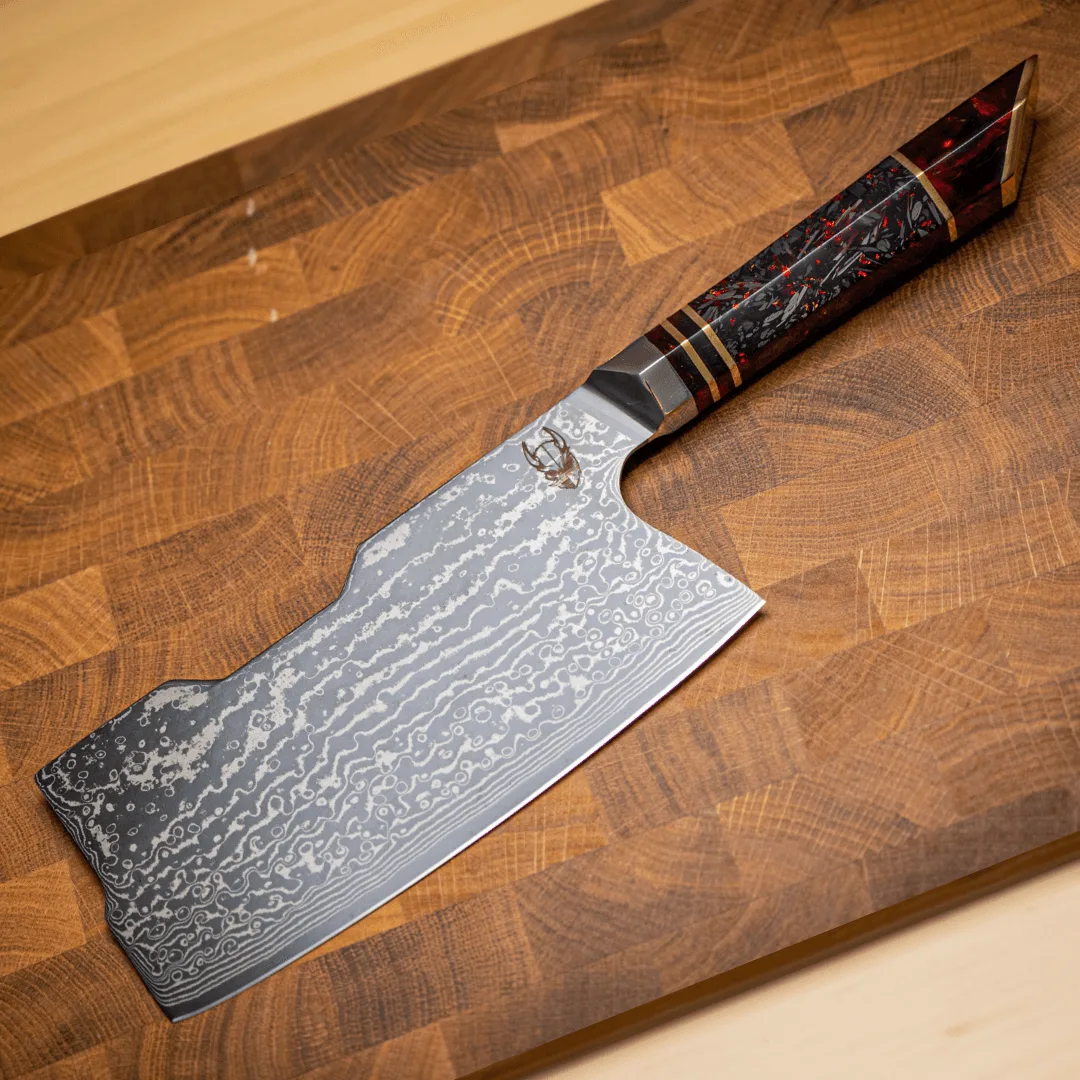
the Shadowbringer Knife
- Pro tip: pair your gyuto with a magnetic strip or saya to protect the edge between ramen sessions.
The Nakiri Knife: Vegetable Mastery
A nakiri is a Japanese vegetable knife with a straight, rectangular blade and a flat edge. Its design lets you chop, slice, and julienne without the tip getting in the way. For ramen, that means perfect batons of carrot, thin rounds of scallion, and even julienned nori. Because the edge contacts the board along its entire length, you get cleaner cuts and less crushing of delicate ingredients.
Nakiri blades are typically 165mm to 180mm long and thin, so they glide through produce. The trade-off? They’re not great for meat or hard squashes—use your gyuto for those. When shopping, check for a comfortable handle and a blade height of at least 50mm so your knuckles clear the board. A well-made nakiri will last years with proper care. And because it’s a single-purpose knife, you can focus your budget on a high-quality steel without feeling you’re missing out on versatility.
- Tip: if you prep a lot of green onions and bean sprouts for ramen, a nakiri will become your most-used blade.
The Paring Knife: Precision Garnishes
The paring knife is small but mighty. With a blade around 80-100mm, it gives you full control for delicate tasks: peeling ginger, trimming soft-boiled eggs, slicing chili rings, or carving decorative cuts from nori. For ramen, you’ll use it to remove eggshells, score fish cake, and create those tiny sesame-garnishes that make a bowl look professional.
A paring knife doesn’t need to be expensive, but it should feel nimble in your hand. Look for one with a comfortable grip and a blade that holds an edge—stainless steel is fine because you’ll sharpen it often. Since it sees less abuse than your gyuto, you can prioritize an ergonomic handle over exotic steel. And because it’s small, it’s the perfect knife to keep on a magnetic strip near your prep station for quick grabs.
- Practical advice: a plain-edge paring knife is better for fine work than a serrated version; serrations tear soft ingredients.
Putting It All Together: Building Your Ramen Knife Set
You don’t need to buy all three at once. Start with a gyuto—it’s the most versatile. Once you’re comfortable, add a nakiri to speed up vegetable prep. Then round out your set with a paring knife for garnishes. If you’re just beginning, consider a bundle like the Zentreya Spicy Tonkotsu v3.1 that includes a dedicated gyuto—it’s a great way to get a matched knife and ramen pack in one go. For an upgrade, the Shadowbringer Knife offers a premium blade that works as an excellent gyuto substitute.
Maintenance is key to keeping your ramen knife set performing. A dull knife is dangerous and ruins your prep. The VKS Sharpening Kit includes whetstones and a guide stone to restore any edge. Spend ten minutes sharpening every few weeks, and your gyuto, nakiri, and paring knife will stay razor-sharp. Also invest in a honing rod or strop for daily touch-ups. With the right tools and a little care, your knife set will outlast any ramen habit.
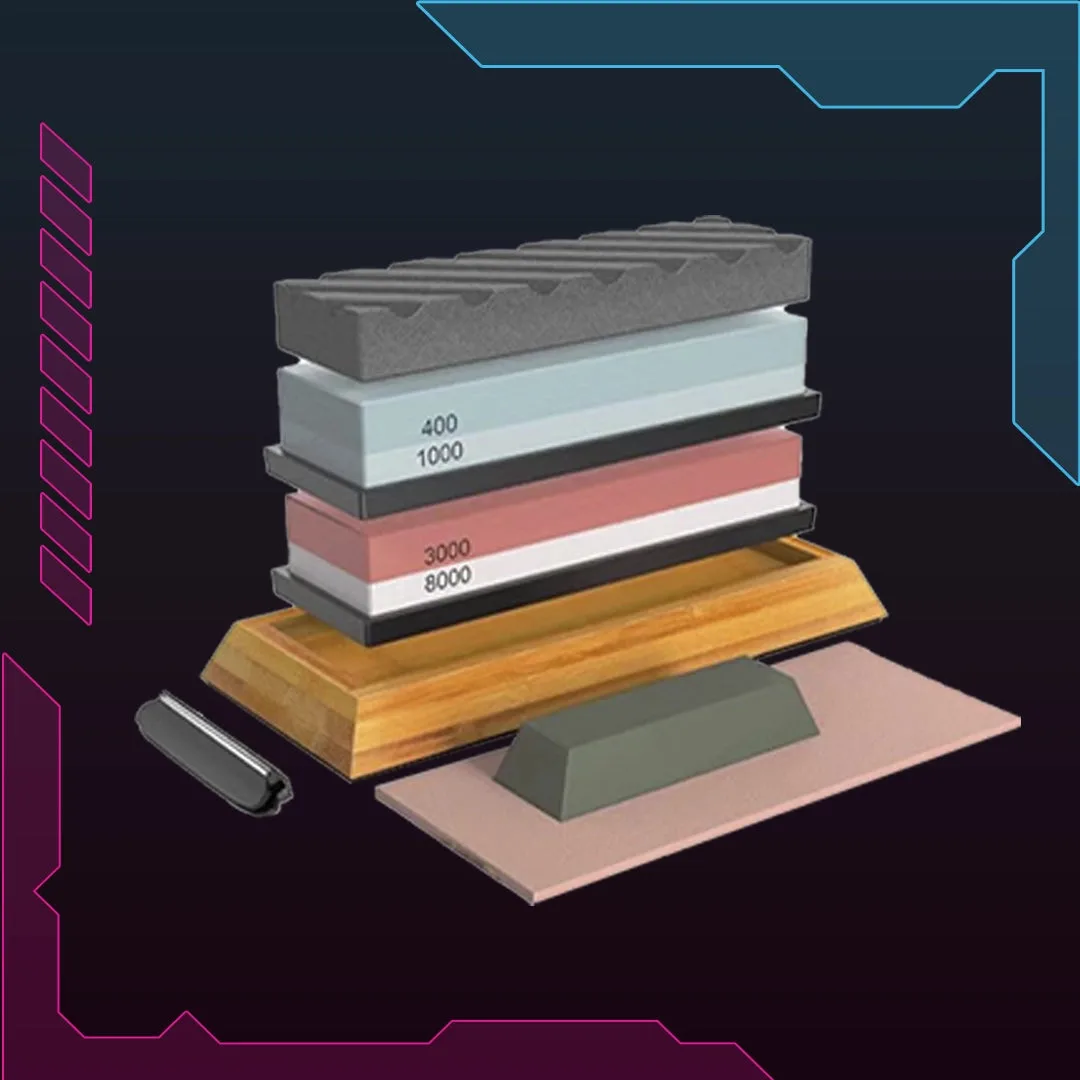
VKS Sharpening Kit
- Storage tip: store each knife in its own saya or on a magnetic strip to prevent edge damage—avoid dumping them in a drawer.
A dedicated ramen knife set doesn’t have to be complicated. Start with a quality gyuto for versatility, add a nakiri for vegetable prep, and round it out with a paring knife for fine work. Pair them with a reliable sharpening kit like the VKS Sharpening Kit to keep your edges in top shape. Your future ramen bowls will thank you.