Quick Answer
For most continuous respiratory monitoring, an ETCO2 nasal cannula that combines oxygen delivery and CO2 sampling is the practical choice. A dedicated sampling cannula is better when you need precise capnography without oxygen delivery.
Key Differences at a Glance
The main difference lies in functionality. An ETCO2 nasal cannula with oxygen delivery allows simultaneous O2 administration and end-tidal CO2 sampling through a single device. This is ideal for patients who need both oxygen therapy and capnography monitoring.
In contrast, an ETCO2 sampling cannula is designed solely for CO2 sampling. It does not deliver oxygen. This makes it suitable for patients who are not on supplemental oxygen but still require continuous carbon dioxide monitoring.
Design and Comfort Considerations
Both types typically feature curved prongs for anatomical fit and over-the-ear placement to reduce irritation and pressure sores. However, the presence of an additional oxygen line in combination cannulas can add bulk, which some patients may find less comfortable.
The McKesson ETCO2 nasal cannula includes a 7-foot O2 line and CO2 tubing with a 2-inch pigtail and female luer connectors. This dual-line design is convenient but may require more careful management to avoid tangling.
Cost and Value Trade-Off
Combination cannulas are generally more affordable. For example, the McKesson ETCO2 nasal cannula is priced at $2.51, making it a cost-effective option for facilities with high usage. On the other hand, the Salter Labs sampling cannula is priced at $99.19, reflecting its specialized design and brand reputation.
If you need both oxygen and CO2 monitoring, the combination cannula offers significant cost savings. However, if you only need sampling, the higher price of a dedicated sampling cannula may be justified by its simplicity and precision.
Decision Trade-Offs
- Functionality: Choose a combination cannula if the patient needs both oxygen and CO2 monitoring. Choose a sampling-only cannula if oxygen delivery is not required. Assess the patient's oxygen needs first.
- Comfort: Combination cannulas have extra tubing, which may be less comfortable for some patients. Sampling cannulas are simpler and may be preferred for long-term monitoring without oxygen. Consider patient comfort for extended wear.
- Cost: Combination cannulas are more cost-effective, especially for high-volume use. Sampling cannulas are more expensive but may be necessary for specific clinical requirements. Balance budget with clinical needs.
Product Facts
-
ETCO2 Nasal Cannula McKesson Adult Curved Prongs Tubing Low Flow Rate with female luers: Allows simultaneous O2 inhalation and end-tidal gas sampling with a 7-foot O2 line and CO2 tubing. This dual functionality reduces the need for multiple devices, simplifying setup and improving patient comfort.
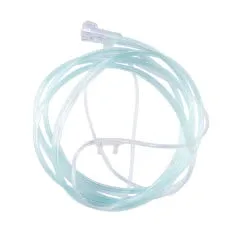
ETCO2 Nasal Cannula McKesson Adult Curved Prongs Tubing Low Flow Rate with female luers
-
ETCO2 Nasal Sampling Cannula Salter Labs® Adult Curved Prongs 7 Foot Tubing Low Flow Rate: Standard Series STAT capnography cannula with a non-flared tip, designed for reliable end-tidal CO2 monitoring. The non-flared tip ensures a secure fit and accurate sampling, which is critical for precise capnography readings.

ETCO2 Nasal Sampling Cannula Salter Labs® Adult Curved Prongs 7 Foot Tubing Low Flow Rate
Who Should Choose Which?
Best for
- Patients on supplemental oxygen who also need continuous CO2 monitoring
- Emergency departments and critical care units where dual functionality is essential
Not for
- Patients who do not require oxygen delivery and need a simple, dedicated sampling device
- Long-term monitoring when the extra tubing of a combination cannula may be cumbersome