Quick answer
Start by confirming your mattress is a standard 28 by 52 inches and that the sheet is fully tucked under all four corners. If it still rides up, the cause is usually wash temperature or dryer heat rather than the sheet itself, so switch to cold washing and low or no heat before you replace it.
Why a snug fit matters more than fabric softness
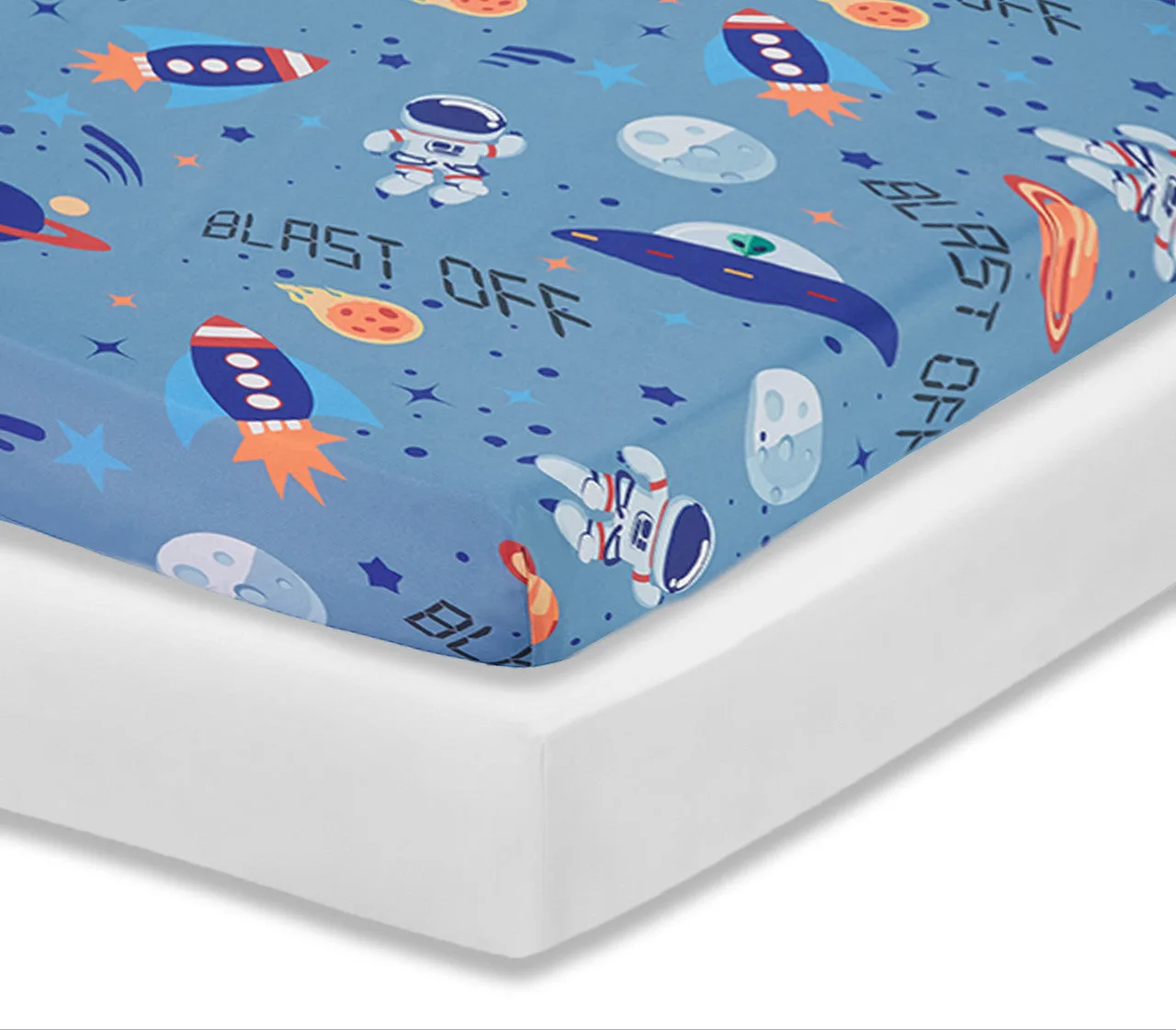
A crib sheet that pulls loose creates folds near a baby's face and can bunch under the mattress, so fit comes before feel. The EVERYDAY KIDS 2-Pack Fitted Boys Crib Sheet is cut for standard crib mattresses at 28 by 52 inches, which is the size to measure before you blame the sheet.
Softness is a secondary concern. If a sheet feels lovely but lifts at the corners after one nap, treat it as a fit problem and work through the causes below rather than layering another sheet on top.
The two-pack trade-off: rotation helps, but only if you wash both the same way
Two sheets let you rotate one on the bed while the other is in the wash, which spreads wear and keeps a clean sheet ready for night changes. The catch is that mismatched washing can make one sheet fit differently from the other.
Wash both sheets together under the same cold, gentle cycle so they shrink, if at all, at the same rate. If you only ever wash one, the spare stays stiff and slightly larger, and you may misread that as a loose-fit defect.
When the problem is the mattress, not the sheet
Some mattresses are labeled standard but measure slightly over 52 inches after a waterproof protector is added. A protector can add enough bulk that even a correctly sized sheet struggles at the corners.
Measure the mattress with the protector on. If the total is well beyond 52 inches, no standard crib sheet will stay tight, and the fix is a thinner protector rather than a different sheet.
Diagnose the fit problem in four steps
- Symptom: corners pop off during the night: Measure the mattress and any protector at the longest and widest points. If either dimension is more than about an inch over 52 by 28 inches, the mattress setup is the cause, not the sheet. Remove or swap to a thinner protector and retest before buying anything. If the mattress measures standard and the corners still pop, move to the wash check.
- Symptom: sheet fits after washing but loosens within a day: Check your last wash and dry settings. Hot water or a hot dryer cycle relaxes elastic and can shrink the fabric unevenly. Rewash on cold, gentle, and air-dry or tumble on low, then refit while the sheet is slightly damp so it settles tight. If cold washing and low heat restore the fit, keep that routine for both sheets in the pack.
- Symptom: sheet is visibly short at the corners after drying: Lay the sheet flat and compare it with the 52 by 28 inch spec. Jersey-style knits can relax back toward shape when washed cold and stretched gently onto the mattress while damp. Do not tug hard on the seams; ease each corner on in turn. If it still falls short after one cold wash and damp fitting, the sheet has likely passed its useful fit.
- When to stop and choose another option: Replace the sheet when the elastic is visibly stretched or cracked, when a cold wash and damp refit no longer hold the corners, or when the fabric has thinned enough to see light through it. At that point a fresh two-pack is the practical choice rather than more washing experiments. Retire the sheet rather than adding clips or layers, which can create a loose edge near the baby.
Product facts
-
EVERYDAY KIDS 2-Pack Fitted Boys Crib Sheet - Space/White: Fitted sheet measures 52 by 28 inches and fits standard crib mattresses. Measure your mattress first; a sheet built for this size will only stay snug if the mattress and any protector match it.
EVERYDAY KIDS 2-Pack Fitted Boys Crib Sheet - Space/White
-
EVERYDAY KIDS 2-Pack Fitted Boys Crib Sheet - Space/White: Machine wash separately in cold water with like colors on a gentle cycle, using non-chlorine bleach only when needed. Cold, gentle washing is the routine least likely to shrink or stress the elastic, which is the usual reason a fitted sheet starts to loosen.