Why a Proper Fit Matters for Your Dog's Hiking Pack
A dog backpack like the Hurtta Expedition Pack can make trail adventures easier for both of you, but only if it fits well. A poorly adjusted pack can rub, shift, or interfere with your dog's movement, turning a fun hike into an uncomfortable experience. The Expedition Pack is structured like a harness, with adjustable neckline, chest, and waist straps, plus an elastic waistband that helps keep it in place. This guide walks you through the adjustment process step by step, using the features and limits of the Expedition Pack as our reference.
Before you start, remember that the pack is designed to carry a load, but never more than 10% of your dog's weight, distributed evenly between both pockets. That limit is a safety guideline, not a target—start light and build up gradually as your dog gets used to wearing it.
Step-by-Step Strap Adjustment for the Expedition Pack
With the pack on your dog (empty at first), follow these adjustments in order. Make changes gradually and check your dog's comfort after each step.
- Loosen all straps before putting the pack on: Open the neckline, chest, and waist straps fully so the pack slides over your dog's head and shoulders without pulling.
- Position the pack on your dog's back: The padded front section should sit over the shoulders, with the pockets resting on either side of the body. The pack should feel balanced, not tilted forward or backward.
- Adjust the neckline strap: Tighten until the strap sits snugly but allows you to slide two fingers underneath. This strap keeps the front of the pack from sliding down.
- Adjust the chest strap: The chest strap should sit behind the front legs, across the chest. Tighten it enough that the pack doesn't rotate side to side, but not so tight that it restricts breathing or leg movement.
- Adjust the waist strap: The elastic, adjustable waistband should sit comfortably around the belly, behind the rib cage. It should be snug enough to keep the pack from bouncing during movement, but loose enough that your dog can breathe and move naturally.
- Check the overall fit: With all straps adjusted, the pack should stay centered when your dog walks, trots, and turns. The handle on the back should be easy to grab without pulling the pack sideways.
Expedition Pack Features That Affect Fit
-
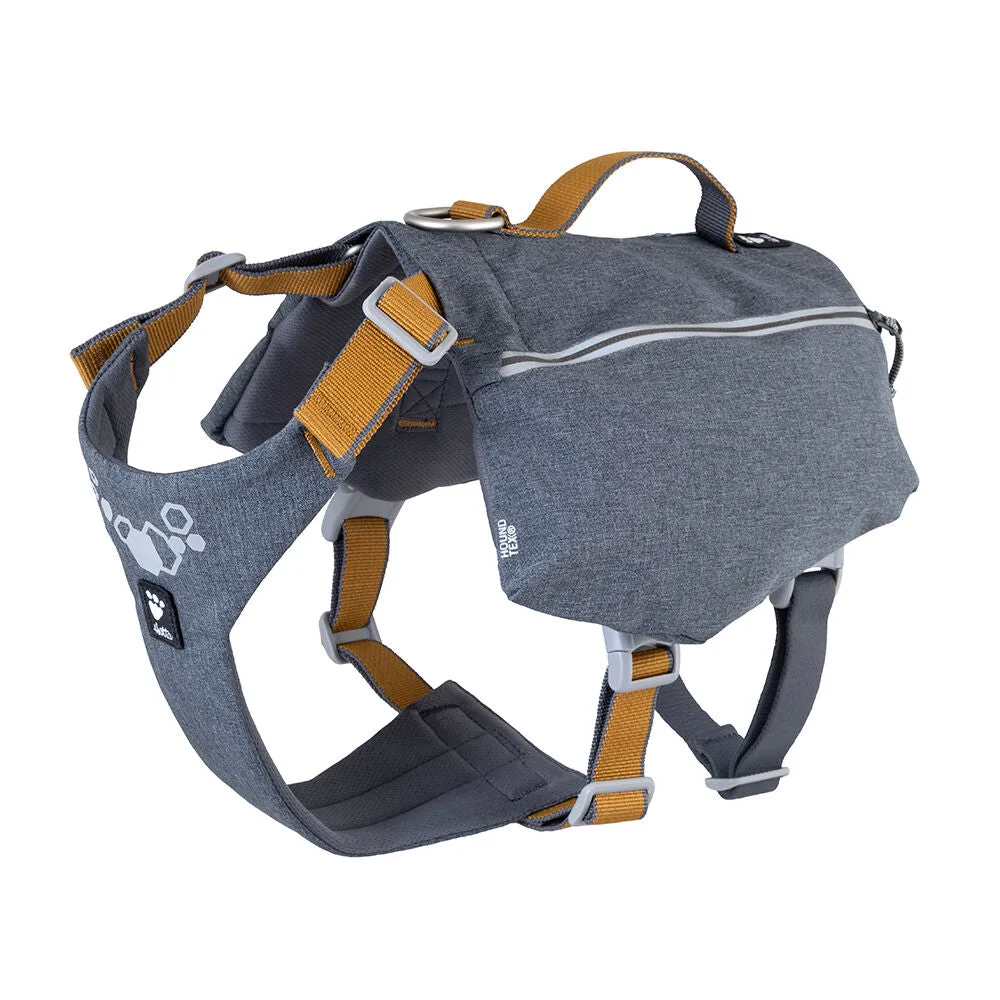
Expedition Pack: Ergonomically designed with infinitely adjustable neckline, chest, and waist straps to guarantee a comfortable and secure fit. These three adjustment points let you tailor the fit to your dog's body shape, which is essential for comfort on long hikes.
Expedition Pack
-
Expedition Pack: The elastic, adjustable waistband means the backpack stays in place even during the wildest of adventures, never interfering with movement. A stable waistband reduces bouncing and rubbing, so your dog can move freely without the pack shifting.
-
Expedition Pack: Enhanced control with a convenient handle on the back, ideal for managing your dog in challenging situations. The handle gives you a secure grip to assist your dog over obstacles or keep them close when needed.
How to Choose the Right Size Expedition Pack
The Expedition Pack comes in three sizes, each with a different total pocket volume: Size S holds 4 dl, Size M holds 10 dl, and Size L holds 20 dl. These volumes indicate how much gear your dog can carry, but the right size also depends on your dog's measurements. The size ranges (45–65, 60–80, 75–95) likely correspond to your dog's chest girth in centimeters, but always measure your dog carefully and compare to the size chart before ordering.
If your dog falls between sizes, consider the load you plan to carry and your dog's build. A larger size offers more capacity but may be too bulky for a smaller dog. The pack should sit comfortably without extending too far beyond your dog's body.
Load Distribution and Comfort Tips
Once the pack fits well, how you load it affects comfort just as much as the straps.
- Keep the load balanced: Distribute weight evenly between the two zippered pockets. An uneven load can pull the pack to one side and cause rubbing.
- Stay under 10% of your dog's weight: This is the maximum total load, not a starting point. Begin with a light load and increase gradually as your dog builds stamina.
- Pack soft items against your dog's body: Place softer items like a small towel or treats closest to your dog, and heavier items like a water bottle in the center of each pocket to reduce shifting.
- Use the integrated key loop: Secure keys or small clip-on items so they don't dangle or get lost on the trail.
- Check the reflective details: The reflective print on the front padding and reflective zippers improve visibility in low light. Make sure they aren't covered by gear.
When to Recheck the Fit
After your dog has worn the pack for a few minutes, recheck all straps. Movement and settling can loosen them slightly. Pay attention to the neckline and chest straps, which may need a small tightening after your dog starts walking. The waistband's elastic should keep it secure, but always verify it hasn't twisted.
During your hike, watch for signs of discomfort: excessive panting, reluctance to move, or trying to rub the pack off. If you notice any of these, stop and readjust. A well-fitted pack should be barely noticeable to your dog once they're used to it.