Quick answer
To fit a dog harness safely and comfortably, measure your dog's chest and neck, choose the correct size, and adjust the straps so you can slip two fingers under any part. A snug but not tight fit prevents chafing and escape.
Why proper fit matters more than style
A harness that is too loose can let your dog slip out, especially with escape-prone breeds. A harness that is too tight can rub, restrict movement, or even cause breathing issues. The right fit distributes pressure evenly across the chest and shoulders, which is especially important for no-pull training.
Small dogs and deep-chested breeds have different proportions, so a one-size-fits-all approach rarely works. Always check the manufacturer's size chart and measure your dog before buying.
Step-by-step fitting guide
- Measure your dog: Use a soft measuring tape to measure the widest part of the chest (just behind the front legs) and the neck. Record both numbers and compare them to the harness size chart. For small dogs, measure precisely—a half inch can make a big difference. Checkpoint: If your dog is between sizes, choose the larger size for comfort, but ensure the neck opening is snug.
- Loosen all straps before putting on: Unclip the harness and loosen every strap fully. This makes it easier to slide over your dog's head or clip around the chest without pulling fur or causing stress. Checkpoint: Never force a harness over your dog's head—if it doesn't slide on easily, you may need a different style or size.
- Position the harness correctly: Place the chest piece centered on the sternum, not too high on the neck or too low on the belly. The D-ring (where the leash clips) should sit on the back or front chest, depending on the harness design. Checkpoint: If the harness twists or shifts, readjust the straps before clipping.
- Tighten the straps evenly: Pull each strap snug but not tight. You should be able to slide two fingers flat under any strap. For no-pull harnesses, the front clip area may need a slightly snugger fit to stay effective. Checkpoint: After tightening, do a quick tug test—if you can pull the harness off without unclipping, it's too loose.
- Check for chafing and movement: Watch your dog for a few minutes. The harness should not rub under the armpits or restrict shoulder movement. If you see red marks or your dog tries to scratch, loosen slightly or check the fit. Checkpoint: Recheck the fit after a few walks, as straps can stretch or shift.
Product facts
-
Snake Eyes Orange Dog Harness: The Snake Eyes Orange Dog Harness is made from premium-quality nylon webbing with sewn seams for maximum strength and a soft, abrasion-resistant material for long-lasting comfort. This durable construction helps the harness hold up to daily wear and reduces the risk of chafing, so you can focus on getting the fit right rather than replacing gear.
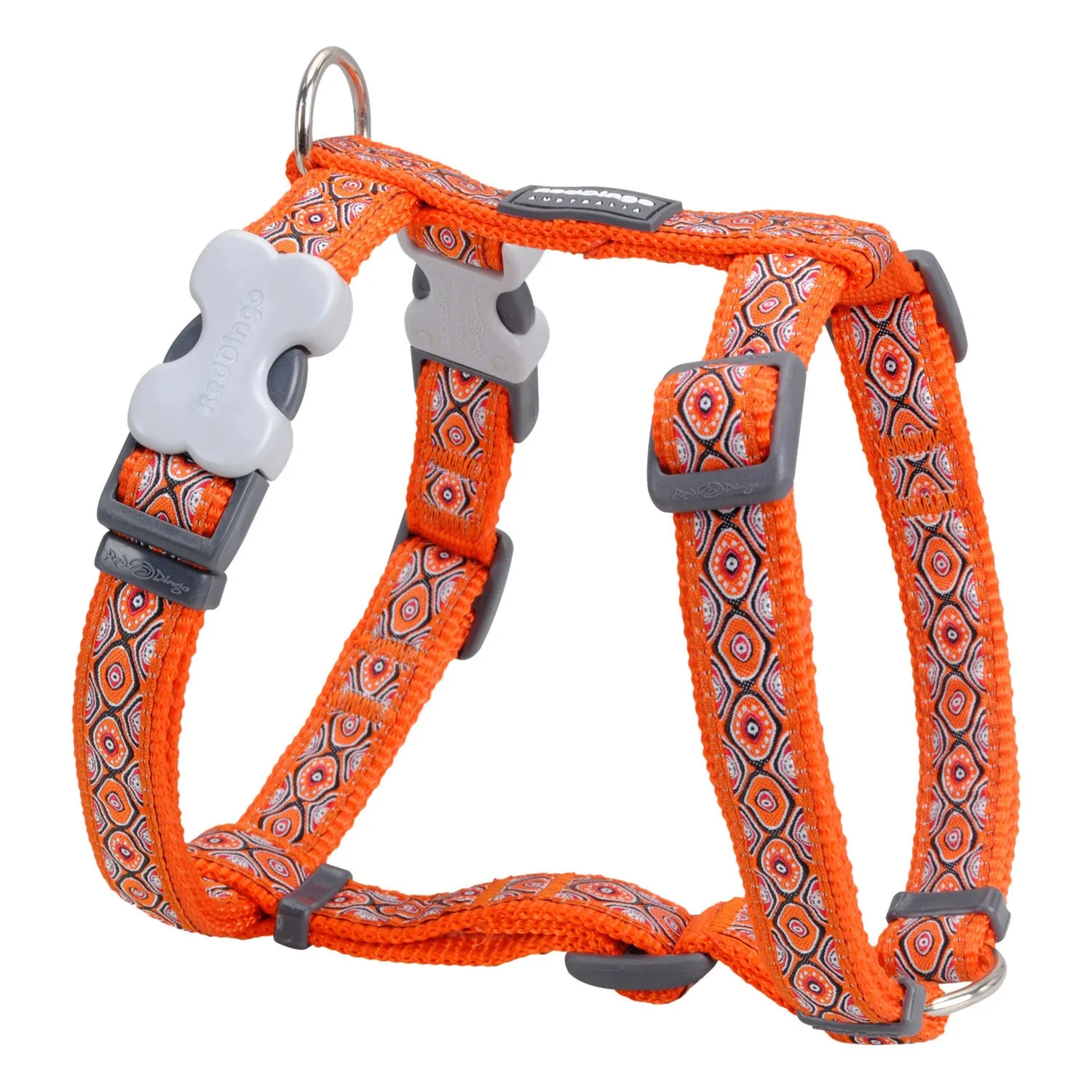
Snake Eyes Orange Dog Harness