Quick answer
You need an external amplifier when your loudspeakers demand more clean power than your receiver or integrated amp can deliver, or when you want lower distortion and better bass control at realistic listening levels. Match amplifier power to your speaker's sensitivity and your room size first, then check impedance compatibility. For most listeners, a high-current stereo amplifier rated around 100–200 watts per channel into 8 ohms, doubling into 4 ohms, is the sweet spot.
If your system sounds thin, strained, or compressed when you turn it up, the amplifier is usually the bottleneck, not the speakers. An external amplifier buying guide should start with one question: what does your loudspeaker actually ask for?
This guide walks through the practical decisions—power, impedance, room size, and budget—so you can choose an amplifier that fits your speakers and your listening habits, without guessing.
When an external amplifier makes sense
An external amplifier is worth it when your speakers are inefficient, your room is large, or you listen at high volumes and hear compression or harshness. It also helps when your current receiver lacks preamp outputs or when its amplifier section is the weak link in an otherwise good system.
If you already own a quality integrated amplifier with enough power for your speakers, adding a separate amp may not change much. The upgrade pays off when the speaker genuinely needs more current or when you want the lower distortion and higher damping that a dedicated power amplifier can provide.
- Check whether your receiver or integrated amp has preamp outputs before shopping for a power amplifier.
- If your speakers are rated below 88 dB sensitivity, plan for more power than you think you need.
Power, impedance, and what actually matters
Amplifier power is not about loudness alone; it is about headroom. A speaker rated at 86 dB sensitivity needs roughly twice the power of a 89 dB speaker to reach the same level. That is why two amplifiers with the same wattage can behave very differently in real rooms.
Impedance matters just as much. A speaker that dips to 4 ohms or lower demands an amplifier that can deliver current without strain. An amplifier that doubles its power into 4 ohms is a strong sign it can handle difficult loads, because it maintains voltage and current as impedance drops.
- Look for power ratings into both 8 ohms and 4 ohms, not just one number.
- A 4-ohm rating that is double the 8-ohm rating indicates a robust power supply.
How to choose an amplifier for your room and speakers
Start with room size. In a small room at moderate levels, 50–100 watts per channel into 8 ohms is often plenty. In a large room or at high levels, 200 watts per channel or more gives you the headroom to avoid clipping, which is the main cause of tweeter damage and harsh sound.
Next, consider your speaker's impedance curve. If it drops below 4 ohms, prioritize an amplifier with high current delivery and a strong power supply. If your speaker is 8 ohms and efficient, you have more flexibility and can focus on sound quality and features.
- Match amplifier power to the speaker's sensitivity and your typical listening distance.
- If you listen nearfield at low levels, you can prioritize quality over raw wattage.
Stereo vs. mono, and when to add a subwoofer
Stereo amplifiers power both channels from one chassis, while monoblocks give each channel its own amplifier and power supply. Monoblocks can offer better channel separation and more power, but they cost more and take up more space. For most systems, a high-quality stereo amplifier is the practical choice.
Adding a subwoofer changes the equation. When you cross over low bass to a dedicated subwoofer, your main amplifier no longer has to deliver deep bass, which reduces demand on the amp and the speakers. This can make a moderate-powered amplifier perform like a much larger one.
- If you plan to add a subwoofer, choose an amplifier with enough power for your speakers above the crossover point.
- A sealed or ported subwoofer with flexible crossover controls integrates more easily with main speakers.
Decision rules: match your amplifier to your speakers
- Speaker sensitivity below 88 dB: Choose an amplifier with at least 200 watts per channel into 8 ohms and a 4-ohm rating that doubles that figure. Low-sensitivity speakers need current and headroom to sound dynamic. Prioritize high current over feature count.
- Speaker impedance dips below 4 ohms: Look for an amplifier that explicitly doubles its power into 4 ohms and has a robust power supply. This indicates it can deliver current without strain. Avoid amplifiers that only list an 8-ohm rating.
- Large room or high listening levels: Aim for 200 watts per channel or more into 8 ohms. In a large room, headroom prevents clipping, which protects your speakers and keeps the sound clean. If you are unsure, more power is safer than less.
- Small room or nearfield listening: 50–100 watts per channel into 8 ohms is usually sufficient. You can focus your budget on sound quality and build rather than raw wattage. Spend on quality, not excess power.
- Adding a subwoofer: A subwoofer takes over deep bass, reducing demand on your main amplifier. This can let a moderate-powered amplifier drive your speakers more cleanly. Consider a subwoofer before upgrading to a larger amplifier.
PS Audio amplifiers and subwoofers that fit these rules
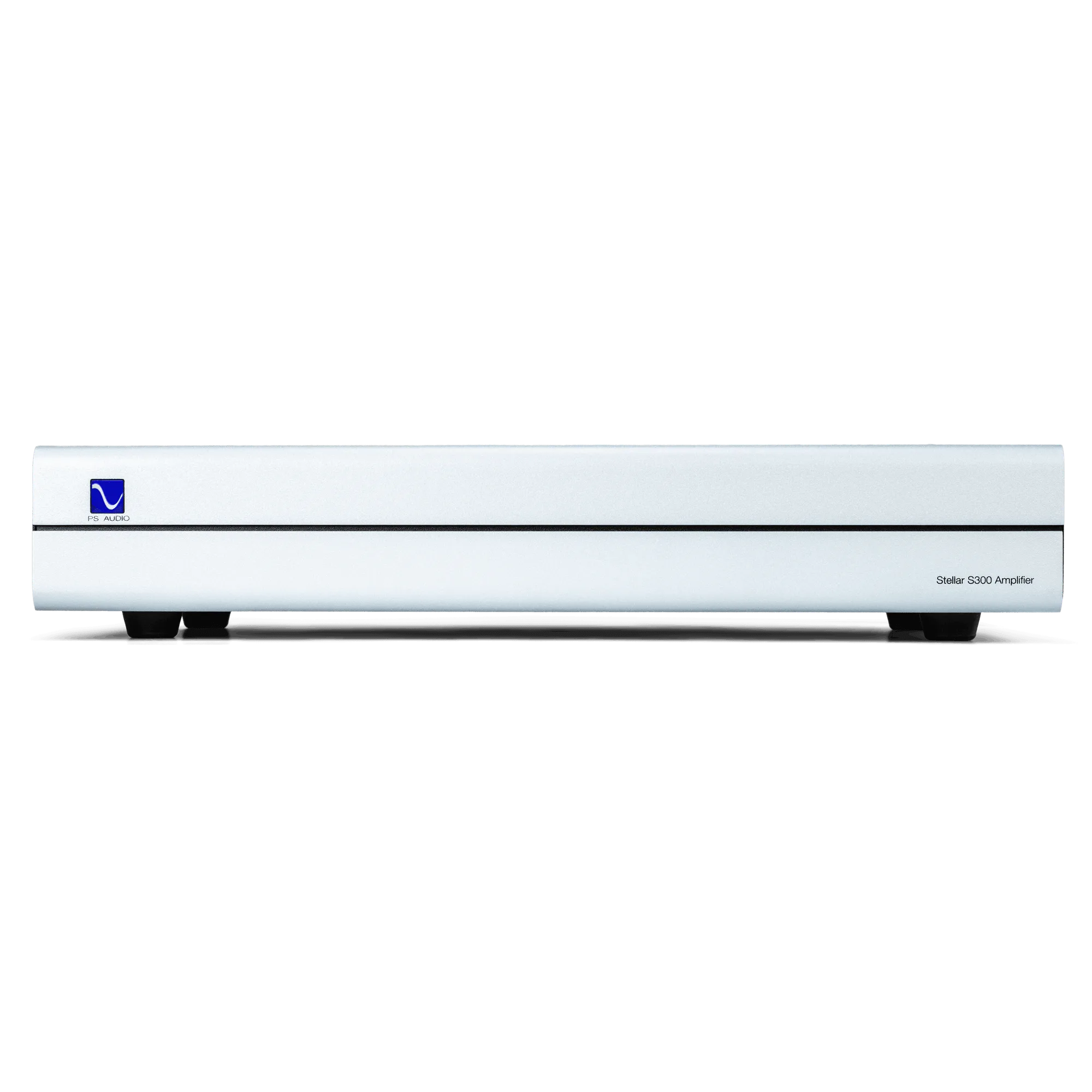
- S300 Amplifier: From the deepest bass to the warmest, sweetest highs, the Stellar S300 makes any loudspeaker sing and is our most affordable stereo power amplifier ever. A strong entry point if you want an external amplifier without a large outlay, and it works with a wide range of speakers.
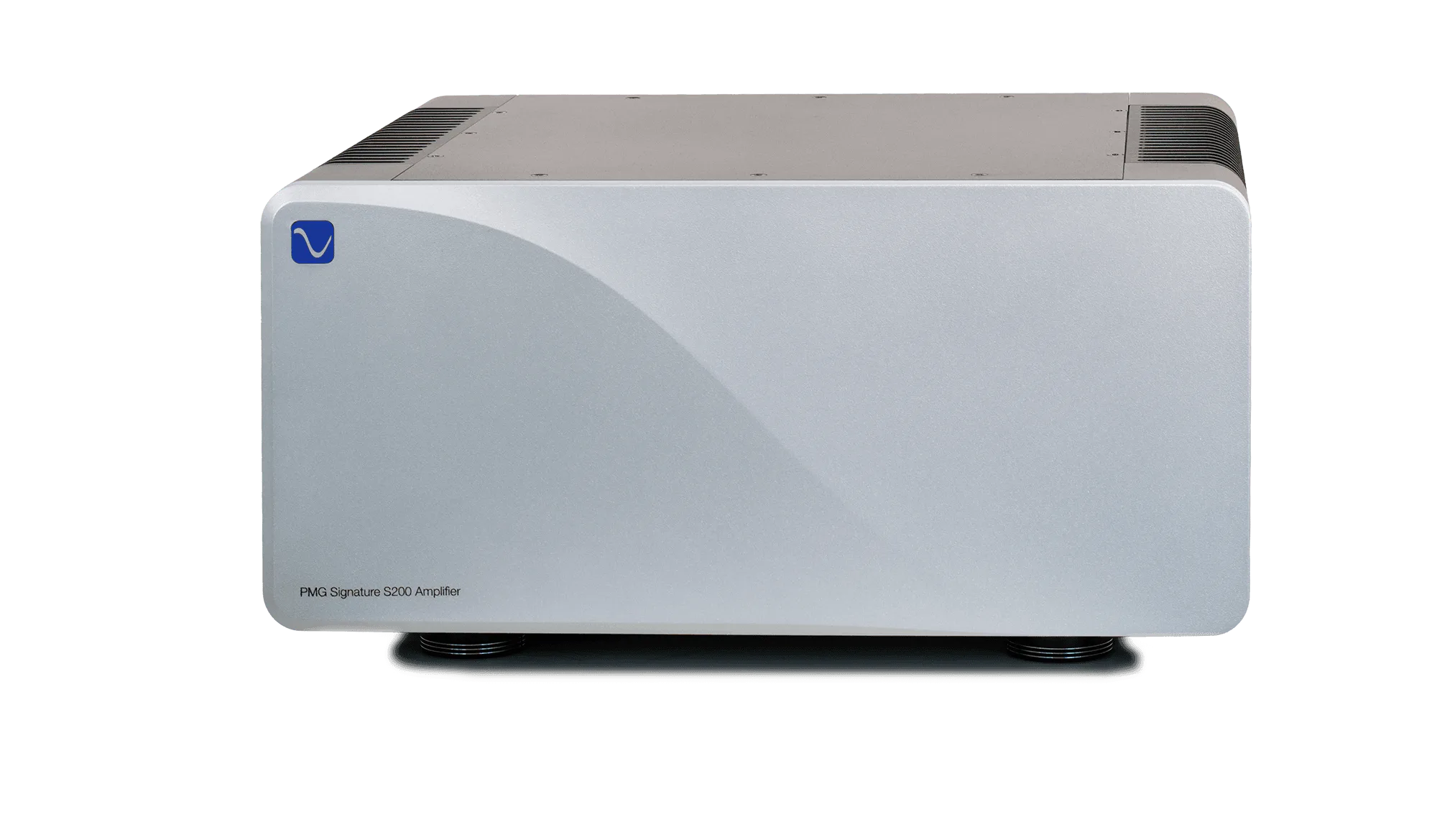
- PMG S200 Stereo: One hundred watts per channel into 8 ohms, doubling into 4, drawn from the same state-of-the-art active power supply architecture that defines the entire Signature line. The same 50 watts of Class A bias per channel. The doubling into 4 ohms and 50 watts of Class A bias mean it stays linear and controlled with demanding speakers, making it a good match for medium-sensitivity floorstanders.
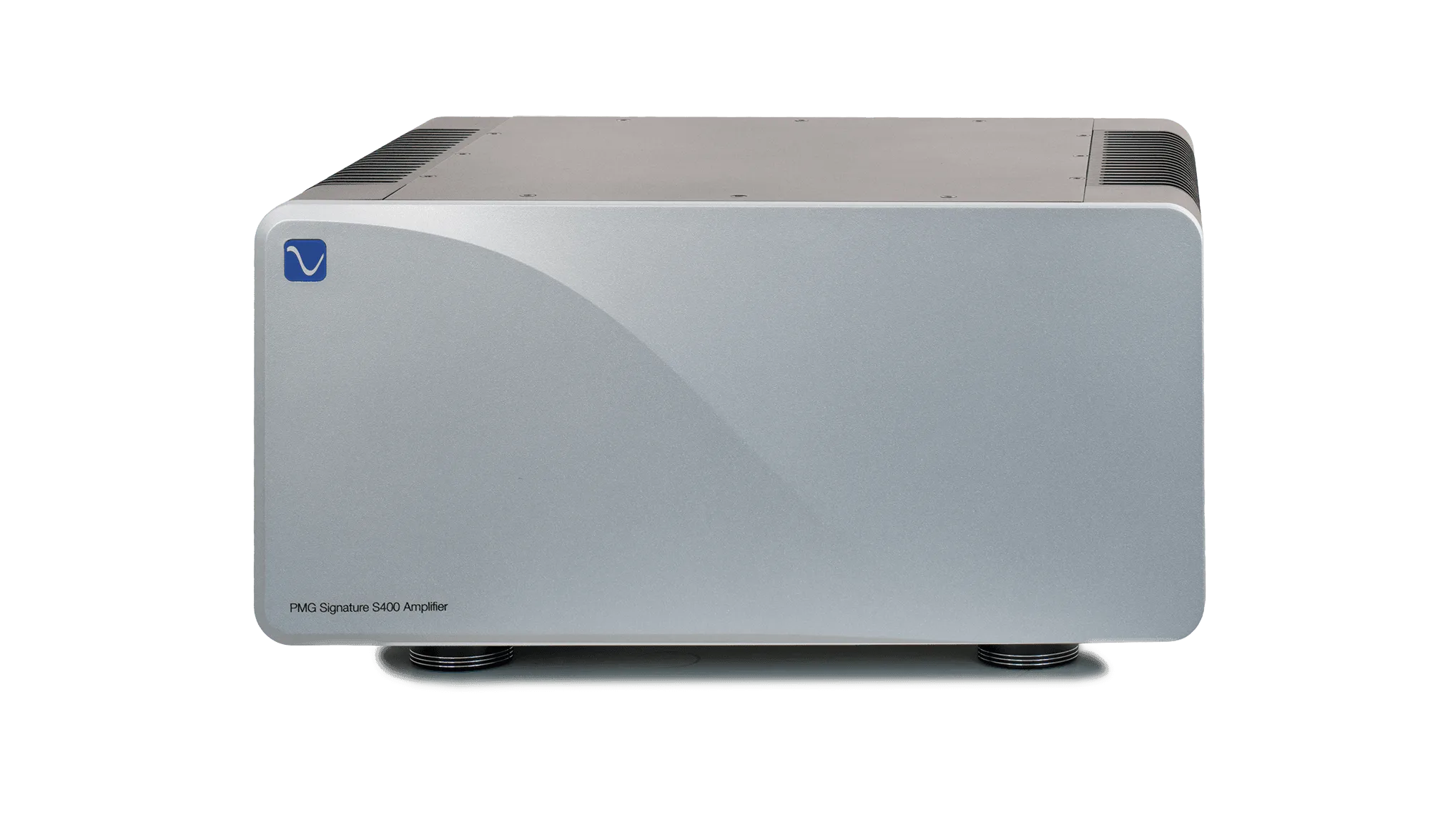
- PMG S400 Stereo: Two channels of 200 watts each into 8 ohms, doubling into 4, drawn from the same state-of-the-art active power supply that drives the M800. The same Class A bias of 50 watts per channel keeps both channels in the most linear region of operation for 99% of normal listening. With 200 watts per channel and high current, it suits large rooms and low-sensitivity speakers where headroom and control matter most.
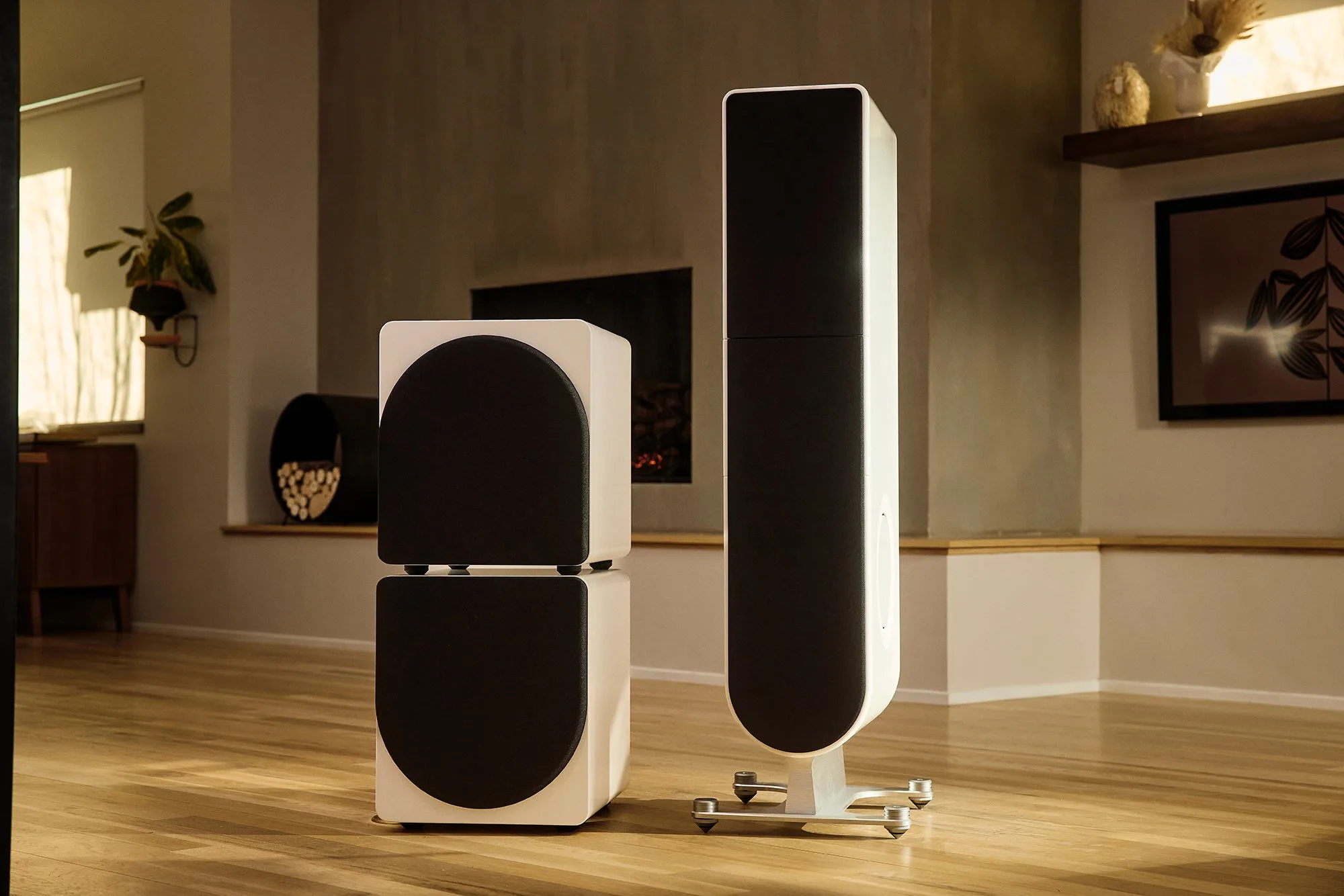
- Foundry F12 Subwoofer: The Foundry F12 subwoofer is a compact, reference-grade solution to one of audio’s most stubborn challenges: bass in real rooms. Designed to integrate seamlessly with any high-performance system, the F12 delivers fast, tuneful, and deeply musical low frequencies with the authority to move air—and you—when the recording demands it. Adding a subwoofer can reduce the bass demand on your main amplifier, letting a smaller amp drive your speakers more cleanly.
Who should buy an external amplifier
Best for
- Listeners with low-sensitivity or 4-ohm speakers who hear strain at high volumes
- Owners of receivers or integrated amps that lack preamp outputs or sufficient power
- Anyone adding a subwoofer who wants cleaner midrange and bass control
Not for
- Listeners with efficient speakers and low listening levels who are happy with their current integrated amp
- Those who need more inputs or streaming features rather than more power
- Budget-limited shoppers who have not yet optimized speaker placement and room acoustics
Match the amplifier to the speaker first, then to the room. If your speakers are efficient and your room is small, you may not need an external amplifier at all. If they are demanding, choose an amplifier with high current and headroom—and consider a subwoofer to reduce the load.