Quick answer
For most architectural speakers in a home theater or distributed audio system, an amplifier delivering 50–100 watts per channel at 8 ohms is sufficient. Higher power (200+ watts per channel) is beneficial only for large rooms, low-sensitivity speakers, or very loud listening levels.
Why power matters for in-wall and in-ceiling speakers
Architectural speakers like the Clearus C6DC in-ceiling and Intimus L6-IW in-wall are designed to blend into your room, but their performance depends on getting the right amplifier power. Under-powering can lead to distortion at higher volumes, while over-powering is wasteful unless your setup demands extreme headroom.
The key factors are speaker sensitivity (how loud they play per watt), impedance (the electrical load), and your typical listening distance and volume. Most architectural speakers have moderate sensitivity around 88–90 dB, which means they need a reasonable amount of power to fill a medium-sized room.
The trade-off: headroom vs. budget
A 100-watt amp is usually the sweet spot for architectural speakers in rooms up to 30 square meters. If you listen at moderate levels or have high-sensitivity speakers, you can go lower (e.g., 50 watts). The Energy E3H three-channel amplifier delivers 600 watts per channel at 8 ohms, which is far beyond typical needs—but it provides massive headroom for dynamic peaks and very large spaces.
For a typical home theater with architectural speakers, a 3-channel amp like the E3H is overkill unless you're powering three front channels with very low-sensitivity speakers. A stereo or multi-channel amp with 80–120 watts per channel is more practical and cost-effective.
Decision rules for choosing amplifier power
- Rule 1: Match power to speaker sensitivity: If your architectural speaker has sensitivity above 90 dB, 50 watts per channel is enough for moderate listening. For 85–89 dB, aim for 80–100 watts. Below 85 dB, consider 100–150 watts.
- Rule 2: Consider your listening distance: Doubling distance reduces sound level by about 6 dB. For seating 3–4 meters away, add 10–20 watts to compensate. For 5+ meters, a 100-watt amp may still be insufficient; consider 150–200 watts.
- Rule 3: Decide on headroom vs. cost: If you listen at moderate levels (below 85 dB average), a 50–80 watt amp is cost-effective. If you want to handle dynamic peaks without distortion, choose an amp with at least 100 watts per channel. The Energy E3H at 600 watts is only needed for very large rooms or low-sensitivity speakers. For most architectural speakers, a 100-watt amp provides excellent balance between cost and performance.
Product facts for your decision
-
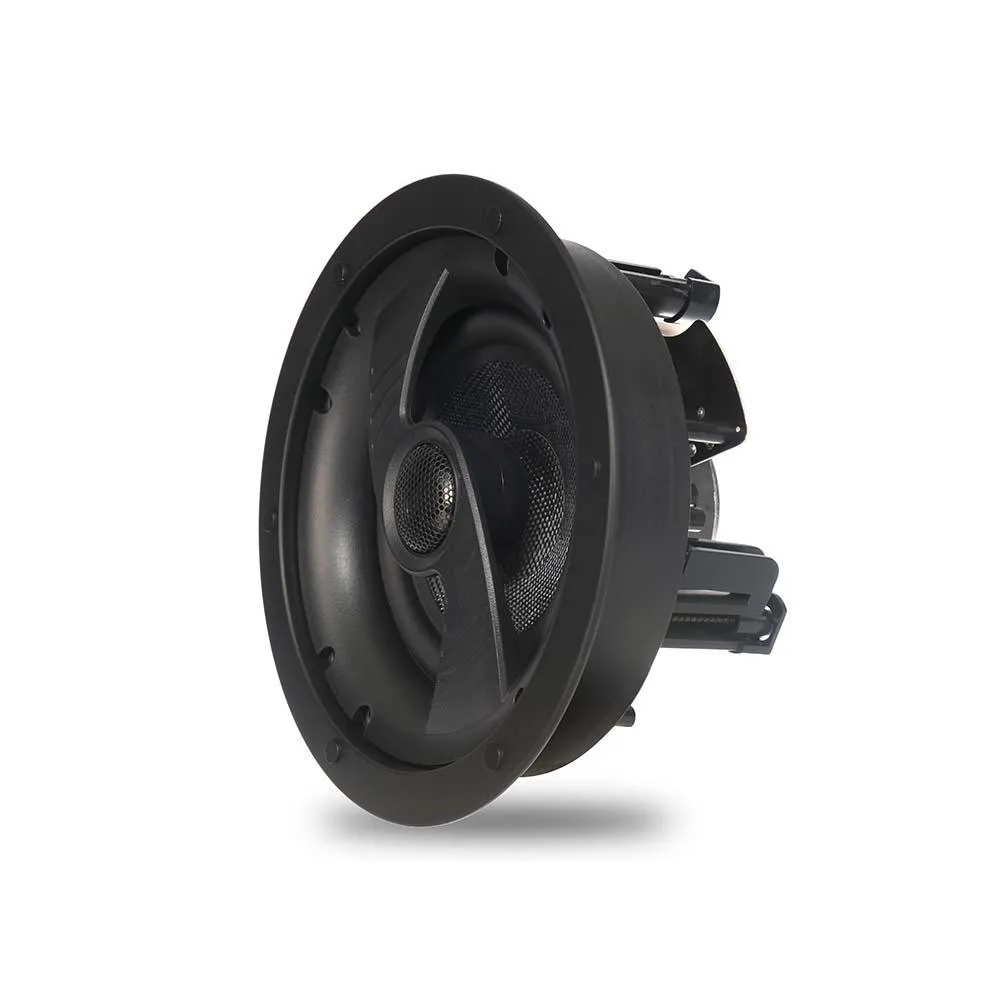
Clearus C6DC Direct-Firing 6.5" In-Ceiling Speaker Single: The Clearus C6DC is a 6.5-inch 2-way in-ceiling speaker designed for seamless audio without bulky enclosures. Its moderate sensitivity means a 50–100 watt amplifier will drive it well for most rooms, but you may want 100 watts for larger spaces.
Clearus C6DC Direct-Firing 6.5" In-Ceiling Speaker Single
-
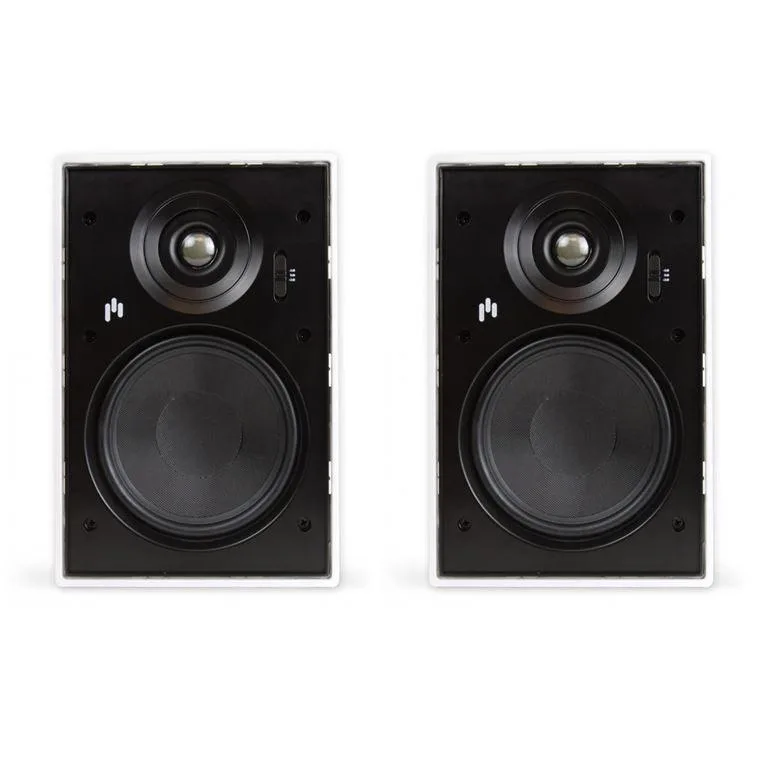
Closeout Intimus 2-Way 6.5" In-Wall Speaker | Pair: The Intimus L6-IW 2-way 6.5-inch in-wall speaker offers distributed audio with the sound quality of a cabinet speaker. It pairs nicely with a 50–80 watt amp for background music, but a 100-watt amp gives more headroom for movie soundtracks.
Closeout Intimus 2-Way 6.5" In-Wall Speaker | Pair
Who this advice fits
Best for
- Home theater enthusiasts with in-wall or in-ceiling speakers in medium rooms
- Anyone upgrading from a basic receiver to a dedicated amplifier for cleaner sound
Not for
- Those using very low-sensitivity architectural speakers (below 85 dB) in large rooms—you may need 200+ watts
- Users who only want background music at low volumes—a 30–50 watt amp is sufficient