Quick answer
Rinse your lenses with lukewarm water before you wipe them, dry them with a clean microfiber cloth, and put your glasses in a hard case every time you set them down. Those three habits prevent most scratches. Skip paper towels, shirttails, and hot water, and your sunglasses and readers will stay clear for years.
Most scratched lenses are not caused by one big accident. They come from small daily habits: wiping dust across the lens with a dry cloth, leaving glasses face-down on a table, or tossing them loose into a bag. Those tiny grains of sand and grit act like sandpaper, and the damage builds up until you notice a haze you cannot clean away.
The good news is that eyewear care takes less than a minute a day. This guide walks through an ordered routine for sunglasses and readers, from rinsing and drying to storage and repair, with the common mistake to avoid at each step. Follow it and you will extend eyewear life instead of replacing lenses every season.
Why scratches happen (and what actually damages lenses)
Lens scratches usually start with particles, not pressure. Dust, sand, salt, and dried sunscreen sit on the surface, and when you wipe a dry lens, you drag those particles across the coating. Anti-reflective and polarized layers are softer than the base material, so they scratch first. That is why a lens can look fine after a beach day and hazy a week later.
Heat and chemicals are the second culprit. Leaving glasses on a car dashboard can warp frames and break down coatings, and household cleaners, alcohol, and ammonia can cloud lenses over time. Even your breath-and-shirttail habit adds up: the fabric holds grit, and the friction wears the coating thin.
- Common mistake: wiping a dry lens with a tissue, paper towel, or clothing. Always rinse first.
- Checkpoint: if you can feel grit with your fingertip, rinse before you touch the lens with any cloth.
What you need: a short supply list
You do not need a cabinet of products. A mild dish soap without moisturizers, lukewarm water, and two clean microfiber cloths cover almost every situation. Keep one cloth for cleaning and one for drying, and wash them weekly so they do not become grit carriers. A small spray bottle of lens cleaner is handy for travel, and a hard case protects glasses when they are not on your face.
For readers, the same supplies work. If you use a microfiber pouch, treat it as a case, not a cleaning cloth, because it picks up debris from your bag. A dedicated cloth stays cleaner and does less damage over time.
- Avoid: paper towels, bathroom tissue, and any cloth labeled with fabric softener.
- Nice to have: a lens pen or blower for dust on the go, especially if you wear readers at a desk.
A simple weekly routine that prevents most damage
Once a week, give your glasses a full clean instead of a quick polish. Rinse both sides of each lens under lukewarm water, add a drop of mild soap, and gently rub with your fingertips. Rinse again, shake off excess water, and dry with a clean microfiber cloth using light circular motions. Clean the frame, nose pads, and hinges too, since oils and sunscreen collect there and transfer back to the lenses.
This routine matters more than any single product. It removes the grit that causes micro-scratches and keeps coatings intact. If you wear sunglasses daily, add a midweek rinse during pollen season or after sweaty workouts.
- Common mistake: using hot water, which can damage coatings and warp some frames.
- Checkpoint: after drying, hold lenses up to a light. If you see streaks, your cloth is dirty, not your lenses.
Storage habits that protect lenses between wears
Where glasses rest when you take them off decides how long they last. A hard case with a soft lining is the safest option, and it keeps lenses away from keys, coins, and zippers. If you use a pouch, make sure it is clean and reserved for glasses only. Never set glasses lens-down on a table, even for a moment, because the surface holds grit that scratches on contact.
At home, pick one landing spot: a nightstand tray, a desk drawer, or a shelf away from direct sun. Heat is a quiet enemy, so avoid windowsills and car dashboards. For readers you use in several rooms, a second inexpensive pair in a case can reduce the temptation to shove them into a pocket.
- Common mistake: folding glasses with the lenses facing inward against the frame, which traps grit.
- Checkpoint: if your case is cracked or lined with debris, replace it before it damages the lenses.
On-the-go care: what to do when you cannot rinse
When you are out and about, a dry wipe is better than nothing only if the lens is free of grit. Use a blower or lens pen brush first to lift dust, then a clean microfiber cloth. If the lens feels gritty, wait until you can rinse it. A scratched coating from a rushed wipe is permanent, while a smudge can wait.
Keep a small cloth in a dedicated pocket, not loose in your bag where it collects crumbs. If you carry a wristlet or crossbody, a separate slip pocket for the cloth keeps it clean and easy to find. That small separation is one of the easiest eyewear cleaning tips to actually stick with.
- Common mistake: using hand sanitizer or alcohol wipes on lenses, which can strip coatings.
- Checkpoint: replace your travel cloth every few weeks, or wash it and let it air dry.
When to repair or replace instead of clean
Some damage is not fixable at home. Deep scratches that catch a fingernail, crazing in the coating, or a cloudy film that survives a proper wash mean the lens is done. Loose hinges and bent frames are best handled by an optician, who can tighten screws and adjust fit without cracking the frame. If the frame is fine but lenses are scratched, replacement lenses are often cheaper than new glasses.
Readers are usually not worth repairing once lenses are deeply scratched, but sunglasses with quality frames often are. Decide based on the frame, not the scratch. If you love how they fit, ask about replacement lenses before you buy a new pair.
- Common mistake: tightening hinge screws with a kitchen knife, which strips the screw head.
- Checkpoint: if a scratch is visible in your central vision, stop wearing them for driving.
Your 7-step eyewear care routine
- Rinse before you wipe: Hold lenses under lukewarm running water to float away dust and grit. Do this every time, even for a quick smudge. Checkpoint: if you skip this step, stop and rinse. Dry wiping is the number one cause of scratched lenses.
- Use a drop of mild soap: Add a small drop of gentle dish soap without moisturizers to your fingertips and rub both sides of each lens and the frame. Mistake to avoid: using hand soap with lotion or any cleaner containing ammonia or alcohol.
- Rinse again and shake off water: Rinse thoroughly so no soap film remains, then shake gently rather than blowing on the lenses. Checkpoint: your breath adds droplets and oils, so keep it off the lens.
- Dry with a clean microfiber cloth: Use light circular motions with a cloth reserved for lenses. Wash the cloth weekly and air dry it. Mistake to avoid: paper towels, tissues, and shirttails, which all hold grit.
- Clean the frame and hinges: Wipe nose pads, temples, and hinge areas where oils and sunscreen collect and later transfer to lenses. Checkpoint: if the frame feels tacky, it needs another pass.
- Store in a hard case: Put glasses in a case whenever they leave your face, and keep the case free of crumbs and debris. Mistake to avoid: setting lenses face-down on any surface, even for a second.
- Keep heat and chemicals away: Skip dashboard storage, hot cars, and household sprays. Keep a travel cloth and lens spray in a separate bag pocket. Checkpoint: if lenses look cloudy after cleaning, the coating may be damaged. See an optician before replacing the frame.
Small bags that protect eyewear on the go
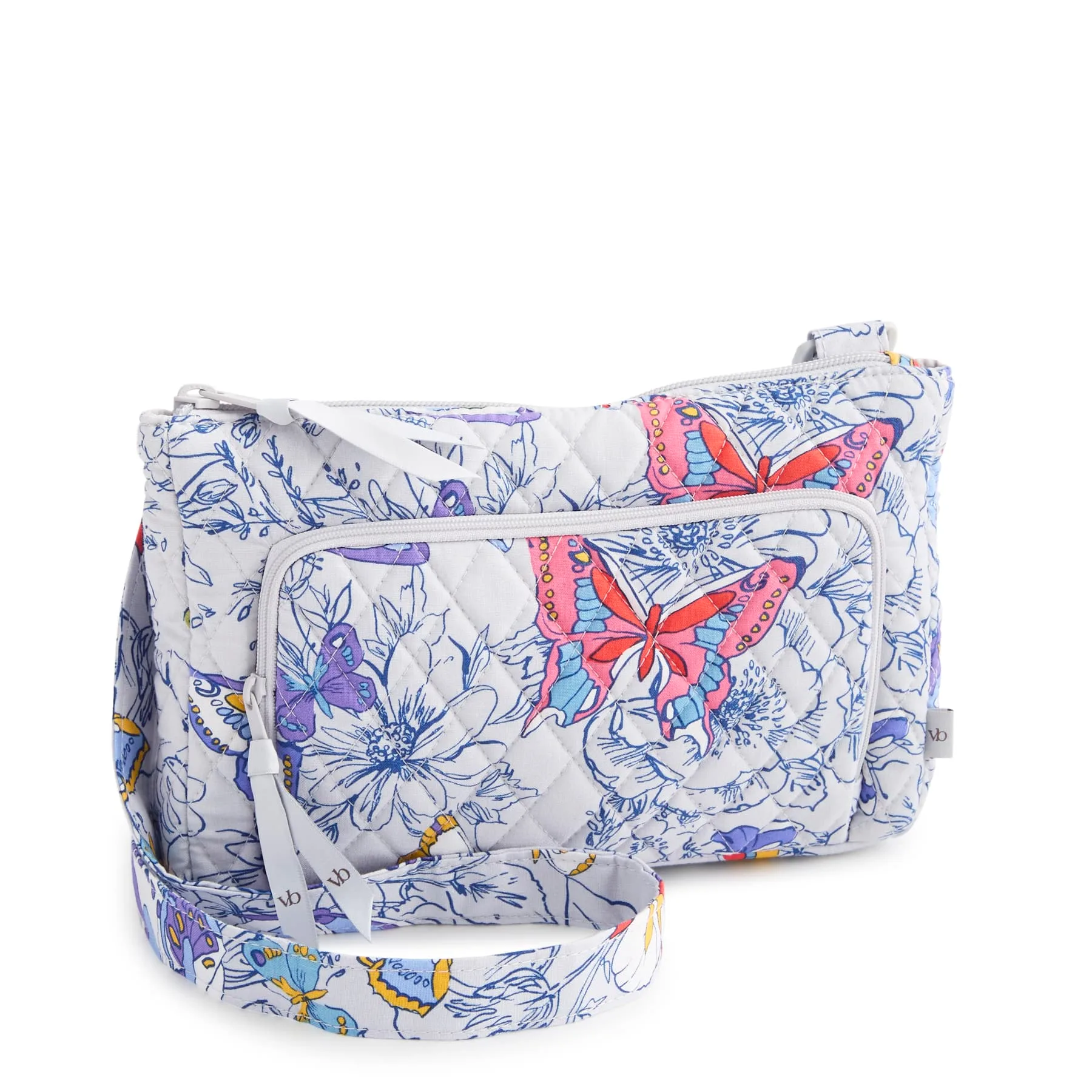
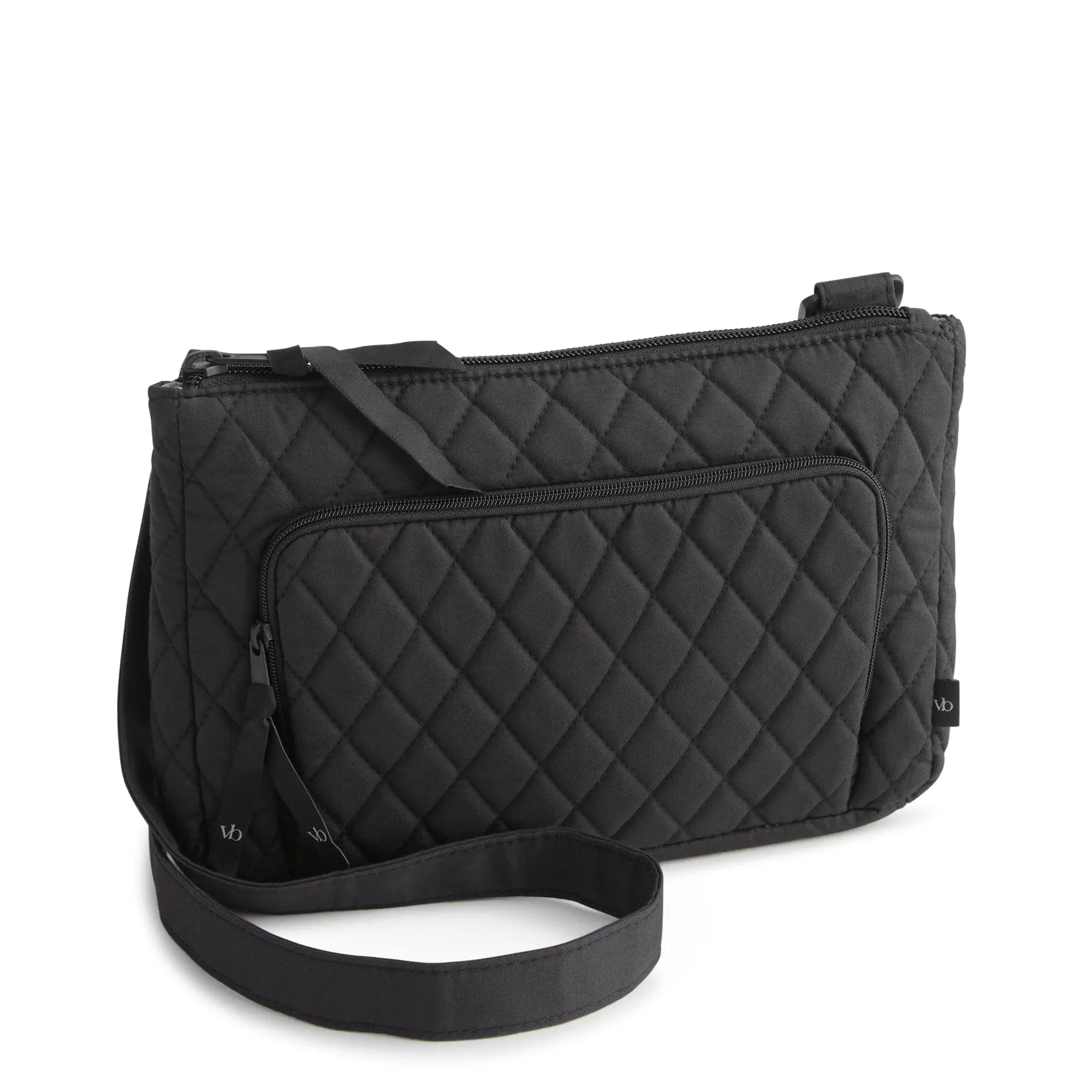
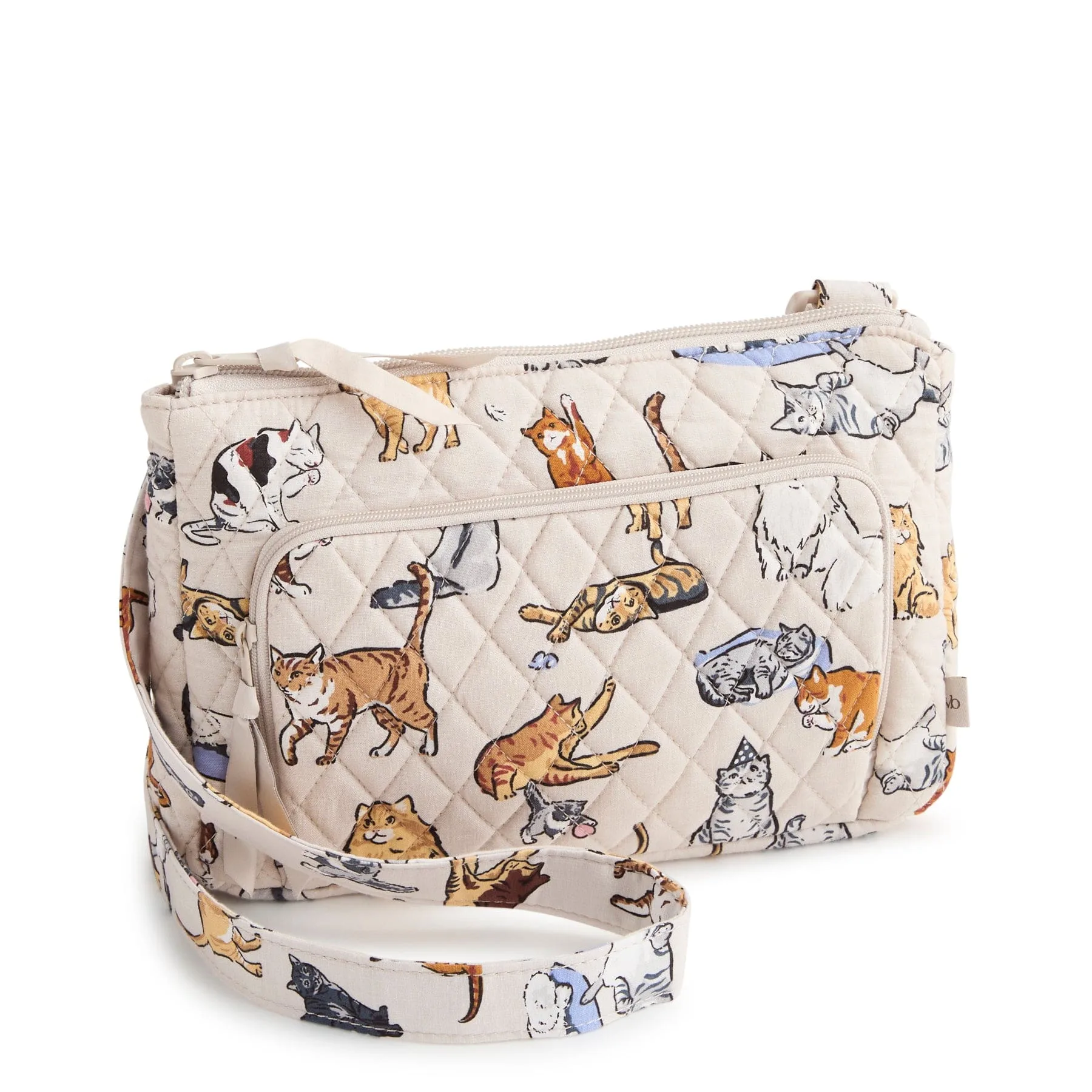
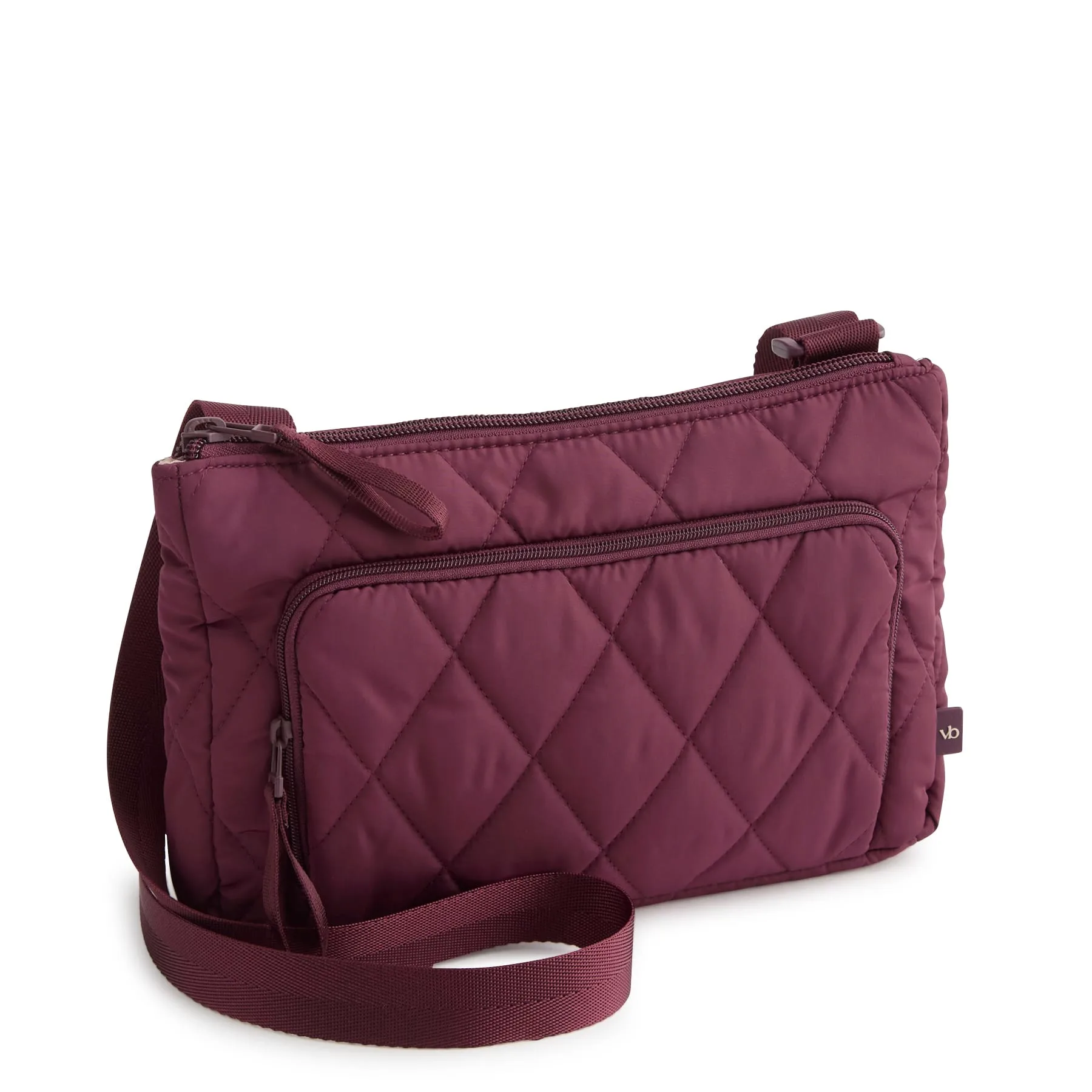
- https://verabradleyoutletex.com/products/little-hipster-5440423424-7bc00d95be85dd423a4cfd98-1640512https://verabradleyoutletex.com/products/little-hipster-5449022519-1c0336be1d638cfb16fc2aa0-1640544https://verabradleyoutletex.com/products/outlet-little-hipster-5449020183-d1b0145ba229e5df96b15851-1640576https://verabradleyoutletex.com/products/outlet-little-hipster-5440423028-c588c891a551469131142ef4-1640625Outlet Little Hipster: Compact crossbody with a front zip compartment containing a bill slip pocket and four card slip pockets, a back slip pocket, and an interior zip pocket; dimensions 9.75" w x 6.5" h x 1.5" d. The separate zip compartments keep a microfiber cloth and lens spray away from keys and grit, so your cleaning cloth stays clean enough to use on lenses.
- Disney Large Cube Belt Bag: Outlet Exclusive belt bag with dimensions 8.25" w x 5.5" h x 2.0" d and an adjustable strap at longest length 44.0"; weight 0.33 lb. A hands-free bag with a defined main space gives sunglasses a stable spot instead of letting them tumble loose with loose change.
- Outlet Phone Wristlet: Wristlet with eight card slip pockets, a zip pocket, and a phone pocket; dimensions 6.75" w x 3.75" h; wrist strap drop 6.0"; weight 0.2 lb. The zip pocket is a dedicated place for a lens cloth or slim case, so your readers care routine travels with you.
Scratch-free lenses come down to a few repeatable habits: rinse before wiping, dry with a clean microfiber cloth, and store glasses in a case every time. Build those into your day and you will spend less on replacements and see more clearly through every pair you own.