Quick answer
Buy a hard-shell case for travel, bags, and gloveboxes, and a soft or slim sleeve for pockets and desk drawers where bulk is the bigger problem. Match the interior to your frame's folded width and temple thickness before you buy, and treat a clip as a carrying method, not extra protection. If you own a handcrafted frame such as Nina Mûr's ADELA, LYNCH, or MARNI, or Gazal's titanium Jekyll, choose a case that holds the folded shape without pressing on the brow or hinges.
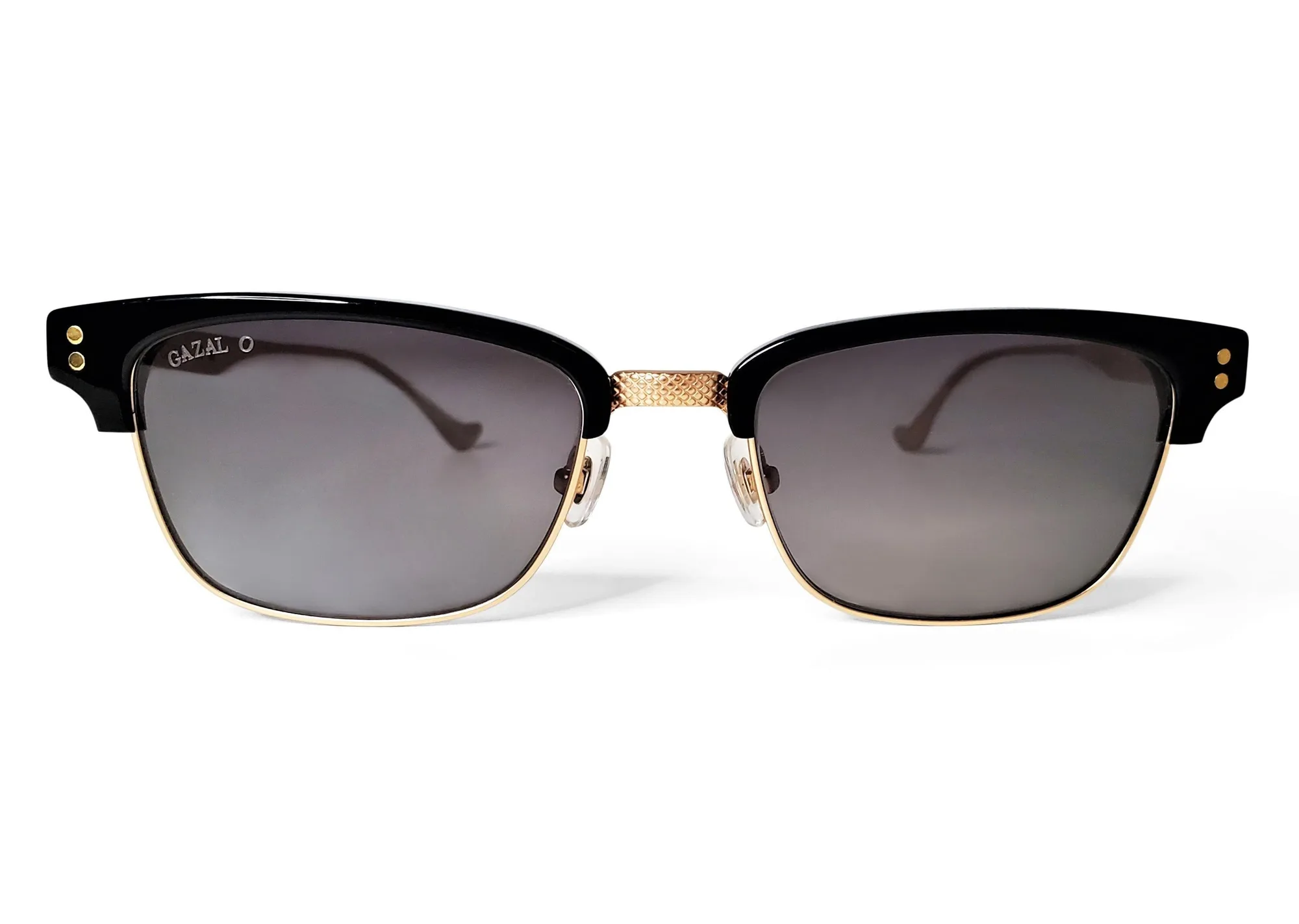
Jekyll
Start with how the case will travel, not the material
The most common mistake is buying a case for the frame you own rather than the bag you carry. A hard case that lives in a backpack needs a crush-resistant shell and a snug interior; a case that lives in a jacket pocket needs thin walls and rounded corners. Write down three things before shopping: where the case will sit most days, whether it will be clipped to something, and whether it will ever be packed inside luggage.
- Pocket or small bag: slim soft sleeve or thin hard case, no clip.
- Backpack or tote: hard shell with a felt or microfiber lining.
- Luggage or glovebox: hard shell plus a secondary pouch so the case does not rattle against other items.
- Clipped to a belt, strap, or lanyard: a sunglass case with clip, accepting that the clip is a carry aid rather than armor.
Hard vs soft glasses case: what each actually protects
A hard case resists crushing and point pressure, which is what breaks hinges and warps browlines. A soft case resists scratches and dust but transfers impact straight to the frame, so it is a scratch guard, not a crash guard. Many people own one of each and swap by the day; that is usually cheaper than trying to find a single case that does both well.
- Choose hard when the case shares space with keys, tools, water bottles, or anything heavy.
- Choose soft when the case is the only thing in the pocket and weight matters.
- Avoid soft cases with rough seams or exposed zipper teeth; those are the parts that scuff lenses.
- If you only buy one, buy hard and keep a soft sleeve inside it for the days you want to travel light.
Fit guidance: measure the folded frame, not the lens
Case listings usually quote exterior size, which tells you almost nothing about whether your frame fits. Measure your glasses folded: total width across the front, temple length from hinge to tip, and the thickest point where the temples fold against the frame. Then look for an interior length and width at least a few millimeters larger. A case that is too tight presses on hinges every time you close it; a case that is far too large lets the frame slide and rub.
- Folded width: the case interior should clear the widest part of the front.
- Folded depth: check the brow and hinge area, especially on thicker acetate or wood frames.
- Temple tips: they should rest on the lining, not dig into a hard corner.
- If the listing gives no interior dimensions, treat that as a decision limitation and prefer a seller that does.
Clips, loops, and lanyards: useful, but not protection
A sunglass case with clip solves one real problem: keeping the case where you can reach it. It does not make the case more protective, and a clip that opens under load drops the whole case. Check the clip tension, the attachment point, and whether the case can rotate flat against your body. For cycling, hiking, or crowded transit, a clip plus a hard shell is more reliable than a clip on a soft pouch.
- Metal clips hold tension longer than molded plastic in most designs.
- A clip attached to a thin flap can tear; prefer a clip mounted on the case body.
- For water or snow, skip the clip and use an interior pocket instead.
Leather glasses case care and lining choices
A leather glasses case ages well but needs different handling than synthetic shells. Leather can stiffen in cold, dry air and soften in heat, so avoid leaving it on a dashboard. Linings matter just as much: felt and microfiber cushion and wipe, while unlined leather or hard plastic can leave marks on lenses and coatings. If the case gets damp, let it air dry open and empty rather than sealing it closed.
- Wipe the lining monthly; grit trapped in felt is a scratch source.
- Condition leather sparingly and never apply product to the interior lining.
- Store the case open when not in use so it keeps its shape and dries fully.
Travel eyeglass case setup for a single bag
For travel, think in layers: a hard outer case, a soft sleeve for the frame, and a small pouch for a cloth and a spare pair of nose pads if your frame uses them. Keep the case at the top of the bag rather than the bottom, where it takes the weight of everything else. If you carry two pairs, use two separate cases; stacking frames in one case is how lenses meet hinges.
- One hard case per frame, no exceptions.
- Pack a microfiber cloth inside the case, not loose in the bag.
- Keep the case out of checked luggage if you can; if you must check it, pad around it.
Decision rules for choosing a case
- If the case shares a bag with hard objects: Choose a hard shell with a felt or microfiber lining and check that the interior clears your folded frame width. Hard shell wins whenever impact or crushing is possible.
- If the case lives in a pocket: Choose a slim soft sleeve and accept scratch protection only; keep keys and coins in a different pocket. Thin and light beats armored when bulk is the daily problem.
- If you need hands-free carrying: Use a sunglass case with clip on a hard body, and test the clip tension before relying on it outdoors. Clip for access, hard shell for protection.
- If you own a handcrafted or limited frame: Measure the folded frame and buy a case with a few millimeters of clearance, not a snug press fit. Clearance protects hinges and browlines.
Frames worth matching to the right case
- ADELA: Nina Mûr ADELA is handcrafted in Madrid from responsibly sourced birch wood using a multi-layer lamination process, with Color, Nosepad, and Temple options. Wood frames are light but can be marked by hard interior edges, so choose a lined case with enough folded depth to avoid pressure on the laminated brow.
- LYNCH: Nina Mûr LYNCH shares the same Madrid handcrafted birch construction and offers Color, Nosepad, and Temple options. If you swap nosepads or temples, recheck folded thickness before buying a case; a case that fit the original setup may now be tight.
- Jekyll: Gazal Jekyll is a rectangular club-master in titanium with an acetate upper brow, the original Wicked temple, and fewer than 100 pieces made per color in Japan. A limited handcrafted frame deserves a hard shell with a soft lining; the brow and temple geometry need clearance rather than compression.
Who this approach suits
Best for
- People who carry glasses daily in a bag, backpack, or luggage
- Owners of handcrafted or limited frames who want to avoid hinge and brow pressure
- Travelers who want one hard case per frame and a slim sleeve for light days
Not for
- Anyone who only needs dust cover at a bedside table and never transports glasses
- People who want a single case to hold two or more frames at once
- Shoppers who will not measure the folded frame before buying