Quick answer
For most sci-fi armies that need a durable, handling-resistant finish, Fiji Blue is the safest pick. Hiril Blue suits fantasy models where you want a softer, more natural blue that still holds up on the table. Neon Blue is the specialist choice for glow effects and high-visibility accents, but it demands more careful layering and is less forgiving as a base coat.
Choosing the right blue for a miniature project comes down to more than color preference. Finish, coverage, and how the paint behaves under a brush or airbrush all affect the final result. This comparison looks at three blues from the SCALE75 range—Fiji Blue, Hiril Blue, and Neon Blue—using only the catalog facts available, so you can match the paint to your project instead of guessing.
If you have ever bought a blue that looked perfect in the bottle but turned out too bright, too soft, or too fussy on the model, this guide is for you. We will break down what each paint is designed for, where it excels, and where it falls short, so you can pick the right one the first time.
What each blue is designed for
Fiji Blue is formulated for painting all types of miniatures, with a particular focus on wargame figures. Its finish is resistant to handling, which matters when models are regularly picked up, moved, and used on a game board. It works with both brush and airbrush, giving you flexibility across different stages of a project.
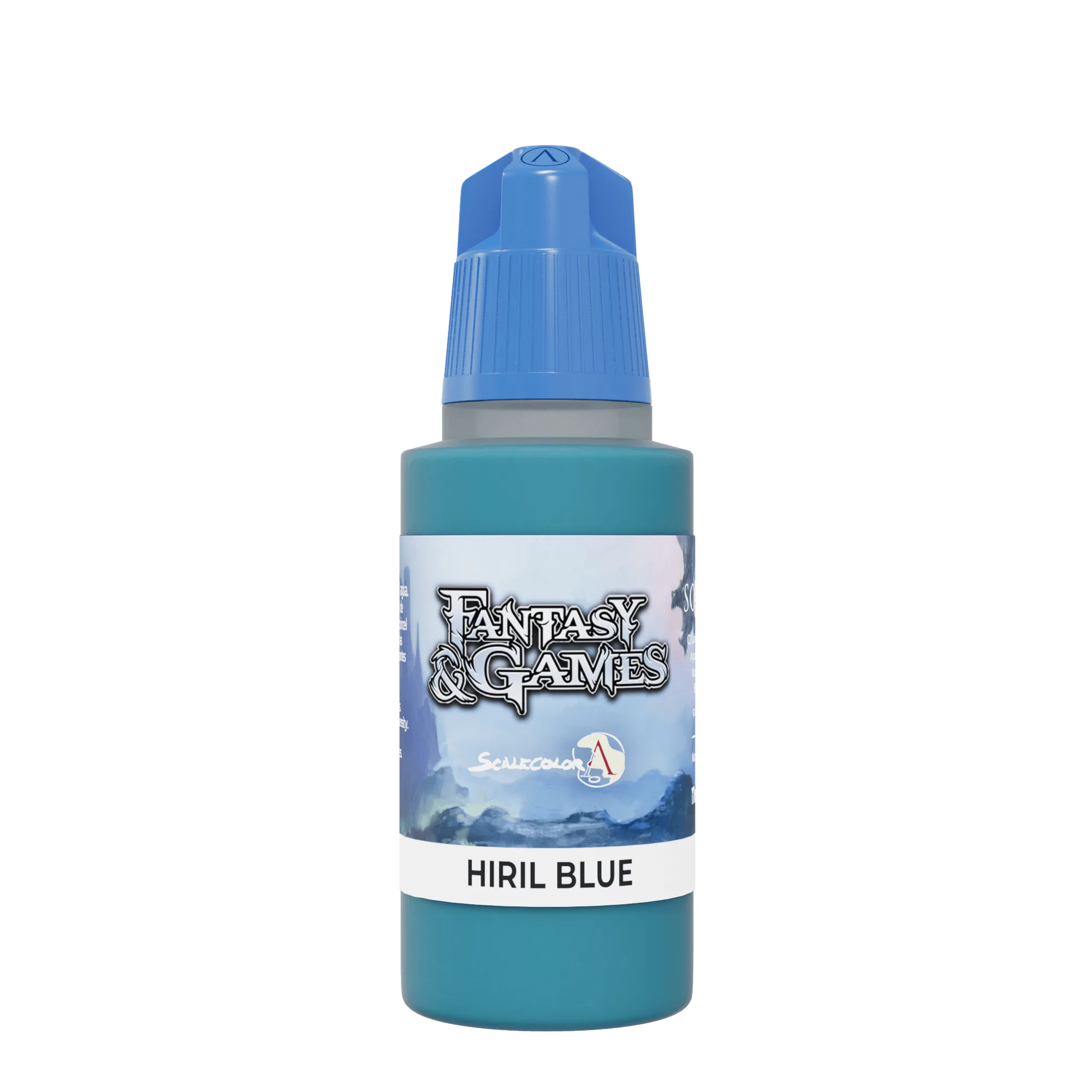
Hiril Blue shares the same handling-resistant formulation and brush/airbrush compatibility as Fiji Blue, but it is a satin finish acrylic in a 17ml pot. That satin sheen gives it a slightly different character on the model, which can suit fantasy figures or organic subjects where a softer, less flat look is welcome.
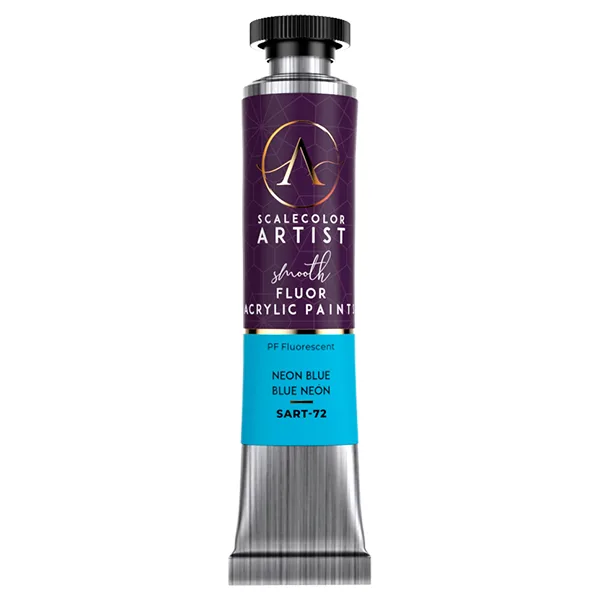
Neon Blue is built for speed. Its formula is designed for easy, convenient, and very fast painting, achieving a color gradient even with a single coat. It is aimed at players who need to get a large number of figures table-ready for wargames or board games, and it also works with brush and airbrush.
- Fiji Blue: handling-resistant, wargame-focused, brush and airbrush.
- Hiril Blue: handling-resistant satin finish, 17ml, brush and airbrush.
- Neon Blue: fast one-coat gradient, matte finish, 17ml, brush and airbrush.
Finish and handling: the practical differences
Finish affects how a miniature reads on the table and how it feels in the hand. Fiji Blue and Hiril Blue both prioritize a finish that resists handling, which is a real advantage for armies that see regular play. The difference is in the sheen: Hiril Blue is explicitly a satin finish, while Fiji Blue's catalog entry does not specify a sheen, so if a particular gloss level is critical to your project, treat that as a decision limitation and test first.
Neon Blue is a matte finish. Matte surfaces tend to scatter light and can make a model look flatter, which is often desirable for gaming pieces but less so for display models where you want depth. The trade-off is that Neon Blue's fast-gradient formula is optimized for speed, not for the kind of slow, controlled blending some painters want on a centerpiece.
- If you handle your models a lot, prioritize the handling-resistant finish of Fiji Blue or Hiril Blue.
- If you want a specific sheen, Hiril Blue's satin finish is the only one explicitly stated among these three.
- If you need speed across many figures, Neon Blue's one-coat gradient is the standout feature.
Where each blue fits best
For sci-fi armies, Fiji Blue is a strong default. Its wargame-oriented formulation and handling resistance suit the wear and tear of regular play, and it works through an airbrush for basecoating squads quickly. Neon Blue can work for sci-fi too, but its strength is speed and gradient rather than a specific genre look, so it is better reserved for accents or for getting large forces to a basic standard.
For fantasy models, Hiril Blue's satin finish can give a slightly richer, less chalky appearance than a pure matte, which often suits cloaks, banners, and organic textures. Fiji Blue remains a solid alternative if you prefer a more uniform finish across your collection. Neon Blue is the least natural fit for fantasy unless you are deliberately painting magical effects or high-visibility details.
- Sci-fi: start with Fiji Blue for durability and airbrush-friendly basecoats.
- Fantasy: consider Hiril Blue for its satin finish on cloth and organic surfaces.
- Effects and accents: Neon Blue for glow, energy, or high-visibility details.
Coverage, speed, and control
Neon Blue's catalog description highlights a formula that can achieve a color gradient with just one coat, which is a significant time saver when you are painting many figures. That same speed-oriented design can make it less predictable for painters who want to build up thin, controlled layers, because the paint is doing more of the work in a single application.
Fiji Blue and Hiril Blue do not have a stated one-coat gradient claim in the supplied facts, so plan on building your color in layers if you choose them. The upside is that both are compatible with brush and airbrush, so you can basecoat by airbrush and refine by brush. If coverage is your main concern, test each on a spare figure before committing to a full unit.
- Use Neon Blue when speed matters more than slow, controlled blending.
- Use Fiji Blue or Hiril Blue when you want to layer color deliberately.
- Always test coverage on a spare model before painting a whole squad.
Trade-offs to weigh before you buy
- Fiji Blue: durability vs. unspecified sheen: Fiji Blue offers a handling-resistant finish that suits wargame figures, but its catalog entry does not state a sheen. If a specific gloss level matters, you cannot confirm it from the listing alone. Best when durability and airbrush compatibility matter more than a known sheen.
- Hiril Blue: satin finish vs. single-pot format: Hiril Blue gives you a stated satin finish and handling resistance in a 17ml pot, but it is one color rather than a set, so you will need other paints to complete a scheme. Best when you specifically want a satin blue for fantasy or organic subjects.
- Neon Blue: speed vs. control: Neon Blue can achieve a gradient in one coat, which is excellent for batch painting, but that speed-oriented formula can be less predictable for painters who prefer slow, layered blending. Best for large forces and effects, not for slow display-level blending.
Product facts at a glance
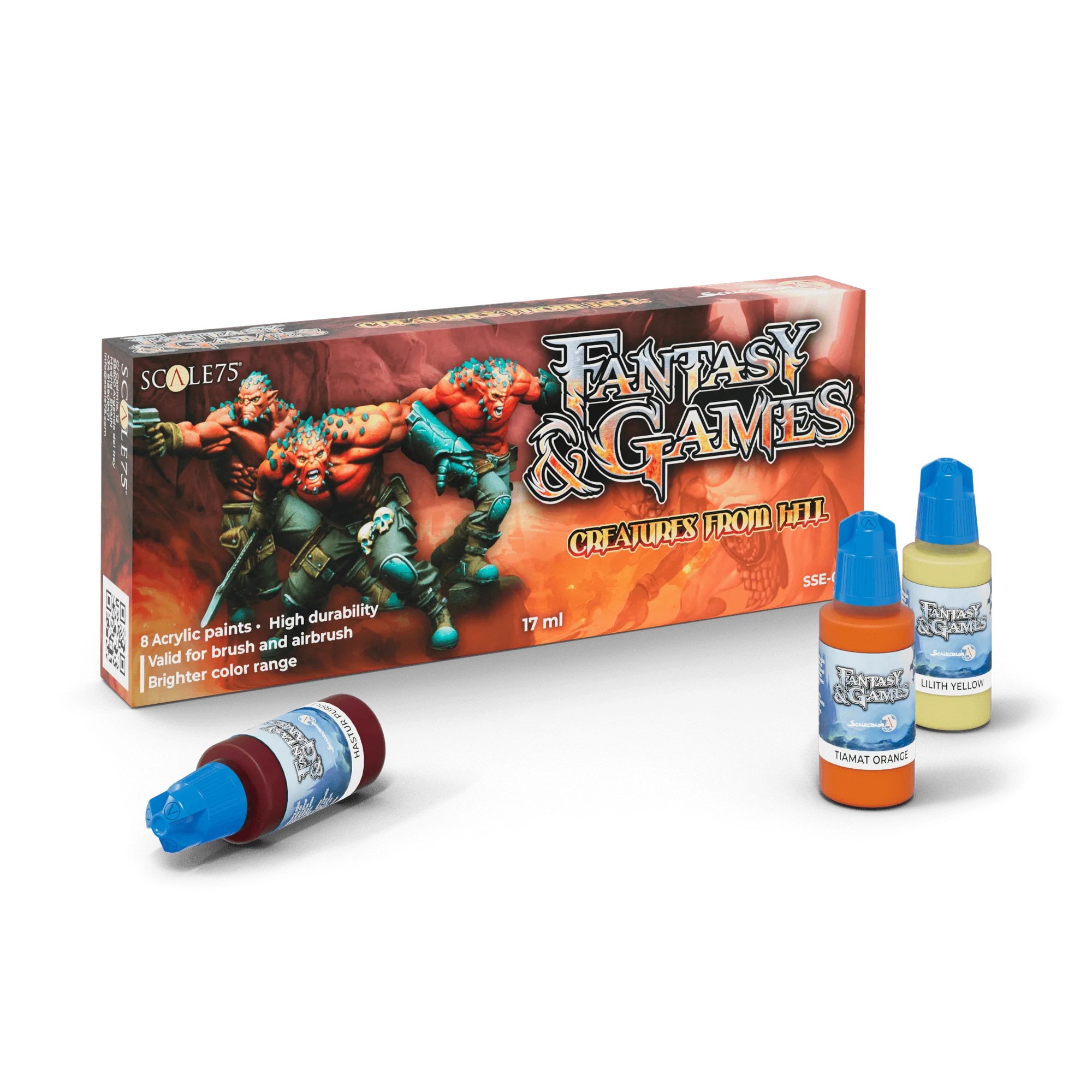
- CREATURES FROM HELL: Paint set designed for painting all types of miniatures, especially wargame miniatures, with a handling-resistant finish, valid for brush and airbrush. A set gives you a broader palette to build around a single blue, which is useful if you are painting a full army rather than a one-off figure.
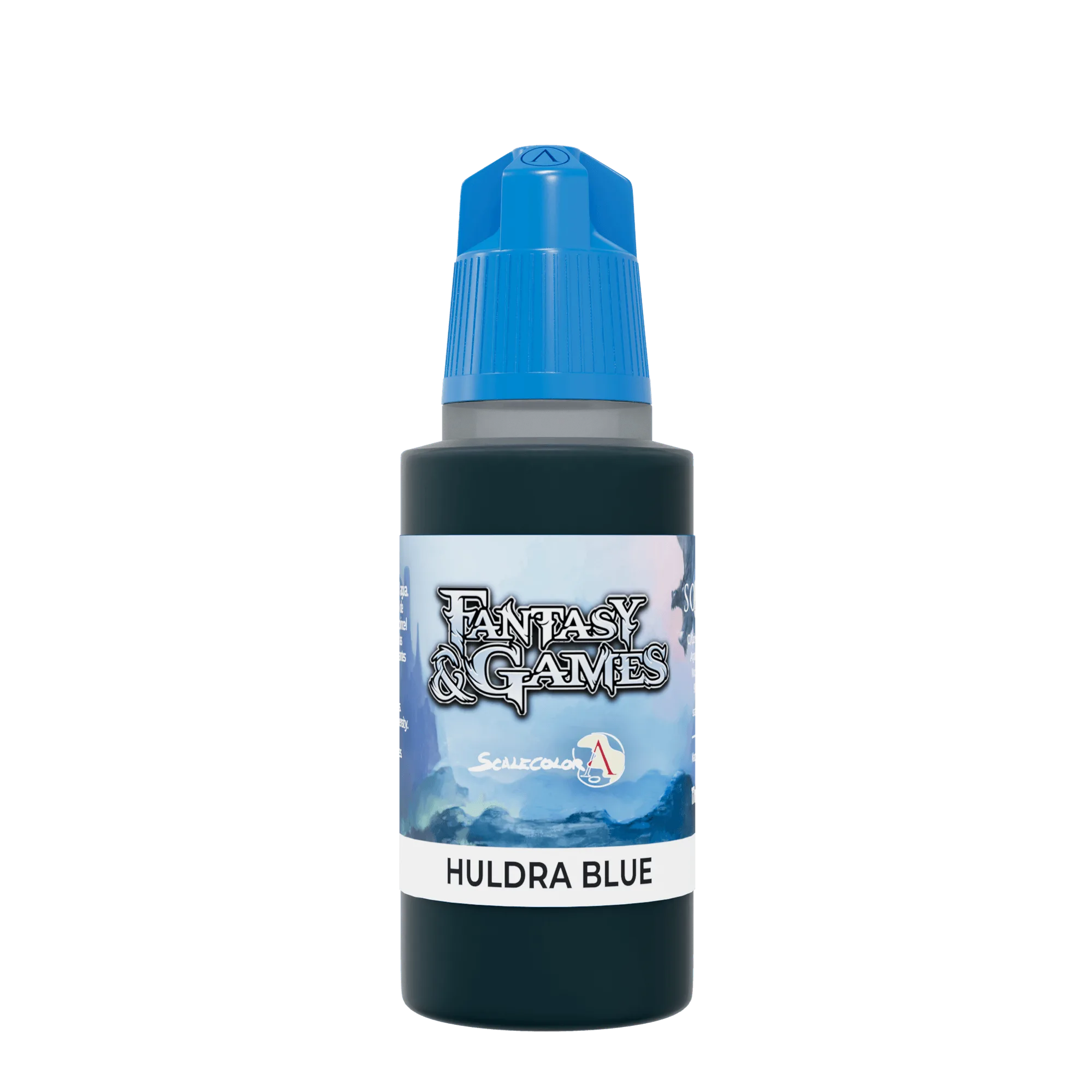
- HULDRA BLUE: Satin finish acrylic paint, 17ml, designed for all types of miniatures, especially wargame miniatures, with a handling-resistant finish, valid for brush and airbrush. If you want a satin blue in a single 17ml pot, this is a direct option alongside Hiril Blue, and the handling resistance suits models that get played with.
- GREY SPELL: Instant Colors acrylic paint with a matte finish, 17ml, designed for easy, convenient, and very fast painting, achieving a color gradient even with one coat, valid for brush and airbrush. Useful as a neutral companion shade for shading or highlighting blue schemes, especially when you want speed across many figures.
- Kolinsky Tajmyr 0 Brush: Kolinsky sable brush #0. A size 0 Kolinsky sable is a practical detail brush for the controlled work that blues often need, such as edge highlights and fine line work.
Which blue should you choose?
Best for
- Sci-fi and wargame armies that need a handling-resistant blue for regular play.
- Painters who want a blue that works with both brush and airbrush.
- Fantasy models where a satin finish suits cloth, banners, or organic textures (Hiril Blue).
- Batch painting and glow effects where speed and one-coat gradient matter (Neon Blue).
Not for
- Display painters who need a confirmed sheen from the catalog listing alone (Fiji Blue's sheen is not stated).
- Projects that require a full palette from a single pot (Hiril Blue and Neon Blue are single 17ml paints).
- Slow, controlled blending on centerpiece models (Neon Blue is optimized for speed).
Pick Fiji Blue for durable, airbrush-friendly sci-fi and wargame forces, Hiril Blue when you want a satin finish for fantasy subjects, and Neon Blue when speed and one-coat gradients matter more than slow blending. Test each on a spare figure first, and build your palette around the blue that matches how you actually paint.