Quick answer
If your fins are loose or rub after long sessions, get bodyboard fin socks; if you're worried about losing your board in waves, get a bodyboard leash. Many riders end up with both because they solve different problems.
They solve different problems
Bodyboard fin socks are worn between your feet and fins to improve comfort and fit security. They add a layer of 3 mm neoprene that helps fine-tune how your fins sit, reducing chafing and slippage during extended sessions.
A bodyboard leash, on the other hand, attaches your board to your arm or bicep so you don't lose it when you bail or get caught in whitewater. It has nothing to do with your feet.
Because they address separate issues, comparing them is less about choosing one and more about identifying which problem you actually have. If your fins are comfortable and snug, a leash won't help with that. If your board stays close, socks won't keep it from drifting away.
Comfort trade-offs
Fin socks add material between your skin and the fin, which can make a tight-fitting fin feel more secure but also slightly tighter. If your fins are already snug, the extra 3 mm might feel restrictive—though the neoprene does compress a bit in the water.
They also add warmth, which is welcome in cooler water but can make hot-weather sessions feel stuffy. Flatlock seams help reduce irritation, but if you're prone to blisters, the socks are usually a net positive.
A leash has no effect on foot comfort, but it does add a cord that can tangle or drag in the water. Some riders find it annoying, especially in shore break.
Fin socks vs. leash: trade-offs at a glance
- Loose or rubbing fins: Choose fin socks to add comfort and fit security. They fill the gap between your foot and fin, reducing slippage and chafing.
- Risk of losing your board: Choose a bodyboard leash to keep your board attached to your arm. It won't affect fin fit, but it prevents your board from washing away. If you often lose your board, a leash is the direct solution.
- Both issues at once: Use fin socks for foot comfort and a leash for board security. They serve different purposes and can be used together without conflict. Buying both solves both problems; they don't overlap.
Product facts
-
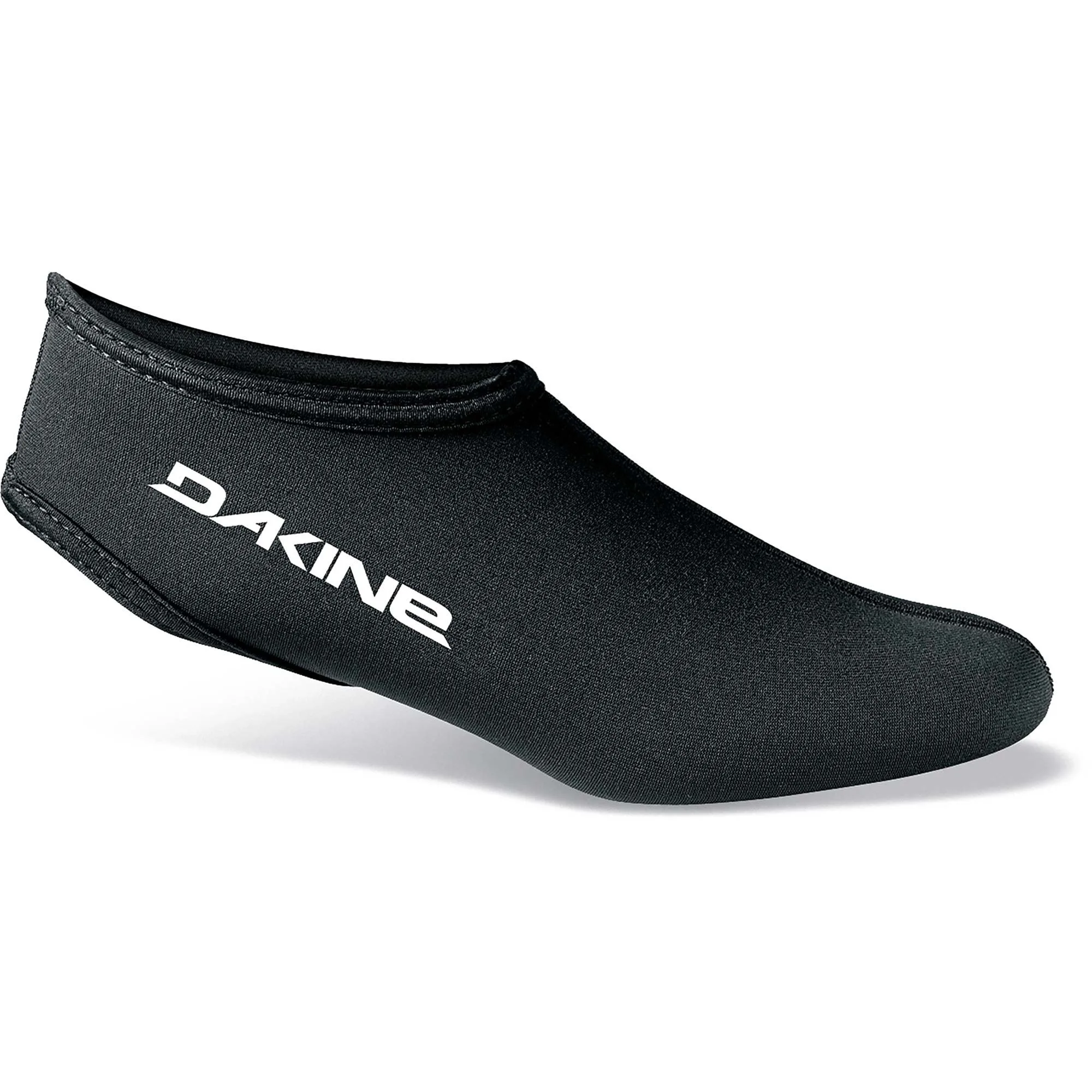
Fin Socks: Dakine Fin Socks use 3 mm neoprene with flatlock seams for comfort and fit security. The 3 mm layer helps fine-tune fin fit and reduces chafing, making longer bodyboarding sessions more comfortable.
Fin Socks
Which should you get?
Best for
- Riders whose fins feel loose or cause blisters after long sessions
- Cold-water bodyboarders who want extra foot warmth
Not for
- Riders who mainly need to keep their board from drifting away—that's a leash's job
- Those with already snug fins who find any extra material uncomfortable