Quick answer
Measure the clear walking path first, then choose storage that sits above or beside it. In most small rooms, a wall-mounted locker or a tiered book and bin display frees more usable floor than a freestanding unit, and a narrow runner works only when it leaves at least one full stride of bare floor on each side of the path.
Diagnose the room before you buy storage
Walk the room and mark the path a child actually takes from door to table to sink. That path is the non-negotiable zone. Everything else — lockers, bookcases, bins, rugs — is negotiable. A small room feels crowded when storage intrudes on the path, not when the room simply holds a lot of things.
Measure three numbers: the width of the clear path, the height of the wall you can use, and the depth of the deepest item you already own. Write them down. Every storage decision in this article is checked against those three numbers, so you can stop guessing whether a piece will fit.
Match locker style to the wall you have
Lockers solve cubby clutter, but they solve it differently depending on whether they are mounted or freestanding. A wall-mounted unit keeps the floor clear underneath, which is the single biggest win in a small room. A freestanding locker offers more total capacity but consumes floor area and needs clearance around it for doors and drawers.
If your room has a long, uninterrupted wall, a wider section count can replace several small bins. If the wall is broken up by windows or doors, a narrower freestanding locker next to the entry may be the only option — and that is a legitimate choice, not a compromise, as long as it stays out of the path.
Arrange bookcase and wall lockers so they work together
The best bookcase and locker layout puts display at child height and closed storage above or below it. Books and bins belong where children can reach them without a stool; lockers and deep storage belong where adults load and unload. That split reduces the daily mess because children can serve themselves without pulling everything down.
Keep the tallest piece against the shortest wall. A tall bookcase on a long wall visually shrinks the room, while the same bookcase on a short wall reads as intentional. Leave at least a hand's width between a locker and a doorway so doors and little fingers both have room.
Choose a runner that respects the path
A runner in a narrow hallway or playroom should be narrower than the clear path, not equal to it. If the rug touches both walls, children will step off it constantly and the edges will curl. Leave bare floor on both sides so the rug reads as a lane, not a carpet.
Skip fringe and thick pile in high-traffic rooms. A low, flat weave lies still, vacuums quickly, and does not catch small feet or toy wheels. If the room already feels tight, a runner is optional — it adds warmth and sound control, but it is the first thing to remove when the path is too narrow.
Diagnosis: symptom, cause, fix, and when to stop
- Symptom: the room feels cramped even after you add storage: The new piece is sitting in the walking path, so every trip through the room becomes an obstacle course. Measure the clear path before and after placement. If the path is narrower than one child's stride plus a hand's width, move the piece or switch to a wall-mounted option.
- Symptom: children cannot reach their own books and supplies: Storage is stacked too high or too deep. Tiered display at child height and closed storage above or below fixes this without adding furniture. If a child needs a stool to reach daily items, rearrange before buying anything new.
- Symptom: the runner curls, trips, or slides: The rug is as wide as the path or has thick pile and fringe. A narrower, low-profile runner with bare floor on both sides stays put. If the path is already tight, remove the runner entirely — warmth is not worth a fall.
- Stop point: when no layout leaves a clear path: If every arrangement blocks the door, the sink, or the main walkway, the room is telling you it needs less furniture, not more clever placement. At that point, choose a wall-mounted locker over a freestanding one, or reduce the number of pieces rather than forcing a fit.
Storage pieces that fit small rooms
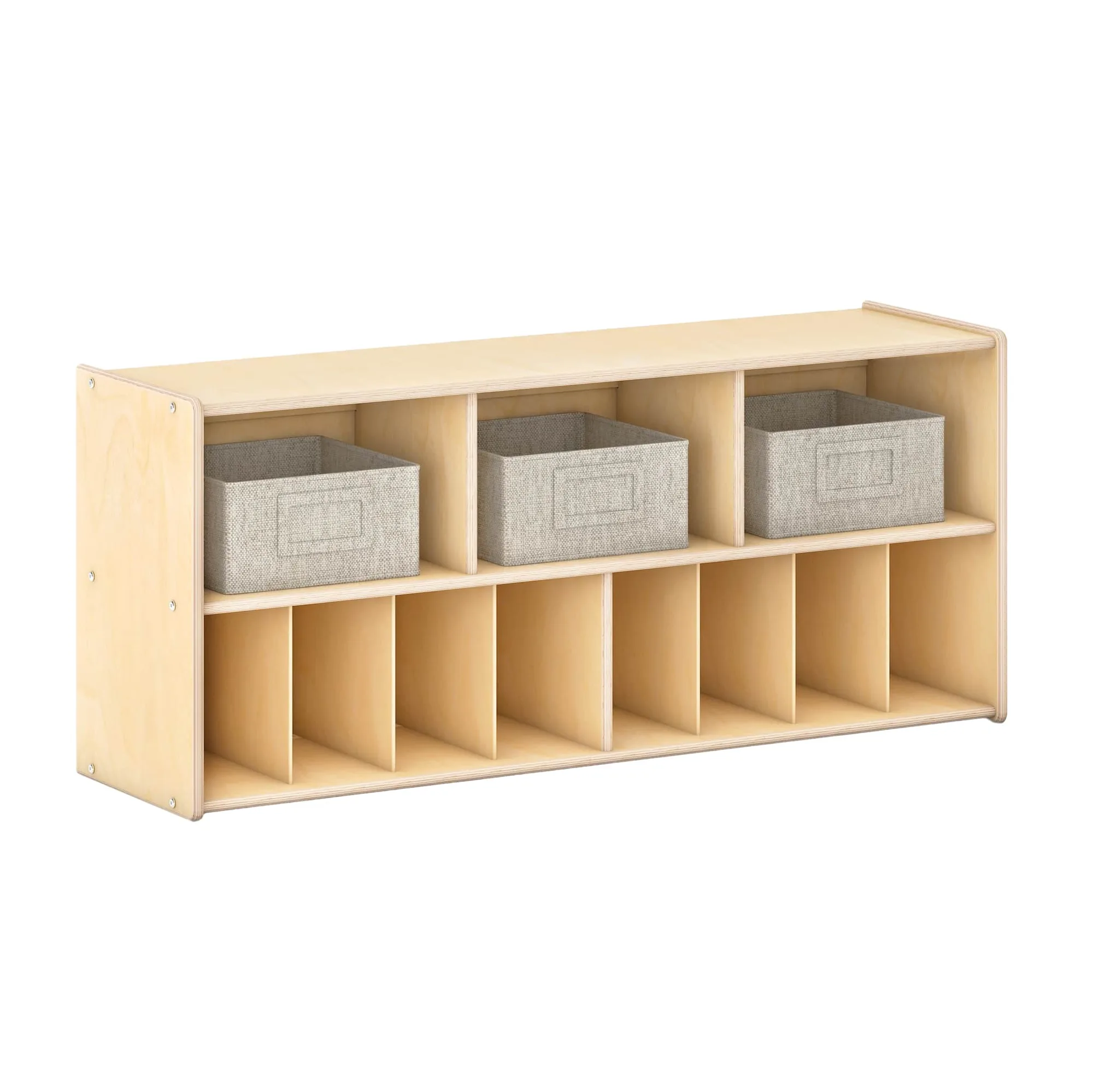
- EdQ 10-Section Wall Mounted Locker: Guidecraft's EdQ 10-Section Wall Mounted Locker is designed for spaces with limited floor space and allows for simple organization in children's learning environments. Because it mounts to the wall, it keeps the floor clear for walking and play, which is usually the deciding factor in a small room.
- EdQ Book and Bin Display: The EdQ Book and Bin Display uses gently tiered shelves to store and display children's books and magazines, and keeps toys or supplies organized and accessible. Tiered display lets children choose books themselves at their own height, so you can keep deeper storage for adults and reduce daily spills.
- EdQ 5-Section Locker: The EdQ 5-Section Locker is made of easy-to-clean premium birch plywood and is available in white or natural finishes. A freestanding locker adds capacity when wall space is limited, and the easy-clean surface matters in rooms where paint, glue, and snacks are routine.