Quick Answer
Most enamel paint problems on plastic models come from incorrect thinning, poor surface prep, or wrong brush technique. Fix bubbling by thinning paint properly, ensure even coverage with multiple thin coats, and speed drying by using a thinner like Revell Color Mix.
Why Enamel Paints Cause Problems on Models
Enamel paints like Revell Color are oil-based and dry slower than acrylics, which makes them prone to issues like bubbling and uneven coverage if not applied correctly. The key is understanding that these problems are almost always user-error, not product flaws.
Common mistakes include applying paint too thick, not cleaning the plastic surface, or using a brush that's too dry. These lead to air bubbles trapped in the paint, visible brush strokes, or paint that doesn't adhere evenly.
When to Switch to a Different Paint Type
If you consistently have problems with enamel paints despite following proper techniques, consider switching to acrylic paints for certain applications. Acrylics dry faster and are more forgiving for beginners, but they don't bond as well to plastic as enamels.
However, for most model builders, learning the correct techniques for enamel paints is worth the effort because they provide a durable, glossy finish that looks more realistic, especially on metallic parts.
Diagnosis and Fixes for Common Enamel Paint Problems
- Bubbling Paint: Symptom: Small air bubbles appear in the paint as it dries. Likely Cause: Paint is too thick or applied too heavily. Corrective Action: Thin the paint with Revell Color Mix (about 2 parts paint to 1 part thinner) and apply in thin, even coats. Let each coat dry completely (2-4 hours) before adding another. If bubbles persist after thinning, the paint may be too old or contaminated.
- Uneven Coverage / Streaks: Symptom: Paint looks patchy or shows brush strokes. Likely Cause: Brushing with too little paint or using a brush that's too dry. Corrective Action: Use a soft, wide brush and load it with enough thinned paint to cover the area in one stroke. Apply in one direction, not back and forth. If needed, apply a second thin coat after the first dries. For large flat surfaces, consider using an airbrush with thinned paint for a smoother finish.
- Paint Not Drying / Tacky: Symptom: Paint remains sticky or soft for hours. Likely Cause: Too thick application or high humidity. Corrective Action: Apply thinner coats and wait longer between coats (up to 6-8 hours). If humidity is high, move the model to a warmer, drier room. You can also mix in a few drops of Revell Color Mix to speed drying. If paint remains tacky after 24 hours, strip it with isopropyl alcohol and start over.
- Paint Peeling / Cracking: Symptom: Paint lifts off the plastic or cracks as it dries. Likely Cause: Plastic surface not properly cleaned or primed. Corrective Action: Wash the model with warm soapy water and let dry completely before painting. For bare plastic, apply a thin primer coat first. Use Revell Color enamel paints that are formulated not to attack plastic. Always test paint on a scrap piece of the same plastic before applying to the model.
Product Facts
-
Metallic "Brass" Enamel Color Enamel - 14ml: Revell Color is a synthetic resin enamel paint that does not attack the plastic surface of plastic models. It can be mixed with each other and diluted with 'Revell Color Mix' for spray gun or brush application. This means you can safely thin this paint without damaging your model, which is the first step to fixing bubbling and uneven coverage.
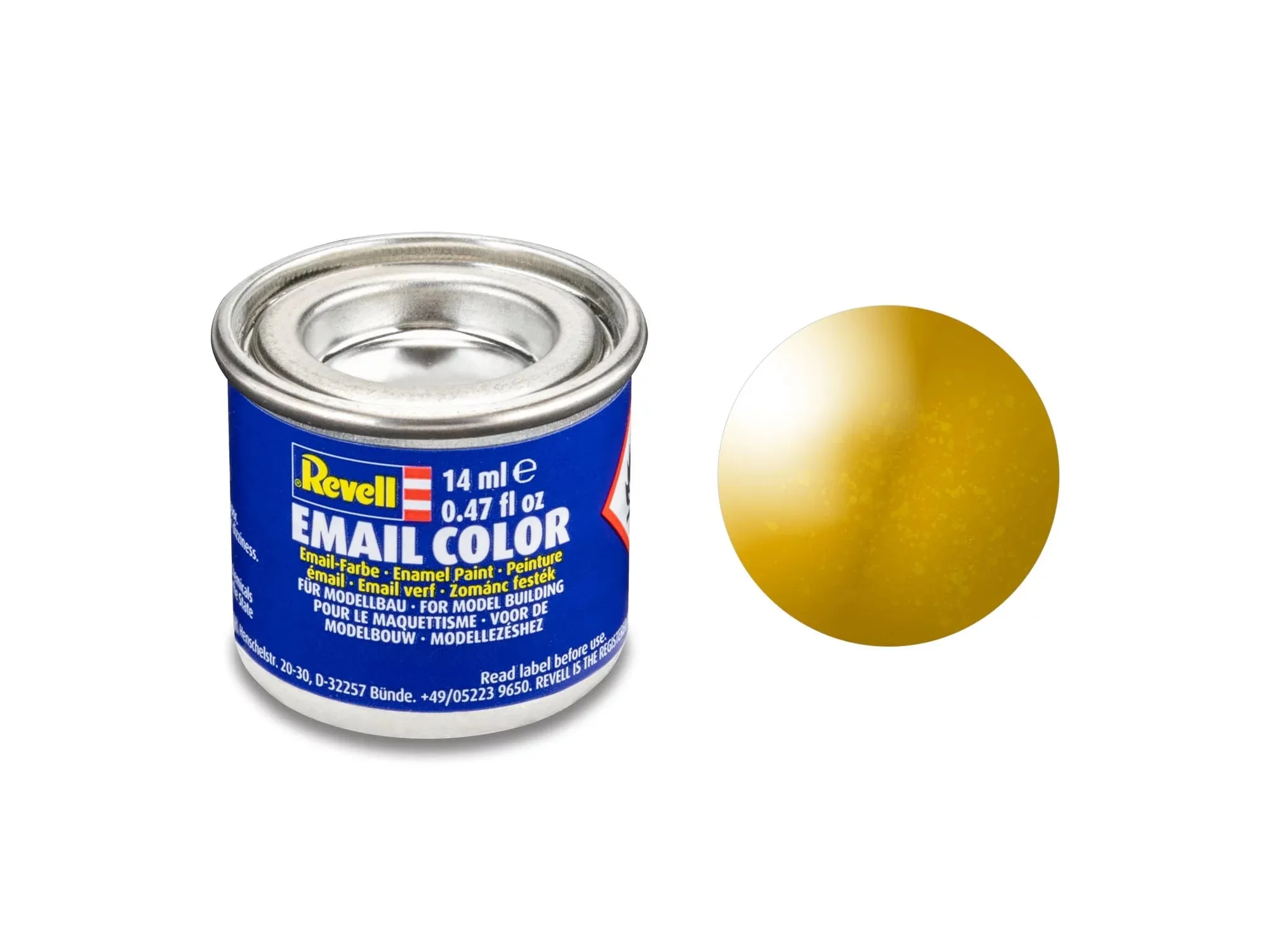
Metallic "Brass" Enamel Color Enamel - 14ml