Quick answer
Most leaning figures are not broken; they are either seated incorrectly on the base, sagging from long-term heat exposure, or standing on a peg that has worn loose. Before you glue or bend anything, remove the figure from the base, check the peg and socket, and test whether the lean disappears with a temporary shim. If the plastic itself has warped, gentle warm-water reshaping works on many PVC figures, but stop the moment the material feels rubbery. If the peg is cracked or the leg is torn, replace the base or use a display stand instead of forcing a repair.
Start by separating the three symptoms
A figure that leans forward, a figure whose arm droops, and a figure that rocks on its base look similar in a photo but have different causes. Lean usually traces back to the base connection or to heat sag. A drooping limb usually means a loose joint or a soft peg inside the shoulder or hip. Rocking means the base is warped, the feet are not fully seated, or the figure is standing on a surface that is not flat. Diagnose which one you have before touching anything, because the wrong fix (glue on a joint, heat on a stable figure) creates a problem that did not exist.
Test the base and peg before any repair
Take the figure off its base and look at the peg and the socket. If the peg slides in with almost no resistance, the lean is mechanical, not structural. A thin strip of clear tape wrapped once around the peg, or a small piece of silicone earring back pushed into the socket, often restores a firm fit without adhesive. If the peg is cracked or sheared, do not glue it back into the leg; a repaired peg will fail again under the figure's weight. Instead, switch to a display stand or a replacement base that supports the figure under the torso or between the legs. For heavier figures, a stand is the honest answer, not a stronger glue.
- Check that both feet touch the base at the same time.
- Confirm the peg is not bent or whitened at the stress point.
- Test the figure on a known-flat surface, such as a glass shelf, to rule out a warped shelf.
Use gentle heat only when the plastic itself has warped
If the base connection is solid and the figure still leans, the PVC may have sagged from heat, sunlight, or a long stay in a hot room. Warm water at a temperature you can hold your hand in, roughly 40 to 50 degrees Celsius, softens PVC enough to reshape it. Dip only the affected area for 20 to 30 seconds, straighten it slowly with your fingers, then hold it under cool running water to set the new shape. Never use a hairdryer on high heat or boiling water; both can distort paint, cloud clear parts, and warp thin ankles. If the figure still springs back after two attempts, the plastic has memory and further heating will only risk damage.
Stabilize the display so the fix lasts
A repaired figure will lean again if it returns to the same hot, uneven shelf. Keep figures out of direct sun and away from heaters, and place a small level or a known-flat tile under the base to confirm the surface is true. For tall figures with small feet, a clear acrylic stand that supports the torso removes the load from the ankles entirely. Rotate the figure slightly every few months so the same leg is not carrying the weight year after year. If you collect Ichiban Kuji figures, which often have dynamic poses and narrow contact points, a stand is a reasonable long-term choice rather than a sign of a failed repair.
When to stop and choose another option
Stop immediately if the plastic feels sticky, if paint lifts onto your fingers, or if a clear part turns cloudy. Stop if the peg crumbles instead of bending, because that means the plastic has become brittle and any force will break it. Stop if the figure has a metal armature or a resin body, since heat methods for PVC do not apply. In those cases, use a display stand, accept a slight lean as part of the pose, or replace the base. A figure that stands safely with a stand is better than a figure that has been glued, heated, and stressed into a shape it cannot hold.
Diagnosis: match the symptom to the cause
- Figure leans forward or backward from the base: The peg is loose in the socket or the base is warped. Remove the figure, test the peg fit, and add a tape shim or silicone insert before considering heat. If the lean disappears with a shim, the plastic is fine and no reshaping is needed.
- Arm or leg droops at a joint: A soft internal peg or worn joint is the likely cause. Do not glue a joint you may want to pose later; use a small amount of clear acrylic gel on the peg only if the joint is meant to be fixed. If the joint still moves freely after tightening, leave it and adjust the pose instead.
- Figure rocks or wobbles on a flat shelf: One foot is not seated, the base is uneven, or the shelf itself is not flat. Re-seat the figure, test on glass, and add a thin shim under the base if needed. If it still rocks on glass, the base is warped and a display stand is the safer fix.
- Plastic feels soft or sticky when warmed: The PVC has already been heat-damaged or is a softer material than expected. Stop heating immediately and move the figure to a stable, cool display position. Further heat will distort paint and clear parts; use a stand instead.
Figures where base fit and pose matter
- Ichiban Kuji Dandadan Dance In The Music Room Begins Prize A Okarun Figure: Okarun Turbo Granny Transformation (Prize A MASTERLISE) stands 7.02 inches (18 cm) tall. Taller figures with dynamic poses put more leverage on the ankles, so check the peg fit and consider a stand if the figure leans.
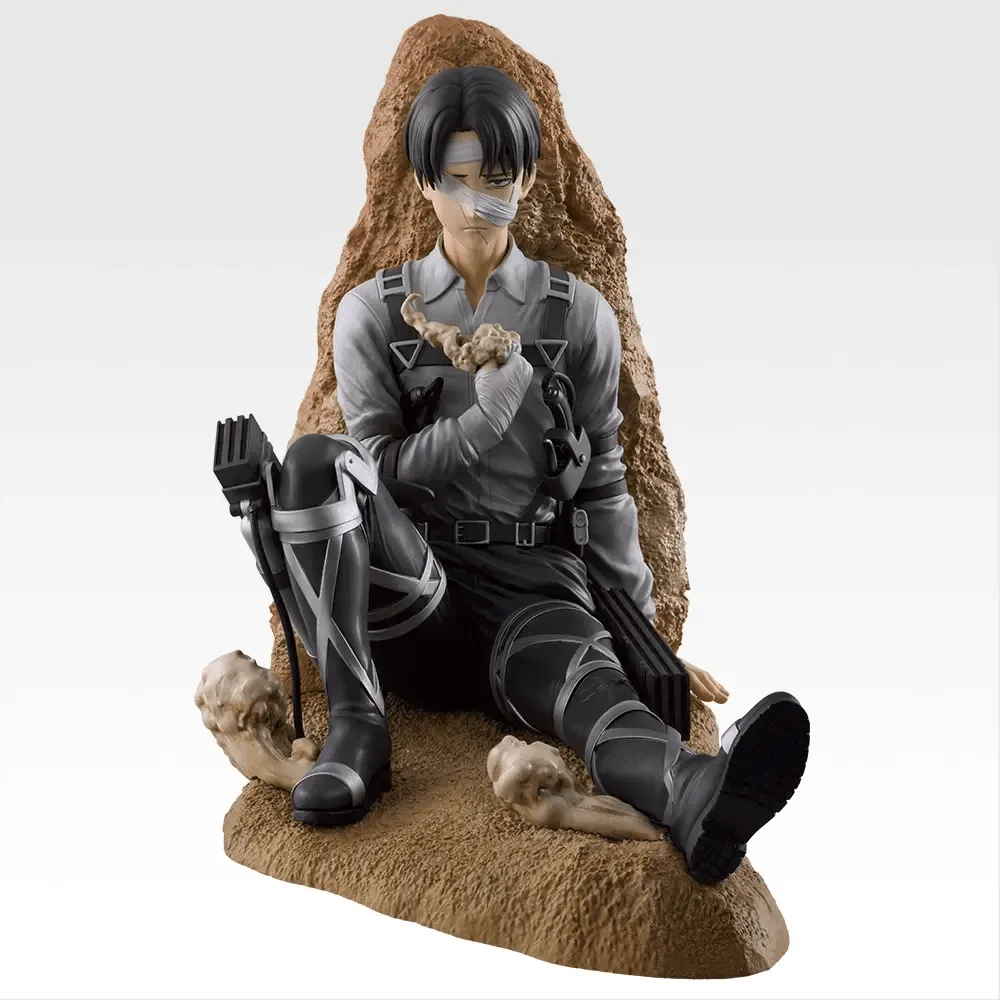
- Ichiban Kuji Attack on Titan Each One’s Resolve Prize C Levi Figure: Levi Ackerman (Prize C) stands 4.29 inches (11 cm) tall. Shorter figures are less likely to sag, but their smaller pegs wear loose faster, so test the socket fit before gluing anything.