Quick Answer
Gear slipping under hard braking is most often caused by a loose pedal tray, chassis flex, or a slipping load cell pedal mount. Tighten all bolts, check for flex points in your rig, and consider upgrading to a stiffer pedal plate or a motion/haptic system that reduces chassis strain.
Why Does Sim Racing Gear Slip Under Hard Braking?
When you stomp on the brakes with a load cell pedal, you're transferring a lot of force into your rig. If any part of the mounting system has play—whether it's the pedal tray bolts, the wheel deck, or the shifter mount—that force will cause movement. That movement feels like gear slipping, even though the hardware itself is fine.
The most common culprits are: a pedal tray that isn't bolted down tightly, an aluminum profile rig that has a loose joint, or a shifter that moves because its bracket flexes. The fix usually starts with a simple bolt check and ends with a structural upgrade.
Step 1: Check Your Pedal Tray and Mounting Bolts
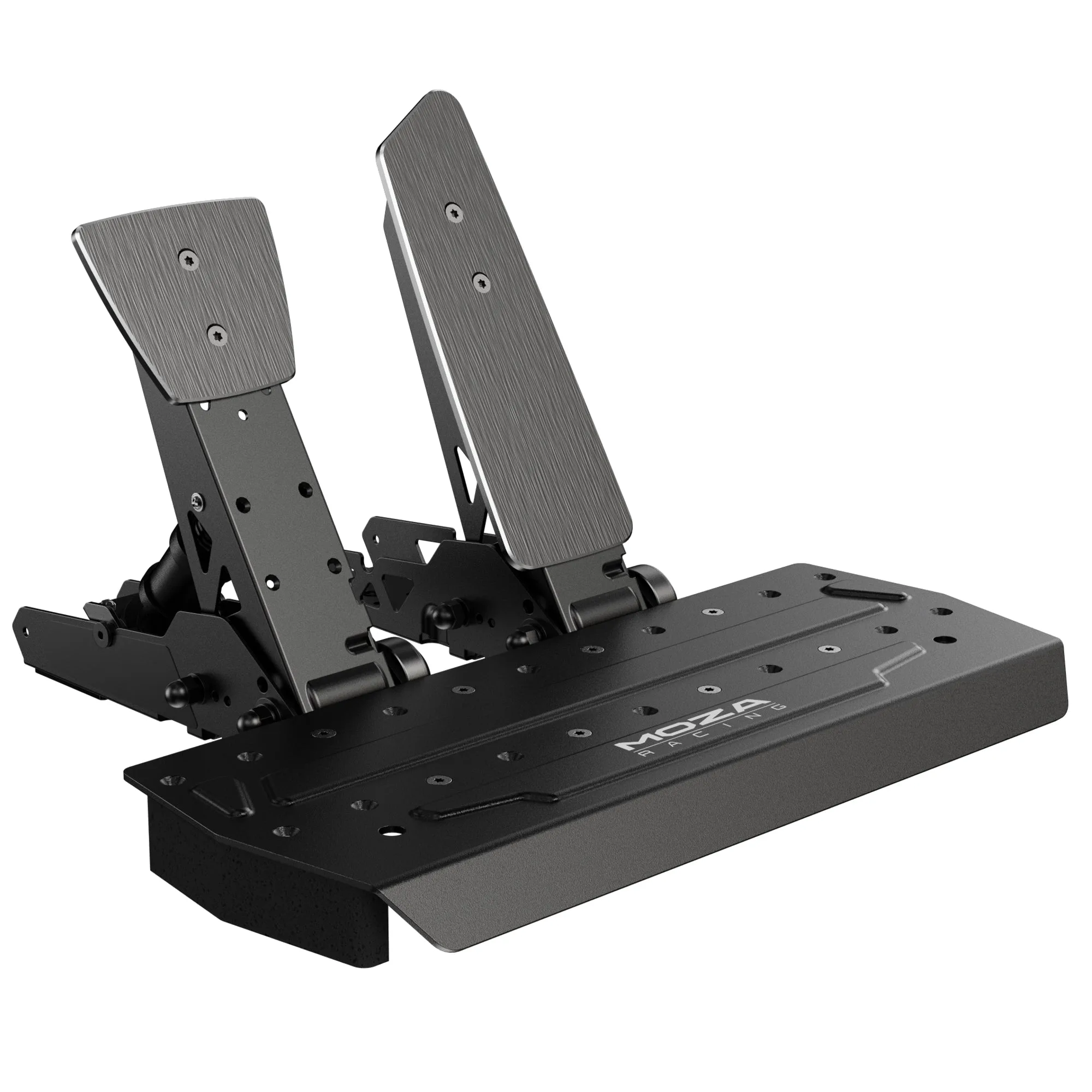
Start with the easiest fix: tighten every bolt on your pedal tray and the bolts that attach the tray to your rig. Use a torque wrench if you have one, but a good hand-tightening with a hex key is often enough. Pay special attention to the bolts holding your load cell pedal base—those are the ones that take the most force.
If your pedal tray uses T-nuts in aluminum profile, make sure the nuts are seated properly and not spinning. A loose T-nut can cause intermittent slipping that's hard to diagnose.
Step 2: Inspect Your Rig for Chassis Flex
Chassis flex is the hidden cause of many slipping complaints. Stand next to your rig and press the brake pedal firmly while watching the pedal tray and wheel deck. If you see any movement that isn't from the pedal itself, you have flex. Common flex points are the joints between profile sections, the pedal plate itself, and the wheel deck mounting brackets.
For aluminum profile rigs, adding corner brackets or gussets at the flex points can stiffen the structure. For tubular rigs, you may need to replace the pedal plate with a thicker steel or aluminum plate.
Step 3: Examine the Shifter and Handbrake Mounts
If your shifter or handbrake moves when you brake hard, it's not necessarily a shifter problem. The force from braking can travel through the rig and cause a side-mounted shifter bracket to flex. Check the bolts on your shifter mount and the bracket itself. A bracket that's only held by two bolts on a single profile section is prone to twisting.
If you have a MOZA Racing Active Shifter, its dual servo motors can actually help you feel when the mount is flexing—the force feedback will change as the mount moves. That's a useful diagnostic clue.
Step 4: Consider a Motion or Haptic Upgrade
Sometimes the best fix for gear slipping is to reduce the force your body puts into the rig. A haptic system like the D-BOX G3 Flex 4250i can provide realistic road feel through the seat, which lets you brake more smoothly. When you brake with less panic, you put less sudden force into the pedal tray, reducing the chance of slipping.
That said, a motion platform adds its own mounting requirements. Make sure your rig can handle the additional forces before adding motion.
Diagnosis: Gear Slipping Under Hard Braking
- Symptom: Your wheel, shifter, or pedals feel like they shift or jump when you brake hard. The movement may be small but it breaks immersion and affects consistency. This is almost never a hardware failure—it's a mounting or rigidity issue.
- Likely Cause: Loose pedal tray bolts, chassis flex at a joint, or a shifter bracket that twists under load. The force from a load cell brake pedal can exceed 100 lbs, which is enough to move anything that isn't locked down tight. Start with the pedal tray, then check the rig structure, then the shifter mount.
- Corrective Action: Tighten all bolts. Add corner brackets or gussets to flex points. If the pedal plate itself flexes, replace it with a thicker plate. For persistent issues, consider a stiffer rig or a haptic system that encourages smoother braking. Most cases are fixed with a bolt check and a single structural addition.
- Stop or Choose Another Option: If you've tightened everything, added bracing, and still feel slipping, the issue may be in the pedal internals (e.g., a load cell that's loose in its housing). Contact the manufacturer or consider a pedal upgrade. Do not keep driving with loose gear—it can damage the hardware. At this point, the fix is a repair or replacement, not a mounting adjustment.
Products That Help Prevent Gear Slipping
- MOZA Racing Active Shifter: The MOZA Active Shifter uses dual servo motors with 12Nm peak torque to deliver lifelike engagement clicks, resistance, and vibration feedback. Multiple gear modes (H-pattern, sequential, and handbrake) can be switched instantly. Its force feedback can actually help you detect when your shifter mount is flexing, making it a diagnostic tool as well as an upgrade. If you feel the feedback change under hard braking, you know the mount is moving.
- D-BOX G3 Flex 4250i Haptic System [3" Travel]: The D-BOX G3 Flex 4250i Haptic System provides realistic road feel through the seat, helping sim racers stay in tune with their machinery. By giving you tactile feedback through the seat, it encourages smoother braking inputs. Less sudden force means less chance of your gear slipping.
![ASR 4 Chassis [Open Face]](https://xilands.com/api/media/sync/3d/3d5fdf8a784fbb40cf0eeffc551fb8c66c6d7d296a43a618a74df381c2171200.webp)