Quick answer
Use flatlay fabrics like muslin, chiffon, or velvet to add texture and depth to your food photos. Layer them thoughtfully to create a natural, styled look.
Why fabric choice matters for food flatlays
Flatlay fabrics are not just backgrounds—they set the mood and guide the viewer's eye. A soft muslin can make a rustic loaf look warm and inviting, while a smooth satin adds elegance to a dessert shot. The key is matching the fabric's texture and color to the food's story.
Different materials also react differently to light. Chiffon diffuses light gently, reducing harsh shadows, while velvet absorbs light for a rich, moody feel. Knowing these traits helps you control the atmosphere without extra gear.
Common pitfalls to avoid
A common mistake is using a fabric that overpowers the subject. Busy patterns or bright colors can distract from the food. Stick to neutral tones or subtle textures that complement, not compete.
Another pitfall is neglecting fabric care. Wrinkles and stains can ruin an otherwise perfect flatlay. Iron or steam your fabrics before shooting, and keep them stored flat or rolled to avoid creases.
How to create a food flatlay with fabrics
- Choose a fabric that matches your food's mood: For rustic dishes like bread or soup, pick a textured, matte fabric like muslin. For desserts or drinks, go with satin or velvet for a polished feel. Lay the fabric flat on your shooting surface, smoothing out major wrinkles. Test a small piece under your light source first to see how it reflects or absorbs light.
- Layer two or more fabrics for depth: Place a larger base fabric (e.g., muslin) and then drape a smaller contrasting piece (e.g., chiffon) diagonally across it. This creates visual interest and leads the eye toward the main subject. Avoid overlapping too many patterns. Keep the contrast subtle—neutral tones layered with a slightly darker or lighter shade work best.
- Arrange your food and props on the fabric: Position the main dish slightly off-center, then add smaller props like utensils, napkins, or ingredients around it. Let some fabric show between items to maintain breathing room. Shoot from directly above for a true flatlay perspective. Check for fabric folds that create unwanted lines across the frame; adjust until the texture feels natural.
- Adjust lighting to enhance the fabric's texture: Use soft, diffused natural light from a window or a softbox. Side lighting emphasizes fabric wrinkles and folds, while overhead light minimizes them. For velvet, try a single directional light to bring out its sheen. If shadows are too harsh, add a white reflector opposite the light source to bounce soft light back onto the scene.
Product spotlight
-
Stoffe zur Dekoration deines Flatlays, z.B. für Foodfotografie & Produktfotografie: This set includes muslin, chiffon, satin, and stretch velvet, offering a variety of textures for different flatlay styles. You can switch between a soft, matte look for breads and a shiny, elegant backdrop for desserts without buying separate fabrics.
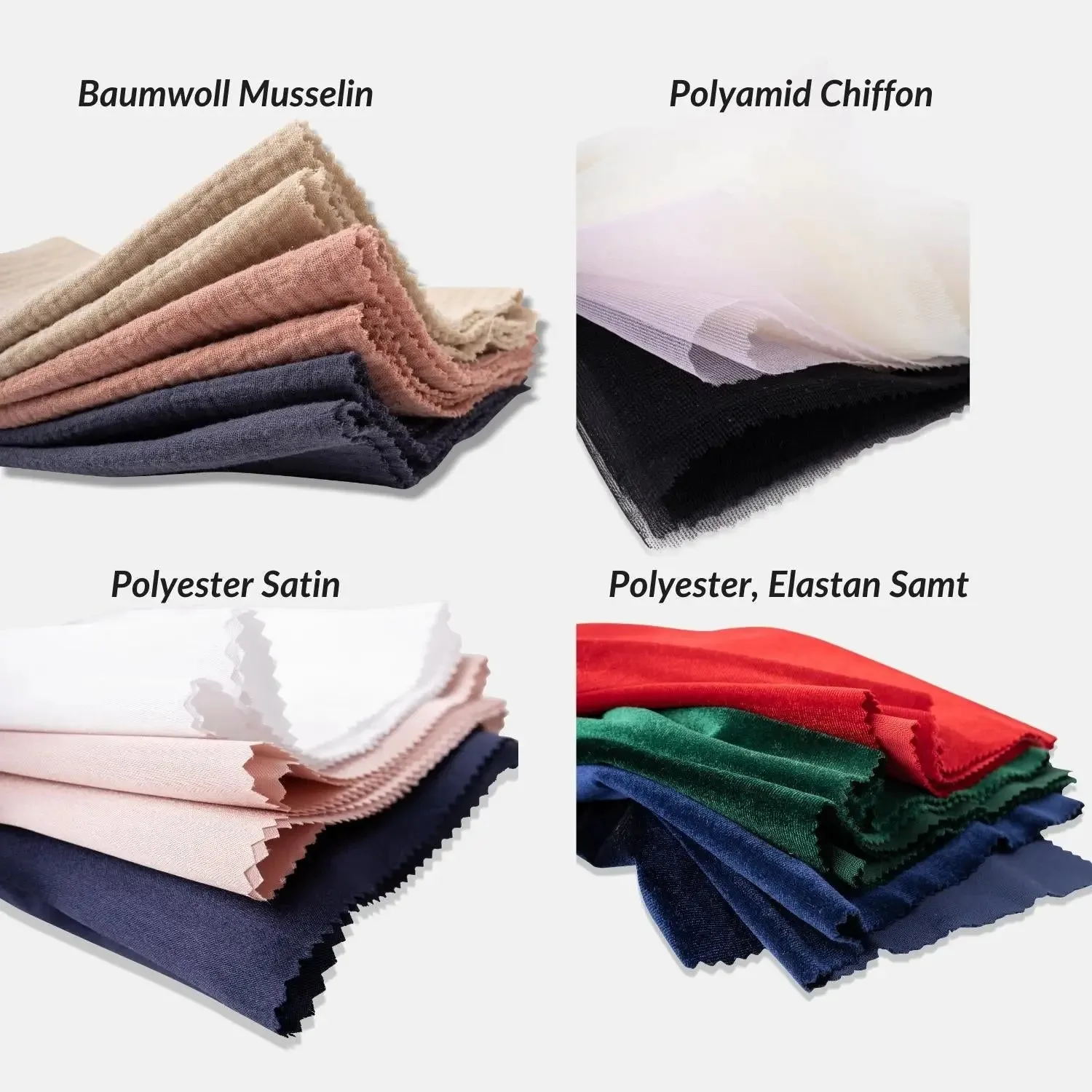
Stoffe zur Dekoration deines Flatlays, z.B. für Foodfotografie & Produktfotografie