Quick Answer
Flaxseed oil is a plant-based source of omega-3 that may support heart health and skin hydration. Choose a cold-pressed supplement and follow the dosage on the label for best results.
Why Flaxseed Oil for Omega-3?
Flaxseed oil is rich in alpha-linolenic acid (ALA), a type of omega-3 fatty acid found in plants. Unlike fish oil, it's a fish-free option, making it suitable for vegetarians and vegans. ALA is a precursor to EPA and DHA, but the conversion in the body is limited, so you may need a higher dose to get similar benefits.
Heart Health and Skin: What the Omega-3 Does
Omega-3 fatty acids, including ALA, are known for their role in maintaining cardiovascular health. They may help support healthy cholesterol levels and reduce inflammation. For skin, omega-3s contribute to the skin's lipid barrier, helping to retain moisture and maintain a supple appearance. While research is ongoing, many people use flaxseed oil for these benefits.
Choosing a Quality Flaxseed Oil Supplement
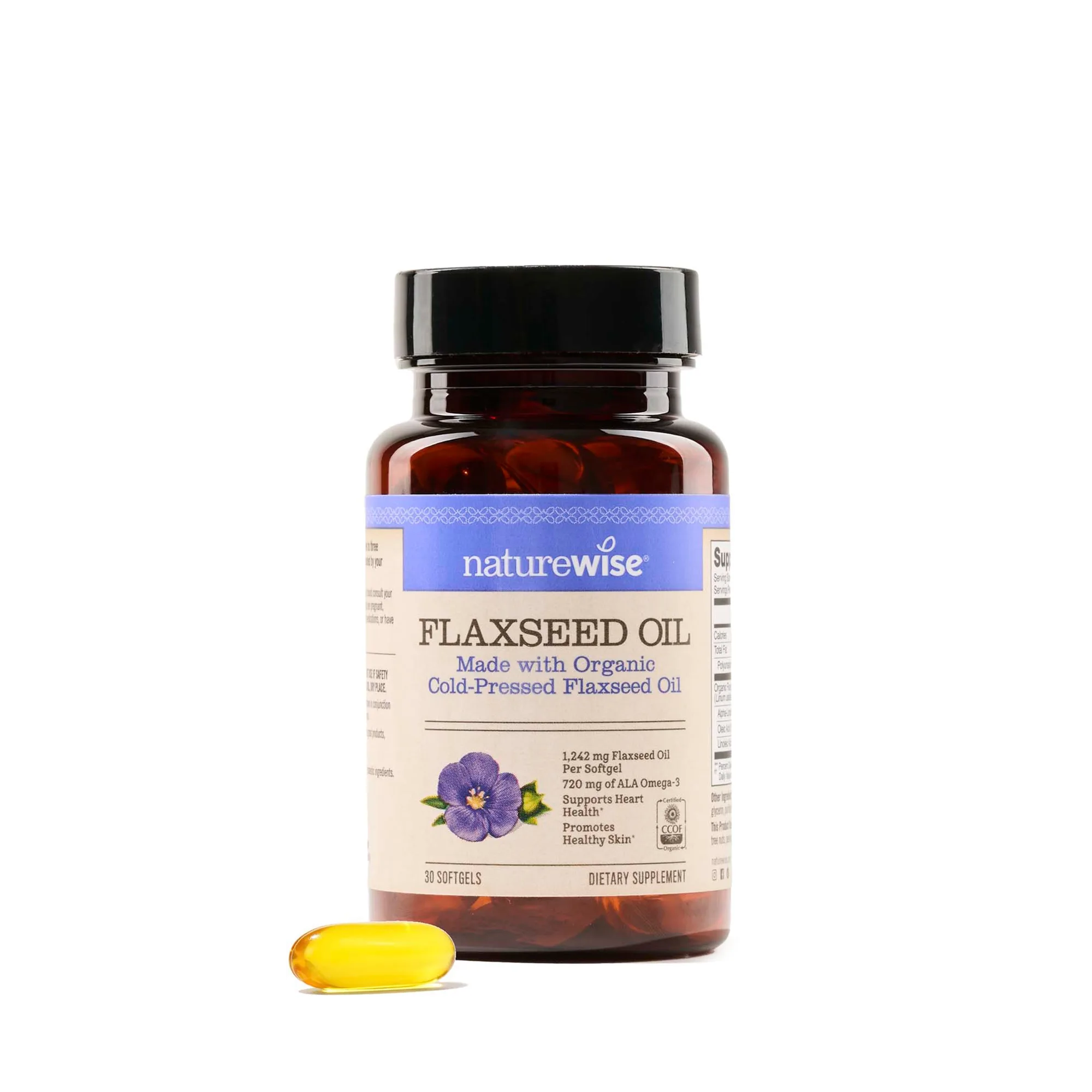
When selecting a flaxseed oil supplement, look for 'cold-pressed' on the label. This indicates the oil was extracted without heat, preserving its nutritional quality. Also consider the strength and bottle size to match your preference and dosage needs. For example, NatureWise Flaxseed Oil comes in multiple strengths (1000 mg, 1242 mg, 1400 mg, and 3000 mg) and sizes (30 to 240 count), so you can choose what fits your routine.
Flaxseed Oil FAQ
What are the main flaxseed oil benefits?
Flaxseed oil is primarily taken for its omega-3 content, which supports heart health and may help maintain skin hydration. It's a plant-based alternative to fish oil. Consider your dietary preferences when choosing an omega-3 source.
How much flaxseed oil should I take?
Follow the dosage instructions on the product label. Typical doses range from 1000 mg to 3000 mg per day, depending on the product strength. Start with a lower dose if you're new to it. Always check the label for specific dosage guidance.
Can flaxseed oil improve skin health?
Omega-3 fatty acids in flaxseed oil may help support skin moisture and barrier function, potentially improving dryness and overall appearance. Results vary, and it's not a substitute for topical skincare. Use flaxseed oil as part of a holistic skincare routine.
Is flaxseed oil better than fish oil?
It depends on your needs. Flaxseed oil is fish-free and suitable for vegetarians, but the body converts ALA to EPA/DHA inefficiently. Fish oil provides preformed EPA/DHA. Choose based on your dietary restrictions and health goals. Weigh the pros and cons based on your diet and omega-3 needs.
Product Facts
-
Flaxseed Oil: NatureWise Flaxseed Oil is cold-pressed and a fish-free source of omega-3, available in strengths from 1000 mg to 3000 mg. Cold-pressing helps preserve the oil's quality, and the range of strengths lets you adjust your omega-3 intake easily.
Flaxseed Oil