Quick Answer
Use the Flexible Triad Turquoises set to mix consistent turquoise shades by starting with the darkest tone and gradually adding lighter colours. This guide walks you through the steps and common pitfalls.
Why Turquoise Mixing Is Tricky
Turquoise sits between blue and green on the colour wheel, which makes it easy to end up with a shade that leans too far in one direction. The Flexible Triad Turquoises set gives you six tones from deep to light, so you can keep your mixes balanced without guessing.
Mixing from a triad set is faster than mixing from scratch because every colour in the set already shares a turquoise base. That means your shadows, midtones, and highlights stay harmonious across the miniature.
Trade-Off: Triad Sets vs Single Paints
A triad set gives you convenience and consistency, but it costs more upfront than buying a single pot of turquoise. If you only need one exact shade for a small project, a single paint might be enough. For armies or recurring colour schemes, the set pays off because you can reproduce the same mixes every time.
Another trade-off is that the six colours in the set are fixed. You cannot choose individual shades, but the range from deep to light covers most needs, especially for magical effects and fantastical creatures.
Step-by-Step Turquoise Mixing
- Start with the darkest shade: Use the darkest turquoise in the set as your base for shadows and deep recesses. Apply it where you want the most depth, such as under armour plates or in folds. Check that the darkest shade is fully dry before adding lighter layers to avoid muddying.
- Build up midtones: Mix a small amount of a lighter turquoise into your base colour to create a midtone. Test the mix on a scrap surface first to confirm it matches the look you want. Add the lighter paint gradually; a little goes a long way.
- Create highlights: For bright highlights, use the lightest turquoise in the set. Apply it sparingly to raised areas like edges and ridges. Keep your brush slightly damp to avoid chalky streaks.
- Blend the transitions: Use a wet palette or glaze medium to soften the lines between shadow, midtone, and highlight. This creates a smooth gradient instead of harsh bands. If the transition looks patchy, add a thin glaze of the midtone to unify it.
- Check your contrast: Step back and look at the miniature from arm's length. If the contrast between the darkest and lightest areas is too subtle, deepen the shadows or brighten the highlights. Good contrast makes the turquoise pop even from a distance.
Product Facts
-
Flexible Triad: Turquoises: Six 18ml Warpaints Fanatic acrylic paints ranging from deep and dark to bright and light. This range gives you a full turquoise gradient, so you can mix consistent shadows, midtones, and highlights without needing extra paints.
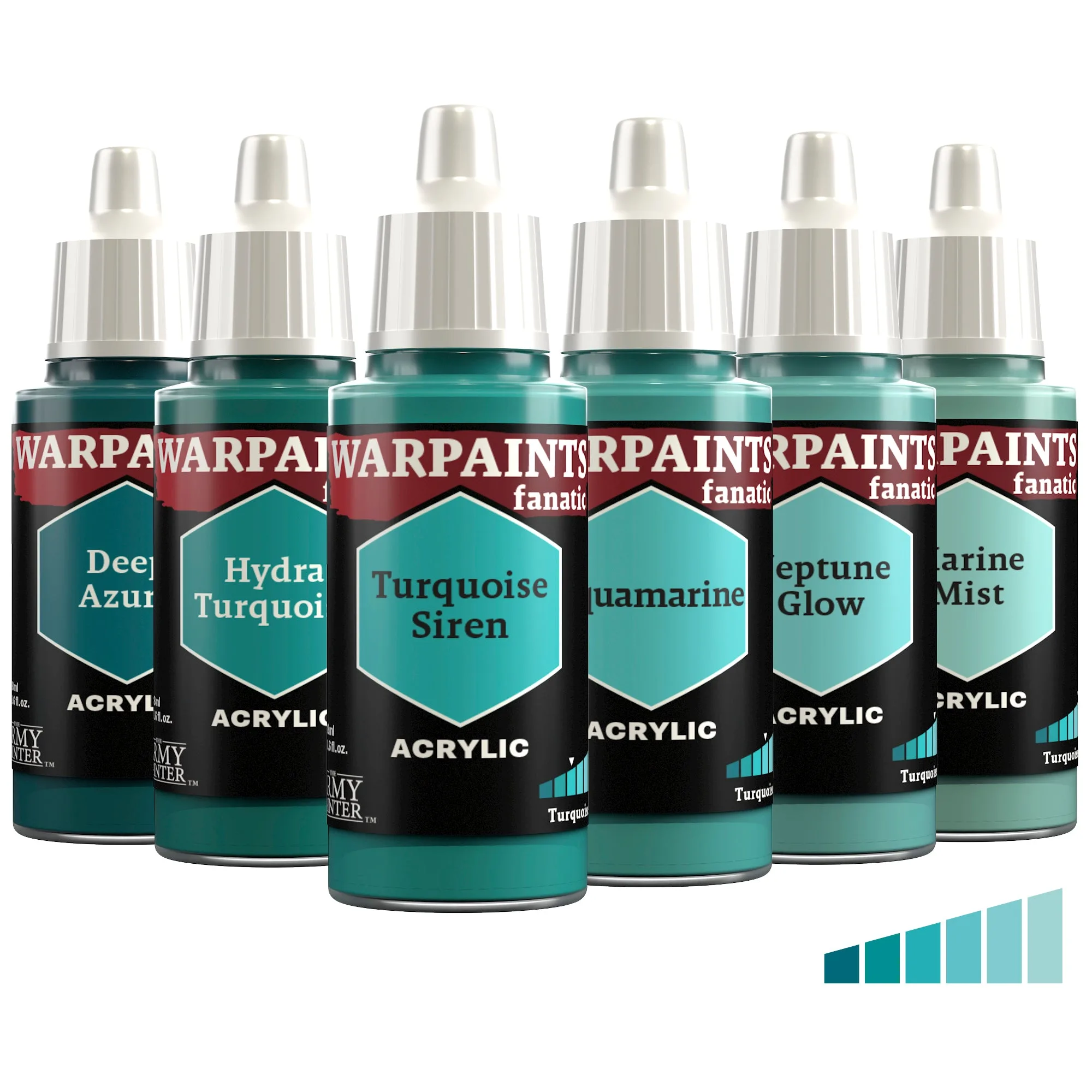
Flexible Triad: Turquoises