Quick answer
If you have open floor space and want a collaborative, movement-friendly activity for kids, a large floor puzzle is a great choice. If you prefer a focused, space-efficient challenge for one or two people, a tabletop puzzle with smaller pieces is better. Consider your available space, the puzzler's age, and how you plan to store the finished puzzle.
When you’re shopping for a new puzzle, one of the first decisions is whether to go with a floor puzzle or a traditional tabletop puzzle. Both offer satisfying challenges, but they serve different needs. Floor puzzles are designed to be assembled on the ground, often with large pieces that are easy for small hands. Tabletop puzzles, on the other hand, are typically assembled on a table or other flat surface, with smaller pieces that require more dexterity.
This guide compares the two formats across key factors like size, engagement, storage, and skill level. We’ll also look at specific examples from Genius Games, including double-sided floor puzzles and a detailed tabletop brain puzzle, to help you make an informed choice.
Size and Space Requirements
The most obvious difference is physical size. Floor puzzles are often quite large—some span over 3 feet when completed. For example, the Cat Jigsaw Puzzle is a 4FT double-sided floor puzzle, making it a substantial project that needs open floor area. This size is great for kids who like to spread out and move around while they work. In contrast, tabletop puzzles like the Human Brain Anatomy Jigsaw Puzzle have 662 pieces and are designed to be assembled on a table, requiring a dedicated flat surface but less floor space.
Before choosing, measure the area where you plan to puzzle. If you have a playroom or a large living room floor, a floor puzzle can be a fun, immersive activity. If you’re working with a small apartment or a shared table, a tabletop puzzle might be more practical. Remember that floor puzzles often require you to bend or kneel, which can be uncomfortable for some adults, so consider who will be doing the assembling.
- Measure your available floor and table space before buying.
- Consider whether you’ll need to clear the area when not puzzling.
Engagement and Interaction
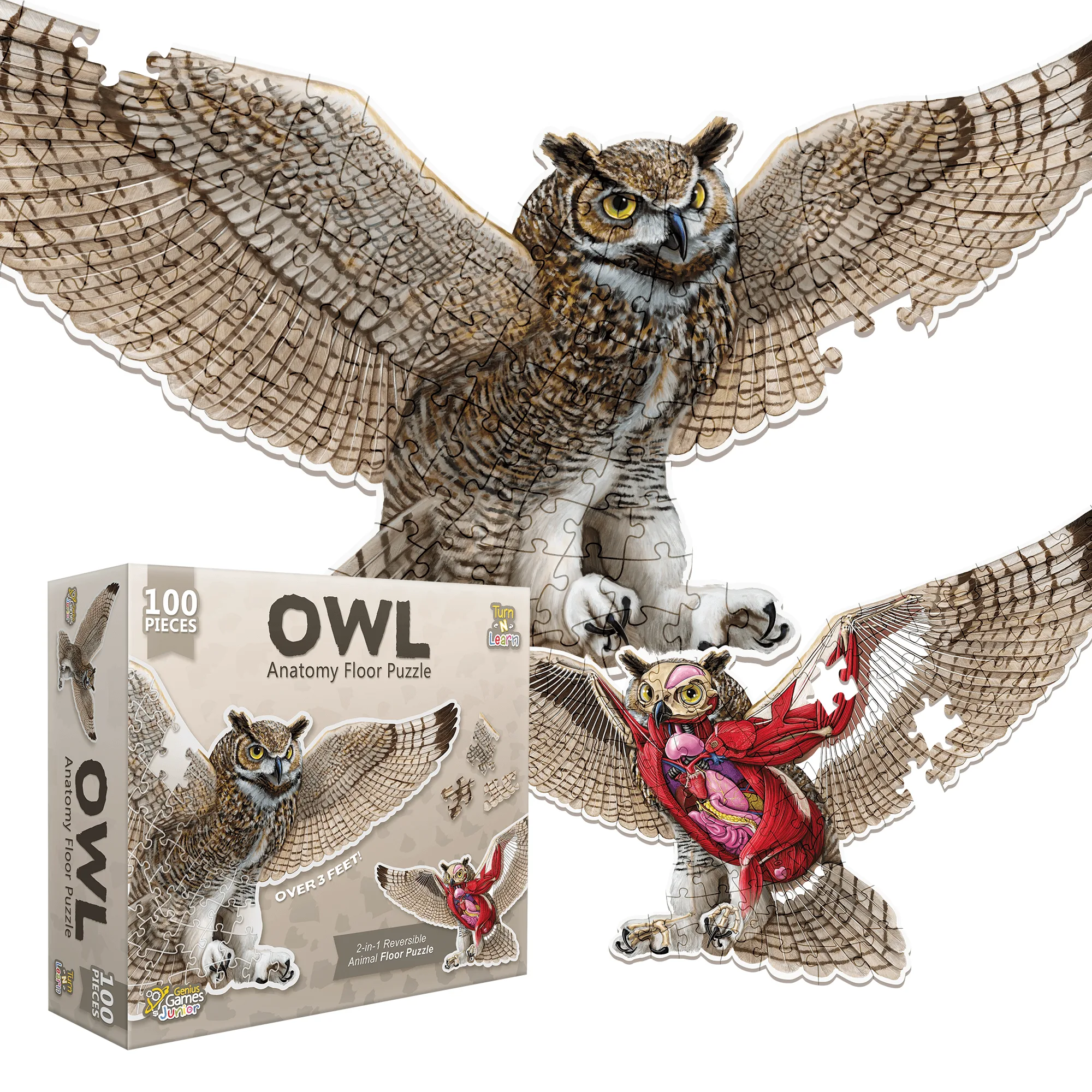
Floor puzzles naturally encourage more physical movement and can be a social activity. Kids might lie on their stomachs, reach across pieces, and collaborate with siblings or friends. The large size makes it easy for multiple children to work on different sections at once. For example, the Bundle - Tiger, Shark & Owl Jigsaw Puzzle includes three separate 100-piece floor puzzles, each over 3 feet, making it a great set for group play or rotating solo projects.
Tabletop puzzles, on the other hand, promote a more focused, seated activity. They are often chosen by older kids and adults who enjoy the mental challenge without the need for large movements. The Human Brain Anatomy Jigsaw Puzzle, with 662 pieces, is a detailed project that requires patience and attention to detail, making it ideal for a single puzzler or a pair working closely together. Think about the social dynamic you want: floor puzzles are better for active group play, while tabletop puzzles suit quieter, more concentrated sessions.
- For group play, choose a floor puzzle with multiple large sections.
- For focused solo puzzling, a tabletop puzzle offers a more intricate challenge.
Storage and Portability
Storage is a practical concern that often tips the scale. Floor puzzles, due to their large size, can be bulky to store. They typically come in a large box or a bag, and if you want to keep the completed puzzle, you’ll need a big space to display or store it. Some floor puzzles are double-sided, like the Pond Slider Turtle Jigsaw Puzzle, which adds educational value but also means you have two images to store if you keep it assembled.
Tabletop puzzles are generally easier to store. A 662-piece puzzle like the Human Brain Anatomy Jigsaw Puzzle comes in a standard-sized box that fits neatly on a shelf. If you need to pause mid-puzzle, you can use a puzzle mat or roll it up, but the smaller footprint makes it easier to manage in tight spaces. Consider whether you plan to keep the puzzle assembled for display or if you’ll take it apart after finishing—this affects how much storage you need.
- If storage is tight, a tabletop puzzle is easier to shelve.
- Floor puzzles may require a dedicated storage spot or a display wall.
Skill Level and Age Appropriateness
Floor puzzles are often marketed for younger children, typically ages 3 and up, because the large pieces are easier to grasp and less of a choking hazard. The 100-piece count in many floor puzzles, such as the Owl Jigsaw Puzzle, offers a moderate challenge for early elementary kids. The double-sided feature—showing the animal's outside on one side and its anatomy on the other—adds an educational twist that appeals to curious kids.
Tabletop puzzles, especially those with 500+ pieces, are better suited for older children, teens, and adults. The Human Brain Anatomy Jigsaw Puzzle is part of a series that includes detailed scientific illustrations, making it a hit with biology enthusiasts. If you’re buying for a child, consider their fine motor skills and attention span. Younger kids may get frustrated with tiny pieces, while older kids might find a 100-piece floor puzzle too easy. Match the puzzle type to the puzzler's experience level.
- For young kids (3-6), choose a floor puzzle with large, sturdy pieces.
- For older kids and adults, a tabletop puzzle with 500+ pieces offers a satisfying challenge.
Trade-offs at a glance
- Floor puzzles: pros: Large pieces are easy for small hands, encourage movement and group play, and often include educational double-sided designs. Best for young kids and active play.
- Tabletop puzzles: pros: Compact footprint, higher piece counts for a challenge, and easier to store or display on a shelf. Best for older kids and adults who prefer focused puzzling.
- Floor puzzles: cons: Require open floor space, can be uncomfortable to assemble for adults, and are harder to store when complete. Consider space and storage before buying.
- Tabletop puzzles: cons: Small pieces can be a choking hazard for young children and require a table that can be left undisturbed. Not ideal for toddlers or shared dining tables.
Product facts to consider
- Bundle - Tiger, Shark & Owl Jigsaw Puzzle - 4FT Double Sided Floor Puzzle: This bundle includes three 100-piece double-sided floor puzzles, each over 3 feet, featuring tiger, shark, and owl anatomy. If you want variety and value, this bundle gives you multiple floor puzzles that can be rotated, perfect for kids who love animals and science.
- Human Brain Anatomy Jigsaw Puzzle | Dr. Livingston's Unique Shaped Science Puzzles: This 662-piece tabletop puzzle is set 2 of 5 in the Dr. Livingston series, illustrated by a certified medical illustrator from Johns Hopkins University. For older puzzlers interested in detailed anatomy, this offers a challenging and educational tabletop experience that can be displayed as a conversation piece.
How to decide
Best for
- Families with young children who have a dedicated play area and want a collaborative, educational activity.
- Puzzlers who enjoy large, visually striking images and don't mind assembling on the floor.
Not for
- Adults or older kids who prefer a quiet, detailed challenge on a table.
- Anyone with limited floor space or who needs to clear the area frequently.
Choosing between a floor puzzle and a tabletop puzzle ultimately comes down to your space, the puzzler's age, and the experience you want. Floor puzzles like the Cat Jigsaw Puzzle or the Pond Slider Turtle Jigsaw Puzzle are fantastic for young kids and group play, offering large, double-sided educational fun. Tabletop puzzles like the Human Brain Anatomy Jigsaw Puzzle provide a more intricate, focused challenge for older enthusiasts. Assess your room, storage, and who will be puzzling, and you'll find the perfect fit.