Quick Answer
If your main concern is brightening your smile, choose a fluoride-free whitening toothpaste; if tooth sensitivity is your priority, choose a sensitive formula. Each addresses a different need, so the right pick depends on your primary goal.
What Each Formula Does Differently
Fluoride-free whitening toothpaste focuses on removing surface stains and gently polishing teeth to reveal a brighter smile. It typically contains mild abrasives or natural ingredients that help lift discoloration without harsh chemicals.
Sensitive toothpaste is designed to help calm the discomfort that can come from hot, cold, sweet, or acidic foods. It works by addressing the nerve pathways in your teeth, often using ingredients that help block the sensations that trigger pain.
Because these formulas target different concerns, they are not interchangeable. Choosing the wrong one may leave your main issue unaddressed, so it's important to match the product to your specific need.
The Trade-Off: Whitening vs. Sensitivity Relief
A whitening toothpaste may not provide sensitivity relief, and a sensitive formula may not effectively remove stains. If you have both concerns, you may need to alternate or choose a product that offers a balance, but be aware that a single tube rarely excels at both.
Whitening toothpastes can sometimes be more abrasive, which might aggravate sensitive teeth. On the other hand, sensitive formulas are often gentler, but that gentleness may mean less stain-removing power.
Consider your daily habits and diet. If you drink coffee, tea, or red wine regularly, whitening might be your priority. If you wince when eating ice cream or drinking cold water, sensitivity relief likely matters more.
How to Decide: Whitening vs. Sensitive
- If your main goal is a brighter smile: Choose a fluoride-free whitening toothpaste like the Antiplaque & Whitening Spearmint formula. It helps fight plaque and gently whiten, but it may not address sensitivity.
- If tooth sensitivity bothers you regularly: Pick a sensitive formula like the Rapid Relief Sensitive toothpaste. It's designed for rapid relief, but it may not remove stains as effectively as a whitening toothpaste.
- If you have both concerns: Consider alternating between the two formulas—use whitening in the morning and sensitive at night—or talk to your dentist about a tailored routine. No single tube perfectly solves both. Track how your teeth respond over a few weeks to see which concern improves and adjust accordingly.
Product Comparison
-
Fluoride-Free Antiplaque & Whitening Spearmint Toothpaste: Tom's of Maine Fluoride-Free Antiplaque & Whitening Spearmint Toothpaste helps fight plaque and gently whiten your smile. This is a good pick if you want a natural toothpaste that targets plaque and surface stains while keeping your breath fresh with spearmint.
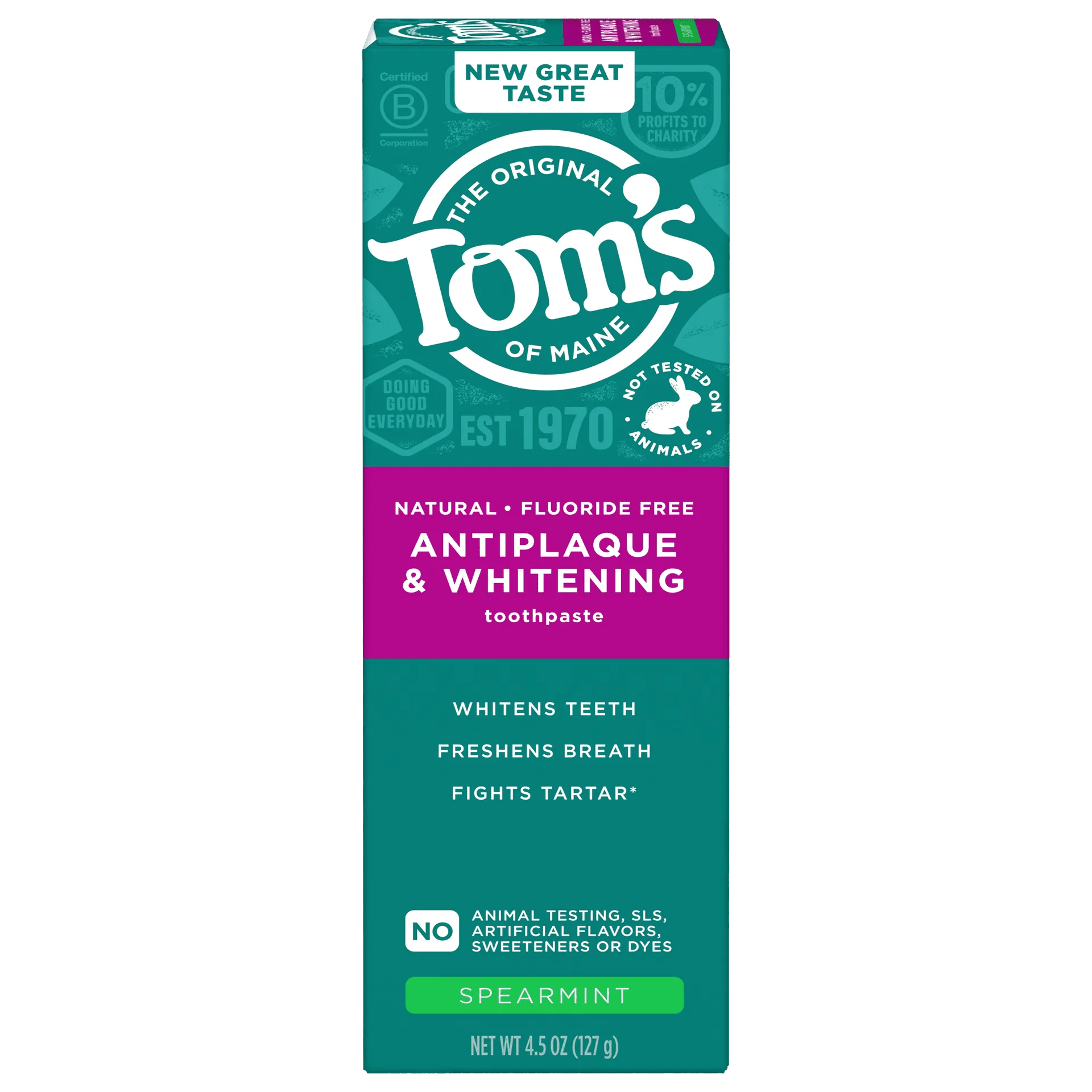
Fluoride-Free Antiplaque & Whitening Spearmint Toothpaste
-
Rapid Relief Sensitive Fluoride-Free Toothpaste: Tom's of Maine Rapid Relief Sensitive Fluoride-Free Toothpaste is specifically formulated for sensitive teeth to help provide rapid relief. Choose this if tooth sensitivity is your primary concern and you prefer a fluoride-free natural option that focuses on calming discomfort.
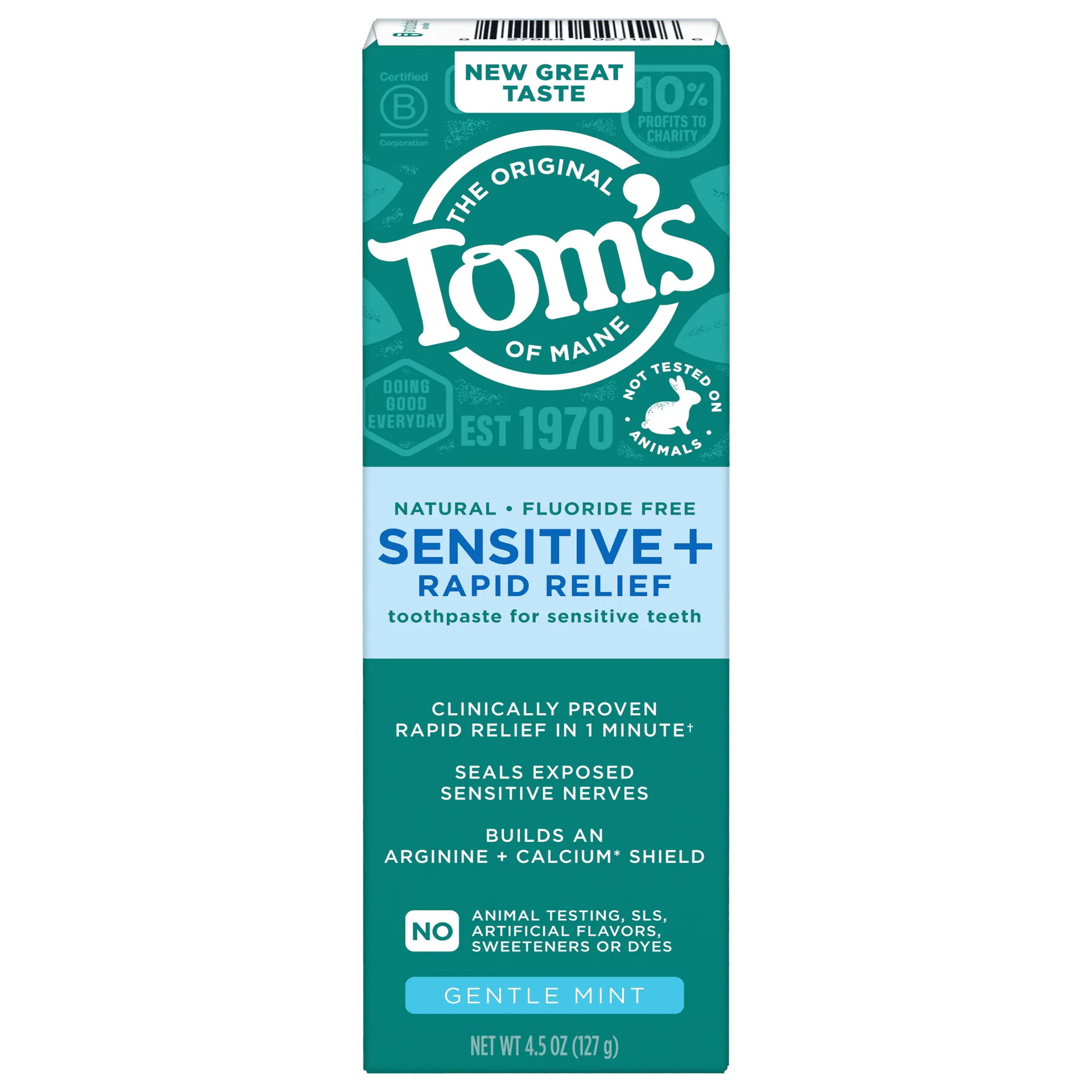
Rapid Relief Sensitive Fluoride-Free Toothpaste
Who Should Choose Which
Best for
- People who want to brighten their smile and fight plaque with a natural fluoride-free toothpaste
- Those who experience occasional tooth sensitivity and want a gentle, fluoride-free option
Not for
- Whitening toothpaste is not ideal if you have severe sensitivity or exposed dentin, as it may cause discomfort
- Sensitive toothpaste is not ideal if your main goal is significant stain removal or whitening