Quick Answer
For toddlers under three who are still learning to balance, foam play cubes for toddlers are the safer, softer first choice. For children aged three and up who need climbing, swinging, and long-term durability, wooden climbing blocks and climbing sets are the better investment. Many playrooms work best with both: foam cubes for quiet building and wooden equipment for active indoor play.
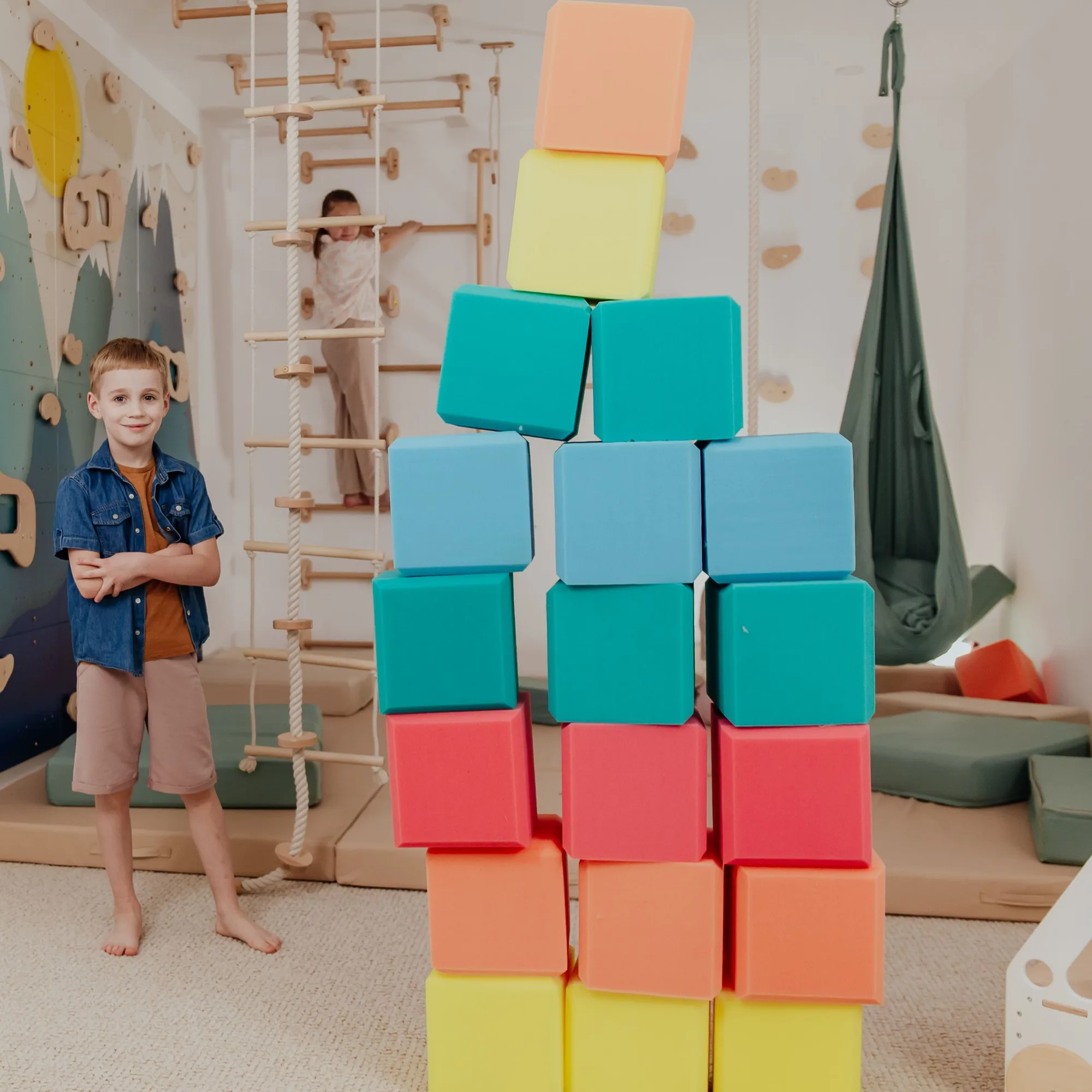
foam cubes
Choosing between foam cubes and wooden climbing blocks usually comes down to your child's age, your available floor space, and how you want the room to feel. Foam is forgiving and light; wood is sturdy and modular. Neither is universally better, but one will fit your playroom better right now.
This comparison uses real product facts from the Woodandhearts catalog to show where each material wins, where it costs you, and how to combine them without wasting money or floor space.
Safety and Age Fit
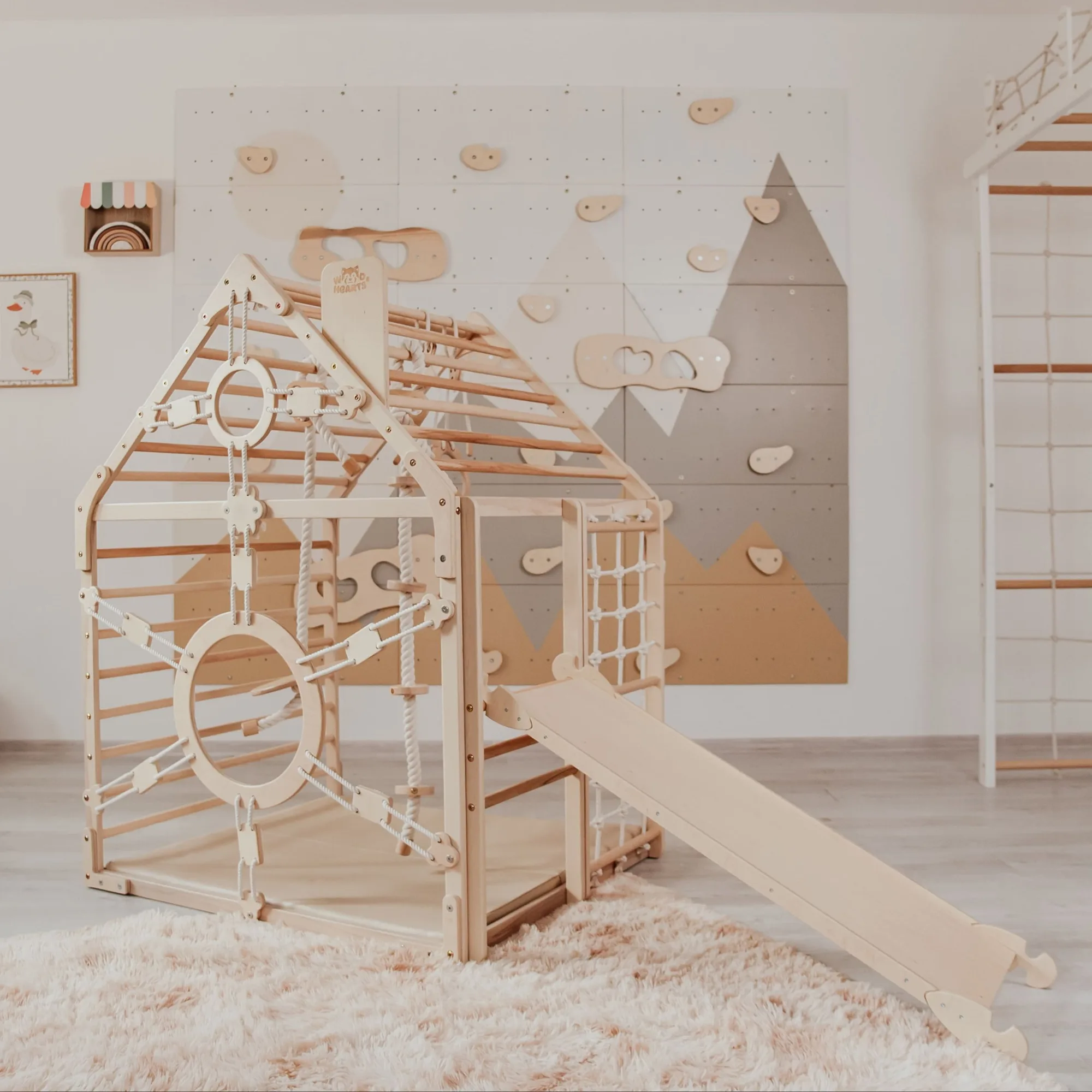
Foam Building Blocks are a safe construction toy with no age restrictions for play, which makes them a natural fit for toddlers who fall often and put everything in their mouths. The soft edges reduce impact during early walking and stacking. Wooden climbing blocks and climbing frames are built for older children: the Home Climbing Wall is designed for ages 3 to 8, and the Wooden Climbing Playhouse is recommended for ages 1 to 6 with adult supervision. The trade-off is clear: foam protects the youngest users, while wood challenges older children who need real climbing resistance.
If your playroom serves a mixed-age group, foam cubes can be the shared base layer while wooden equipment stays in a defined zone. That keeps toddlers away from hard edges and gives older kids a space to climb without stepping on soft blocks.
- Check the manufacturer age range before buying any climbing equipment.
- Place foam cubes on the floor around wooden climbers as an extra landing zone.
Durability and Long-Term Value
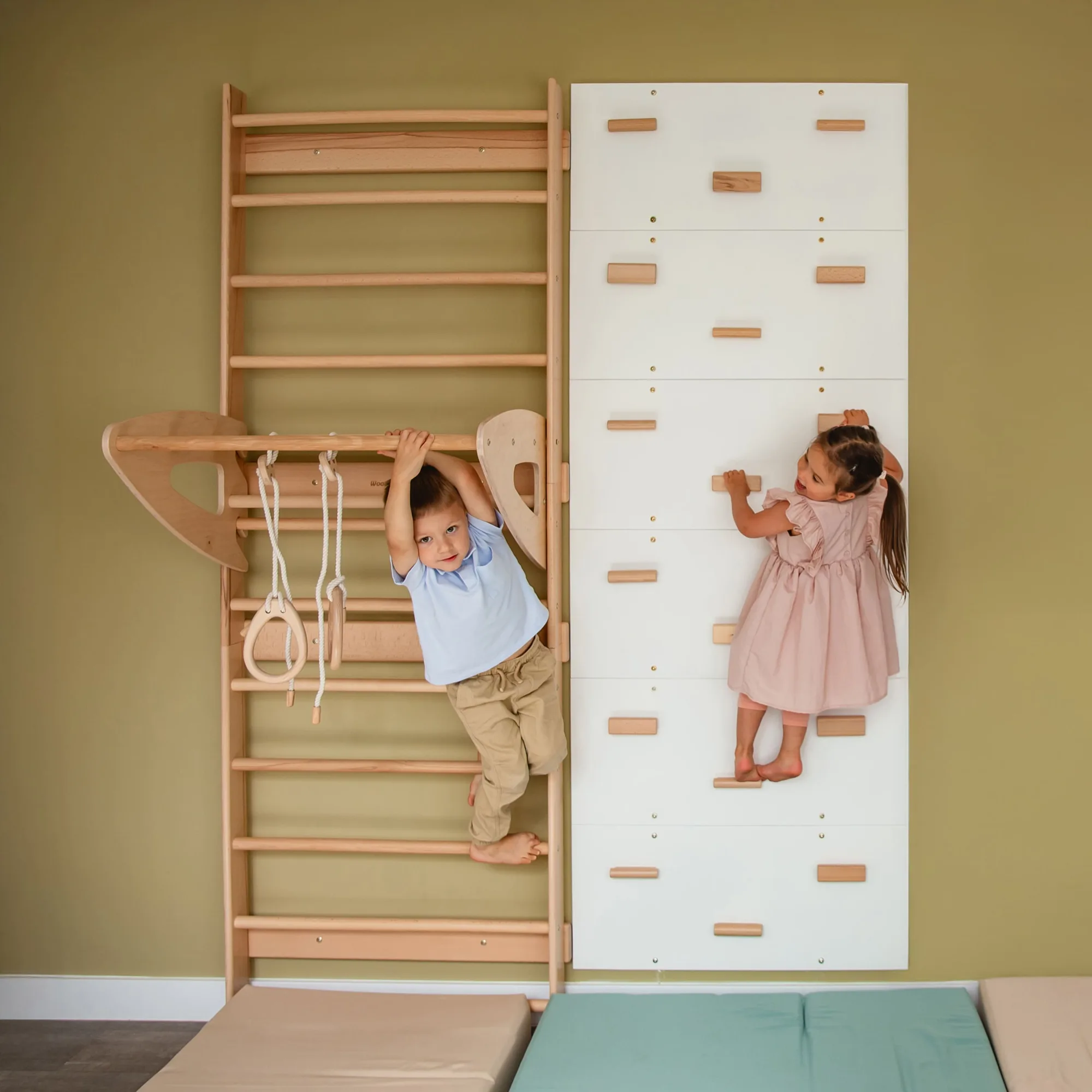
Foam compresses over time, especially if children jump on it or it stays under heavy furniture. Wooden climbing blocks and wall sets hold their shape for years and can often be re-stained or rearranged. The Swedish Climbing Wall includes a natural wood wall and six rectangular climbing panels in four color variations, so it can grow with a child rather than being outgrown in a single season. That durability is why wooden sets usually cost more upfront. The Foam Building Blocks are priced at USD 88.00, while the Home Climbing Wall is USD 188.00 and the Wooden Climbing Playhouse is USD 367.00. Foam is the lower-risk entry point; wood is the longer-term purchase.
- Store foam blocks off the floor when not in use to slow compression.
- Wipe wooden climbing holds with a damp cloth instead of soaking them.
Space and Setup
Foam cubes are the easier fit for small rooms because they can be stacked in a corner or pushed under a shelf. Wooden climbing equipment needs a dedicated footprint and safe clearance. The Indoor Play Gym combines climbing, swinging, and balancing elements for children aged 3 and up, and it works best when it has a defined play zone rather than being moved daily. The Monkey Bars Indoor Playground Bundle is even larger, combining monkey bars, a climbing wall, swings, a pod swing, and a safety mat. That bundle is a playroom centerpiece, not a toy you tuck away. Measure your room and decide whether you want flexible floor space or a permanent activity zone.
- Leave at least a arm's-length clearance around any swinging or climbing element.
- Use a wall-mounted set like the Swedish Climbing Wall when floor space is tight.
Play Value and Skill Development
Foam cubes support open-ended building, color sorting, and quiet pretend play. They are excellent for language and fine-motor practice because children can move them independently. Wooden climbing blocks and climbing walls target gross motor skills: strength, coordination, and balance. The Home Climbing Wall is described as bringing the challenge of rock climbing into the living space, which builds grip and body awareness. The two categories are not competitors so much as different tools. A playroom with only foam may leave active kids bored; a playroom with only wood may leave quiet builders without a creative outlet.
- Rotate toys weekly so both foam and wooden options stay interesting.
- Pair a wooden climber with a soft landing mat for confident risk-taking.
Cleaning and Maintenance
Foam blocks usually have a wipeable surface, but seams and cracks can trap crumbs and moisture over time. Wooden climbing equipment is generally easier to wipe down and does not absorb spills the same way, though it can show scratches and dents. Neither material is maintenance-free. If your playroom doubles as a snack area, wood is the more forgiving choice. If your priority is quick cleanup after craft time, foam cubes can be wiped and stacked in minutes. The right answer depends on which mess your household actually creates most often.
- Use a mild soap and water mix for both foam and sealed wood surfaces.
- Avoid harsh solvents that can break down foam or strip wood finish.
Cost and Resale
Foam cubes are the cheaper starting point, but they may need replacing sooner if they are heavily used. Wooden climbing sets cost more upfront and hold resale value better because the material and hardware last. The Indoor Play Gym is USD 879.50 and the Monkey Bars Indoor Playground Bundle is USD 1062.47, both positioned as complete play systems rather than single toys. If your budget is tight, start with foam and add a wooden wall or climber later. If you are furnishing a playroom for multiple children over several years, buying wood once often costs less than replacing foam repeatedly.
- Buy foam first if you are unsure how much use the playroom will get.
- Buy wood first if you have the space and want a permanent activity zone.
Trade-Offs at a Glance
- Safety vs. Challenge: Foam cubes are softer and safer for toddlers, but they do not build climbing strength the way wooden blocks and walls do. Choose foam for under-threes, wood for confident climbers aged three and up.
- Flexibility vs. Permanence: Foam stacks away in minutes, while wooden climbing sets like the Swedish Climbing Wall or Indoor Play Gym need a dedicated zone. Measure your room before buying wood; foam forgives a small space.
- Upfront Cost vs. Replacement: Foam costs less today but may compress and need replacing, while wooden sets cost more upfront and last through multiple children. If the playroom is long-term, wood usually costs less per year of use.
Product Facts That Matter
- Foam Building Blocks: Colorful large Foam Building Blocks are a safe construction toy with no age restrictions for play, priced at USD 88.00. They work for toddlers and mixed-age groups, and the low entry price makes them easy to try before committing to a larger wooden set.
- Wooden Climbing Playhouse: The Wooden Climbing Playhouse blends a Montessori-inspired climber with a cozy kids' hut for ages 1 to 6, priced at USD 367.00. It combines active climbing with a quiet reading or pretend-play space, so it earns its floor footprint in a smaller playroom.
- Indoor Play Gym: The Indoor Play Gym combines climbing, swinging, and balancing elements for children aged 3 and up, priced at USD 879.50. It is a complete active-play system rather than a single toy, which suits families who want one dedicated movement zone.
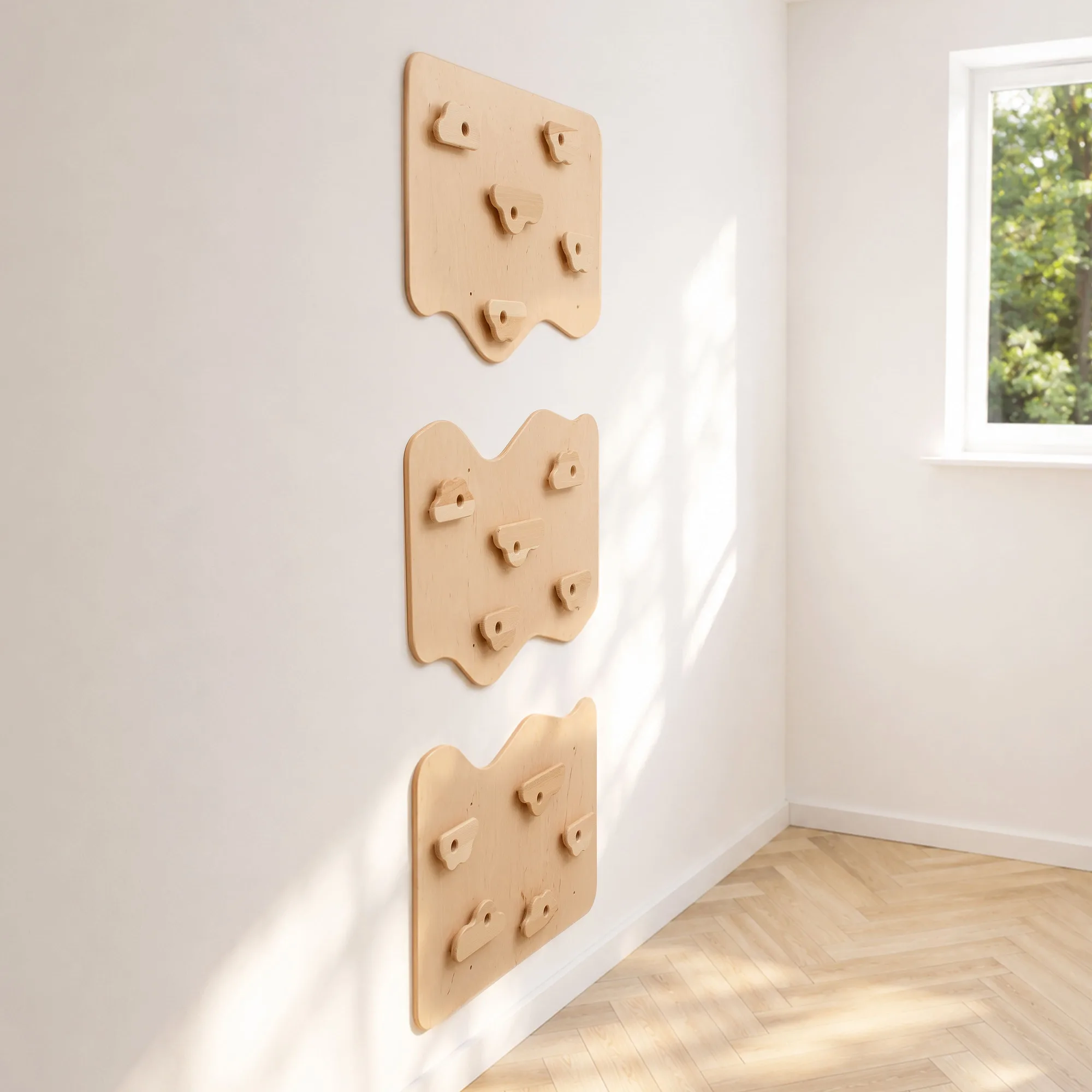
- Home Climbing Wall: The Home Climbing Wall is designed for kids aged 3 to 8 years and is priced at USD 188.00. It is the lower-cost wooden climbing option, making it a practical bridge between foam-only play and a full indoor playground.
Which Should You Buy?
Best for
- Toddlers under three who need soft, safe stacking and building
- Small playrooms where equipment must be stored away after use
- Families who want a low-cost first block set before investing in wood
Not for
- Children aged three and up who need real climbing and swinging challenge
- Playrooms where blocks will be used daily and must hold their shape for years
- Families who want a permanent activity zone rather than a toy that gets packed away
Foam cubes and wooden climbing blocks solve different problems, and the best playroom often uses both. Start with foam if your child is under three or your space is temporary. Move to wood when you are ready for a permanent climbing zone that will outlast the toddler years.