Quick answer
Foam toys win for soft, floor-friendly, and lightweight play—especially for early walkers and indoor spaces—while plastic toys offer harder surfaces for building and outdoor use. If you want a toy that grows with your child and is gentle on furniture, foam is the better pick; if you need rigid pieces for construction play, plastic is the way to go.
Choosing between foam and plastic toys often comes down to where and how your child plays. Foam toys are typically softer, lighter, and quieter on floors, making them a natural fit for hallways, playrooms, and early walking stages. Plastic toys tend to be firmer and more rigid, which suits building, sorting, and outdoor adventures.
But the trade-offs go beyond feel. Safety, durability, and long-term play value depend on the specific design and materials. In this comparison, we look at real examples from Nuby—like the Boogie Buggy and Rock 'N Ride—to show how foam performs in daily use, and where plastic still has the edge.
Safety: What Parents Should Know
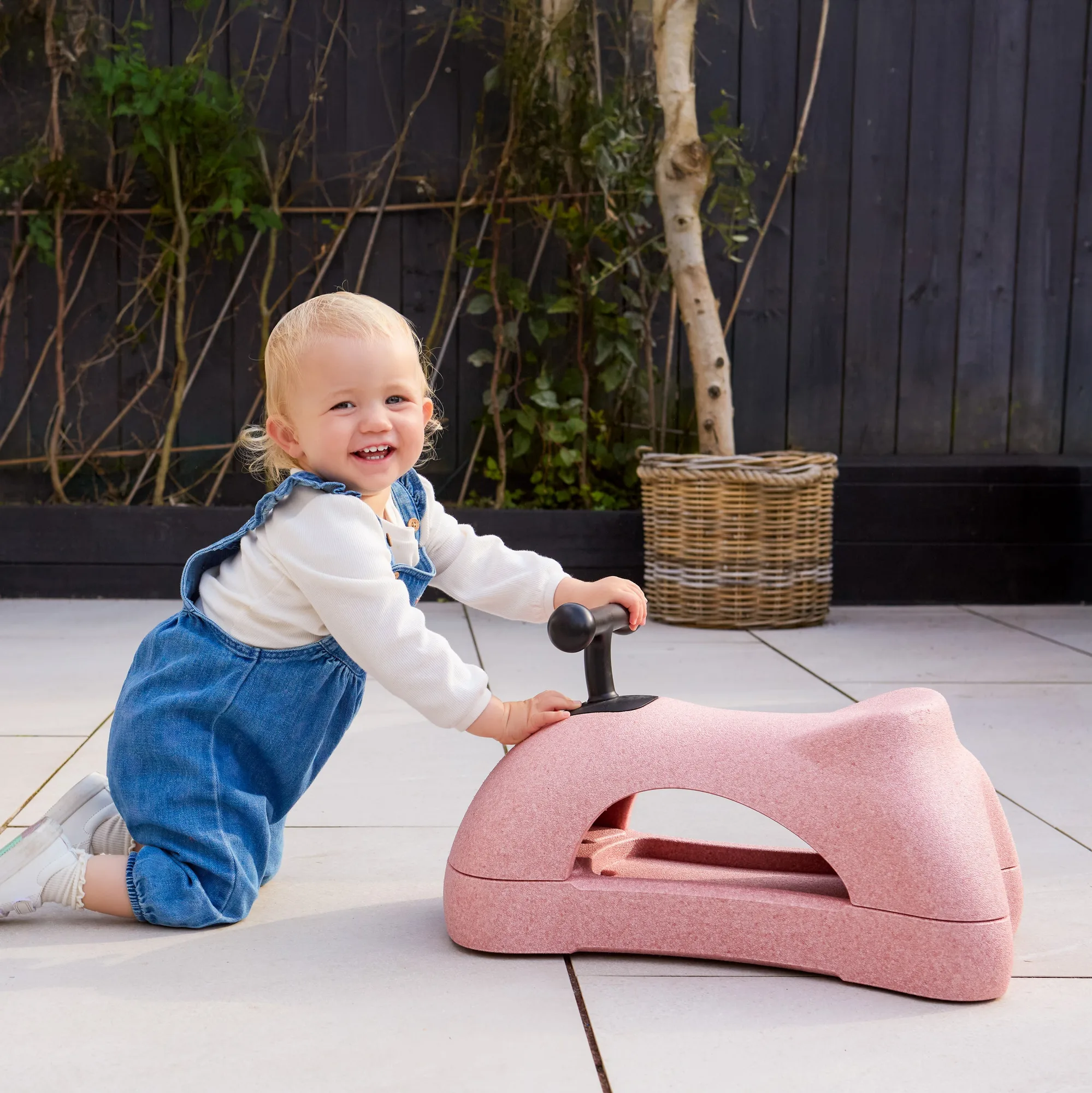
Foam toys are often chosen for their softness, which reduces the risk of bumps and bruises during active play. The Boogie Buggy, for instance, is made of waterproof EPP foam that is soft on furniture and floors yet durable enough for toddler energy. This makes it a reassuring choice for indoor spaces where sharp corners or hard plastic could be a hazard.
Plastic toys, on the other hand, can be very safe when they are well-made and free of small parts. However, they are harder and can hurt if a child falls on them. For babies who are just sitting up, a foam ball pit like the Kids' Ball Pit provides soft but sturdy walls for security. Always check age recommendations and ensure plastic toys have no sharp edges.
- Look for foam toys labeled non-toxic and free from harmful chemicals.
- For plastic toys, check for smooth edges and sturdy construction.
Durability: How They Hold Up Over Time
Foam toys can be surprisingly tough. The Boogie Buggy and Rock 'N Ride are both made from ultra-durable, waterproof EPP foam that resists cracking and is easy to wipe clean. This means they can handle daily use and occasional spills without losing their shape. However, foam can still be punctured by sharp objects or chewed by determined teethers.
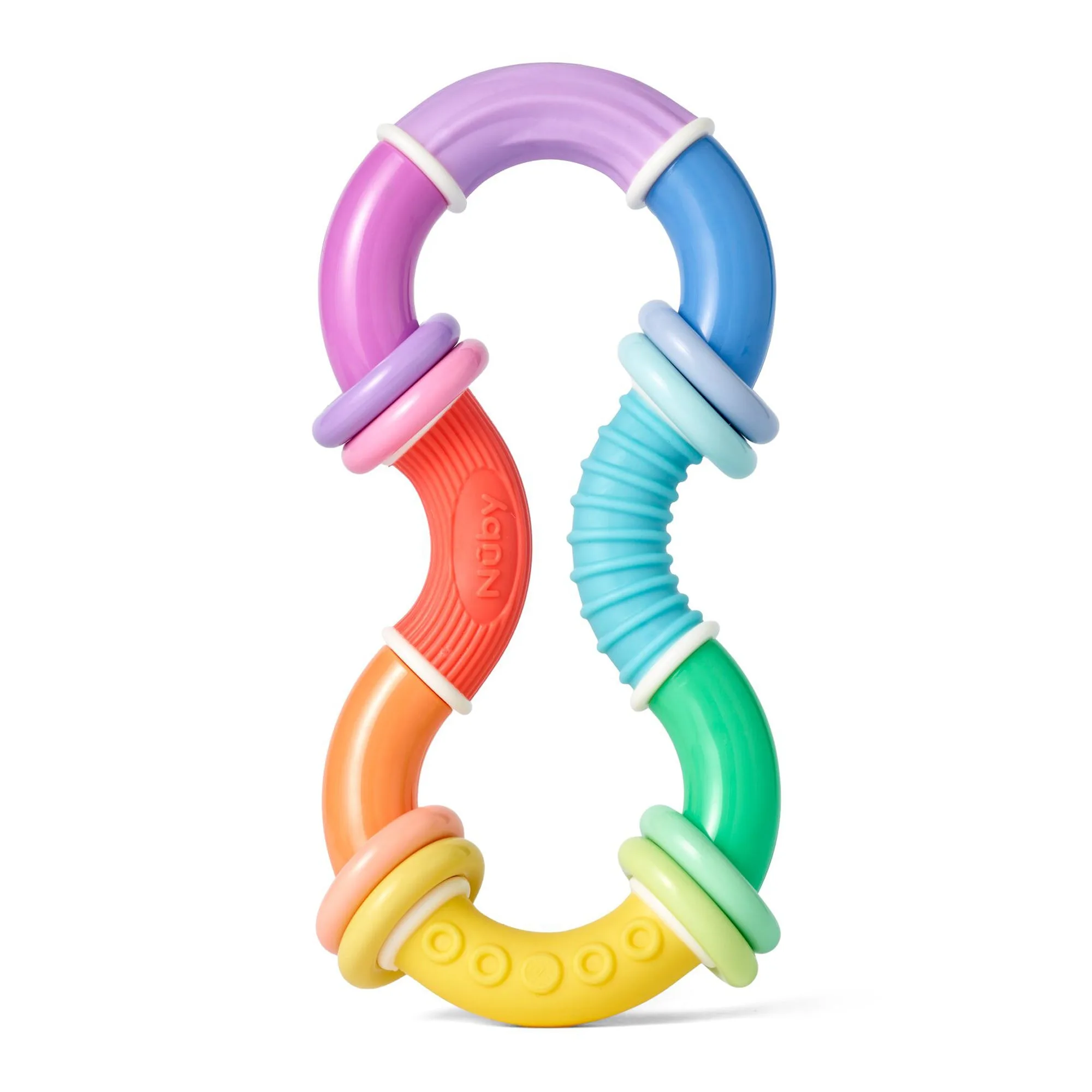
Plastic toys are generally more resistant to punctures and can last for years, especially if they are made from thick, high-quality plastic. But they can become brittle over time or crack if dropped on hard surfaces. For teething babies, a plastic teether like the Twista Rattle Teether offers textured surfaces that provide relief and are built to withstand gnawing.
- Inspect foam toys regularly for tears or crumbling.
- Choose plastic toys with rounded edges and no loose parts.
Play Value: Which Material Encourages More Learning?
Foam toys often shine in active, open-ended play. The Boogie Buggy transforms from a scooter to a walker to a caster board, supporting balance and coordination as your child grows. This 3-in-1 design means it adapts to different stages, offering long-term value. Similarly, the Rock 'N Ride changes from rocker to scooter to caster board, encouraging imagination and physical development.
Plastic toys excel in structured play, such as building blocks, puzzles, and sorting games. They can be more precise and are often used in educational settings. For babies, a wooden play gym like the Animal Adventures Wooden Play Gym combines wood with hanging toys to develop hand-eye coordination. While not plastic, it shows how rigid materials can offer different sensory experiences.
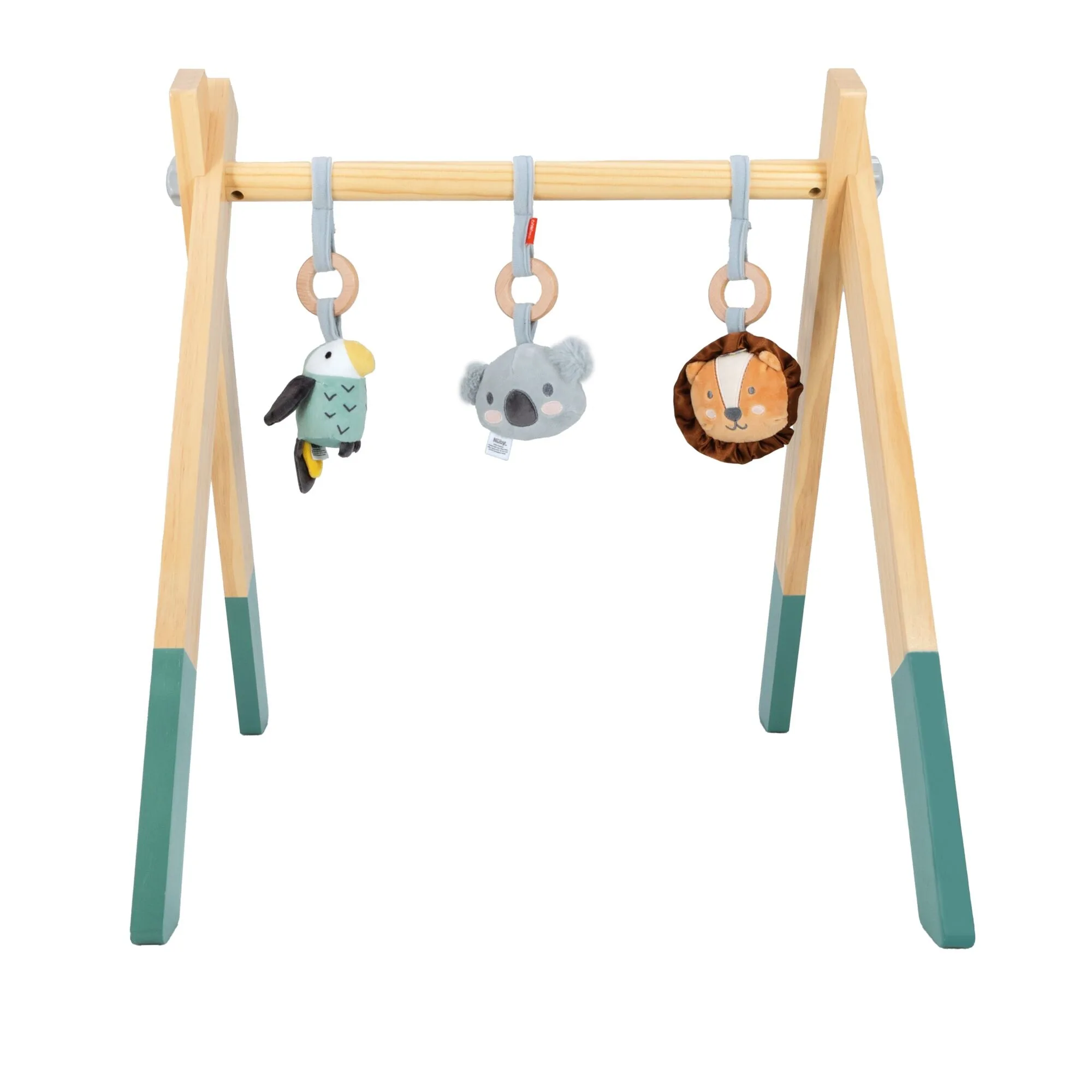
wooden play gym
- Rotate toys to keep play fresh and match developmental stages.
- Combine materials: foam for active play, plastic for tabletop learning.
Cleaning and Maintenance
Foam toys are typically easy to clean because many are waterproof. The Boogie Buggy can be wiped down with a damp cloth, which is a big plus for busy parents. However, foam can harbor bacteria if not dried properly, so avoid soaking it. Plastic toys are also easy to clean and can often be submerged or washed with soap and water.
For teething toys, hygiene is critical. The Twista Rattle Teether can be washed with warm soapy water or placed in the dishwasher (check manufacturer instructions). Always dry toys thoroughly before storage to prevent mold, especially in humid climates.
- Use mild soap and water for most foam and plastic toys.
- Avoid harsh chemicals that can degrade materials.
Trade-offs at a glance
- Softness vs. structure: Foam toys like the Boogie Buggy are soft and floor-friendly, reducing bumps, but they lack the rigid structure of plastic for building and stacking. Choose foam for active, open-ended play; choose plastic for construction and tabletop activities.
- Durability vs. vulnerability: EPP foam resists cracking and is waterproof, but it can be punctured or chewed. Plastic is puncture-resistant but may crack if dropped on hard surfaces. Inspect both regularly; replace if you see tears or cracks.
- Cleaning ease vs. care: Foam toys are easy to wipe clean but should not be soaked. Plastic toys can often be submerged or dishwashed, but check instructions. Dry thoroughly before storage to prevent mold.
Product facts
- Boogie Buggy | Pink: 3-in-1 scooter, walker, and caster board made of ultra-durable, waterproof EPP foam; soft on furniture and floors; lightweight; easy to wipe clean; for 12+ months. This design grows with your child and is gentle on indoor spaces, making it a practical foam option for early walkers.
- Rock 'N Ride | Blue: 3-in-1 rocker, scooter, and caster board made from lightweight, durable, waterproof EPP foam; transforms without tools; soft on floors and furniture; for 12+ months. The tool-free transformation adds play value and durability, while the foam construction protects floors and little knees.
- Twista Rattle Teether Toy | Colorful Rings: Teether with textured surfaces that provide relief; stimulates senses and develops dexterity and hand-eye coordination; available with rattle balls or colorful rings. This plastic teether offers a firm, textured surface for gnawing, contrasting with soft foam toys for active play.
- Kids' Ball Pit for Home with 200 Balls | Aqua: Soft but sturdy walls offer security when babies sit upright; sleek, modern design; light and easy to move; includes 200 balls. The foam walls provide a safe, enclosed play space that is gentle for sitting babies and easy to relocate.
Which material fits your family?
Foam toys are best for
- Toddlers who are learning to walk and need a soft, stable support like the Boogie Buggy.
- Indoor playrooms where noise and floor protection matter.
- Parents looking for lightweight toys that are easy to move and clean.
Plastic toys are better for
- Children who enjoy building and need rigid pieces that stay put.
- Outdoor play where toys may be exposed to rough surfaces.
- Families who prefer toys that can be fully submerged for deep cleaning.
Both foam and plastic toys have a place in your child's play rotation. Foam excels for active, indoor, and early walking stages, while plastic offers structure and durability for building and outdoor adventures. Match the material to your child's current needs and the play environment, and you'll get the most value from every toy.