Why the Forest Scene Tray Puzzle Works for Toddlers
The Forest Scene 35 piece tray puzzle is designed with toddlers in mind. Each piece is large enough for small hands to grasp easily, and the tray itself has a printed outline underneath each piece. That outline acts like a map, showing exactly where every piece belongs. For a child tackling their first puzzle, this visual cue removes guesswork and builds confidence.
The scene itself—a friendly anteater drinking from a stream, a raccoon peeking from a hidey-hole, and other woodland animals—is charming and engaging. Michelle Simpson's artwork gives toddlers a recognizable story to follow as they place each piece.
Puzzle at a Glance
-
Forest Scene (tray) | 35 Piece Tray: 35 large pieces in a tray with definitive outlines underneath to help identify where each piece goes. The outline guides toddlers to the correct spot, reducing frustration and teaching matching skills.
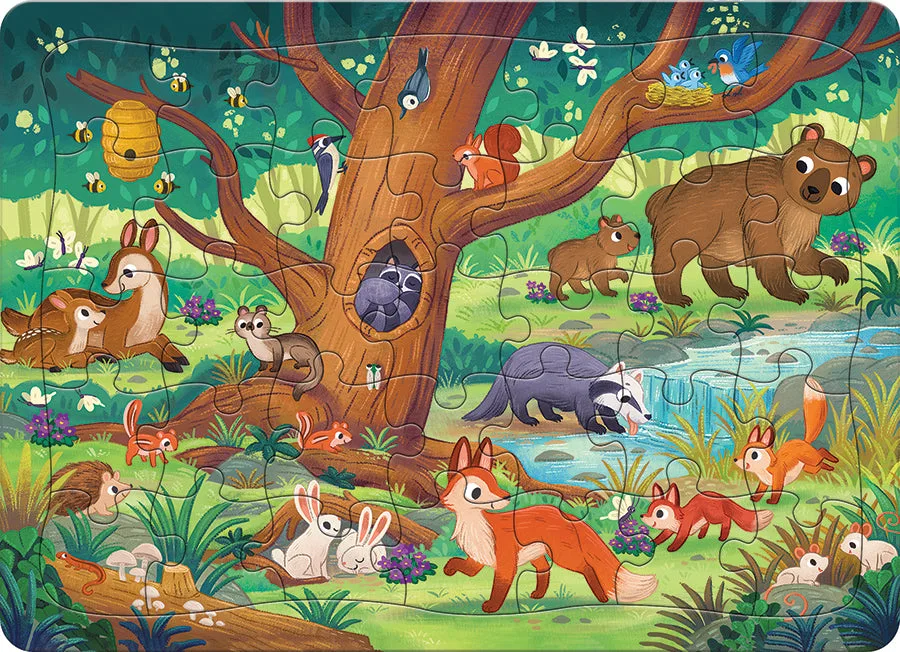
Forest Scene (tray) | 35 Piece Tray
-
Forest Scene (tray) | 35 Piece Tray: Recommended for ages 3+. This age rating matches the developmental stage when children can begin matching shapes and images.
-
Forest Scene (tray) | 35 Piece Tray: Large pieces make it easy for hands to grasp and allow those needing more visual cues to see a greater portion of the image per piece. Bigger pieces are easier to hold and manipulate, which is especially helpful for young children or those with fine motor delays.
A Simple Build Sequence for Toddlers
The goal is to make the first few builds feel like a game, not a chore. Follow this order to keep your child engaged.
- 1. Look at the picture together: Before you start, point out the animals in the scene. Ask your child to find the anteater, the raccoon, or the stream. This builds familiarity with the image.
- 2. Remove the pieces and sort by shape: Take all 35 pieces out of the tray. Show your child how some pieces are long and narrow, while others are short and wide. Sorting is a pre-reading skill that also helps with puzzle solving.
- 3. Match the outline: Hold up one piece and compare it to the outlines in the tray. Say something like, 'This piece looks like it fits right here.' Let your child try to place it. If it doesn't fit, turn the piece or try a different spot.
- 4. Build from the edges inward: The tray's edges are straight and easy to spot. Start with pieces that have a straight edge. Then move to the middle. This strategy works for any puzzle, but the outline makes it even simpler.
- 5. Celebrate each piece: Every time a piece clicks in, give a high five or a cheer. Positive reinforcement turns the activity into a happy memory and encourages your child to keep going.
Tips for a Stress-Free First Build
Keep the first session short—five to ten minutes is plenty. If your child loses interest, put the puzzle away and try again later. The tray design means you can leave the puzzle half-done without pieces scattering.
If your child struggles with a piece, resist the urge to take over. Instead, guide their hand gently toward the outline. Let them feel the satisfaction of placing it themselves.
The large pieces are durable and inlaid, so they stay put once placed. This gives toddlers a clear sense of progress as the image comes together.
Who This Puzzle Suits Beyond Toddlers
While the Forest Scene is labeled for ages 3+, it also works well for older children or adults who need a low-frustration, high-success activity. The large pieces and outline tray make it accessible for individuals with visual or fine motor challenges. And because the scene is sweet rather than childish, it can be a calming break for anyone.