Quick answer
A fort kit gives you structure — poles, connectors, and clips that hold a defined shape — so it wins for kids who want a sturdy hideout they can rebuild the same way. Playsilks are unstructured fabric squares that drape over furniture, clip to anything, and pack flat, making them the better choice for toddlers, tiny rooms, and open-ended play. If you want one purchase that covers both, start with a fort kit and add playsilks as a canopy layer.
What each option actually is (and what it is not)
A fort kit typically includes rods or poles plus connectors, and sometimes clips or fabric panels. The structure stands on its own once assembled, so the child builds a frame first and then decides what to do inside it. Playsilks are large, lightweight squares of fabric — often silk or a silk-like blend — with no frame at all. The child supplies the structure by draping them over chairs, tables, sofa backs, or a doorway.
Neither option is a permanent playhouse. A fort kit needs floor space and a few minutes of assembly; playsilks need furniture to anchor to and stay put only as well as the child's draping. If you are comparing a playsilk canopy vs fort kit, the real difference is this: one gives shape, the other gives flexibility.
Stability, setup, and storage compared
Fort kits win on repeatability. Once the connectors are pushed in, the frame holds its shape, so a four-year-old can build the same tunnel or tower twice in a row. The trade-off is storage: poles are long and bulky, and a kit with many pieces takes up a bin or a closet corner. Playsilks win on storage and setup speed — they fold into a drawer, clip to a chair in seconds, and let a toddler 'build' without waiting for an adult.
The honest limitation is that playsilks have no structural strength on their own. A silk draped between two chairs will sag, and a determined toddler can pull it down. That is not a defect; it is the design. If your child gets frustrated when a fort collapses, a fort kit's rigid frame will cause fewer tears.
Which is better for toddlers vs. older kids
For children under three, playsilks are usually the safer and more usable choice. There are no connectors to jam together, no poles to swing, and the fabric is soft if it lands on a face. Toddlers can drape, carry, hide under, and peek through a silk long before they can assemble a frame.
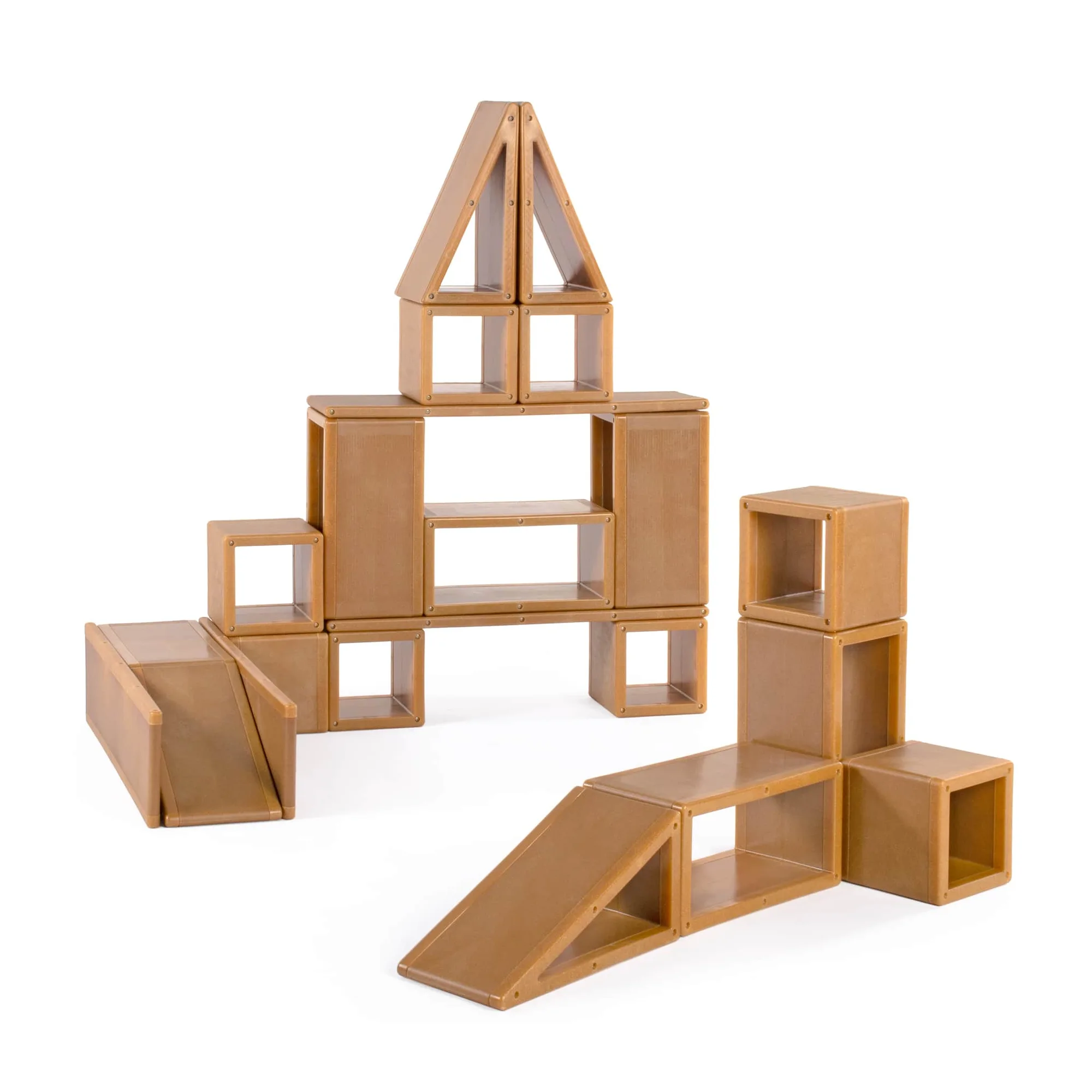
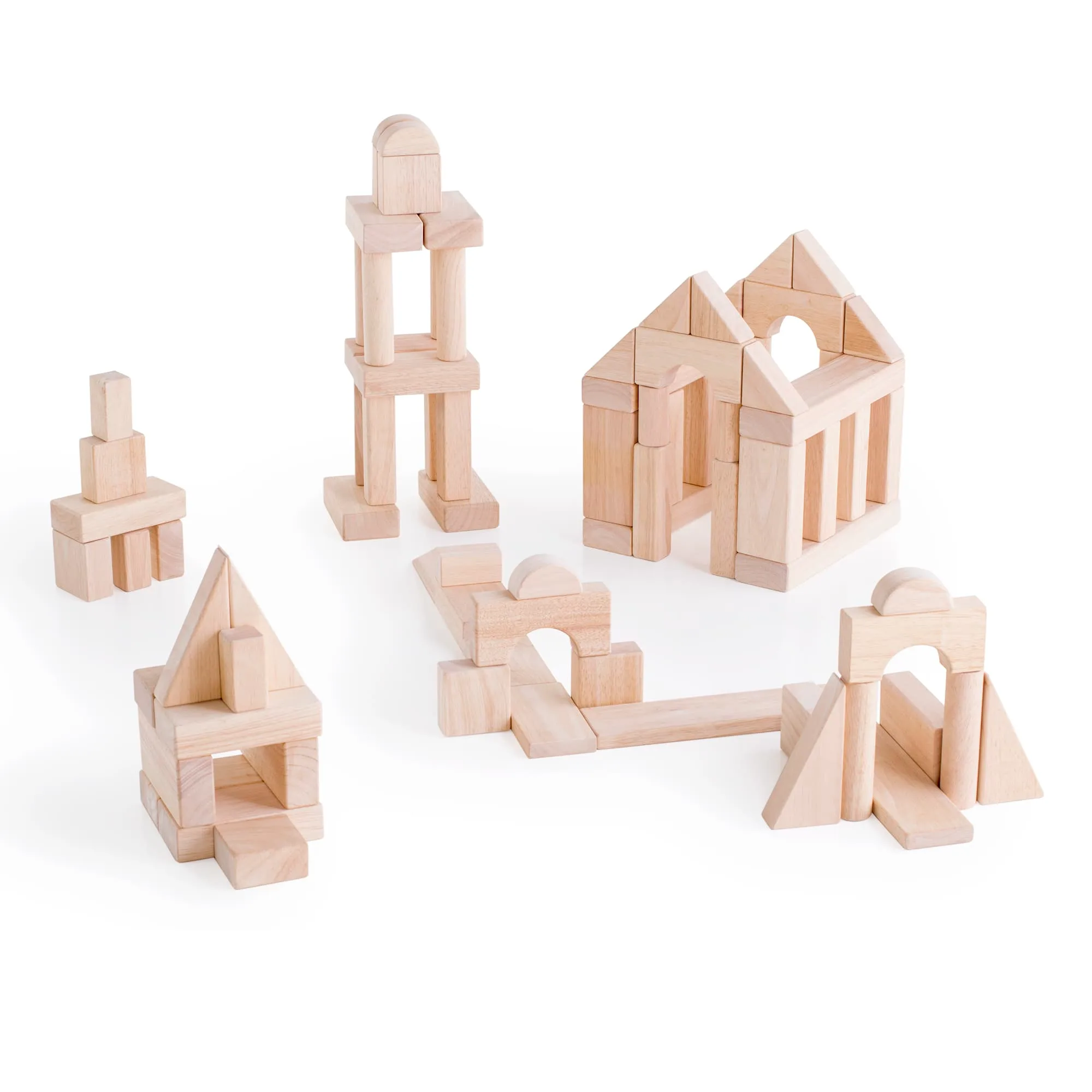
For ages four and up, a fort kit becomes the more engaging option because it rewards planning. Kids start asking for specific pieces — a longer pole, a roof board, a clip — and that is where add-on pieces matter. If your child already builds with unit blocks, a small set of roof boards can turn a block wall into a fort with a real roofline, which is a different kind of building than either a fort kit or a playsilk.
unit blocks
How to combine them without buying twice
You do not have to choose permanently. The most durable setup is a fort kit frame with playsilks used as the walls and canopy. The frame solves the collapse problem; the silks solve the 'it looks the same every time' problem. A child can rebuild the frame once and then redecorate it daily.
If you want to extend a fort kit rather than replace it, look for pieces that scale to what you already own. Roof boards scaled to standard unit block proportions let a child add ramps, bridges, and realistic roof structures to a build, and they store flat. That is a cheaper upgrade than a second full kit, and it keeps the fort-building habit going when the novelty of the frame wears off.
Trade-offs at a glance
- Structure vs. flexibility: A fort kit holds a shape and can be rebuilt the same way; playsilks reshape in seconds but sag without furniture to anchor them. Pick structure for repeat builds, flexibility for daily reinvention.
- Age fit: Playsilks suit toddlers who cannot yet push connectors together; fort kits reward the planning that shows up around age four. Under three, start with fabric. Four and up, add a frame.
- Storage and space: Fort kit poles are long and need a bin or closet; playsilks fold into a drawer but need open floor and furniture to work. Small room? Playsilks first. Spare corner? A fort kit earns its space.
- Cost of extending play: Adding roof boards or loose-part trays to what you own is cheaper than buying a second full kit, and it keeps the build challenging. Upgrade pieces before replacing the whole set.
Fort-building products worth knowing
- Little Pavers - 60 pc. set: Little Pavers - 60 pc. set: weighted hexagonal miniature pavers for open-ended building, with a matte surface texture that supports indoor and outdoor play and withstands water, dirt, sand, and mud. These add weight and texture to a fort's base or courtyard and can move outside without being ruined, so a fort build does not have to end at the doorway.
- Loose Parts Stacking Wooden Trays - Set of 4: Loose Parts Stacking Wooden Trays - Set of 4: deep, square stackable trays divided into varying compartments, with plastic feet on the bottom for a snug fit. Fort pieces scatter fast. Compartment trays let a child sort poles, clips, and small parts by size, which makes cleanup part of the play instead of a chore for you.
- Roof Boards - Unit Blocks - 4 pc. set: Roof Boards - Unit Blocks - 4 pc. set: four long flat boards scaled to standard unit block proportions, intended to expand foundational unit block sets. If your child already has unit blocks, these turn a block wall into a fort with a roof, ramp, or bridge for a fraction of the cost of a second fort kit.
Which should you buy?
Best for
- Toddlers under three who need soft, no-assembly play
- Small homes or classrooms where storage space is tight
- Families who want open-ended, daily-changing builds
Not for
- Kids who get frustrated when a fort collapses and want a rigid frame
- Children who ask for tunnels, towers, and repeatable structures
- Anyone without furniture or open floor space to drape fabric over