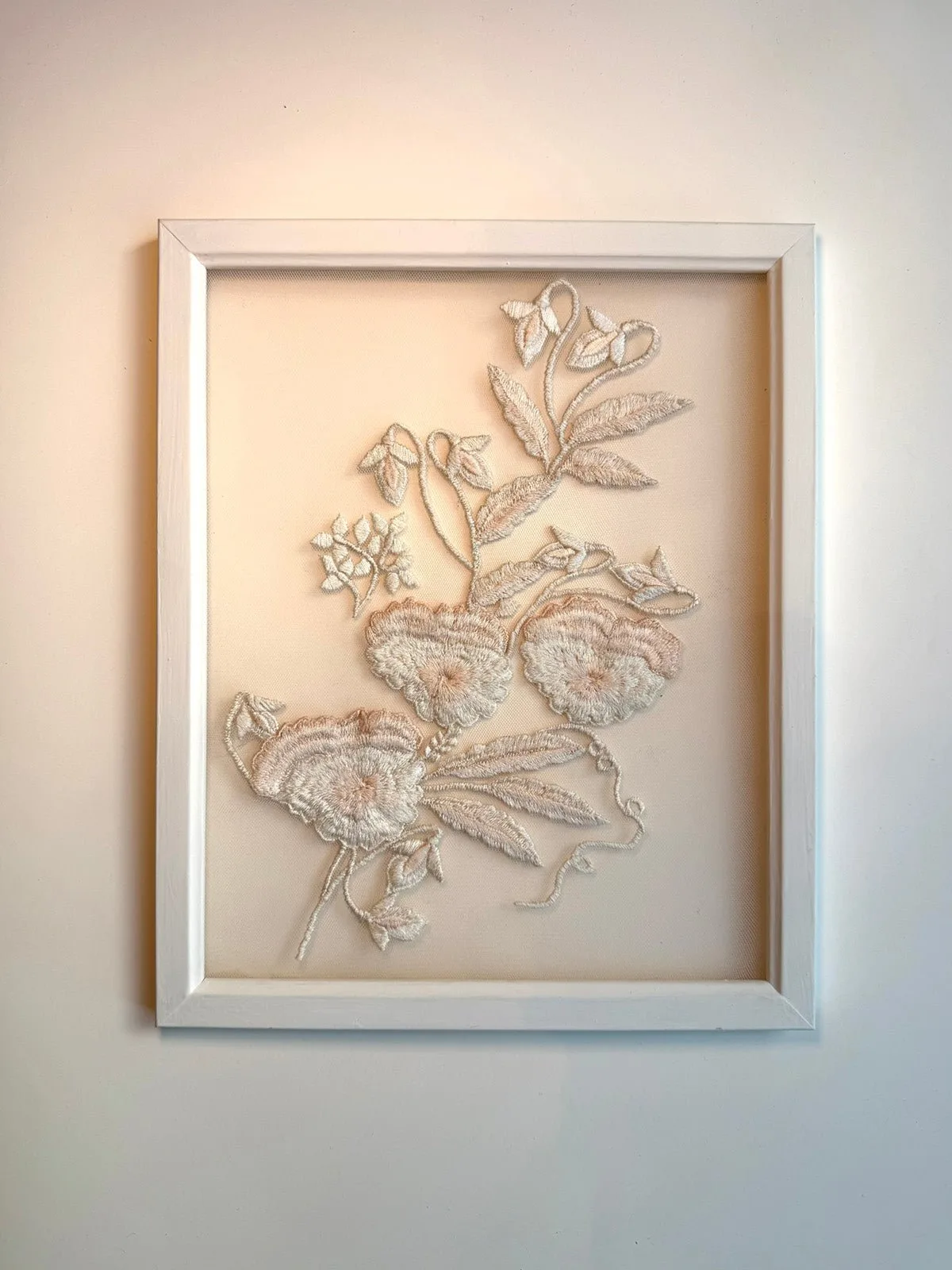
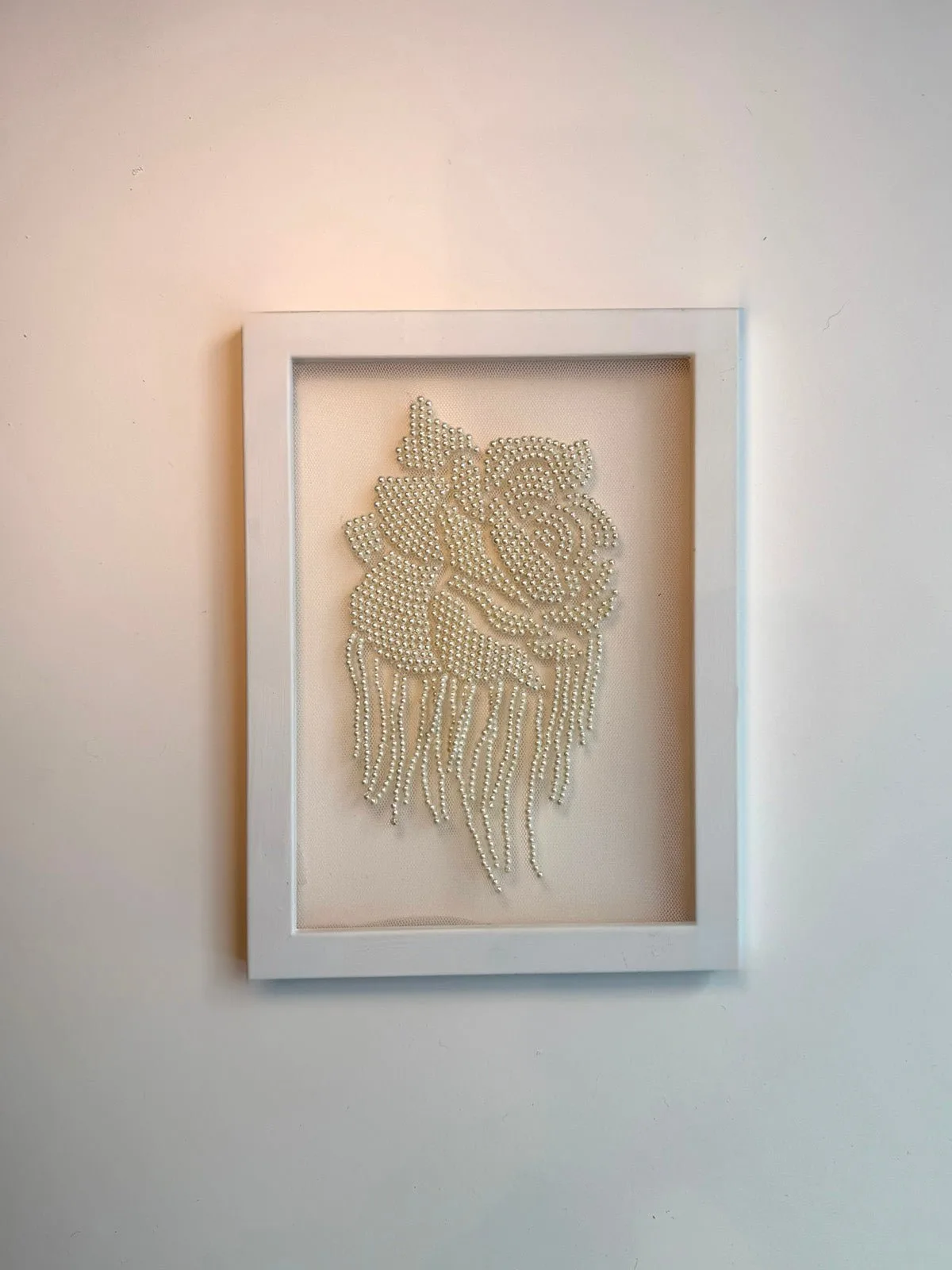
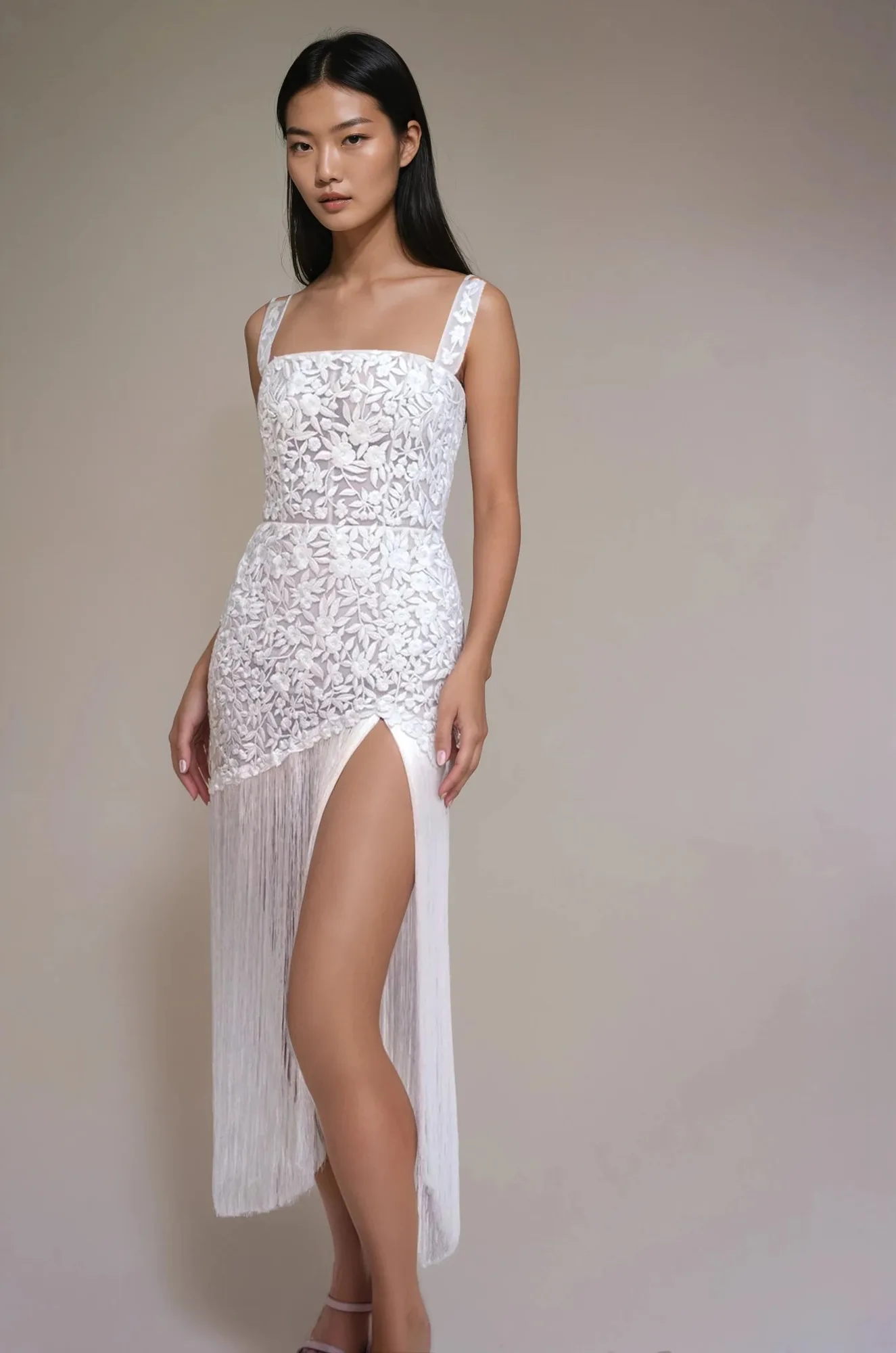
Your Embroidery Is One of a Kind
Owning a framed couture embroidery from the Hermione de Paula atelier means owning a piece of design history. Each work is a one-of-one original, drawn from over 15 years of craftsmanship. Embroidery No. 055, for example, is a single blush pink rose bud on a pale ground, individually signed and numbered by the designer.
Because no two are ever the same, and once sold a piece will not be reproduced, caring for your embroidery and displaying it well matter more than with a mass-produced print. This guide covers what the atelier confirms about handling, framing, and placement, so you can enjoy your piece for years.
What the Atelier Confirms About Your Embroidery
-
Embroidery No. 055 - Signed & Numbered Framed Couture Embroidery: Each framed piece is a one-of-one work, drawn from both archive and current couture developments. Embroidery No. 055 is a single blush pink rose bud, quiet and understated against its pale ground. This uniqueness means there is no replacement if the piece is damaged. Care and display decisions directly affect a work that cannot be recreated.
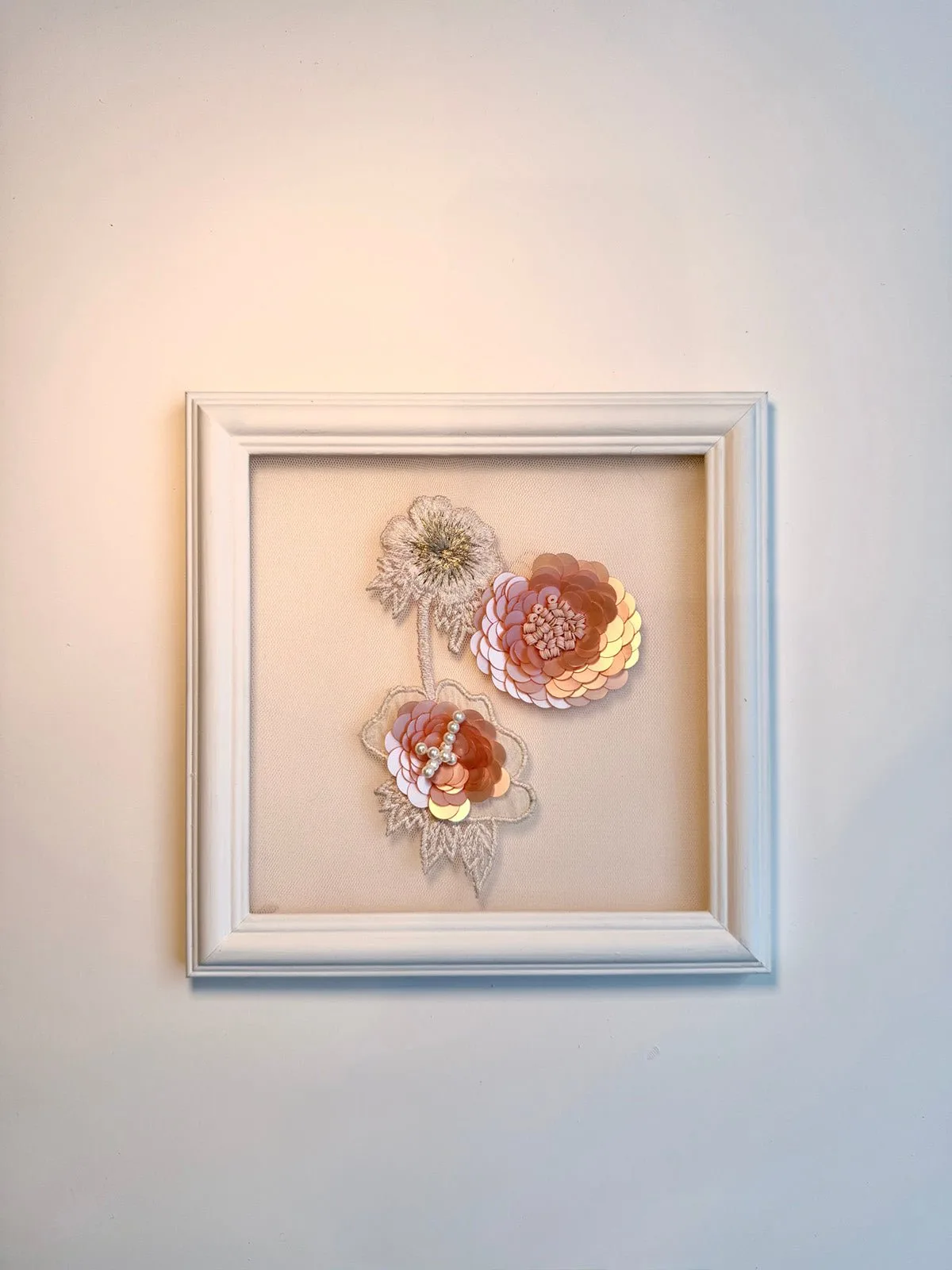
Embroidery No. 055 - Signed & Numbered Framed Couture Embroidery
-
Embroidery No. 055 - Signed & Numbered Framed Couture Embroidery: The embroidery is presented in its original exhibition frame. Frames may show subtle signs of wear or an unfinished, hand-painted reverse – part of their provenance and journey. The frame is part of the artwork's history, but it may not be in perfect condition. Understanding this helps you decide whether to display as-is or re-frame.
-
Embroidery No. 055 - Signed & Numbered Framed Couture Embroidery: The embroidery can be easily re-framed if desired. Re-framing is a practical option if the original frame shows wear or doesn't suit your space. The atelier confirms it's straightforward to do.
Displaying Your Framed Embroidery
The original exhibition frame is ready to hang, but it may show minor wear or an unfinished reverse. This is not a flaw – it is part of the piece's journey from the atelier and a London gallery. If you prefer a more finished look, re-framing is simple and the atelier confirms the embroidery can be easily moved.
For placement, avoid direct sunlight for prolonged periods. While the atelier does not provide specific light-exposure limits, couture embroidery uses delicate threads that can fade over time. A wall away from windows or with UV-filtering glass (if you re-frame) is a sensible choice. Also avoid humid areas like bathrooms or unventilated kitchens, as moisture can affect both the fabric and the frame.
Care and Handling Basics
The atelier does not supply cleaning instructions for these embroideries, so the best care is preventive: keep the piece in a stable indoor environment, dust the frame gently with a soft, dry cloth, and never apply water or cleaning solutions to the embroidery itself. If the glass becomes dusty, clean the outside only with a microfiber cloth – avoid spraying liquid directly on the frame.
When moving or shipping the piece, handle the frame by its edges and wrap it in acid-free tissue or soft padding. The embroidery is delicate, and the original frame may have an unfinished reverse that could snag on rough surfaces.
When to Re-Frame
Re-framing gives you control over the final look and long-term protection. You might choose to re-frame if the original frame's wear doesn't suit your decor, or if you want UV-protective glass and archival backing. A professional framer experienced with textiles can mount the embroidery without damaging it. Keep the original frame as part of the provenance – it tells the story of the piece's exhibition history.