Quick answer
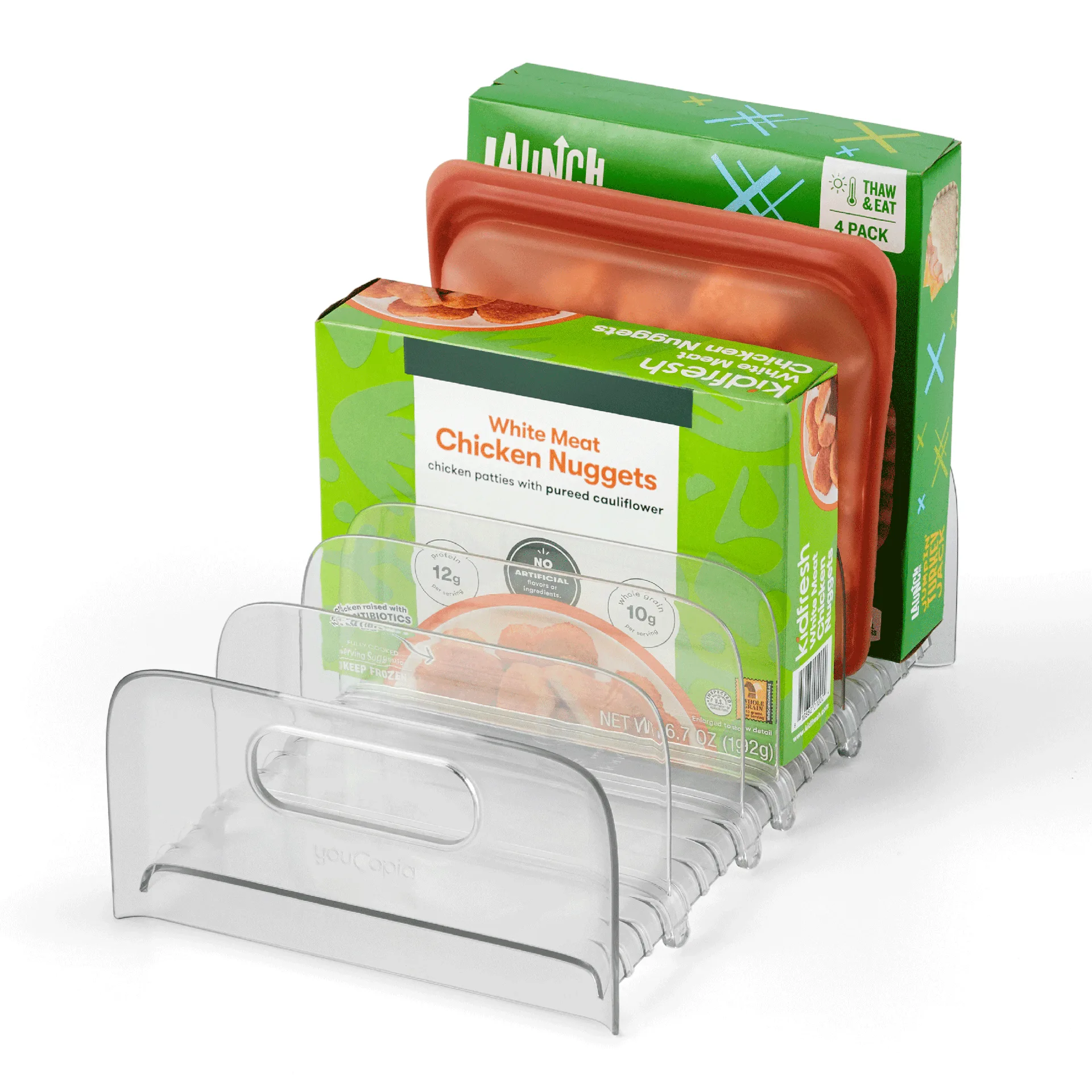
For most upright freezers, start with a FreezeUp Freezer Rack in the 12-inch size, then measure your shelf depth and height before adding a second rack. Buy one rack first to test the fit and your stacking habits, because a freezer rack only helps if you can slide it out and still close the door.
Measure before you buy: the three numbers that matter
A freezer rack buying guide is really a fit guide. Before comparing freezer storage bins or upright freezer organizers, measure three things: shelf depth, shelf-to-shelf height, and door clearance. Write the numbers down and take them with you when you shop.
Shelf depth decides whether a rack sits flush or hangs over the front edge. Height decides whether you can stack two racks or need to keep one on a single shelf. Door clearance decides whether the rack can slide out without hitting the door bin or gasket. If a product page does not list a dimension you need, treat that as a missing specification and choose a different size or model rather than guessing.
- Measure shelf depth at the front and back, since many freezer shelves taper.
- Measure from the shelf surface to the shelf above it, not to the cabinet ceiling.
- Leave at least an inch of clearance in front of the rack for your fingers.
How to choose a FreezeUp freezer rack size
FreezeUp freezer rack sizes are listed by option type, so the size you pick should match the boxes you buy most often. A 12-inch rack is a common starting point for standard frozen meal boxes and vegetable bags, but it is not universal. If your freezer is shallow, a smaller rack may be the only one that fits without blocking the door.
Think about the shape of your frozen food, not just the count. Long pizza boxes, wide family-size entrées, and narrow ice cream pints all need different compartment widths. Adjustable dividers are what let one rack handle that mix, so prioritize a rack with dividers you can move rather than a fixed-slot design.
Plan the setup before you load the rack
A freezer rack setup works best when you assign zones by how often you cook. Put the meals you eat weekly at eye level, bulk items on the bottom, and long-term backups on the top shelf. This is the same logic behind how to organize freezer shelves in any upright freezer: frequency first, category second.
Leave one empty compartment as a buffer. Freezers gain and lose items constantly, and a buffer slot keeps you from cramming new boxes on top of old ones. If you already use bins in the fridge or pantry, keep the same category labels in the freezer so your household does not have to learn a new system.
- Eye level: weekly meals and open bags.
- Bottom shelf: heavy roasts, bulk meat, and large boxes.
- Top shelf: backups and seasonal items you rarely touch.
When a vertical rack is the wrong choice
Vertical racks shine when you have many similar boxes and a deep shelf. They are less useful in chest freezers, where you reach down rather than out, and in freezers with very shallow shelves where a rack cannot slide forward. In those cases, a low bin or a turntable may waste less space.
If your freezer is mostly irregular shapes, bags, and loose items, a rack can actually reduce capacity because it adds walls between items. Measure your typical load before you commit, and consider starting with one rack rather than a full set.
Decision rules for buying a freezer rack
- Rule 1: Match the rack depth to your shelf depth: Choose a rack that sits fully on the shelf with room to slide. If the rack overhangs the front edge, the door may not close or the rack may tip when loaded. Measure depth first, then pick the size.
- Rule 2: Buy adjustable dividers over fixed slots: Adjustable dividers let one rack hold narrow pints and wide entrée boxes at the same time. Fixed slots force you to buy food that fits the rack instead of the other way around. Flexibility beats a perfect-looking fixed grid.
- Rule 3: Start with one rack, not a full set: Load one rack for a week before buying more. If you find yourself stacking on top of it, you need a different size or a bin, not a second rack. Test your habits before you expand.
- Rule 4: Keep a buffer compartment: Leave one compartment empty so new items have a home. A full rack with no buffer is how freezers return to a pile. Buffer space is part of the setup, not wasted space.
Product facts that affect your decision
- FreezeUp® Freezer Rack, 12": FreezeUp Freezer Rack has four adjustable dividers that create custom compartments for frozen food boxes, plus handles to slide the rack out. Adjustable dividers let you resize compartments as your frozen food changes, and handles make back-of-shelf items reachable without unloading the front.
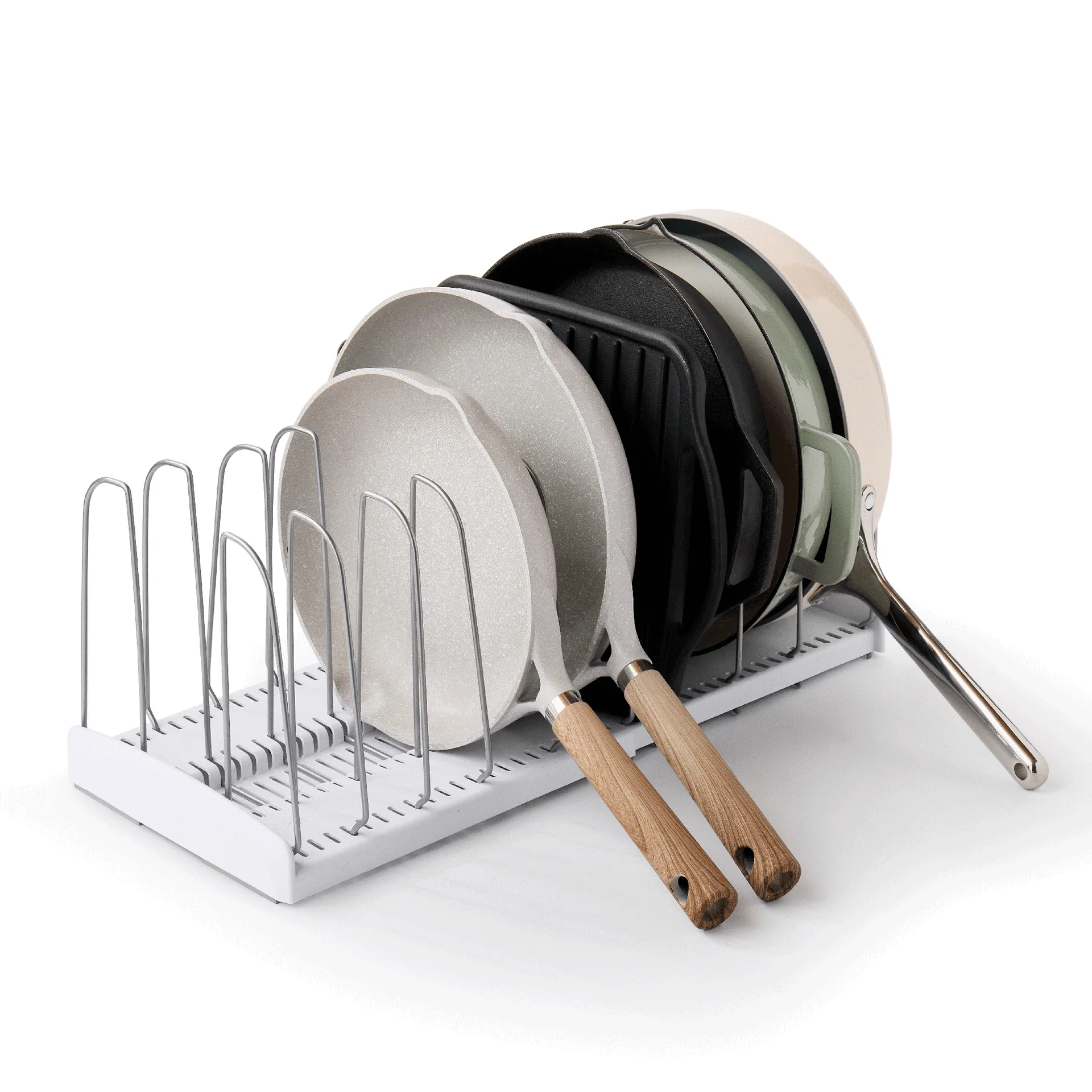
- StoreMore® Cookware Rack: StoreMore Cookware Rack uses tall adjustable dividers, coated steel dividers that won't scratch, and a non-slip, non-tip base. If you also store pans or platters near the freezer area, this rack shows the same divider logic in a scratch-safe format, so you can standardize your storage approach.
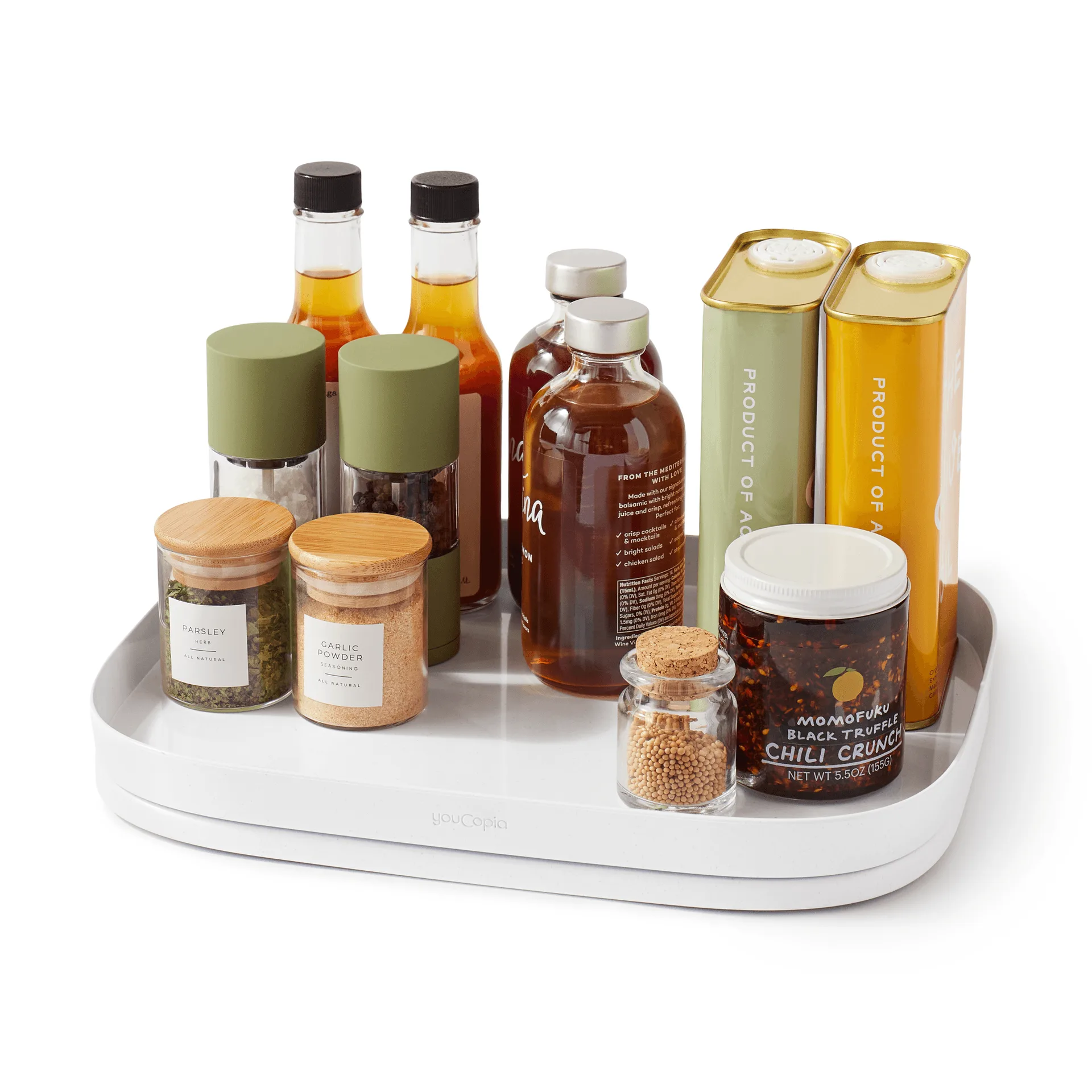
- MagicTrack™ Rectangle Turntable: MagicTrack Rectangle Turntable uses a patent-pending design that rotates the tray forward and around, with four corners to maximize space. For shallow freezer shelves where a rack will not slide, a rectangular turntable can bring items forward without adding depth.
Is a freezer rack right for you?
Best for
- Upright freezer owners with many similar frozen food boxes
- Households that want to see labels at a glance instead of digging
- Anyone willing to measure shelf depth and height before buying
Not for
- Chest freezer owners who reach down rather than out
- Freezers with shelves too shallow for a rack to slide forward
- Loads made mostly of irregular bags and loose items