Quick answer
Plan on roughly one cubic foot of freezer space for every 25–30 pounds of fresh frozen dog food, and buy the smallest package size that matches your dog's weekly intake. If your freezer is tight, choose frozen recipes that ship in stackable pouches or pre-portioned meatballs, and measure your shelf before you subscribe.
How much freezer space fresh frozen dog food actually takes
Fresh frozen dog food is dense, so weight is a better planning number than bag count. As a working rule, one cubic foot of freezer space holds about 25–30 pounds of frozen dog food, depending on how tightly the pouches or meatball bags stack. A 13.5 lb box of frozen meatballs, for example, takes up roughly half a cubic foot once the bags are flattened and stacked.
Measure the usable height, width, and depth of one freezer shelf or drawer before ordering. Leave about 20% of that space empty so cold air can circulate and so you can pull a pouch without unpacking everything else. If you share the freezer with human food, claim one dedicated bin or shelf and treat it as the dog's zone.
- 1 cubic foot ≈ 25–30 lb of frozen dog food
- A 13.5 lb box of frozen meatballs ≈ 0.5 cubic foot stacked
- Keep 20% of the dog's freezer zone empty for airflow and easy access
Match package size to your dog's weekly intake
The fastest way to waste freezer space is to buy a bulk box that outlasts your dog's appetite or your freezer's turnover. Estimate your dog's daily fresh food amount, multiply by seven, and compare that weekly number to the package weight. If your dog eats about 1 lb per day, a 13.5 lb box lasts roughly two weeks; if your dog eats 0.5 lb per day, the same box lasts about four weeks and may crowd a small freezer.
For small dogs or single-dog households, smaller frozen pouches or a mixed order of pouches and meatballs usually fit better than one large box. Buy the largest size only when you have confirmed freezer room and a consistent daily feeding amount.
Thawing, portioning, and container tips that save space
Frozen fresh recipes ship in pouches or bags specifically to preserve freshness and flavor, so keep them in their original packaging until you thaw them. Move only what you will feed in the next 24–48 hours to the fridge, and leave the rest frozen. This keeps the main supply solid and prevents partially thawed packages from taking up extra room.
Once thawed, transfer the food to a reusable airtight container that fits your fridge shelf. If you portion into daily containers ahead of time, stack them rather than lining them up. For meatballs, you can thaw a single bag and use the meatballs as a meal, topper, or treat, which lets you stretch one box across more days without thawing the whole order.
- Thaw only 24–48 hours of food at a time
- Keep unopened pouches and bags in original packaging
- Stack daily portion containers instead of spreading them out
When a fresh dog food subscription makes freezer sense
Subscriptions work best when the delivery cadence matches your freezer turnover. If a box arrives before you have emptied the previous one, you are paying for storage you do not have. Choose a longer delivery interval or a smaller package size if your dog eats slowly, and choose a shorter interval only if you have confirmed shelf space and a consistent routine.
Before committing, check whether the recipe ships frozen and whether the package can be split into smaller bags. Recipes that ship frozen in pouches or pre-portioned bags give you more flexibility than one large solid block because you can thaw one unit at a time.
Decision rules for freezer-friendly fresh frozen dog food
- Freezer space under 1 cubic foot: Choose smaller frozen pouches or a mixed order rather than a bulk box, and thaw only 24–48 hours of food at a time. If you cannot fit a 13.5 lb box with 20% airflow room, size down.
- Freezer space 1–2 cubic feet: A 13.5 lb box of frozen meatballs in 6 x 36 oz bags can work if you flatten and stack the bags and keep one shelf dedicated to dog food. Confirm your dog's weekly intake before choosing the box size.
- Freezer space over 2 cubic feet: You can buy larger frozen packages or subscribe on a shorter cadence, but keep the oldest package in front so you rotate stock. Rotate first-in, first-out to avoid freezer burn and waste.
- Single small dog or slow eater: Pick pouches or meatball bags you can thaw one unit at a time, and avoid bulk boxes that would sit for more than a month. Match package size to a two-week or shorter turnover.
Open Farm frozen options and freezer fit
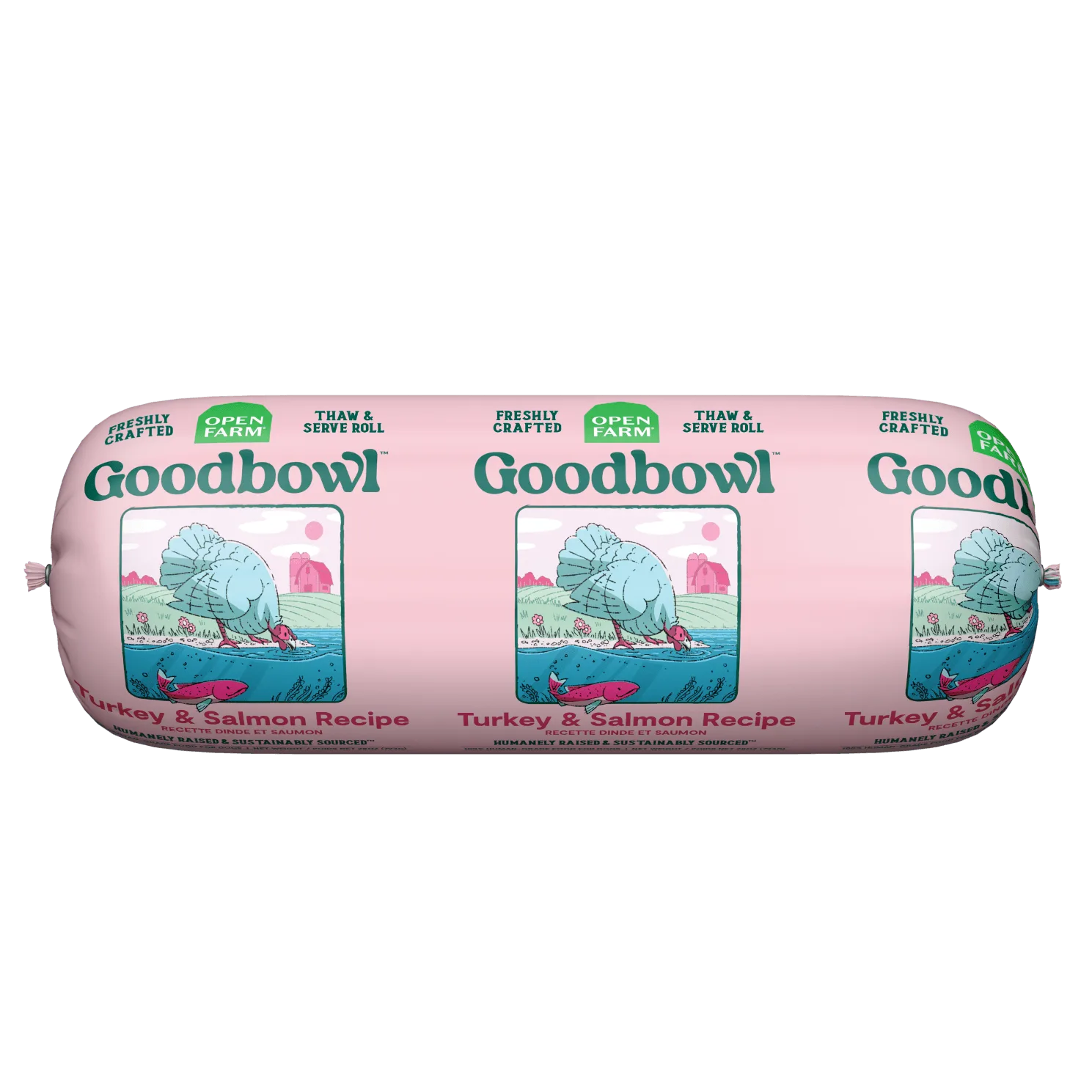
- Goodbowl Grass-Fed Beef Freshly Crafted Recipe: Goodbowl Grass-Fed Beef Freshly Crafted Recipe ships frozen in pouches and is made with humanely raised beef, beef liver, and non-GMO veggies, grains, and superfoods. Pouches thaw faster and stack more flexibly than a single large block, which helps if you are feeding one dog or working with a small freezer shelf.
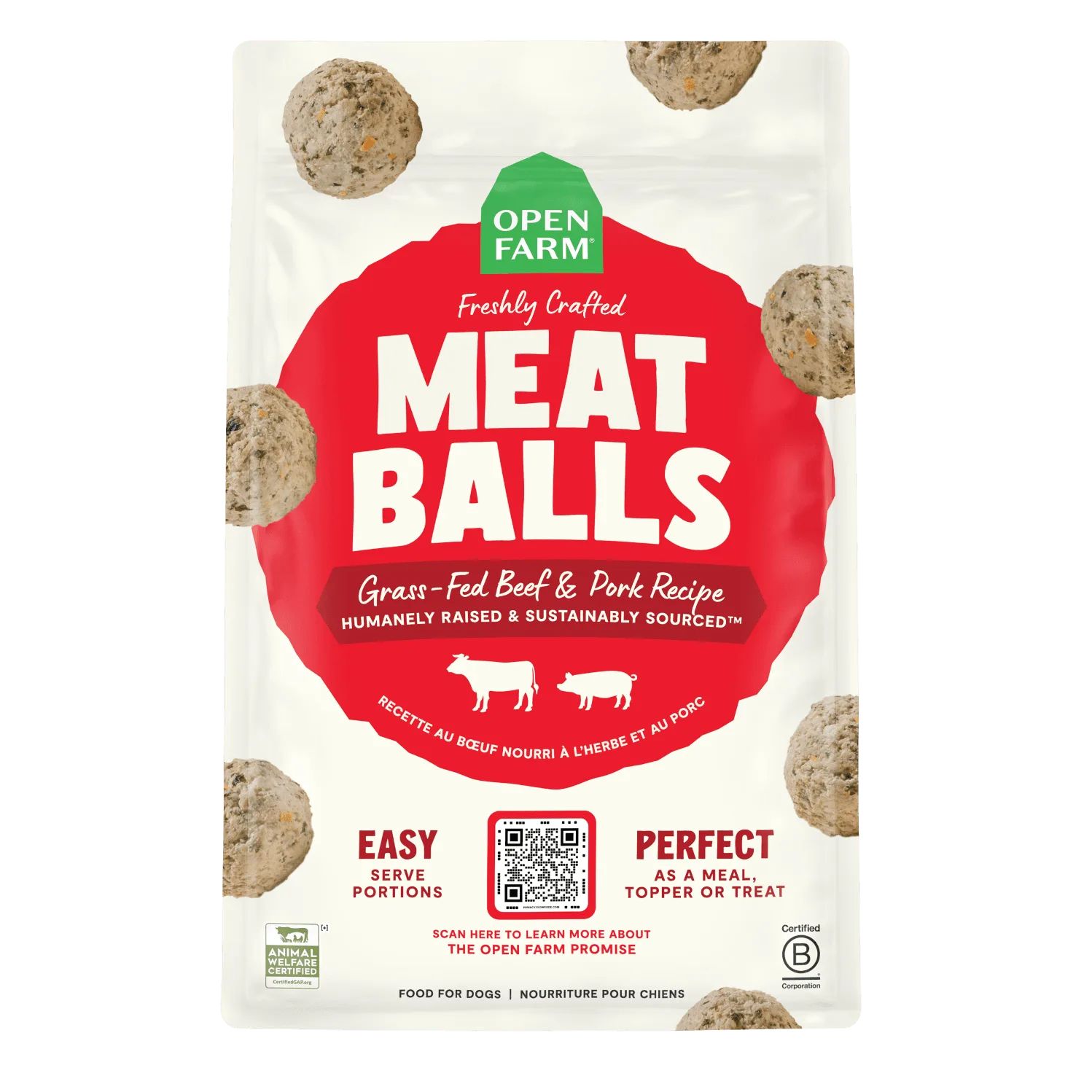
- Grass-Fed Beef & Pork Freshly Crafted Meatballs for Dogs: Grass-Fed Beef & Pork Freshly Crafted Meatballs for Dogs ships frozen and comes as a 13.5 lb box with 6 x 36 oz bags, and the meatballs can be served as a meal, topper, or treat. The bagged format lets you thaw one 36 oz bag at a time instead of the whole box, so you can stretch freezer space and use the meatballs flexibly.
Who this approach fits
Best for
- Owners with a dedicated freezer shelf or drawer who want to feed fresh frozen food without wasting space
- Single-dog households that can thaw one pouch or one 36 oz bag at a time
- Shoppers comparing package sizes before starting a fresh dog food subscription
Not for
- Owners with no freezer space who cannot dedicate at least half a cubic foot to dog food
- Multi-dog households that need to thaw several pounds per day and should choose a larger bulk format instead
- Shoppers looking for shelf-stable dry food with no thawing or freezer requirements