Quick answer
Wipe down the front wheel attachment after every outdoor session, check screws and tire pressure weekly, and store the unit dry and off the ground. This simple routine prevents most wear and keeps the attachment rolling smoothly for years.
Why the front wheel attachment needs its own care routine
The front wheel attachment takes the brunt of the road. It rolls first into curbs, gravel, mud, and wet grass, so it collects more grit and moisture than the rear wheels. That constant exposure wears down bearings, loosens fasteners, and can lead to a wobbly ride if you don't stay ahead of it.
A few minutes of care each week is far easier than replacing parts. The steps below are ordered from daily habits to monthly deep checks, so you can build a routine that fits your schedule.
Daily and weekly habits that prevent most problems
After every walk, wipe the wheels and frame with a damp cloth to remove dirt and salt. Pay attention to the area around the axle and any moving joints. If you walked through mud or water, dry everything thoroughly with a towel before bringing your dog inside.
Once a week, do a quick hands-on check: spin each wheel and listen for grinding, feel for wobble, and look for loose screws. Tighten anything that feels loose, but don't overtighten, as that can strip threads or crack plastic mounts.
- Wipe wheels and frame after every outdoor use.
- Dry completely if exposed to water or mud.
- Spin wheels weekly and listen for rough sounds.
- Check screws and connection points for tightness.
Monthly deep clean and lubrication
Once a month, remove the front wheel attachment from the rear wheelchair if your model allows it. Use a soft brush to scrub dirt from the wheel treads and a damp cloth for the frame. Avoid harsh chemicals or soaking the bearings.
If your attachment has metal bearings, apply a light machine oil sparingly. Wipe off any excess so it doesn't attract dirt. For plastic bushings, a dry silicone spray works better than oil. Check the user manual for specific lubrication points, as not all attachments need it.
Storage and handling that extend lifespan
When not in use, store the wheelchair and attachment indoors, away from extreme heat or cold. Hang it or place it on a shelf so the wheels aren't resting on concrete, which can flat-spot tires over time. If you must store it folded, avoid putting weight on the wheels or frame.
When lifting the wheelchair, grab the frame rather than the wheels or attachment arms. Pulling on the wheels can misalign the axle or bend the mounting brackets.
Step-by-step front wheel attachment care
- 1. Wipe down after every walk: Use a damp cloth to remove dirt, salt, and moisture from the wheels, frame, and axle area. Dry with a towel if the attachment got wet. Checkpoint: no visible grit or moisture left on any part.
- 2. Spin and listen weekly: Lift the wheelchair so the front wheels are off the ground and spin each wheel. Listen for grinding or clicking, and feel for side-to-side wobble. Mistake to avoid: ignoring a faint grinding noise. It usually means dirt in the bearings and gets worse quickly.
- 3. Tighten screws and check tire pressure weekly: Go around the attachment and snug any screws that hold the wheel forks or mounting brackets. If your wheels are pneumatic, check pressure with a gauge and inflate to the recommended PSI. Checkpoint: all fasteners snug, tires firm but not rock-hard.
- 4. Deep clean monthly: Remove the attachment if possible, scrub wheel treads with a soft brush, and wipe the frame with a damp cloth. Do not soak bearings or use harsh chemicals. Mistake to avoid: spraying water directly into bearings. It pushes dirt in and washes out lubricant.
- 5. Lubricate sparingly: Apply a light machine oil to metal bearings or a dry silicone spray to plastic bushings. Wipe off excess so it doesn't collect dirt. Checkpoint: moving parts turn freely with no sticky spots.
- 6. Store dry and off the ground: Keep the wheelchair indoors, away from extreme temperatures. Hang it or place it on a shelf so the wheels aren't resting on concrete. Mistake to avoid: storing in a damp garage or shed, which encourages rust and mold.
Front wheel attachments that benefit from this routine
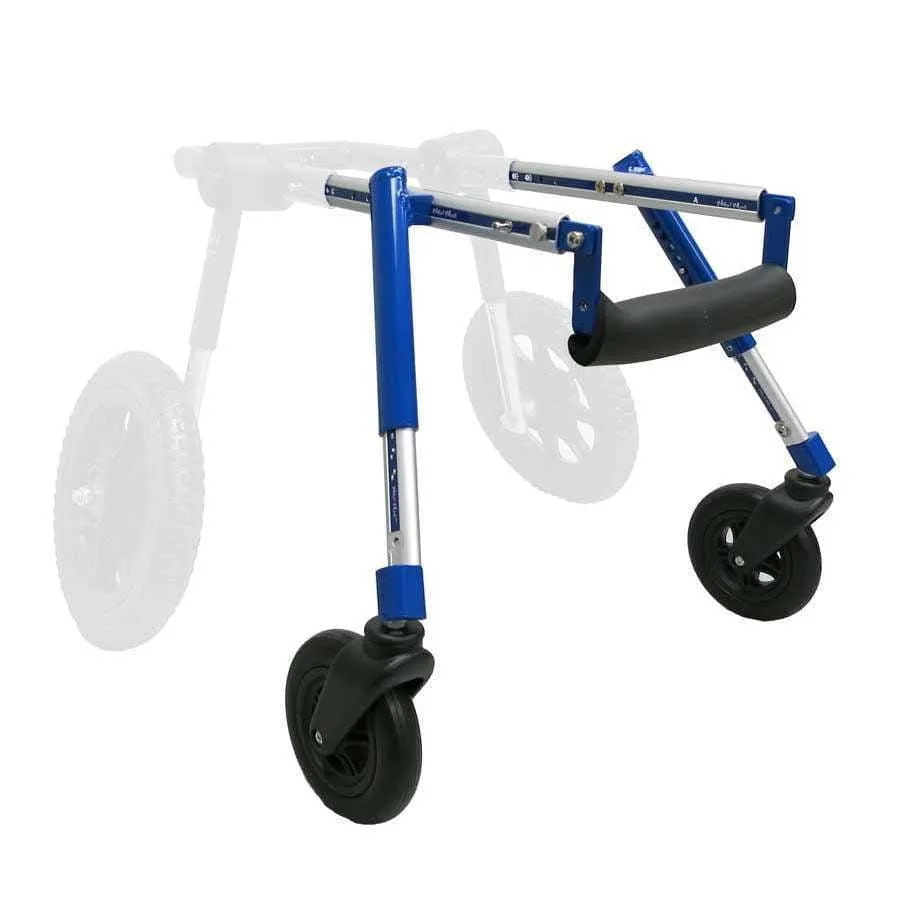
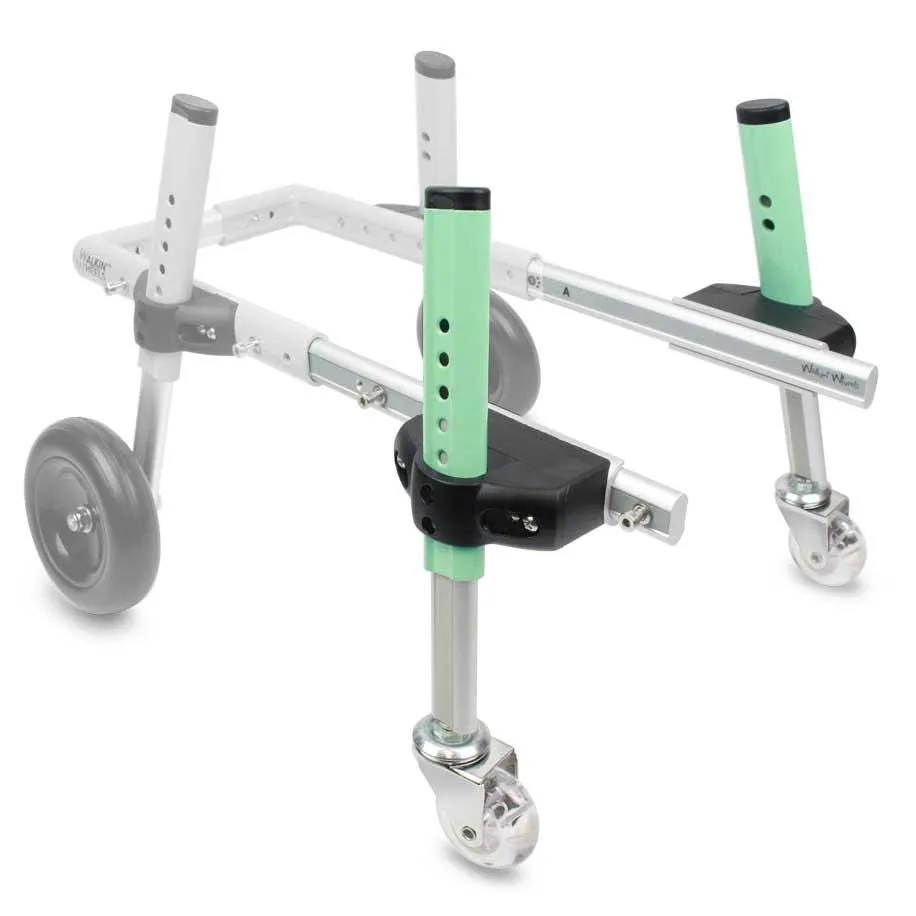
- Walkin’ Wheels SMALL Front Wheel Attachment: The Walkin’ Wheels SMALL Front Wheel Attachment is designed for pets weighing 11–25 lbs and transforms your SMALL Walkin’ Wheels Rear Wheelchair into a Full Support (Quad) Wheelchair. Small dogs put less weight on the attachment, so wear is slower. Still, regular cleaning prevents grit from building up in the small bearings.
- Walkin' Wheels MEDIUM Front Wheel Attachment: The Walkin’ Wheels MEDIUM Front Wheel Attachment is designed for pets weighing 26–69 lbs and transforms your MEDIUM or MEDIUM/LARGE Rear Walkin’ Wheels Wheelchair into a Full Support (Quad) Wheelchair. Medium dogs generate more force on the front wheels, so check screws and tire pressure more often, especially if you walk on rough surfaces.
- Walkin' Wheels LARGE Front Wheel Attachment: The Walkin’ Wheels LARGE Front Wheel Attachment is designed for pets weighing 70–180 lbs and converts your LARGE Walkin’ Wheels Rear Wheelchair into a Full Support (Quad) Wheelchair. Large dogs need the most frequent inspections. After every few walks, check for loose hardware and tire wear, as the extra weight accelerates these issues.