Quick answer
Focus on three things: a short ingredient list, a flavor mix your household will actually eat, and a price per bar that fits your snack budget. A variety pack like the Best Sellers Fruit Bar Variety Pack from That’s It hits these marks—but it’s not the only option.
Ingredient transparency vs. flavor variety
A fruit bar variety pack with two ingredients—fruit and fruit—gives you a clean snack but limits flavor complexity. If you want more adventurous combos (like tropical blends or added seeds), you’ll need to look at bars with extra ingredients. The tradeoff is a longer label and possibly added sugar or preservatives.
Consider how many different flavors the pack includes. A 5-flavor bundle gives everyone a chance to find a favorite, but if your household only likes one or two, you might waste bars. Single-flavor packs reduce waste but remove the discovery element.
Value per bar: bulk buying tradeoffs
Variety packs often appear cheaper per bar than individual boxes, but the actual cost depends on how many bars you’ll eat. A 20-count bundle at around $1.19 per bar can be a strong value if every flavor gets eaten. If you toss half the box, the per-eaten-bar cost jumps.
Compare the price per bar across similar packs. Some brands charge a premium for the variety itself—expect to pay slightly more than a single-flavor box for the convenience of a mix.
Packaging and portability
Fruit bars are lightweight and shelf-stable, making them a solid on-the-go snack. Check whether the individual bars are wrapped separately—this matters for tossing in a bag or lunchbox. A larger box with inner wrappers keeps them fresh longer.
Some variety packs come in resealable bags; others use a cardboard box. The box option takes up more pantry space but displays the flavors clearly. If you plan to carry bars for hiking or travel, individual wraps are essential.
Your decision checklist for buying fruit bar variety packs
- Check the ingredient list: Look for bars with as few ingredients as possible—ideally just fruit. Avoid artificial sweeteners, preservatives, or added sugars unless you specifically want those. If you see more than 5 ingredients, ask yourself whether each one adds value.
- Match flavors to your household: List the fruit flavors your family actually likes. A 5-flavor pack is great for variety, but a 3-flavor pack might suit picky eaters better.
- Calculate price per bar: Divide the pack price by the number of bars. Compare that to single-box pricing. Bulk packs often save money only if you finish them.
- Assess packaging for your routine: Choose individually wrapped bars if you’ll take them to work, school, or the gym. A box without inner wraps works fine for home-only snacking.
- Look at the shelf life: Check the expiration date. A larger pack should have enough time to be eaten before it expires. Fruit bars are stable but not indefinite. A 20-count pack usually has a 6–12 month shelf life from purchase.
Product spotlight
-
Best Sellers Fruit Bar Variety Pack - Blueberry, Cherry, Fig, Mango & Strawberry (20 Bars): 20-count Best Seller Variety Pack includes Apple + Strawberry, Apple + Mango, Apple + Blueberry, Apple + Cherry, and Apple + Fig bars, each 35g, made with only two ingredients: fruit + fruit. You get five popular, real-fruit flavors without additives, making it easy to test preferences and still serve a clean snack.
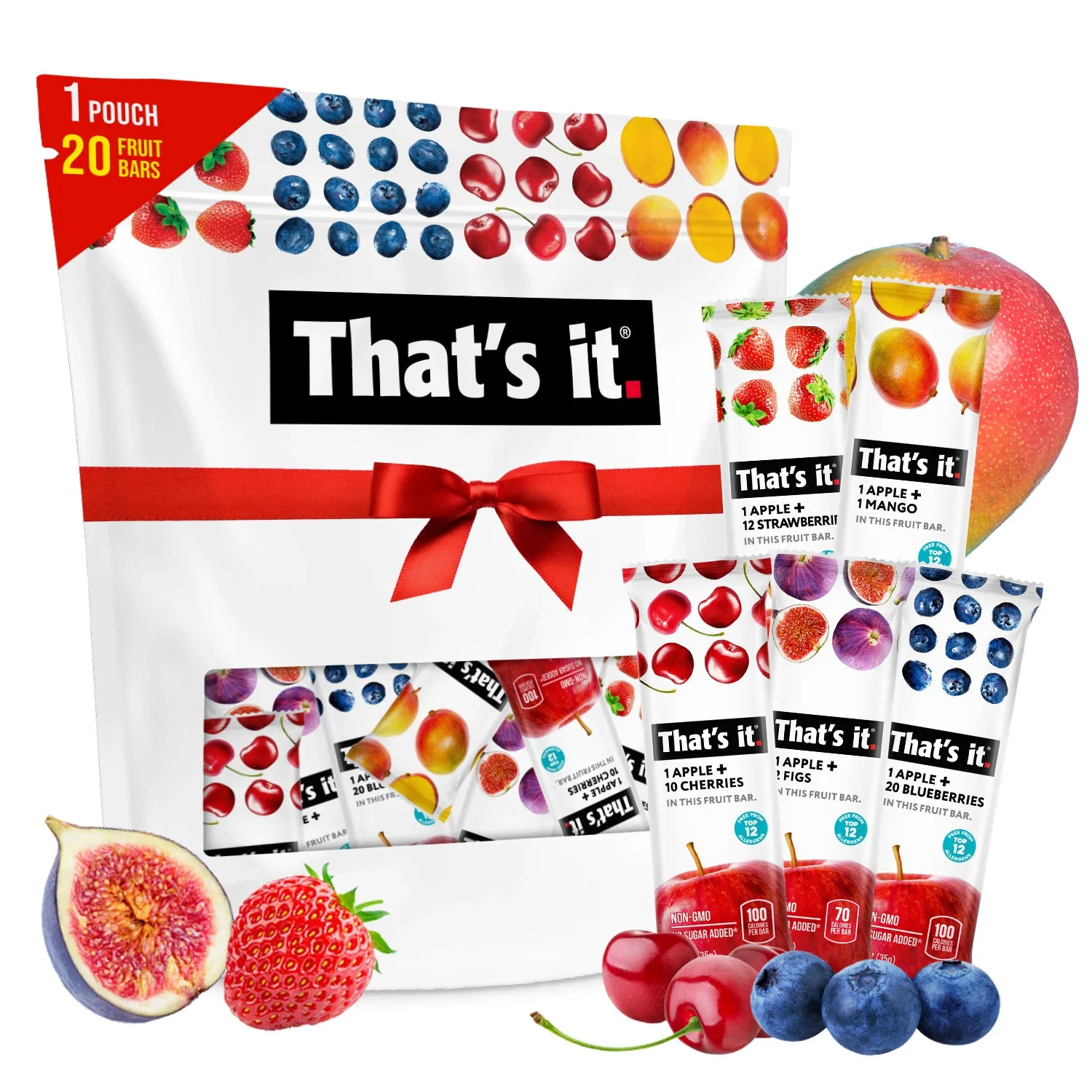
Best Sellers Fruit Bar Variety Pack - Blueberry, Cherry, Fig, Mango & Strawberry (20 Bars)
Is a fruit bar variety pack right for you?
Ideal for
- Homes that want a mix of flavors to keep snacks interesting
- On-the-go lifestyles needing individually wrapped, portable fruit snacks
- Anyone seeking a clean-label snack with minimal ingredients
Consider something else if
- You prefer single-flavor boxes to avoid waste in a picky household
- You’re looking for protein-fortified or nut-added fruit bars
- You need a high-calorie snack for endurance activities—fruit bars are low in protein and fat