Quick Answer
For most toddlers, a wooden fruits and veggies play set is the best choice because it's durable, safe, and encourages open-ended pretend play that builds motor skills and vocabulary.
Why Wooden Play Food Stands Out
Wooden play food offers a tactile experience that plastic sets often can't match. The natural weight and texture help toddlers explore real-world objects, and wood is generally more durable for rough-and-tumble play.
Unlike plastic sets that may have small parts or sharp edges, well-made wooden pieces are typically larger and smoother, reducing choking hazards. This makes wooden play food a safer choice for younger toddlers who still mouth objects.
What Toddlers Learn Through Pretend Food Play
When toddlers pretend to cook or serve meals, they're not just having fun—they're developing important skills. Mimicking everyday activities like preparing dinner helps refine motor skills and hand-eye coordination as they grasp, cut, and arrange the pieces.
Pretend food also sparks language development. As your child names the fruits and veggies, talks about what they're making, and plays out scenarios, they build vocabulary and practice conversation skills.
Additionally, sorting and matching pieces by color or type introduces early math concepts like classification and counting, all while your little one is engaged in imaginative play.
Choosing Between Sets: What to Look For
Not all play food sets are created equal. Look for pieces that are chunky and easy for small hands to hold. Avoid sets with tiny accessories that could be a choking hazard.
Consider how the pieces connect. Some sets use Velcro to let kids 'cut' the food apart, which adds an extra layer of fine-motor practice. Others are solid pieces that are simpler for younger toddlers.
Think about storage and cleanup. A set with a variety of pieces might be more engaging, but you'll need a container or basket to keep everything organized.
Decision Rules for Buying Play Food
- Age Check: For toddlers under 3, choose chunky pieces without small parts. If your child still mouths toys, avoid sets with detachable Velcro pieces that could come loose. Always check the manufacturer's age recommendation before purchasing.
- Material Preference: If you prioritize durability and natural materials, opt for wooden pieces. If you need something lightweight and washable, plastic might be easier to clean, but check for BPA-free labels. Wooden sets often last longer and are more eco-friendly.
- Play Value: Look for sets that include a variety of fruits and veggies to encourage sorting and naming. Sets with Velcro cutting action add an extra fine-motor challenge for older toddlers. A diverse set keeps play interesting and supports more learning opportunities.
A Closer Look at a Top Pick
-
Fruits & Veggies: The Fruits & Veggies set is great for pretend play, mimicking everyday activities like cooking meals. This encourages your child to engage in imaginative scenarios that build social skills and confidence.
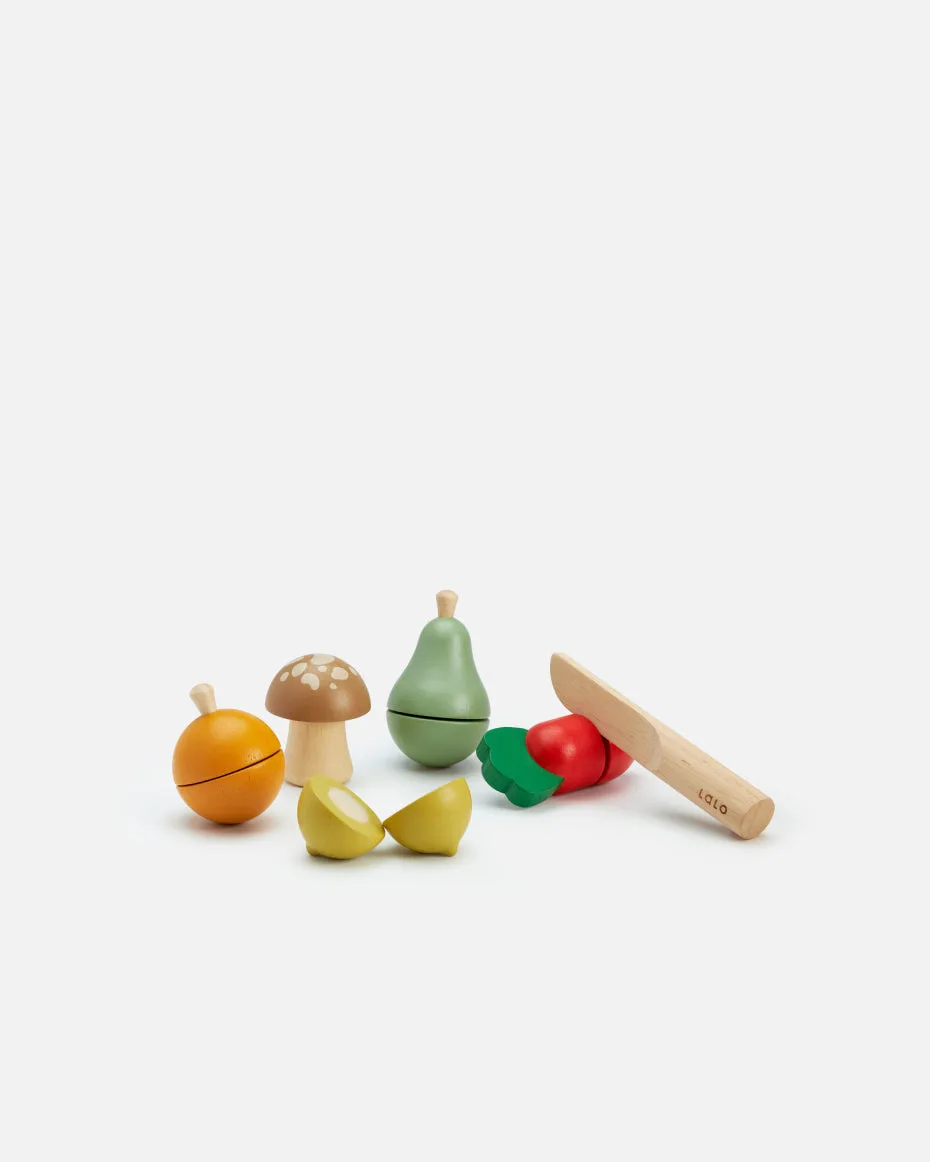
Fruits & Veggies
-
Fruits & Veggies: While your little chef preps dinner, they refine their motor skills and hand-eye coordination. The hands-on action of picking up, holding, and manipulating the pieces helps develop fine motor control.
Who This Play Food Is For
Best for
- Toddlers who love pretend cooking and kitchen role-play
- Parents seeking durable, natural toys that build motor skills and vocabulary
Not for
- Toddlers who still mouth toys heavily and need extra-large, one-piece items
- Families who prefer fully washable plastic sets for easy sanitizing