Which GF Zoom Matches Your Photography?
Choosing between the FUJIFILM GF 20-35mm f/4 R WR Lens and the FUJIFILM GF 35-70mm f/4.5-5.6 WR Lens comes down to your preferred focal length range and shooting priorities. Both lenses are designed for the FUJIFILM G-mount GFX camera system and share weather-resistant construction, but they serve different compositional needs. The 20-35mm offers an ultra-wide to wide 16-28mm equivalent range, while the 35-70mm covers a wide to normal 28-55mm equivalent range. If you frequently shoot expansive landscapes, architecture, or travel scenes, the wider 20-35mm is the natural choice. For everyday walk-around photography, portraits, and documentary work, the lighter, more compact 35-70mm is a versatile companion.
Focal Length and Field of View
The most important difference between these two GF zooms is their angle of view. The 20-35mm f/4 starts at an ultra-wide 16mm equivalent, letting you capture dramatic perspectives and tight interiors. The 35-70mm f/4.5-5.6 begins at a wide 28mm equivalent and extends to a normal 55mm equivalent, a range that suits portraits, street scenes, and everyday subjects.
- FUJIFILM GF 20-35mm f/4 R WR: 16-28mm equivalent focal length. Ultra-wide to wide-angle. Ideal for landscapes, architecture, and interiors where you need to include more of the scene.
- FUJIFILM GF 35-70mm f/4.5-5.6 WR: 28-55mm equivalent focal length. Wide to normal. A practical everyday range for travel, portraits, and documentary photography.
Aperture and Low-Light Performance
The 20-35mm maintains a constant f/4 maximum aperture throughout the zoom range, giving you consistent exposure and depth of field control from 20mm to 35mm. The 35-70mm has a variable f/4.5-5.6 maximum aperture, which means less light reaches the sensor as you zoom in. This difference matters in dim conditions or when you want to keep a fast shutter speed.
- FUJIFILM GF 20-35mm f/4 R WR: Constant f/4 aperture across the zoom range. Better for low-light shooting and consistent manual exposure adjustments. Features a manual aperture ring with a Command position for camera-based control.
- FUJIFILM GF 35-70mm f/4.5-5.6 WR: Variable aperture (f/4.5 at wide, f/5.6 at telephoto). Lighter weight and more compact design, but less light at the long end. Suitable for well-lit conditions.
Key Specifications at a Glance
-
FUJIFILM GF 20-35mm f/4 R WR Lens: Designed for the FUJIFILM G-mount GFX camera system, the GF 20-35mm f/4 R WR Lens is a wide-angle zoom offering a 16-28mm equivalent focal length range. This ultra-wide range is essential for landscape and architecture photographers who need to capture expansive scenes or work in tight spaces.
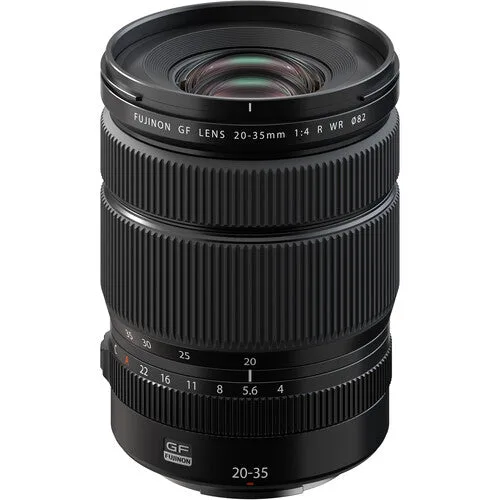
FUJIFILM GF 20-35mm f/4 R WR Lens
-
FUJIFILM GF 35-70mm f/4.5-5.6 WR Lens: Designed for the FUJIFILM G-mount GFX camera system, this GF 35-70mm f/4.5-5.6 WR Lens is a wide-angle zoom offering a 28-55mm equivalent focal length range. The wide-to-normal range makes this lens a versatile everyday option, covering everything from group shots to portraits.
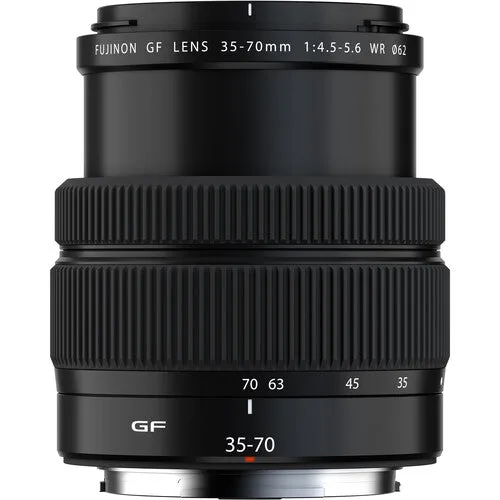
FUJIFILM GF 35-70mm f/4.5-5.6 WR Lens
Size, Weight, and Portability
If you prioritize a lightweight kit for travel or long days out, the 35-70mm is the more portable choice. It weighs under 1 lb and has a closed length of under 3", making it one of the most compact GF zoom lenses available. The 20-35mm is larger and heavier, but its constant f/4 aperture and wider range justify the extra bulk for photographers who need those capabilities. Both lenses feature a dust- and weather-sealed construction that allows operation in temperatures as low as 14°F.
Optical Design and Image Quality
The 20-35mm uses a sophisticated optical design with three aspherical elements, one aspherical ED element, and three ED elements to control spherical and chromatic aberrations. This helps deliver sharp, clear images with minimal distortion across the zoom range. The 35-70mm is also engineered to produce detailed images with minimal focus breathing, but its simpler construction may be less suited to demanding architectural or landscape work where corner-to-corner sharpness is critical. For everyday shooting, both lenses produce excellent results on GFX cameras.
Best Use Cases for Each Lens
Your choice ultimately depends on the subjects you shoot most often. Here is how each lens fits common photography genres.
- Landscape and Architecture: The 20-35mm f/4 is the obvious choice. Its 16-28mm equivalent range lets you capture wide vistas and tall buildings without backing up. The constant f/4 helps maintain consistent exposure when using filters.
- Travel and Everyday Photography: The 35-70mm f/4.5-5.6 is lighter and more compact, making it easier to carry all day. The 28-55mm equivalent range is flexible enough for street scenes, food, and portraits.
- Portraits and Documentary: The 35-70mm reaches a 55mm equivalent, a natural perspective for portraits. The 20-35mm can also work for environmental portraits, but its ultra-wide angle requires careful composition to avoid distortion.
Weather Resistance and Build Quality
- FUJIFILM GF 20-35mm f/4 R WR Lens: The front element features a hydrophobic fluorine coating to repel moisture. Dust- and weather-sealed physical construction enables working in harsh climates and temperatures as low as 14°F. You can use this lens confidently in rain, snow, or dusty environments without worrying about damage.
- FUJIFILM GF 35-70mm f/4.5-5.6 WR Lens: Dust and weather-sealed physical construction enables working in harsh climates and temperatures as low as 14°F. Like the 20-35mm, this lens is built to withstand challenging weather, making it a reliable travel companion.
Making Your Decision
If your photography demands ultra-wide angles for landscapes, architecture, or interiors, the FUJIFILM GF 20-35mm f/4 R WR Lens is the clear winner. Its constant f/4 aperture, advanced optics, and wider range justify the higher price and larger size. If you prefer a lightweight, affordable zoom for everyday shooting, travel, and portraits, the FUJIFILM GF 35-70mm f/4.5-5.6 WR Lens offers excellent value and portability. Both lenses are weather-resistant and deliver the image quality expected from the GFX system, so your choice should be guided by your typical focal length needs.