Quick answer
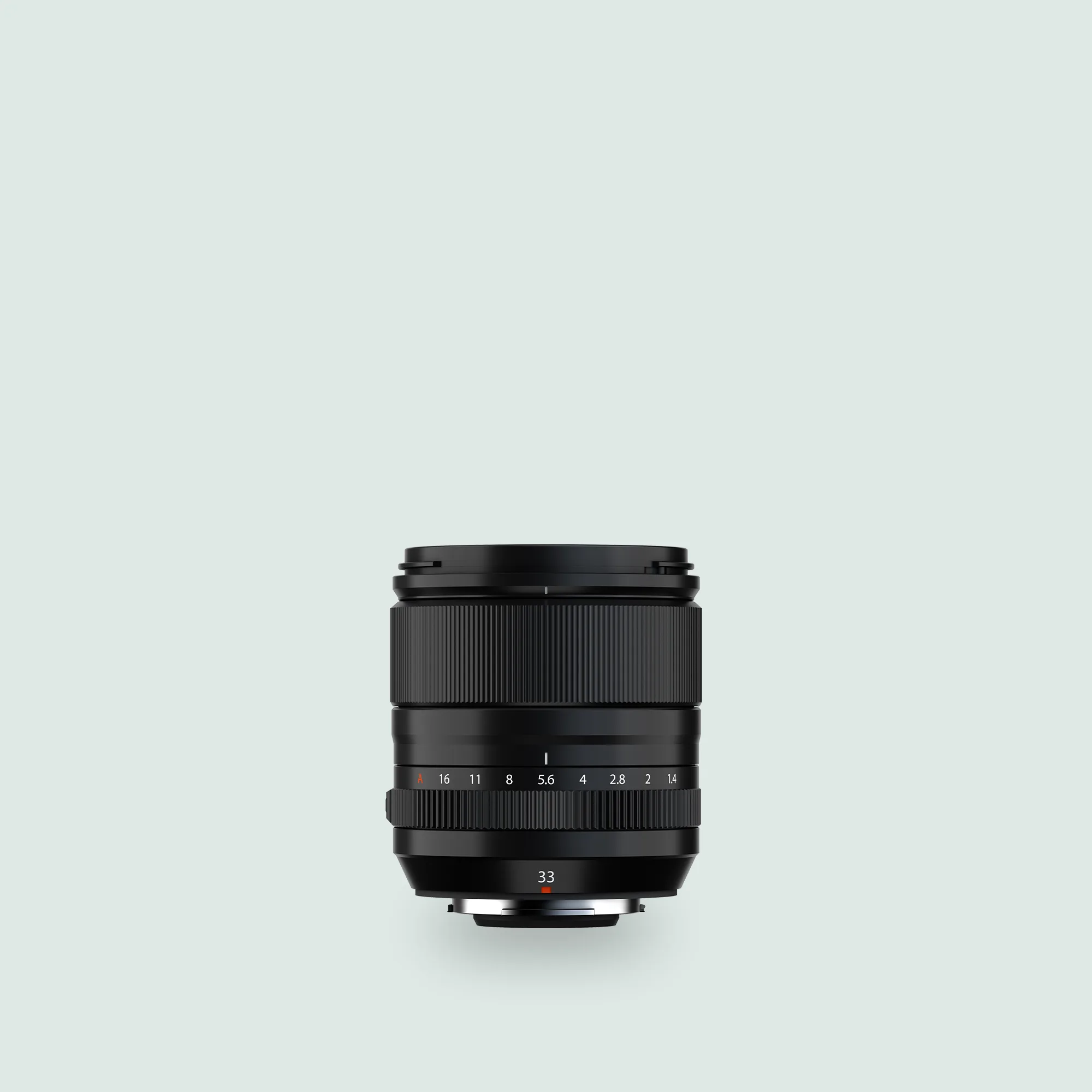
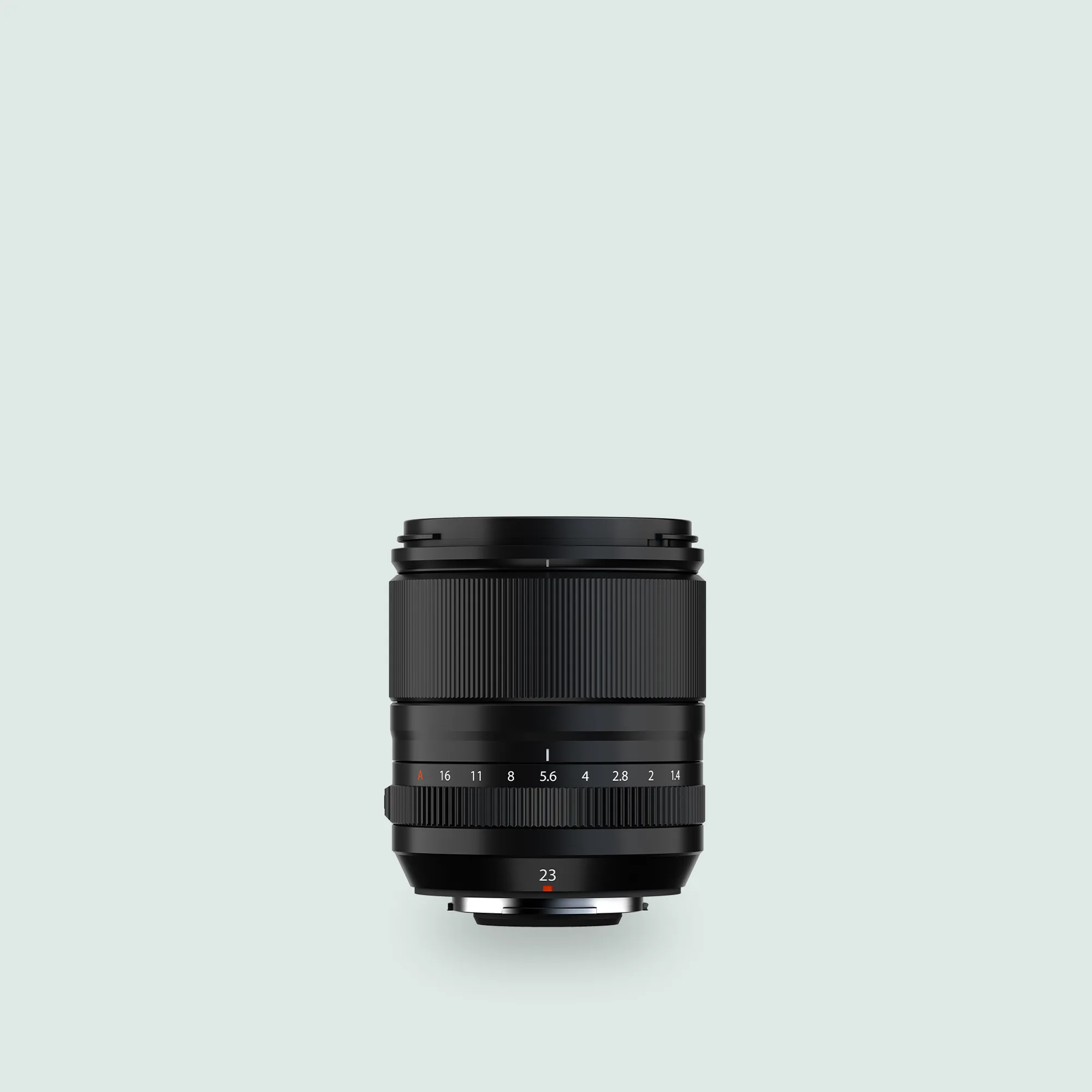
Choose the FUJINON XF 33mm F1.4 R LM WR if you want a classic standard prime that delivers a natural, undistorted perspective for portraits and everyday scenes. Pick the FUJINON XF 23mm F1.4 R LM WR if you need a slightly wider angle that matches the human eye’s field of view, ideal for environmental portraits, street photography, and storytelling.
Field of view and perspective
The most important difference between these two lenses is how they frame your subject. The XF 33mm F1.4 offers a standard perspective on APS-C, roughly equivalent to a 50mm full-frame lens. This gives a natural, undistorted look that works well for portraits, street photography, and everyday shooting. The XF 23mm F1.4 is slightly wider, equivalent to about 35mm full-frame, and its field of view is designed to feel like what your eyes naturally see. This makes it a strong choice for environmental portraits, travel, and documentary work where context matters as much as the subject.
Neither lens is better in absolute terms; the right choice depends on whether you want to isolate your subject with a classic standard view or include more of the scene with a wider angle.
Aperture and low-light performance
Both lenses share the same F1.4 maximum aperture, so you get excellent low-light capability and the ability to create a shallow depth of field on either. The XF 33mm F1.4 is engineered with decades of precision and cutting-edge technology to produce sharp, aberration-free results. The XF 23mm F1.4 also delivers a natural perspective that communicates creative vision, making it a versatile tool for available-light photography.
In practice, the difference in bokeh will be subtle but noticeable: the 33mm compresses the background slightly more due to its longer focal length, while the 23mm shows more of the environment in the out-of-focus areas.
Build and weather resistance
Both lenses are part of Fujifilm's LM WR (Linear Motor, Weather Resistant) series, meaning they offer fast, quiet autofocus and sealing against dust and moisture. This makes either lens a reliable companion for shooting in light rain or dusty conditions. The build quality is similar, so your decision should rest on focal length preference rather than durability.
Trade-offs at a glance
- Standard vs wide perspective: The 33mm gives a classic 50mm-equivalent view; the 23mm gives a 35mm-equivalent view that matches human sight. Choose the 33mm for portraits and everyday shots; choose the 23mm for storytelling and wider scenes.
- Background compression: The 33mm compresses the background slightly more than the 23mm at the same aperture. If you want smoother bokeh with more separation, the 33mm has a slight edge.
- Versatility for travel: The 23mm is often preferred for travel and street because its wider angle captures more of the scene without stepping back. If you shoot in tight spaces or want environmental context, the 23mm is more flexible.
Lens specifications at a glance
- FUJINON XF 33mm F1.4 R LM WR: XF33mmF1.4 R LM WR brings together decades of precision engineering, cutting edge technology, and carefully refined manufacturing processes to usher in a new era of optical brilliance and performance. You get a standard prime that is exceptionally sharp and well-corrected, making it ideal for portrait and detail work where image quality is critical.
- FUJINON XF 23mm F1.4 R LM WR: XF23mmF1.4 R LM WR offers a natural perspective – a field of view similar to the human eye, making it the perfect optic to communicate any creative vision. This wider angle lets you capture more context in a single frame, perfect for storytelling, street photography, and environmental portraits.
Which lens fits your style?
Best for
- Portrait and lifestyle photographers who want a classic standard focal length with excellent sharpness
- Street and documentary shooters who prefer a wider, more contextual field of view
Not for
- If you need a telephoto reach for sports or wildlife, neither of these primes will suit you