Quick Answer
If you want everyday coverage and a smoothing, gently minimising shape, choose a full cup side support bra. If your outfits need a lower neckline or you want a lighter, less enveloping feel, choose a plunge or scooped balcony style. Many full-bust wardrobes work best with one of each rather than forcing a single bra to do everything.
How Full Cup and Plunge Bras Differ in Practice
The difference is not just how much skin is covered. A full cup bra uses taller cup panels and often a side support sling to bring breast tissue forward and inward, which creates a rounder, more contained shape under clothing. A plunge or scooped balcony bra lowers the centre front, so the neckline drops and the upper cup is cut away. That lower centre is what makes plunge styles wearable under V-necks, wrap dresses, and open shirts, but it also means less separation and less coverage at the top of the bust.
For a full bust, the trade-off usually shows up in two places: where the bra anchors and how the neckline reads under clothes. Full cup styles tend to distribute weight through a wider underband and taller wires, which many people find more stable for long days. Plunge styles rely more on the band and strap angle to hold the lower centre in place, so band fit matters even more.
Where Side Support Fits Into the Decision
Side support is a construction feature, not a cup size. It usually appears as a sling or extra panel inside the cup that pushes tissue away from the underarm and toward the centre. That is why side support vs plunge is a useful comparison: side support is about shaping and forward projection, while plunge is about neckline and openness. You can find plunge bras with some side support, but a dedicated full cup side support bra generally gives more of that inward, forward shaping.
If your main frustration is tissue escaping toward the underarm or a flat, wide look under knits, side support is the feature to prioritise. If your main frustration is that every bra shows above your neckline, plunge or scooped balcony is the better starting point.
Matching the Bra to the Outfit, Not Just the Size
A coverage bra for a large bust earns its place under high-necked tops, button-down shirts, and heavier fabrics where a smooth, contained line matters. A plunge bra for a full bust earns its place under lower necklines, wrap tops, and dresses with a V or scoop. Trying to wear a full cup bra under a deep V usually means the cup edge peeks out; trying to wear a plunge under a high, fitted neckline can create a visible ridge where the lower cup ends.
One practical approach is to sort your week by neckline before you shop. Count how many days you actually wear a low neckline versus a high one, then buy for the larger number first. Most full-bust shoppers find they need at least one of each, but the ratio is personal.
Trade-Offs to Weigh Before You Choose
- Coverage vs neckline freedom: Full cup side support gives more top coverage and a contained shape, but the higher cup edge limits how low your neckline can go. Plunge and scooped balcony open up lower necklines, but show more upper bust. Pick based on the necklines you wear most, not the one you wish you wore.
- Shaping vs lightness: Side support panels push tissue forward and inward for a rounder line. Plunge styles often feel lighter and less enveloping because there is less cup above the centre. If underarm spill is your main issue, start with side support. If heaviness or bulk is your main issue, try a plunge or scooped balcony.
- Band stability vs strap reliance: Full cup designs with anchored back straps and a curved underband reduce strap slippage and band roll. Plunge designs place more demand on correct band tension to keep the lower centre in place. Check the band first on any plunge bra; if the band rides up, the plunge will not stay put.
Two Curvy Kate Styles That Show the Difference
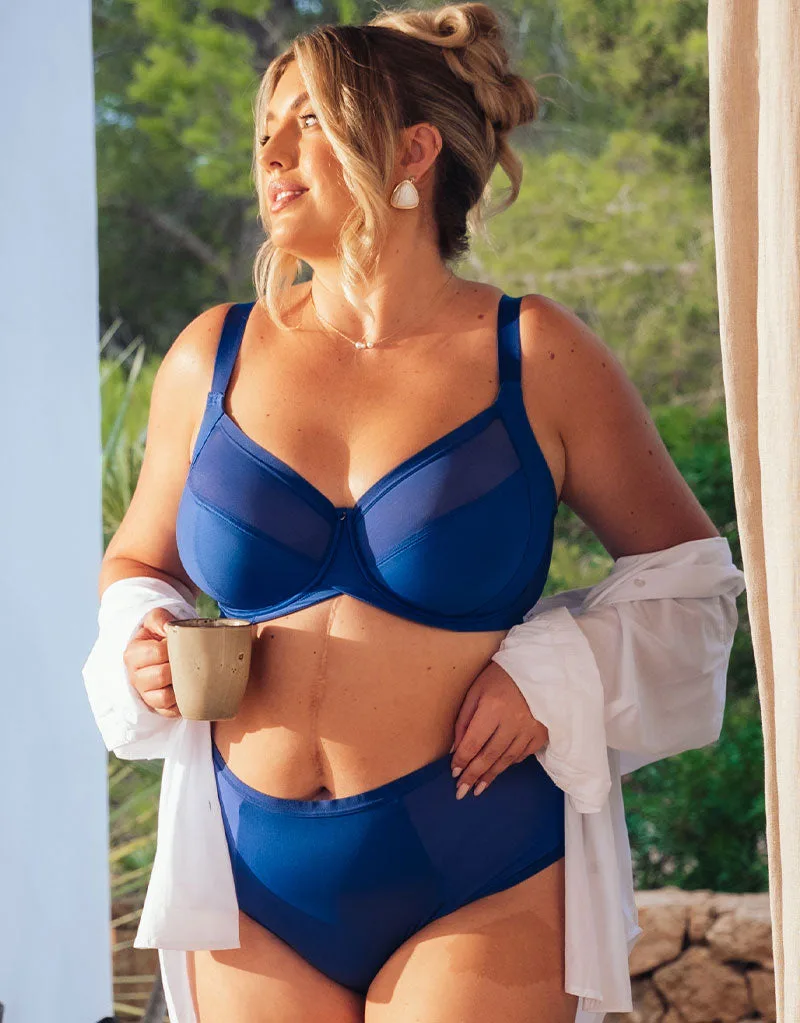
- Curvy Kate WonderFully Full Cup Side Support Bra Dark Blue: WonderFully Full Cup Side Support Bra has stretch mesh top cup panels, anchored back straps, and a curved underband designed to reduce roll and discomfort. This is the full cup side support option: the taller cup and anchored straps suit long days and higher necklines, while the curved underband targets the band roll that bothers many full-bust wearers.
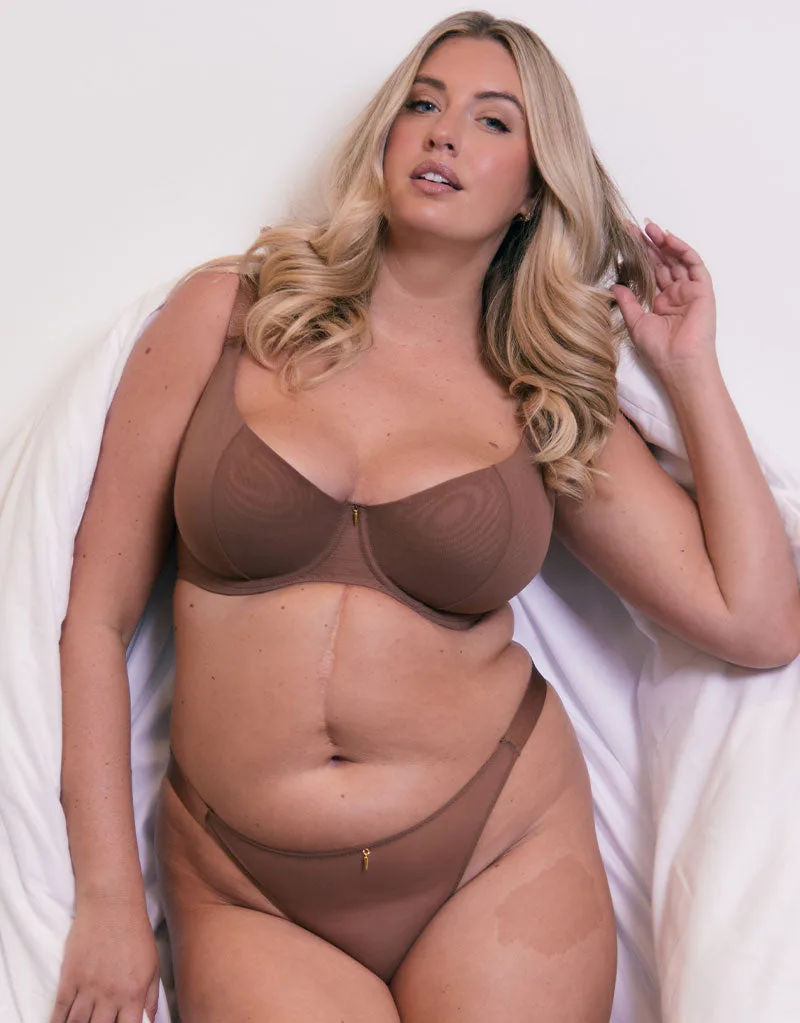
- Curvy Kate Cool Cat Scooped Multiway Balcony Bra Coffee: Cool Cat Scooped Multiway Balcony Bra has soft stretchy mesh cups, a scooped balcony cup for a lower neckline, and multiway straps. This is the lower-coverage, more open-neckline choice: the scooped balcony shape works under V-necks and multiway straps let you switch to a cross-back or halter position when your top requires it.
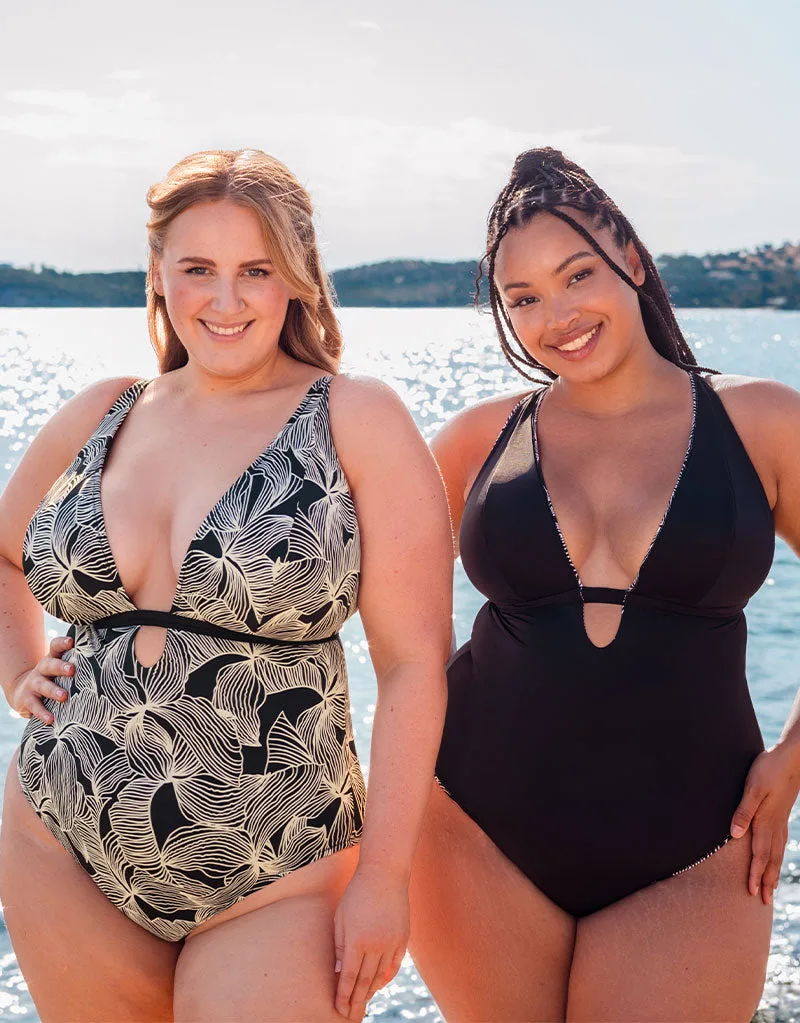
- Curvy Kate Ripple Reef Reversible Non-Wired Multiway Swimsuit Black Print: Ripple Reef Reversible Non-Wired Multiway Swimsuit has multiway straps for classic, cross-back, or halter wear and a reversible 2-in-1 design with a plain black option. If you like the plunge or multiway idea for swimwear rather than everyday bras, this shows how the same neckline flexibility translates to a swimsuit body.
Which Style Should You Choose?
Choose full cup side support if you...
- Wear high-necked tops, button-downs, or heavier fabrics most days
- Want a smoothing, gently minimising shape and more top coverage
- Struggle with tissue escaping toward the underarm or with band roll
Choose plunge or scooped balcony instead if you...
- Wear V-necks, wraps, or low necklines regularly
- Prefer a lighter, less enveloping feel over maximum coverage
- Want multiway strap options for cross-back or halter tops