Quick answer
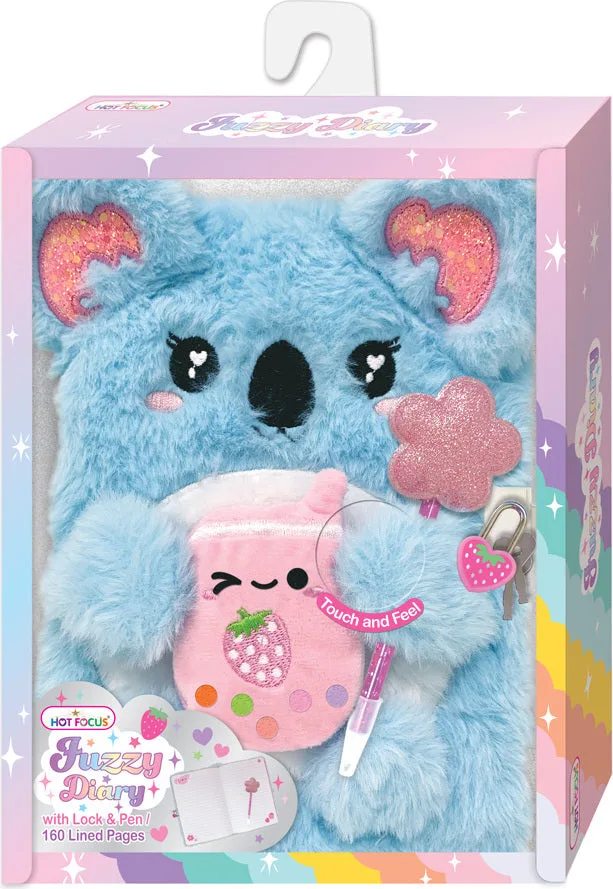
Start by letting your child choose a lockable diary they are excited to use, then set a tiny daily writing ritual of five minutes. Offer simple prompts instead of rules, and keep the diary private so journaling feels safe. A fuzzy diary with lock and keys gives kids that sense of ownership from day one.
Why a lockable diary changes the habit
A diary with a lock does more than look cute. It signals to your child that their thoughts belong to them, which is often the difference between a journal that gets used and one that collects dust. When kids know a parent or sibling won't flip through the pages, they are more willing to write honestly about friendships, school worries, or silly daily moments.
That privacy also gives you a clear role: you are the person who respects the lock, not the person who reads the entries. Say this out loud when you hand over the diary. If your child believes you, they will treat the diary as a real space rather than a school assignment.
Match the diary to your child's age and writing stamina
A younger child who is still building handwriting stamina may do better with a diary that has space for drawing as well as short sentences. An older tween or teen often wants lines, a lock, and a size that fits in a backpack or bedside drawer. The goal is a diary that feels easy to open, not precious or intimidating.
If your child is between interests, choose a diary with a friendly cover and a manageable page count. A thick, formal journal can make kids feel they need to write a lot every time. A smaller, playful diary lowers that pressure and makes a five-minute entry feel like enough.
Set up a five-minute writing ritual
Pick a consistent time that already has a natural pause, such as after dinner, before lights-out, or right after school. Put the diary and a pen in the same spot every day so there is no hunting for supplies. The routine matters more than the length of the entry.
Use a timer only if your child likes the challenge. For most kids, a simple prompt such as 'one thing that made me laugh today' or 'one thing I want to remember' is enough to get the pen moving. If they miss a day, do not turn it into a lecture. Just leave the diary where they can see it and let them return when they are ready.
Steps to start a diary with your child
- Let your child pick the diary: Bring your child to choose the diary themselves, or show a few options and let them decide. A fuzzy diary with lock and keys is often a hit because it looks fun and feels private. Avoid choosing for them, even if you prefer a different cover. Checkpoint: your child should be able to open the diary and say something they like about it.
- Explain the privacy rule out loud: Tell your child clearly that you will not read the diary unless they ask you to. Then stick to it. If you are worried about safety, agree on one exception in advance, such as talking together if something feels unsafe. Common mistake: promising privacy and then peeking 'just to check.' That ends the journaling habit fast.
- Choose a daily five-minute slot: Attach writing to an existing routine, like after brushing teeth or before reading time. Keep the diary and a pen in the same place. Five minutes is enough; the goal is consistency, not long entries. Checkpoint: after one week, your child should be able to find the diary without help.
- Offer prompts, not assignments: Write a few starter prompts on a sticky note inside the cover: 'Something that made me laugh,' 'A wish for tomorrow,' or 'A drawing of my day.' Let your child skip prompts they do not like. Prompts are invitations, not homework. Common mistake: grading or correcting entries. Resist the urge to comment on spelling or handwriting.
- Keep the diary visible but not on display: Store the diary on a bedside table or in a drawer your child can reach easily. Do not leave it in a shared living space where siblings might flip through it. Easy access helps the habit; visible privacy protects it. Next step: after two weeks, ask your child if they want a second prompt list or a new pen to keep momentum going.
Product facts
- Koala Fuzzy Diary With Lock & Keys: This fuzzy diary includes a lock and keys, and its pages work for sketching, coloring, and writing. The lock supports the privacy that makes kids willing to write honestly, while the mixed pages let younger writers draw when words feel hard.