Quick answer
Choose a steel roof if you want the longest lifespan and the least upkeep, especially where snow and wind are real concerns. Choose wood when the structure itself is the look you want and you accept refinishing every few years. Choose fabric only for seasonal shade you plan to take down before winter.
The three roof types and what they actually demand from you
A gazebo roof is not just a style choice. It sets how much weight the frame carries, how often you climb a ladder, and whether the structure survives a storm season. Steel roofs are typically galvanized and powder-coated, which means the protective layer is baked on rather than painted on. Wood roofs, usually cedar, look warmer but move with moisture and need periodic sealing. Fabric roofs are the lightest and cheapest to replace, but they are the shortest-lived and the most likely to need removal in bad weather.
How snow and wind separate the materials
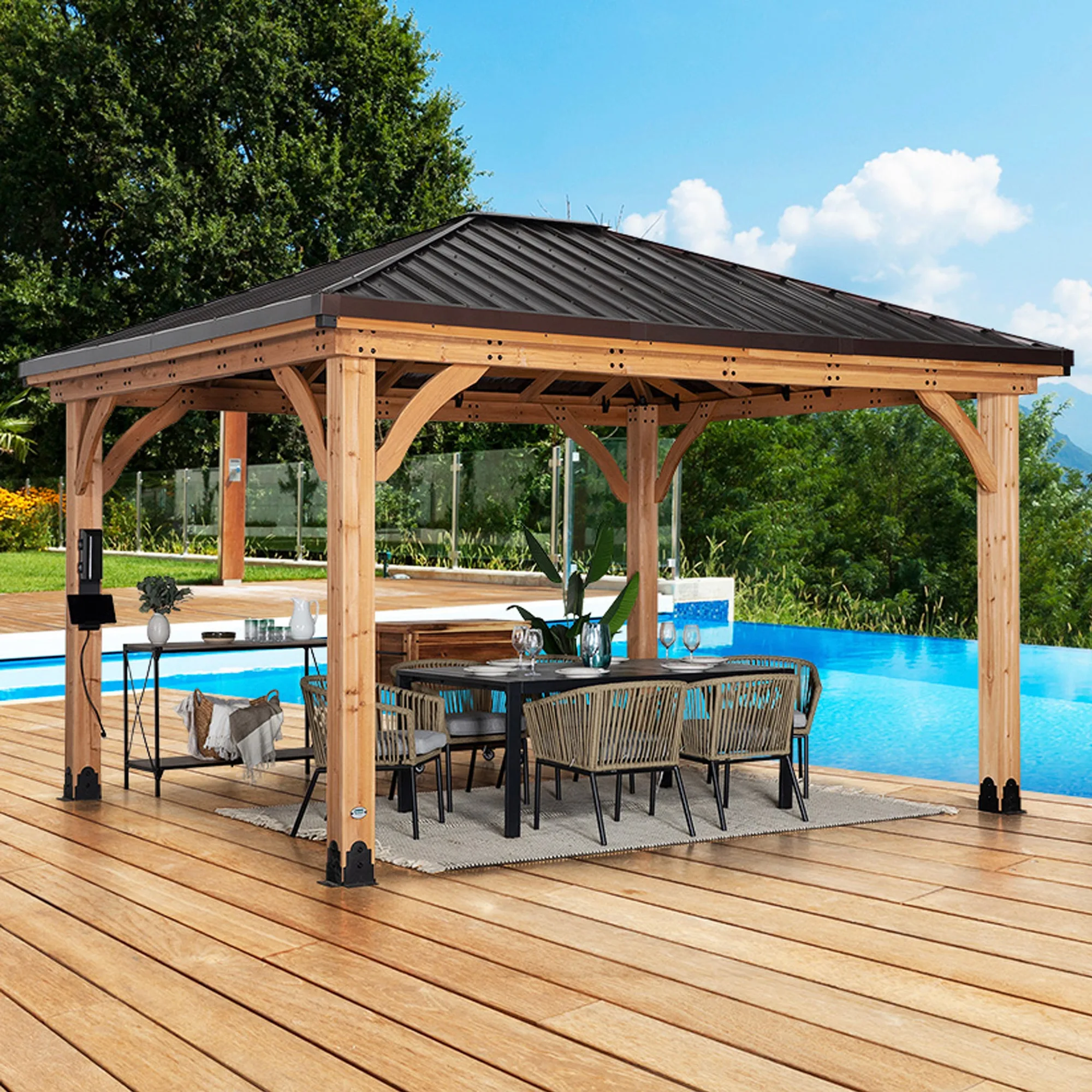
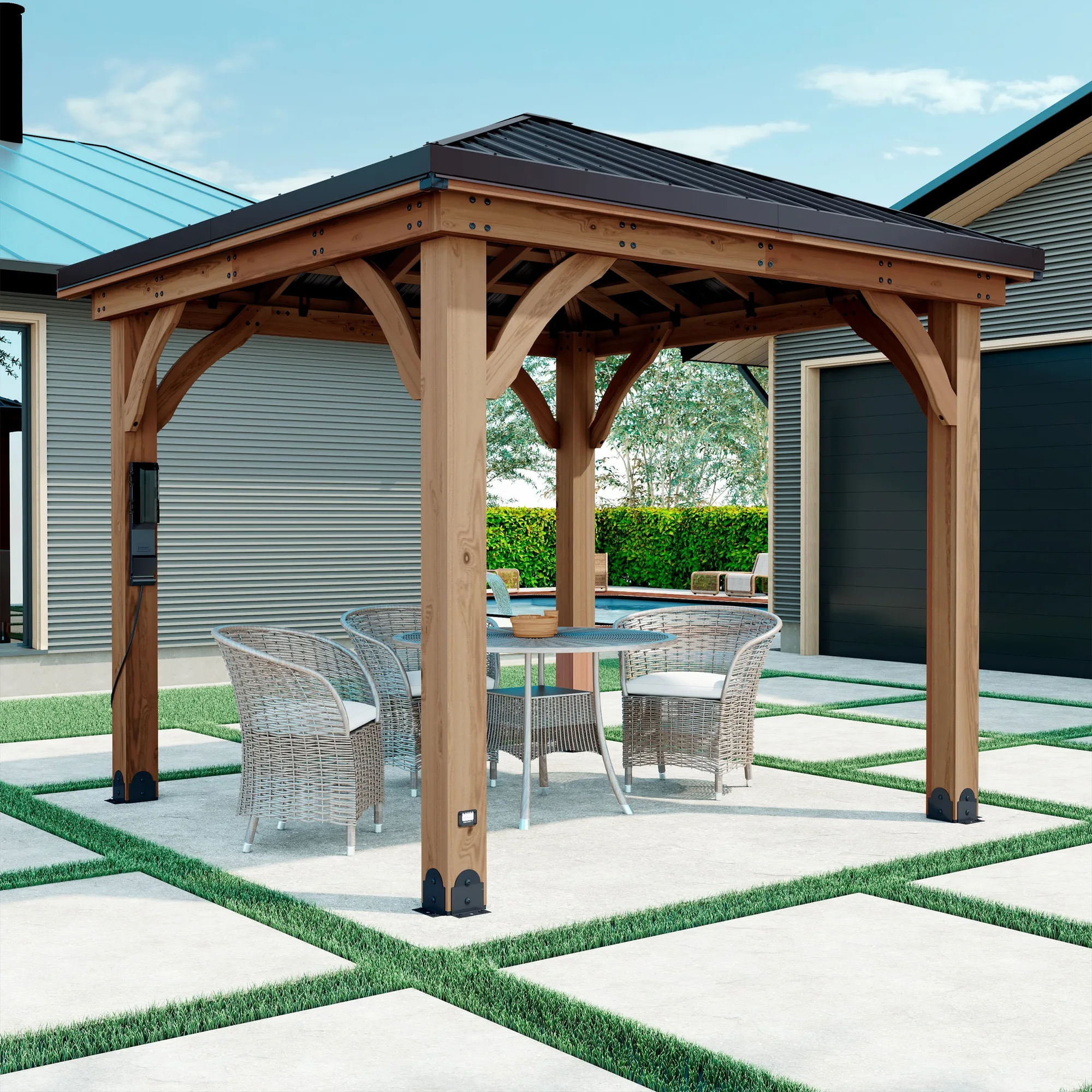
This is where the gap becomes concrete. The 16x12 Barrington Gazebo uses a heavy-gauge galvanized steel hip roof and is Pro-Tect tested and proven to withstand up to 10,100 pounds or 30 inches of snow and 100 mph winds. The 12x10 Norwood Gazebo, built from 100% cedar with a 29-gauge steel roof, is Pro-Tect tested to withstand up to 6,700 pounds of roof weight and wind speeds up to 100 mph. Fabric has no comparable load rating because it is not meant to hold snow at all.
If you live where snow accumulates, that difference is the whole decision. A steel roof keeps its shape under load. A wood roof depends on the frame beneath it and the condition of the finish. Fabric should be taken down or at least cleared before the first heavy snowfall.
Maintenance over a ten-year window
Steel: rinse it, check fasteners, and touch up any scratches. The powder-coated finish on a galvanized steel roof does most of the work. Wood: plan on cleaning and re-sealing every two to three years, and more often in humid or coastal air, because cedar grays and checks if it dries out. Fabric: expect to replace the canopy every few seasons, and store it dry to avoid mildew. The trade-off is simple. Steel costs more up front and asks less later. Wood and fabric cost less up front and ask more later.
Roof shape changes how the material performs
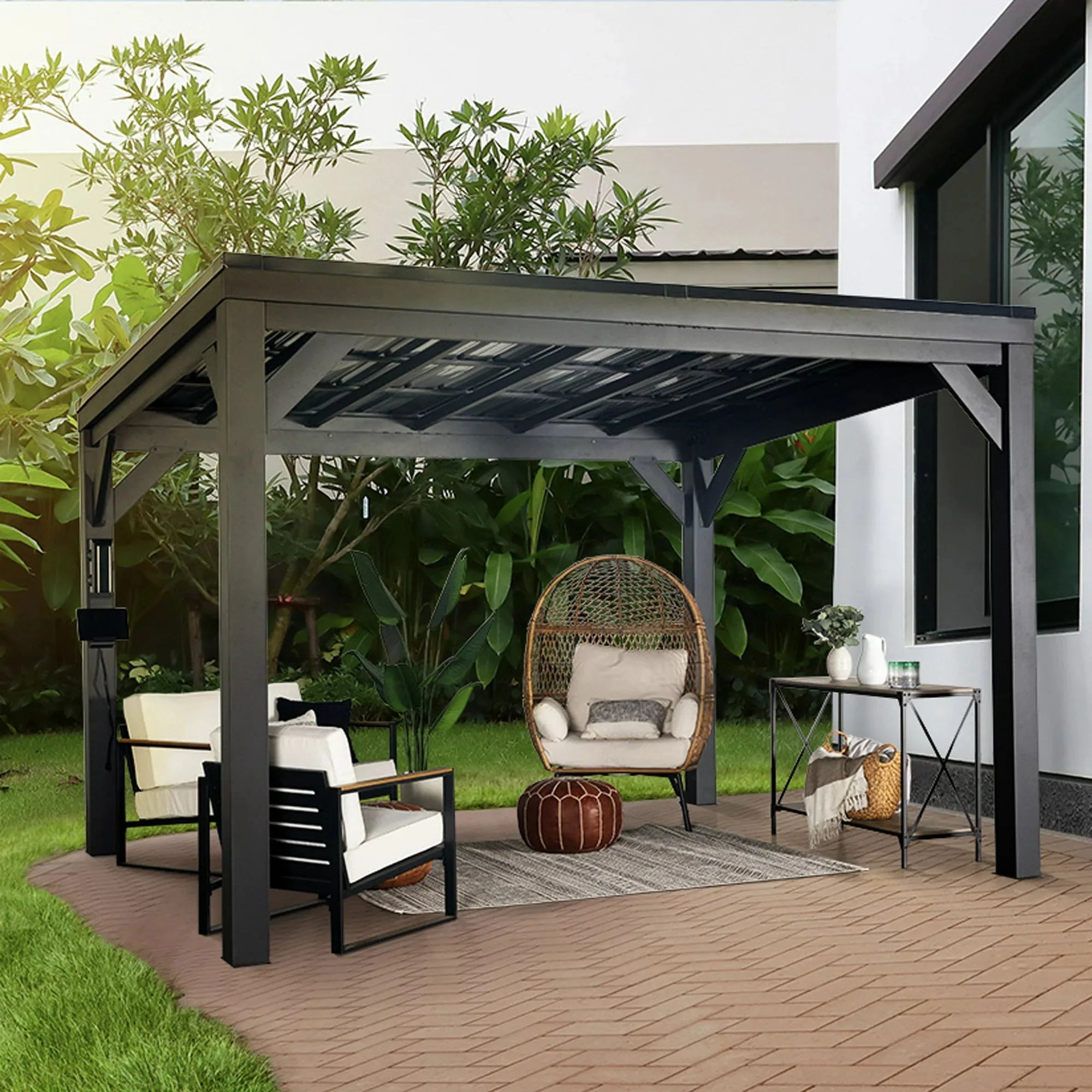
A gable roof sheds water to two sides and gives you more headroom and a more architectural silhouette, which suits a steel build like the Lancaster 14x14 Steel Gazebo with Gable Roof. A hip roof slopes on all four sides, which handles wind from any direction more evenly and is common on wood-framed gazebos. A flat or low-slope roof works for grill areas and bars where you want wide overhead coverage rather than a tall peak. Match the shape to your weather first, then pick the material that supports it.
Trade-offs by material
- Steel roof: Highest load and wind ratings, lowest routine maintenance, and the longest service life. The cost is the highest up-front price and a more industrial look. Pick steel if you want to set it and forget it.
- Wood roof: Warm, natural appearance and a structure that can be refinished rather than replaced. The cost is re-sealing every few years and a lower snow-load ceiling than all-steel builds. Pick wood if the look matters more than the calendar.
- Fabric roof: Lowest cost, easiest to install, and simple to swap colors. The cost is a short canopy lifespan, no meaningful snow rating, and seasonal removal in most climates. Pick fabric only for seasonal shade, not year-round shelter.
How these gazebos apply the materials
- Lancaster | 14x14 Steel Gazebo with Gable Roof: Fabricated from robust galvanized steel with a refined powder-coated finish, using thicker, stronger profiles than conventional gazebos. Thicker steel profiles resist denting and twisting, so the roof holds its lines and needs less attention over time.
- 16x12 Barrington Gazebo: Heavy-gauge galvanized steel hip roof, Pro-Tect tested and proven to withstand up to 10,100 pounds or 30 inches of snow and 100 mph winds. This is the strongest snow and wind rating in the group, making it the safest pick for cold, storm-prone regions.
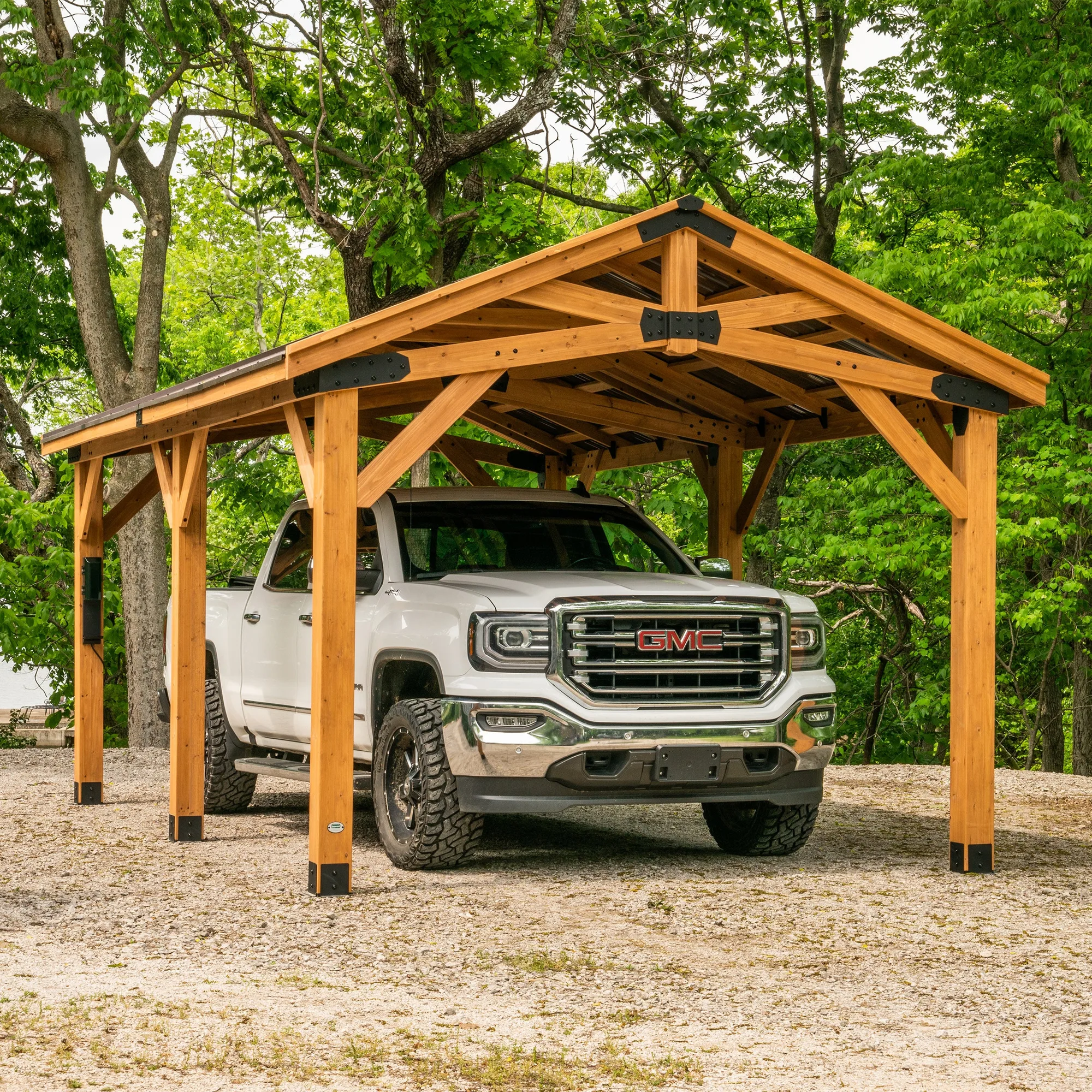
- 12x10 Norwood Gazebo: Crafted from 100% cedar with a 29-gauge steel roof, Pro-Tect tested to withstand up to 6,700 pounds of roof weight and wind speeds up to 100 mph. You get the cedar look with a metal roof, but the lower load rating means you should clear heavy snow rather than let it sit.
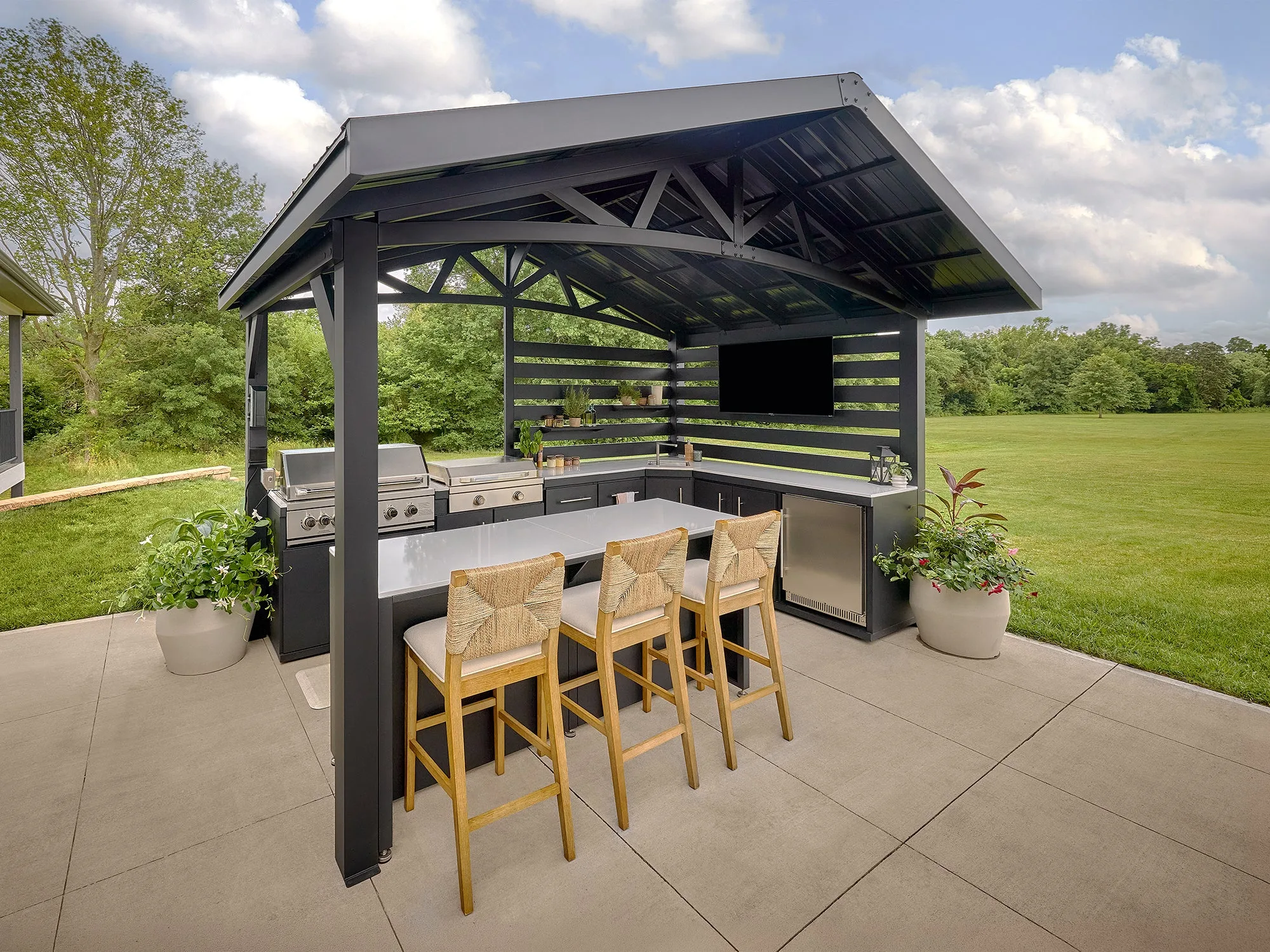
- Granada Grill Gazebo with Outdoor Bar: Crafted from naturally durable cedar wood with a heavy-duty galvanized steel roof and black hardware accents. A good fit over a grill or bar area, where you want a hard roof and a shorter span rather than a full-size sheltered room.
Which roof material fits your backyard
Best for
- Homeowners in snow or high-wind regions who want a roof that stays put without seasonal work
- Buyers who prefer a low-maintenance structure they can rinse and forget
- Anyone building a permanent outdoor room, kitchen, or bar under a hard roof
Not for
- Renters or anyone who needs to move or store the structure each season
- Shoppers prioritizing the lowest possible up-front cost over lifespan
- Buyers who want a specific natural wood look and are unwilling to refinish it