Quick answer
Most gel polish peeling off starts in one of three places: oil or shine left on the nail plate, under-cured gel, or a base and color that do not bond well together. Fix prep first, then verify your lamp and cure times, and only then change products. If a nail still lifts in the same spot twice in a row, switch to a HEMA-free, TPO-free formula and rebuild from a fully dry, fully prepped nail.
Gel polish peeling off is rarely bad luck. It is almost always a chain reaction: something on the nail plate, something in the cure, or something in the product pairing. Find the weak link and the fix is usually one change, not a whole new routine.
This guide separates the symptom from the cause so you stop guessing. Work through the seven causes in order, apply the corrective action, and use the diagnosis block at the end to decide whether to keep troubleshooting or switch products.
Cause 1: Oil and moisture left on the nail plate
If gel polish lifts in whole sheets within a day or two, suspect oil. Natural oils, cuticle cream, and even hand lotion leave a film that gel cannot grip. The fix is a dry manicure: push back cuticles, remove shine with a fine grit buffer, then wipe each nail with a lint-free pad and a dehydrator or high-percentage alcohol. Do not touch the nail plate with your fingers after wiping.
One practical checkpoint: after wiping, the nail should look chalky and matte, not shiny. If you see shine, you missed a spot. Re-buff that area and wipe again before applying base.
- Work one hand at a time so the other hand does not pick up oil from your skin.
- Skip cuticle oil and hand cream until the full manicure is cured.
Cause 2: Shine left on the nail plate
Gel needs a mechanical grip. If you skip buffing, the base coat sits on a smooth surface and peels off in one piece. Use a 180-grit buffer or a fine sanding band to remove the natural shine, then dust off thoroughly. Over-buffing into thin, flexible nail also causes lifting, so stop as soon as the shine is gone.
This is the single most common reason a gel manicure starts peeling from the free edge or the sidewalls. It is also the easiest to fix without buying anything new.
- Buff in one direction rather than back and forth to avoid heat buildup.
- Replace worn buffers; a glazed-over buffer stops removing shine.
Cause 3: Under-cured gel
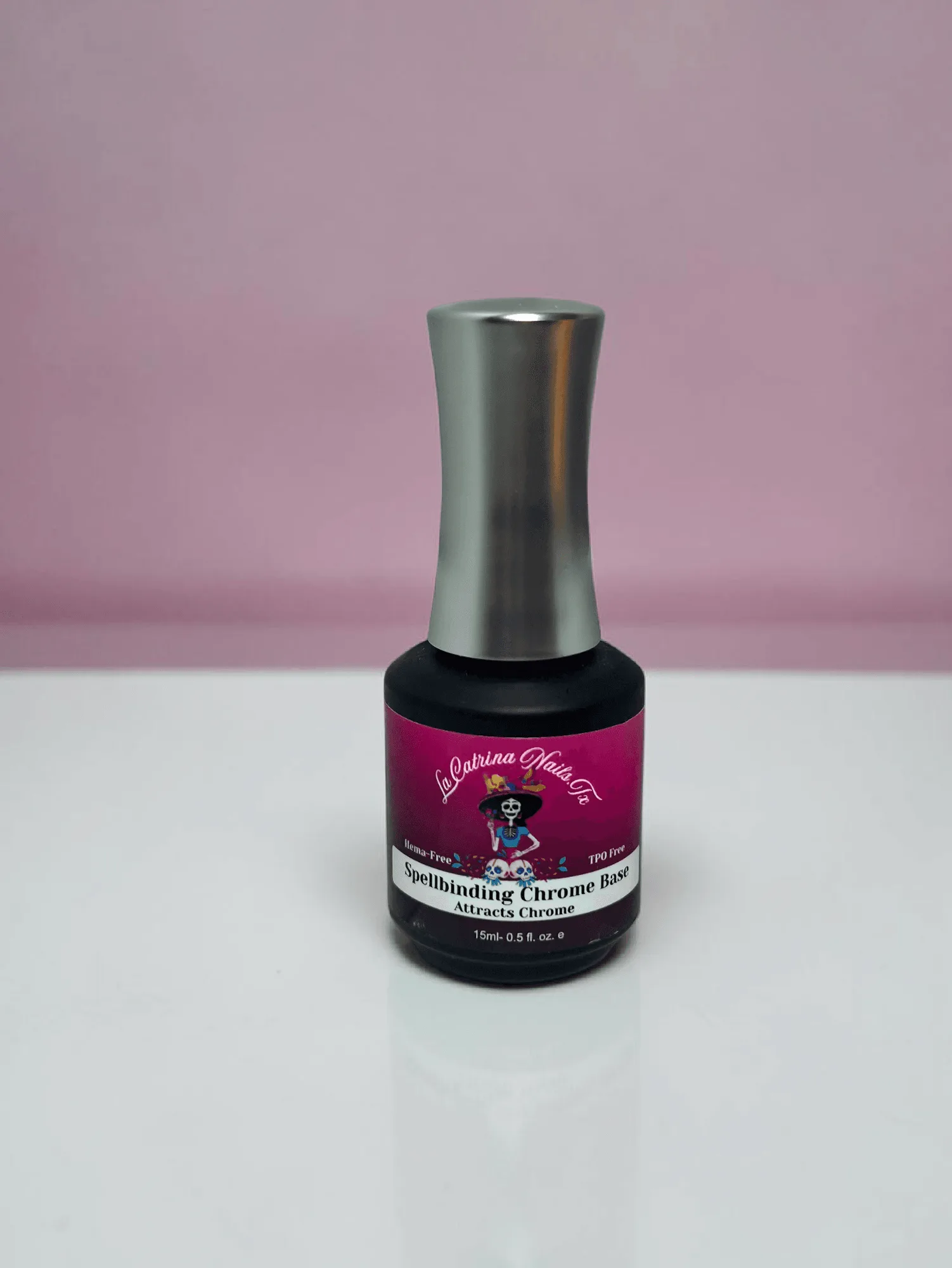
Under-cured gel stays soft underneath, so the top layer looks fine while the base lifts from the nail. Cure times depend on your lamp and the product, so follow the label rather than a habit. The Spellbinding Chrome Base from La Catrina Nails. TX is formulated to cure for 60 seconds with no under-curing needed, which is a useful benchmark when you are checking your own lamp.
Under-curing is not just a wear problem. The brand notes that under-curing any gel product can cause allergic reactions, so this is the one cause worth fixing even if your manicure still looks acceptable.
- Cure all five fingers, including the thumb, at the same angle.
- If the gel feels tacky or moves when you press it, cure longer.
Cause 4: Base and color that do not bond
Some color coats need a specific base to adhere. Chrome and cat eye effects are the classic example: the powder or magnetic layer will not sit evenly on a standard base, so the whole manicure lifts. A chrome-friendly base solves this by attracting the powder for a smooth, even application.
If you use magnetic or chrome finishes and see lifting only on those nails, the base is the variable to change, not your prep.
- Keep one dedicated base for chrome and cat eye work.
- Do not mix brands within one manicure unless you have tested the pairing.
Cause 5: Nail plate damage or thin nails
Peeling, flaking nails cannot hold gel well because the top layers are already loose. If your nails bend easily or have white spots, the gel is bonding to a surface that is about to shed. Give the nail a break, keep it short, and condition before reapplying.
This is the point where you should stop troubleshooting products. No base coat fixes a nail plate that is actively peeling. Wait until new growth is smooth before your next gel manicure.
- Trim back lifting edges rather than picking at them.
- Do not file the nail plate thin to chase a smooth surface.
Cause 6: Application too thick or too close to the cuticle
Thick layers cure unevenly and flood the sidewalls, which is where lifting starts. Apply thin coats and keep a hairline gap at the cuticle and sidewalls. If gel touches skin, it can lift there first and take the rest of the manicure with it.
A useful habit: wipe your brush on the bottle rim and apply in three strokes. If the gel pools, you are carrying too much product.
- Cap the free edge on every layer to seal the tip.
- Remove any gel that touched skin before curing.
Cause 7: Product sensitivity or formula mismatch
If your nails itch, burn, or develop redness along with lifting, stop and remove the gel. Repeated exposure to under-cured gel can trigger reactions, and once sensitivity develops, the same product may no longer be an option. HEMA-free and TPO-free formulas are a common next step for people who react to standard gels.
Switching formulas is not a cure for bad prep, but it is the right move when prep, cure, and application are already correct and lifting still happens.
- Patch test a new formula on one nail before a full set.
- Do not reapply over irritated skin.
Diagnosis: match your symptom to the fix
- Lifts in whole sheets within 24 hours: Oil or moisture on the nail plate, or shine left unbuffed. Redo the dry manicure: buff, wipe with dehydrator, and do not touch the nail after wiping. If it still lifts after a clean prep, check your cure time next.
- Lifts only on chrome or cat eye nails: The base is not bonding with the effect layer. Switch to a chrome-friendly base such as Spellbinding Chrome Base and apply it in a thin, even layer. Keep this base separate from your standard base so you do not mix them up.
- Soft, tacky gel under a hard top layer: Under-cured gel. Increase cure time per the product label and make sure all five nails sit under the lamp at the same angle. Under-curing can also cause allergic reactions, so fix this before anything else.
- Lifting plus itching, burning, or redness: Stop the manicure and remove the gel. This points to sensitivity, not a prep error. Move to a HEMA-free, TPO-free formula once skin is calm. Do not reapply the same product over irritated skin.
- Nails are peeling or flaking on their own: The nail plate cannot hold gel while it is shedding. Pause gel manicures, keep nails short, and wait for smooth new growth. No product change fixes this. Choose a break instead.
Products that help when the cause is formula or base
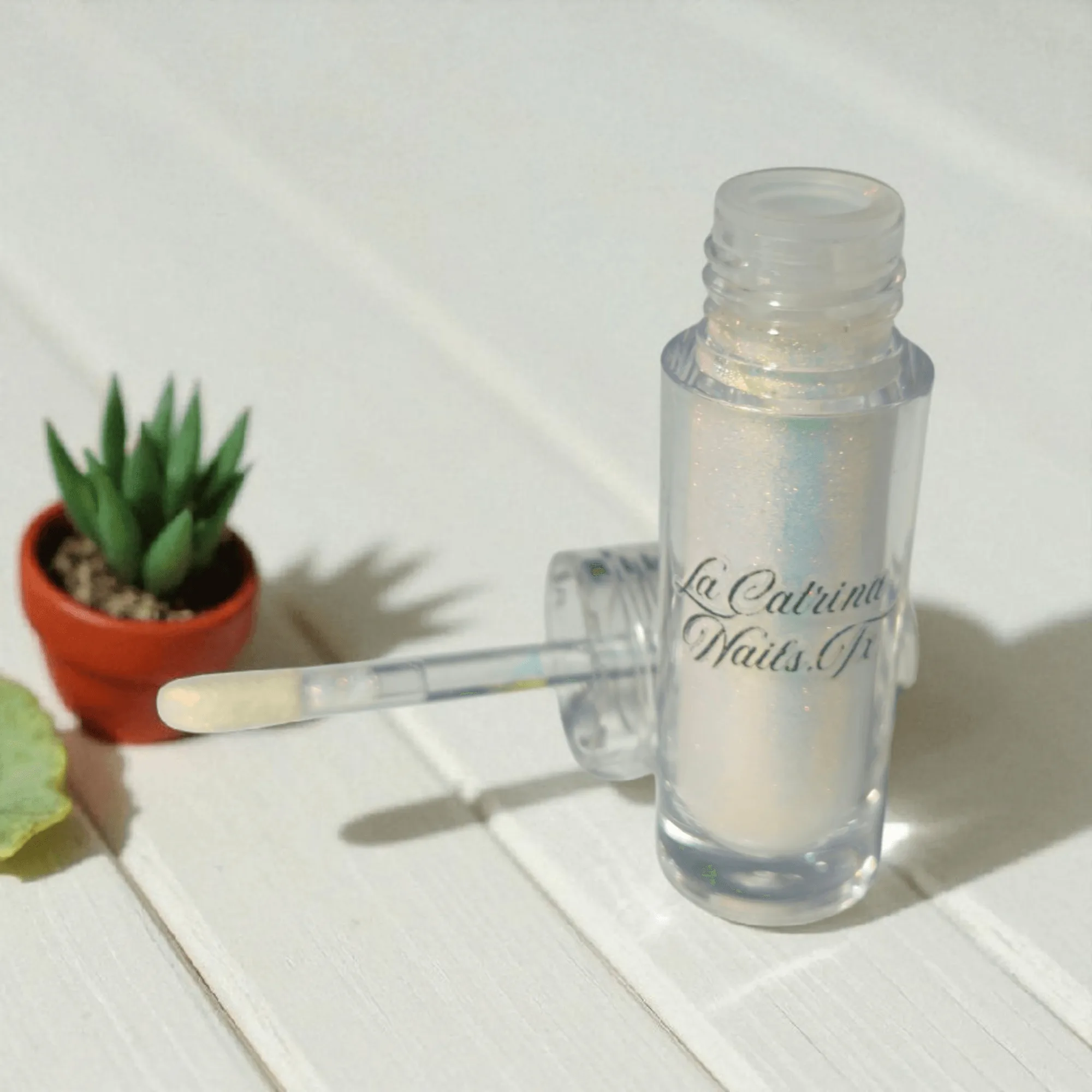
- Spellbinding Chrome Base~ HEMA-Free and TPO Free Gel polish: A chrome-friendly base formulated to attract chrome powder and liquid chrome for smooth, even application, with a 60-second cure and no under-curing needed. If your lifting only happens on chrome or cat eye nails, this base removes the adhesion variable so you can rule it out.
liquid chrome
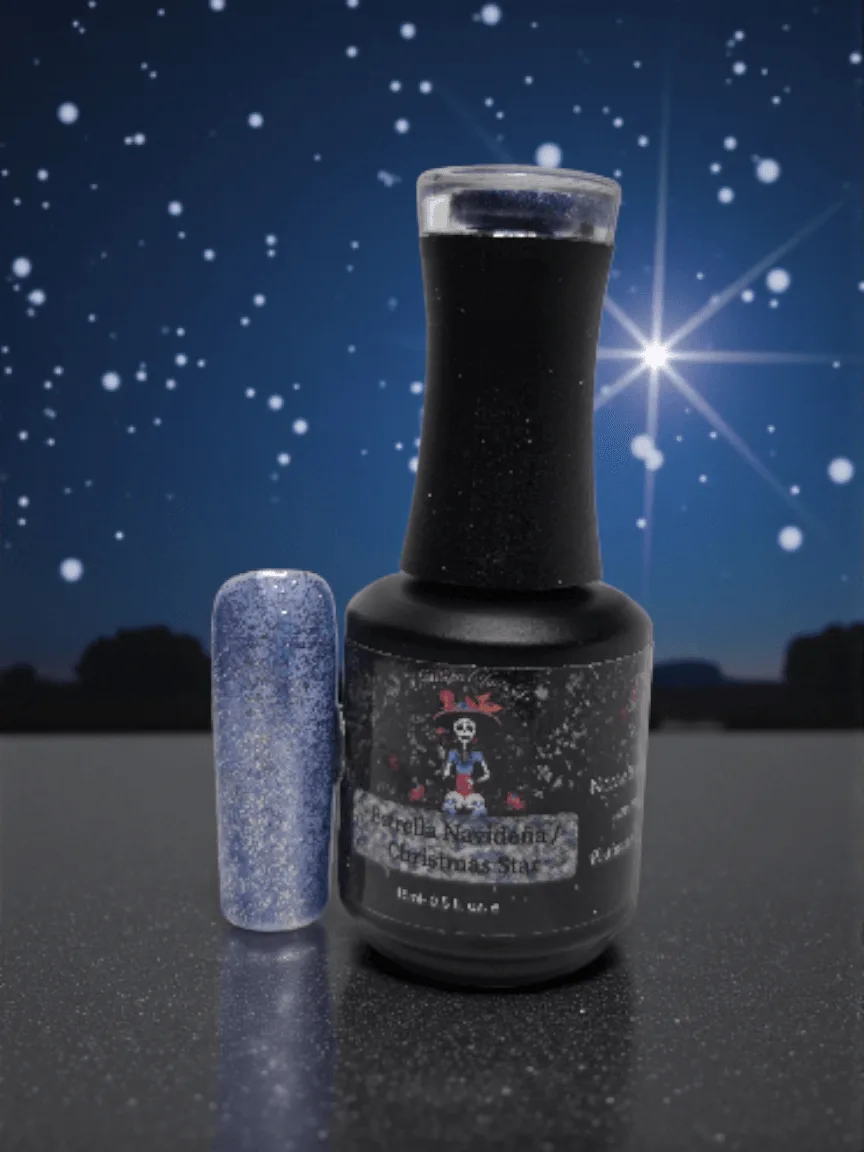
- Estrella Navideña ~ Christmas Star~ HEMA-Free and TPO Free Gel polish: A bluish purple with silver glitter, described as crisp and celestial, catching light from every angle. A HEMA-free, TPO-free color option for anyone rebuilding a routine after a sensitivity reaction or formula switch.
- La Hora Bruja
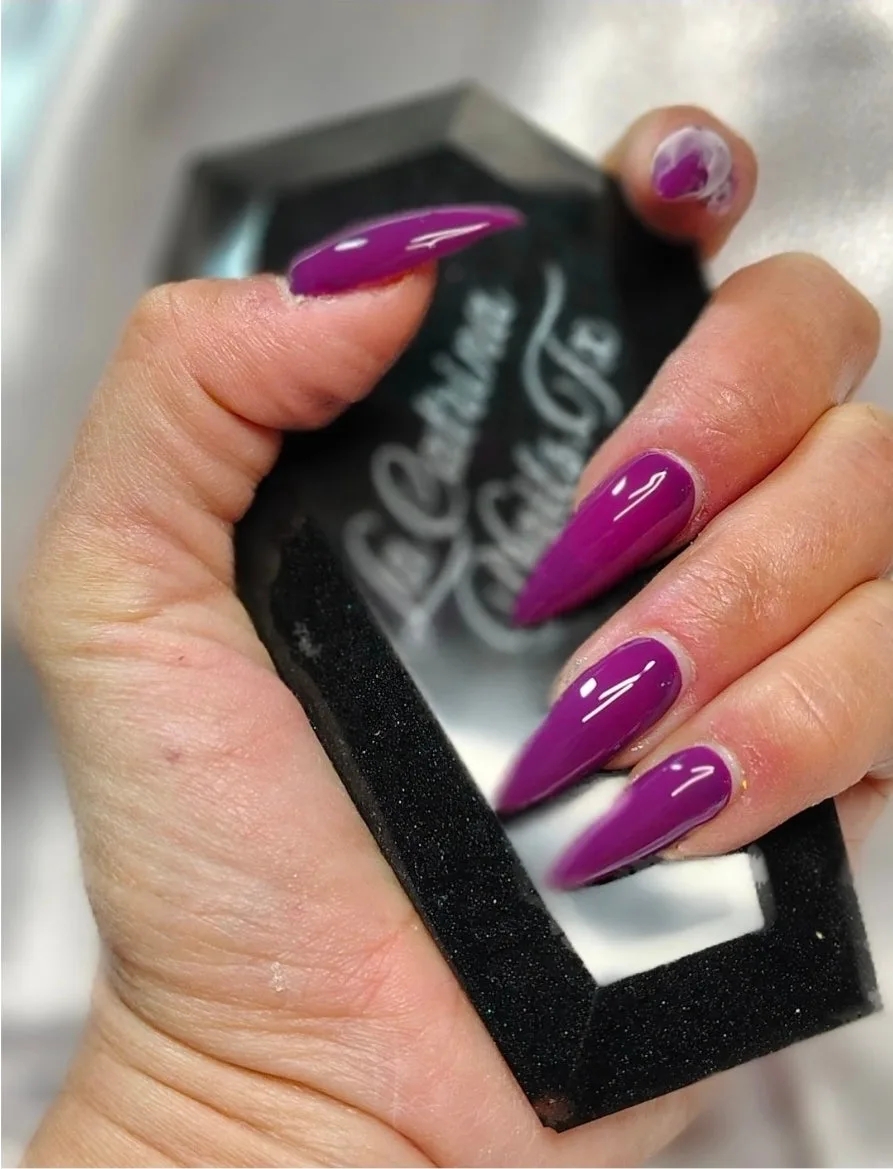
Re ReleaseHEMA-Free and TPO Free Gel polish: Part of the Cuentos de Medianoche (Stories at Midnight) Collection, inspired by the Witching Hour legend. Useful as a replacement shade when you are moving your whole gel lineup to HEMA-free, TPO-free formulas rather than changing one bottle at a time.
Work the causes in order: prep, cure, application, then formula. Most gel polish peeling off disappears after the first two fixes. Only switch products when the nail plate is healthy, the prep is clean, and the cure is correct, and at that point a HEMA-free, TPO-free formula is a reasonable next step.