Quick answer
Choose a traditional top coat if you change polish often, want a simple one-bottle routine, or need to seal shimmer, flakie, and reflective finishes without extra steps. Choose a gel top coat if you need the longest wear between salon visits or at-home gel kits and do not mind UV curing or removal. For most Dam Nail Polish shades, a traditional top coat is the safer default because it will not dull the reflective and holographic particles.
A top coat is not just the last step; it decides how your color wears, how it shines, and how easy removal will be. Gel and traditional top coats both protect polish, but they cure differently and interact with specialty finishes in opposite ways. The right pick depends on how often you repaint and what is underneath.
This comparison uses the finish types in the Dam Nail Polish catalog, from shimmer and flakie to reflective glitter, to show where each top coat helps and where it hurts. No single winner exists, but the trade-offs are clear once you match the top coat to the polish and your routine.
How gel and traditional top coats actually differ
Traditional top coats dry by solvent evaporation. You brush them on over fully dry polish, wait a few minutes, and the film hardens. They are forgiving, easy to reapply, and remove with standard nail polish remover. Gel top coats contain photoinitiators that stay wet until cured under a UV or LED lamp. That curing step creates a harder, glossier shell that resists chips and dulling longer, but it also means you cannot skip the lamp or remove it with acetone alone.
The practical difference shows up in wear time and removal. A traditional top coat may need a refresh every two to three days on active hands. A properly cured gel top coat can hold a week or more, but removal requires soaking or filing that can dry out nails if done often. Neither is universally better; they solve different problems.
- Traditional top coat: no lamp, quick touch-ups, easy removal.
- Gel top coat: lamp required, longer wear, more involved removal.
- Never apply gel top coat over wet traditional polish; the solvents need to escape first.
Shine, wear, and the specialty finish problem
Gel top coats usually win on high-gloss shine that stays glassy for days. That matters for creme and solid shades, but it can flatten the effect of reflective glitter, holographic, and flakie polishes if the gel layer is too thick or applied over a textured surface. Traditional top coats, especially fast-dry versions, tend to preserve the particle pop because they form a thinner film and let light hit the flakes and glitters directly.
Wear is the other trade-off. A long lasting top coat sounds ideal until you want to change colors. Gel removal takes time and can leave nails feeling stripped if you remove it weekly. Traditional top coats let you repaint on a whim, which suits seasonal shades and limited collections. If your priority is protecting a manicure for a specific event, gel has the edge; if your priority is flexibility, traditional wins.
- Use a thin traditional top coat over reflective and holographic polishes to keep sparkle visible.
- If you gel over flakie or glitter, apply a smoothing base first so the gel cures level.
- A fast-dry traditional top coat is the easiest way to refresh shine mid-week.
Application and removal without wrecking your nails
Traditional top coat application is straightforward: cap the free edge, wrap the tip, and avoid flooding the cuticle. Two thin coats dry faster than one thick coat and reduce bubbling. Removal is a quick swipe with nail polish remover, though glitter shades may still need the foil method. Gel top coat requires a clean, fully dry base, a thin layer, and full curing under the lamp. Skipping the lamp leaves sticky uncured gel that attracts lint and peels.
Removal is where gel demands more care. Filing the top layer and soaking in acetone is standard, but repeated acetone soaks can leave nails dry and weak. If you switch between gel and traditional frequently, give nails a break with a nourishing base coat. Traditional top coat removal is gentler, which is a real advantage if your nails are already thin or peeling.
- For traditional top coat, wait until polish is touch-dry before applying to avoid smearing.
- For gel, cure each layer fully; under-cured gel will lift at the edges.
- Always use a base coat under either top coat to protect the nail plate.
Gel vs traditional top coat trade-offs
- Wear time vs flexibility: Gel top coat can last a week or more but locks you into one color and a removal process. Traditional top coat wears faster but lets you repaint whenever you want. Choose gel for event weeks; choose traditional for frequent color changes.
- Shine vs finish preservation: Gel delivers a hard, glassy shine that can flatten reflective and holographic particles. Traditional top coat is thinner and keeps specialty finishes looking dimensional. For shimmer, flakie, and reflective polishes, start with a traditional top coat.
- Removal effort vs nail condition: Gel removal requires filing and acetone soaking, which can dry out nails. Traditional top coat removes with a quick swipe of nail polish remover. If your nails are thin or peeling, traditional top coat is the gentler option.
How these Dam Nail Polish shades behave under each top coat
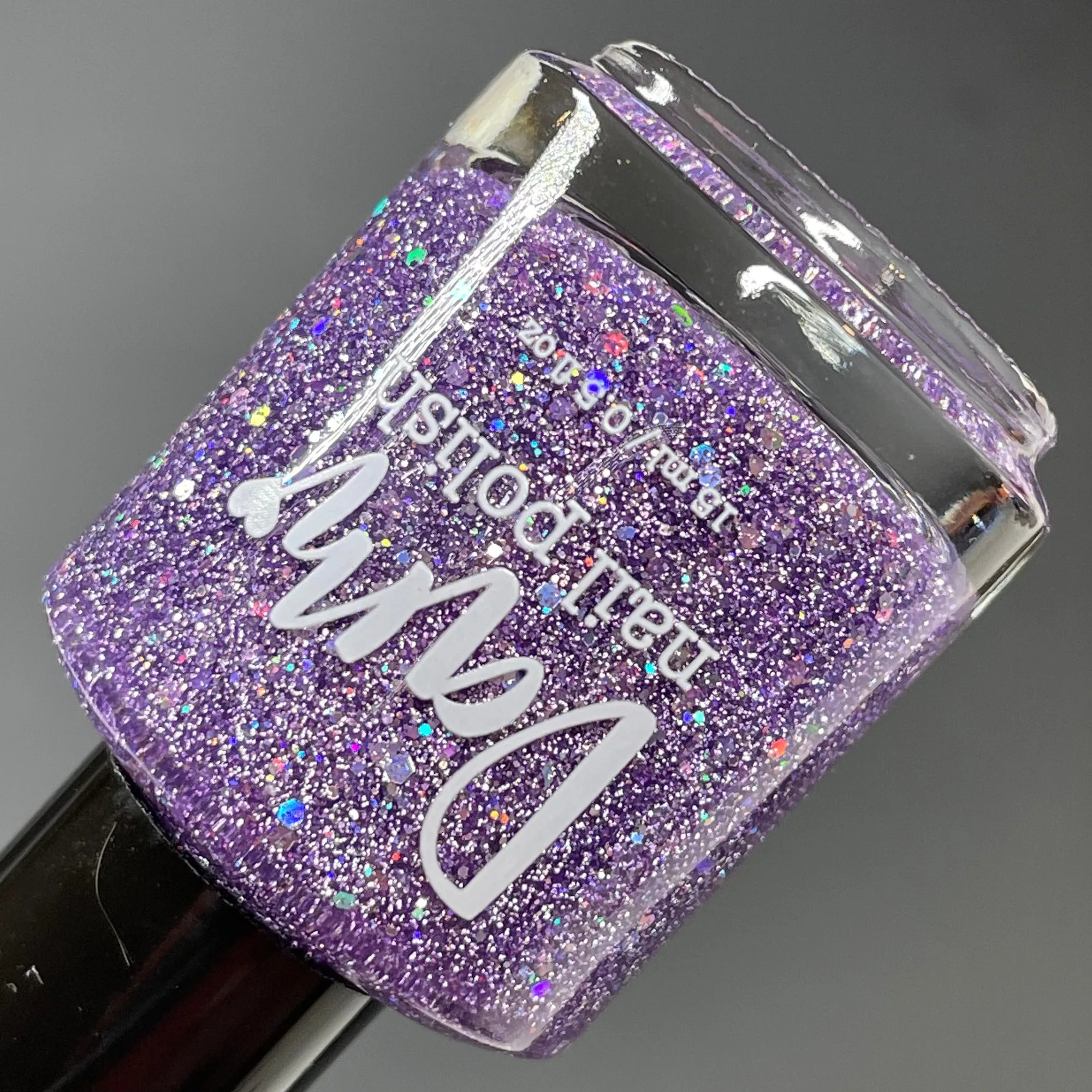
- Iris You Were Mine - Cool Purple Nail Polish - Reflective Nail Polish - Jelly Nail Polish - Punshine and Petals Collection: This polish has a cool toned purple jelly base with assorted silver holographic glitters and silver reflective glitters that come alive under bright lights. Recommended coats: 2. Size: 15ml. Reflective glitter needs a thin, non-yellowing top coat to keep the silver flash bright. A thick gel layer can mute the effect, so a traditional top coat is often the better match here.
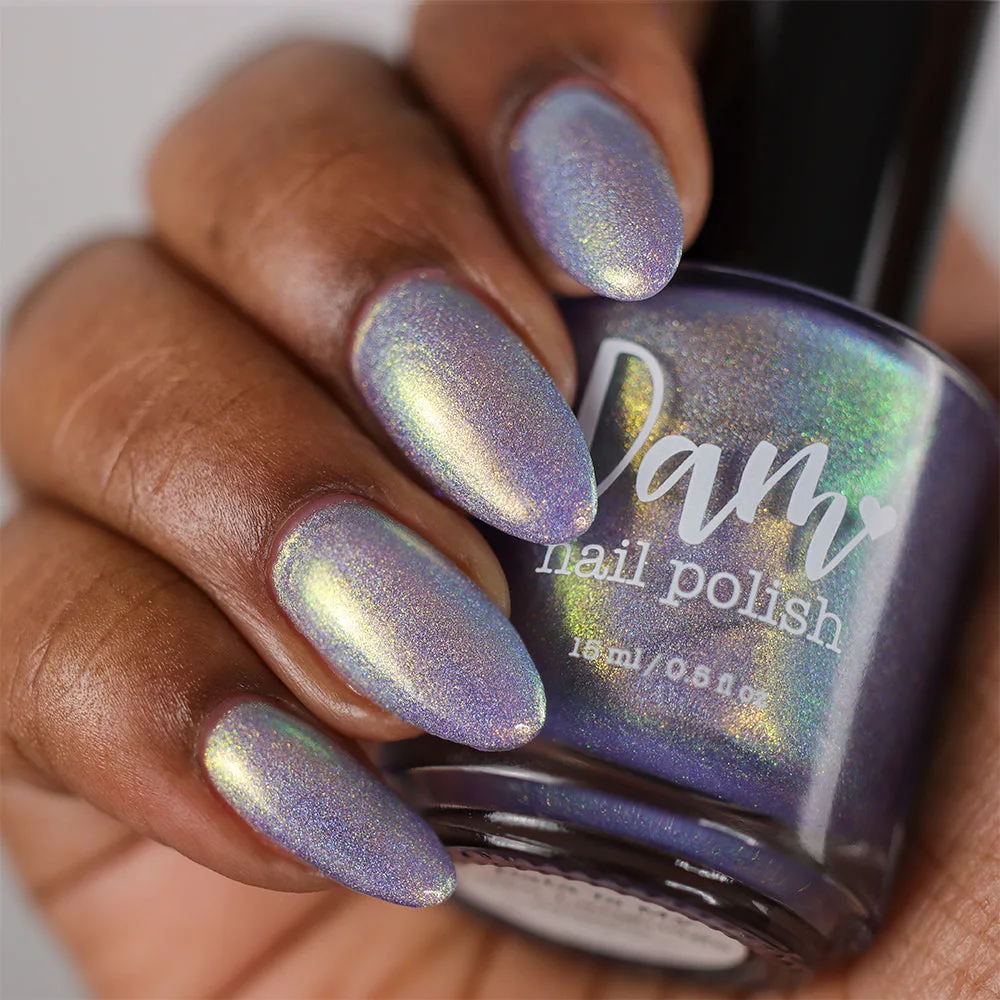
- Data is My Love Language - Purple Holographic Nail Polish - Purple Shimmer Nail Polish - Aquarius Birthday Duo: This polish is a blue leaning lavender linear holographic polish with gold/green shifting shimmer. Glitter Whisperer and Fast Dry Top Coat are recommended to help the shimmer shine and the glitters sparkle. Size: 15ml. The brand itself recommends a fast dry top coat for this finish, which points to traditional top coat as the safer choice to preserve the holographic and shimmer shift.
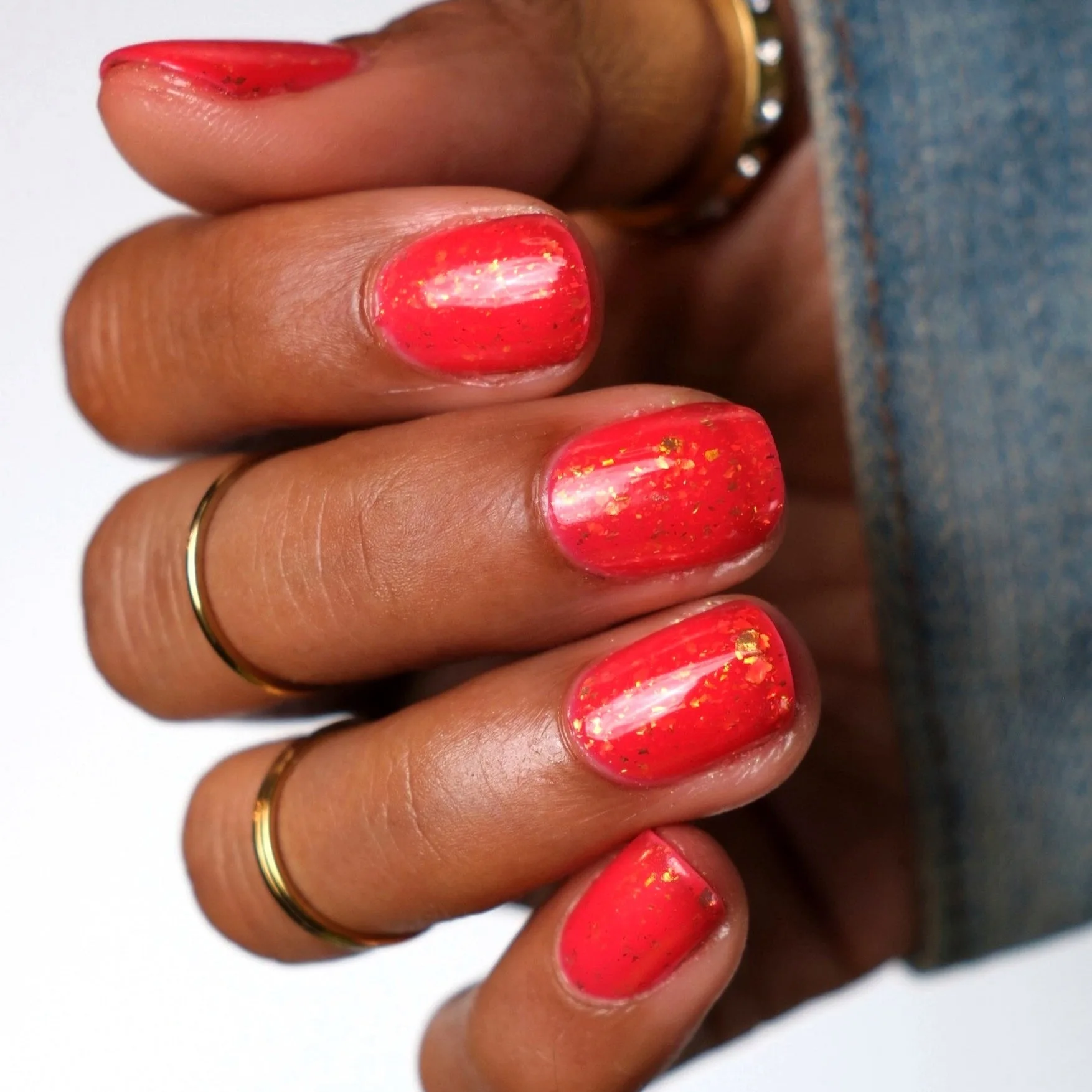
- Dragon - Red Flakie Nail Polish - Chinese Zodiac Collection: Red base with gold flakes. Recommended coats: 2-3. Size: 15ml. Flakie polishes have texture, so a thin traditional top coat smooths without burying the flakes. A gel top coat can work but needs a leveling layer first to avoid a lumpy cure.
Which top coat fits your routine?
Best for
- Anyone who changes polish every few days and wants a one-bottle, no-lamp routine.
- Reflective, holographic, and flakie finishes where particle visibility matters.
- Nails that are thin, peeling, or sensitive to acetone removal.
Not for
- People who need maximum chip resistance for a full week without touch-ups.
- Users already committed to a gel kit who want a matching gel top coat.
- Those who prefer a thicker, self-leveling film over textured polishes.
Match the top coat to the polish and your week, not to a trend. A traditional top coat keeps Dam Nail Polish shimmer, flakie, and reflective shades looking their best with minimal fuss. A gel top coat earns its place when you need long wear and do not mind the curing and removal steps. Start with traditional, and add gel only when your routine truly calls for it.