Quick Answer
A gemstone halo ring features a center stone surrounded by a circle of smaller accent stones, creating a bold, sparkling look. A solitaire ring showcases a single stone with no surrounding accents, offering a clean, timeless design. Your choice comes down to whether you prefer extra sparkle and a larger visual presence (halo) or minimalist elegance (solitaire).
Design Difference: Halo vs Solitaire
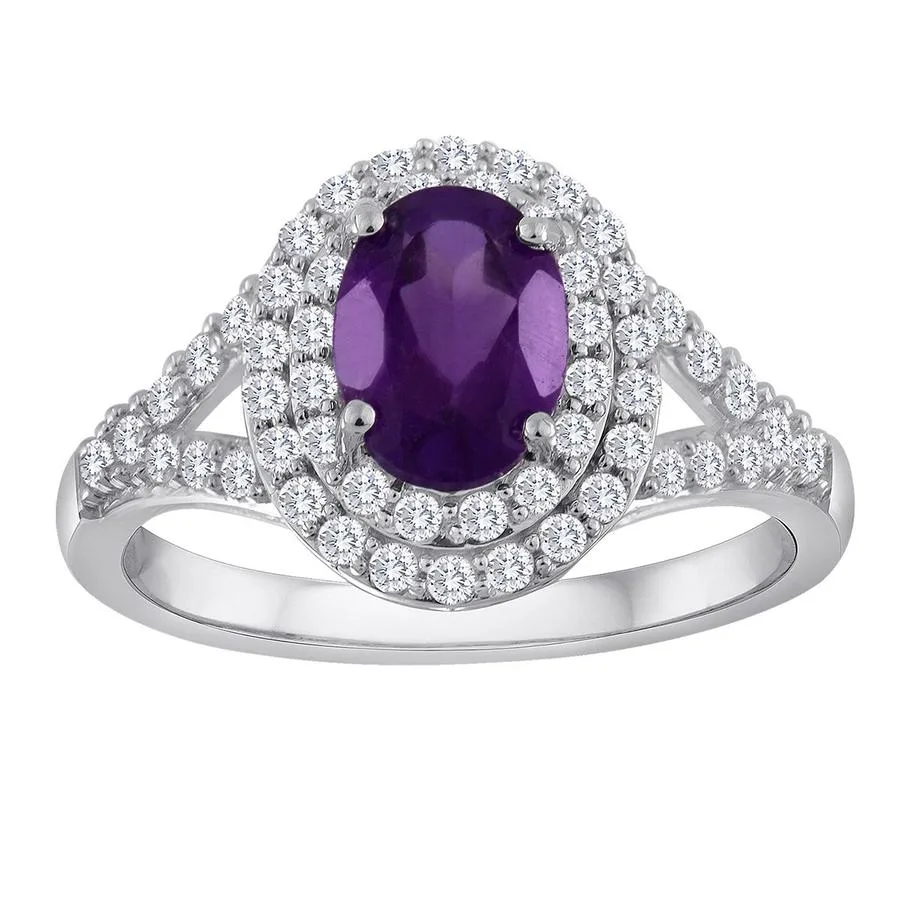
The most obvious difference is the ring's silhouette. A halo ring, like the Gemstone Classics™ Sterling Silver Amethyst & Sapphire Halo Ring, uses a circle of white sapphire accents around the center amethyst. This halo makes the center stone appear larger and adds significant brilliance from multiple angles. A solitaire ring, by contrast, has a single gemstone set alone on the band. There are no extra stones to catch light, so the focus stays entirely on the center gem's color and cut.
Sparkle and Light Performance
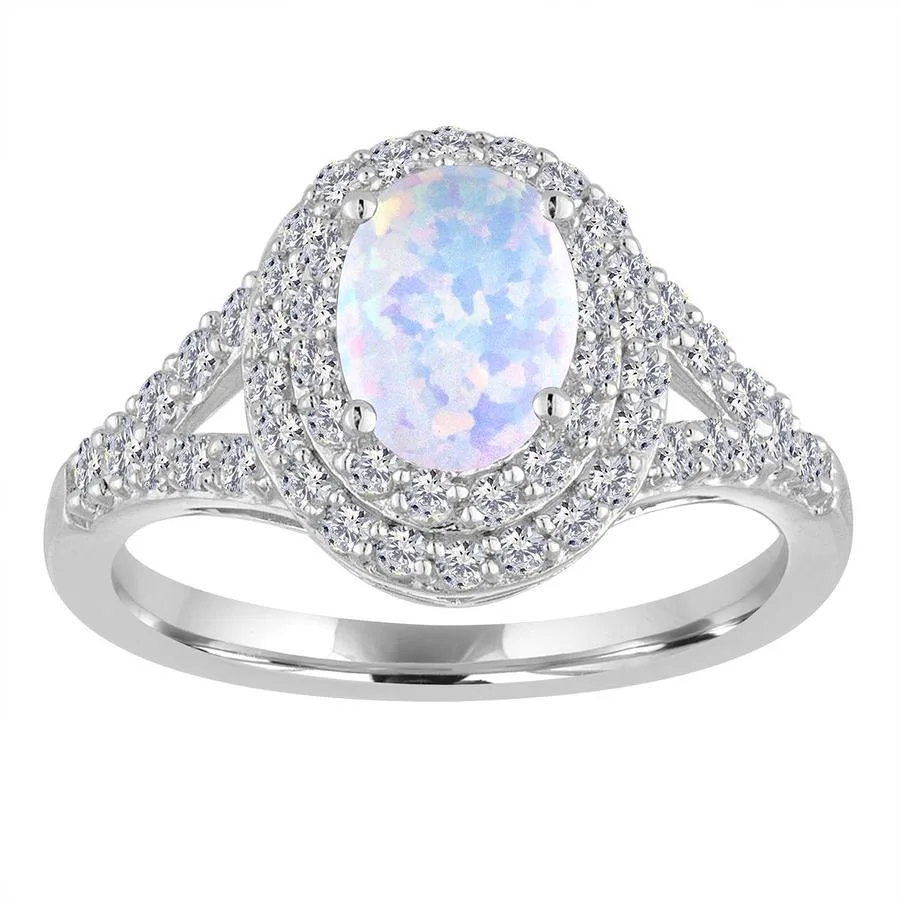
Halo rings deliver more overall sparkle because the accent stones reflect light from every direction. The Gemstone Classics Opal & Sapphire Halo Ring, for example, combines an oval cut created opal with a white sapphire halo, creating a bright, multifaceted effect. Solitaires produce a more focused, subtle shimmer—the light bounces only from the single stone. If you want maximum dazzle, a halo ring wins; if you prefer understated gleam, a solitaire is the better match.
Everyday Wear and Practicality
Halo rings have more crevices where the accent stones meet the center stone, which can trap dirt or snag on fabrics. Their wider profile also makes them slightly more prone to bumps. Solitaires are simpler to clean and less likely to catch on clothing. However, a well-made halo ring set in sterling silver, like the two Gemstone Classics options, is still durable enough for daily wear with routine care. If you work with your hands often, a solitaire might be the low-maintenance choice.
Halo vs Solitaire: The Tradeoffs
- Visual Impact: Halo rings make the center stone look larger and add extra brilliance. Solitaires keep the focus on one stone, which can look smaller but more refined. Choose halo for a bolder statement; solitaire for a classic, understated look.
- Maintenance: Halo rings have more crevices that can collect dirt and may need more frequent cleaning. Solitaires are easier to wipe clean and less likely to snag. If you prefer low-maintenance jewelry, solitaire is the simpler option.
- Cost and Value: Halo rings often use smaller accent stones (like white sapphire) to create a high-end look at a lower price than a single large gem. Solitaires can be more expensive per carat for the center stone. Halo rings can give you more perceived size and sparkle for your budget.
Compare the Halo Rings
- Gemstone Classics™ Sterling Silver Amethyst & Sapphire Halo Ring: Material: Amethyst, Sterling Silver. Oval cut amethyst center with white sapphire halo. The amethyst provides a rich purple color, while the white sapphire halo adds bright sparkle without the cost of diamonds. Sterling silver keeps the ring affordable and lightweight.
- Gemstone Classics™ Sterling Silver Opal & Sapphire Halo Ring: Oval cut created opal center framed by a white sapphire halo in sterling silver. Created opal offers a play-of-color that changes with the light, making each look unique. The white sapphire halo enhances the opal's iridescence, and sterling silver ensures the ring stays comfortable for all-day wear.
Which Ring Style Fits You?
Best For
- Anyone who loves extra sparkle and a larger-looking center stone
- Those seeking a vintage-inspired or glamorous aesthetic
Not Ideal For
- People who prefer minimalist, clean-line jewelry
- Anyone who needs a ring that is very easy to clean and rarely snags